Custom Walk in Panama City, Panama by eporx40_f4574 created on 2026-06-18
Guide Location: Panama » Panama City
Guide Type: Custom Walk
# of Sights: 9
Tour Duration: 17 Hour(s)
Travel Distance: 47.9 Km or 29.8 Miles
Share Key: JCWBF
Guide Type: Custom Walk
# of Sights: 9
Tour Duration: 17 Hour(s)
Travel Distance: 47.9 Km or 29.8 Miles
Share Key: JCWBF
How It Works
Please retrieve this walk in the GPSmyCity app. Once done, the app will guide you from one tour stop to the next as if you had a personal tour guide. If you created the walk on this website or come to the page via a link, please follow the instructions below to retrieve the walk in the app.
Retrieve This Walk in App
Step 1. Download the app "GPSmyCity: Walks in 1K+ Cities" on Apple App Store or Google Play Store.



Step 2. In the GPSmyCity app, download(or launch) the guide "Panama City Map and Walking Tours".
Step 3. Tap the menu button located at upper right corner of the "Walks" screen and select "Retrieve custom walk". Enter the share key: JCWBF
1) Amador Causeway (must see)
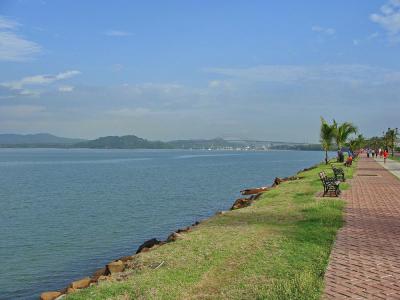
The Amador Causeway, located in Panama City, is a prominent landmark and a hub of recreational and commercial activity. Constructed with rocks excavated during the building of the Panama Canal between 1904 and 1914, the causeway connects the mainland to the four islands of Naos, Perico, Flamenco, and one unnamed island. This 6-kilometer stretch serves as a breakwater at the Pacific entrance of the canal and has transformed significantly since Panama regained control from the U.S.-administered Canal Zone.
Today, the Amador Causeway is adorned with a four-lane road and accompanying bicycle and jogging paths that offer scenic views of Panama City's skyline and the Pacific Ocean. The causeway has seen extensive development, including the establishment of port facilities, marinas, a diverse array of shops, and a variety of restaurants offering cuisines ranging from local Panamanian to international flavors like Arabic, Italian, and Japanese.
The islands, while developed along their edges, still harbor secluded maritime jungles, preserving some of their natural beauty amidst the commercial expansion. The historical significance of the area is highlighted by the remnants of military fortifications dating from the 1920s to the 1980s, originally part of Fort Grant and later Fort Amador, which have been repurposed into commercial spaces such as restaurants and clubs.
For outdoor enthusiasts and tourists, the Amador Causeway provides a plethora of activities. Visitors can engage in walking, jogging, skating, cycling, and renting electric scooters. Water-based activities include kayak and paddle rentals for adventures in the bay. The causeway is also a departure point for trips to nearby Taboga Island and the Las Perlas archipelago.
Cultural and educational experiences are enriched by attractions like the Punta Culebra Natural Center, managed by the Smithsonian Tropical Research Institute, and the Biomuseo. The area also hosts craft centers where local artisans sell their products, adding to the vibrant, multicultural atmosphere of the causeway. The Amador Causeway stands out as one of the most enjoyable outdoor locations in Panama City, blending historical, natural, and modern elements.
Today, the Amador Causeway is adorned with a four-lane road and accompanying bicycle and jogging paths that offer scenic views of Panama City's skyline and the Pacific Ocean. The causeway has seen extensive development, including the establishment of port facilities, marinas, a diverse array of shops, and a variety of restaurants offering cuisines ranging from local Panamanian to international flavors like Arabic, Italian, and Japanese.
The islands, while developed along their edges, still harbor secluded maritime jungles, preserving some of their natural beauty amidst the commercial expansion. The historical significance of the area is highlighted by the remnants of military fortifications dating from the 1920s to the 1980s, originally part of Fort Grant and later Fort Amador, which have been repurposed into commercial spaces such as restaurants and clubs.
For outdoor enthusiasts and tourists, the Amador Causeway provides a plethora of activities. Visitors can engage in walking, jogging, skating, cycling, and renting electric scooters. Water-based activities include kayak and paddle rentals for adventures in the bay. The causeway is also a departure point for trips to nearby Taboga Island and the Las Perlas archipelago.
Cultural and educational experiences are enriched by attractions like the Punta Culebra Natural Center, managed by the Smithsonian Tropical Research Institute, and the Biomuseo. The area also hosts craft centers where local artisans sell their products, adding to the vibrant, multicultural atmosphere of the causeway. The Amador Causeway stands out as one of the most enjoyable outdoor locations in Panama City, blending historical, natural, and modern elements.
2) Panama Canal (must see)
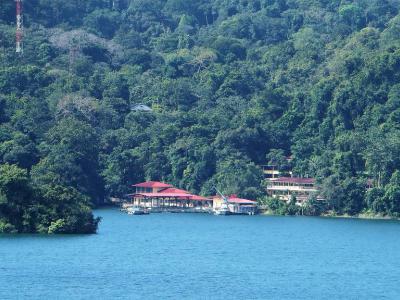
The Panama Canal, located in Panama City, is a marvel of modern engineering and a pivotal artery in global maritime trade. This artificial 82 kilometers (51 miles) waterway connects the Atlantic Ocean with the Pacific Ocean, traversing the Isthmus of Panama. Its creation stands as one of the most formidable and complex engineering feats ever achieved, providing a vital shortcut that allows ships to bypass the perilous journey around the southernmost tip of South America via Cape Horn or the less frequented routes through the Arctic.
Originally opened on August 15, 1914, after a transfer of efforts from French to American hands, the canal significantly reduced the journey time for maritime vessels between the two oceans. France initiated construction in 1881 but faced overwhelming challenges including engineering difficulties and high worker mortality, leading to the cessation of their efforts. The United States took over the project in 1904 and managed to complete the canal, continuing to control the surrounding Panama Canal Zone until the 1977 Torrijos–Carter Treaties facilitated a gradual handover to Panama. Full control was passed to the Panamanian government in 1999, and today, the canal is operated by the government-owned Panama Canal Authority.
The canal features a series of locks that elevate ships up to Gatun Lake, an artificial lake created to minimize excavation work, lifting vessels 26 meters (85 feet) above sea level. The original locks are 32.5 meters (110 feet) wide. To accommodate larger neo-Panamax ships, which can carry more cargo, a third, wider lane of locks was added, and began commercial operations on June 26, 2016. This expansion allows for the transit of significantly larger vessels than before.
Recognizing its significance and impact, the American Society of Civil Engineers has named the Panama Canal one of the seven wonders of the modern world. The canal not only serves as a critical conduit for international maritime trade but also stands as a testament to human ingenuity and determination to overcome natural barriers.
Originally opened on August 15, 1914, after a transfer of efforts from French to American hands, the canal significantly reduced the journey time for maritime vessels between the two oceans. France initiated construction in 1881 but faced overwhelming challenges including engineering difficulties and high worker mortality, leading to the cessation of their efforts. The United States took over the project in 1904 and managed to complete the canal, continuing to control the surrounding Panama Canal Zone until the 1977 Torrijos–Carter Treaties facilitated a gradual handover to Panama. Full control was passed to the Panamanian government in 1999, and today, the canal is operated by the government-owned Panama Canal Authority.
The canal features a series of locks that elevate ships up to Gatun Lake, an artificial lake created to minimize excavation work, lifting vessels 26 meters (85 feet) above sea level. The original locks are 32.5 meters (110 feet) wide. To accommodate larger neo-Panamax ships, which can carry more cargo, a third, wider lane of locks was added, and began commercial operations on June 26, 2016. This expansion allows for the transit of significantly larger vessels than before.
Recognizing its significance and impact, the American Society of Civil Engineers has named the Panama Canal one of the seven wonders of the modern world. The canal not only serves as a critical conduit for international maritime trade but also stands as a testament to human ingenuity and determination to overcome natural barriers.
3) Miraflores Visitor Center (must see)
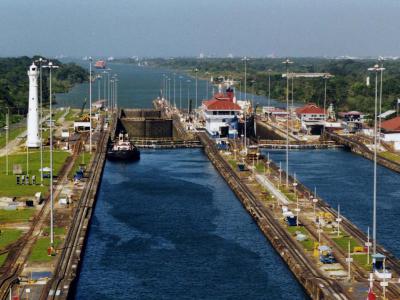
The Miraflores Visitor Center gives visitors insight into the Panama Canal's history and the area's biodiversity and allows front row seating to watch ships move through the canal.
A fabulous IMAX film, Panama Canal: A Land Divided, a World United, is narrated by Morgan Freeman. The movie describes the timeline of the canal from the early 1500s to the present day.
Exhibits describe Panama's natural areas, flora, and fauna. Captains can try out the navigation simulator and see if they have what it takes to pilot a boat through the canal.
If you want to see ships transiting through the locks, the Miraflores Visitor Center is a great place to visit. The Visitor Center has three levels with terraces and observation decks that allow visitors to watch ships transit the canal.
The Atlantic & Pacific Company Restaurant is on the fourth floor of the Visitor Center. This is another excellent place to watch ships transiting the canal. The Restaurant has tasty options for everyone in your group.
Finally, pick out your favorite souvenir at the Gift Shop.
Why You Should Visit:
The Panama Canal provides an essential link between the Caribbean Sea and the Pacific Ocean. It cuts down worldwide shipping times and provides a safer route. Watching mega-tankers move through the canal is a once-in-a-lifetime opportunity, and the Miraflores Visitor Center offers the best vista to witness this engineering feat at work.
Tips:
The best times to visit to watch ships transit are in the morning between 9:00 am, and 11:00 am and in the afternoon between 3:00 pm and 5:00 pm. The canal is busiest during those times.
A fabulous IMAX film, Panama Canal: A Land Divided, a World United, is narrated by Morgan Freeman. The movie describes the timeline of the canal from the early 1500s to the present day.
Exhibits describe Panama's natural areas, flora, and fauna. Captains can try out the navigation simulator and see if they have what it takes to pilot a boat through the canal.
If you want to see ships transiting through the locks, the Miraflores Visitor Center is a great place to visit. The Visitor Center has three levels with terraces and observation decks that allow visitors to watch ships transit the canal.
The Atlantic & Pacific Company Restaurant is on the fourth floor of the Visitor Center. This is another excellent place to watch ships transiting the canal. The Restaurant has tasty options for everyone in your group.
Finally, pick out your favorite souvenir at the Gift Shop.
Why You Should Visit:
The Panama Canal provides an essential link between the Caribbean Sea and the Pacific Ocean. It cuts down worldwide shipping times and provides a safer route. Watching mega-tankers move through the canal is a once-in-a-lifetime opportunity, and the Miraflores Visitor Center offers the best vista to witness this engineering feat at work.
Tips:
The best times to visit to watch ships transit are in the morning between 9:00 am, and 11:00 am and in the afternoon between 3:00 pm and 5:00 pm. The canal is busiest during those times.

4) Metropolitan Natural Park (must see)
The Metropolitan Natural Park is an oasis in the middle of the city. This 573-acre park allows visitors and locals to stretch their legs on hiking trails and see some of Panama's wildlife.
The park has five trails covering three miles. The Mono Tití Road takes hikers to the top of Cerro Cedro, which boasts fantastic views of Panama City. For a longer hike to the top of Cerro Cedro, try the Sendero La Cienaguita. Sendero Las Caoboas also offers vistas of the city and bay.
The park features 284 types of trees. Visitors will be amazed to find hundreds of bird, mammal, reptile, and amphibian species. Two-toed and three-toed sloths live here, but they are often well-hidden. Geoffroy's tamarin, South America's smallest monkey, also resides in the park.
Birds are plentiful, and you might see toucans or hummingbirds. Turtles, frogs, coatis, and agoutis are often seen. While ants usually aren't a must-see, visitors enjoy seeing the processions of leafcutter ants marching with leaves. Grab your water bottle, hiking shoes, and camera, and walk through this jungle in the city.
The park has five trails covering three miles. The Mono Tití Road takes hikers to the top of Cerro Cedro, which boasts fantastic views of Panama City. For a longer hike to the top of Cerro Cedro, try the Sendero La Cienaguita. Sendero Las Caoboas also offers vistas of the city and bay.
The park features 284 types of trees. Visitors will be amazed to find hundreds of bird, mammal, reptile, and amphibian species. Two-toed and three-toed sloths live here, but they are often well-hidden. Geoffroy's tamarin, South America's smallest monkey, also resides in the park.
Birds are plentiful, and you might see toucans or hummingbirds. Turtles, frogs, coatis, and agoutis are often seen. While ants usually aren't a must-see, visitors enjoy seeing the processions of leafcutter ants marching with leaves. Grab your water bottle, hiking shoes, and camera, and walk through this jungle in the city.
5) Panama Viejo (Old Panama) (must see)
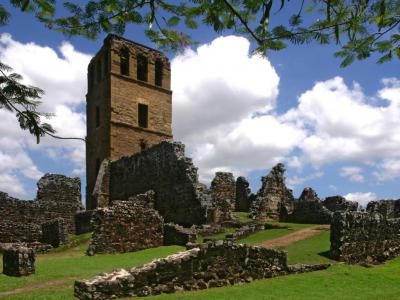
Old Panama (Panama Viejo) is the remaining part of the original Panama City. It served as the former capital of Panama before its destruction in 1671 by the Welsh privateer Henry Morgan. Located in the suburbs of the current capital, it is a site of great historical significance and, together with the historical district of Panama, has been recognized as a UNESCO World Heritage Site since 1997.
The settlement, initially called Castilla del Oro, was established on August 15, 1519, by Pedro Arias Dávila and 100 other settlers. This marked the first permanent European settlement on the Pacific Ocean, replacing the earlier cities of Santa María la Antigüa del Darién and Acla. In 1521, the settlement was elevated to city status by a royal decree from Charles V of Spain, who also granted it a coat of arms, thereby forming a new municipal council (cabildo). Old Panama quickly became a pivotal starting point for expeditions to Peru and an essential hub for the shipment of gold and silver to Spain.
Despite experiencing significant fires in 1539 and 1563, which destroyed parts of the city, Old Panama continued to grow. By 1610, it boasted a population of 5,000, with 500 houses, convents, chapels, a hospital, and a cathedral. However, the city faced multiple attacks from pirates and indigenous people from Darién in the early 17th century. Additionally, a destructive earthquake on May 2, 1620, and the Great Fire of February 21, 1644, which destroyed 83 religious buildings, including the cathedral, were significant setbacks. By this time, the city's population had reached 8,000.
The most catastrophic event in Old Panama's history occurred on January 28, 1671, when Henry Morgan attacked the city with a force of 1,400 men. After defeating the city's militia, Morgan's men sacked Panama. Whether the subsequent fire that destroyed the city was started by Morgan's forces or was a result of an order from Captain General Don Juan Pérez de Guzmán to blow up the gunpowder magazines remains unclear. The attack led to the loss of thousands of lives and necessitated the rebuilding of Panama City a few kilometers to the west at its present location.
Today, Old Panama stands as a symbol of the rich and tumultuous history of Panama. It has also featured in popular culture, serving as a Pit Stop in the 19th season of "The Amazing Race" and hosting a reward feast in the 7th season of the CBS show "Survivor."
The settlement, initially called Castilla del Oro, was established on August 15, 1519, by Pedro Arias Dávila and 100 other settlers. This marked the first permanent European settlement on the Pacific Ocean, replacing the earlier cities of Santa María la Antigüa del Darién and Acla. In 1521, the settlement was elevated to city status by a royal decree from Charles V of Spain, who also granted it a coat of arms, thereby forming a new municipal council (cabildo). Old Panama quickly became a pivotal starting point for expeditions to Peru and an essential hub for the shipment of gold and silver to Spain.
Despite experiencing significant fires in 1539 and 1563, which destroyed parts of the city, Old Panama continued to grow. By 1610, it boasted a population of 5,000, with 500 houses, convents, chapels, a hospital, and a cathedral. However, the city faced multiple attacks from pirates and indigenous people from Darién in the early 17th century. Additionally, a destructive earthquake on May 2, 1620, and the Great Fire of February 21, 1644, which destroyed 83 religious buildings, including the cathedral, were significant setbacks. By this time, the city's population had reached 8,000.
The most catastrophic event in Old Panama's history occurred on January 28, 1671, when Henry Morgan attacked the city with a force of 1,400 men. After defeating the city's militia, Morgan's men sacked Panama. Whether the subsequent fire that destroyed the city was started by Morgan's forces or was a result of an order from Captain General Don Juan Pérez de Guzmán to blow up the gunpowder magazines remains unclear. The attack led to the loss of thousands of lives and necessitated the rebuilding of Panama City a few kilometers to the west at its present location.
Today, Old Panama stands as a symbol of the rich and tumultuous history of Panama. It has also featured in popular culture, serving as a Pit Stop in the 19th season of "The Amazing Race" and hosting a reward feast in the 7th season of the CBS show "Survivor."
6) Multiplaza Pacific (must see)
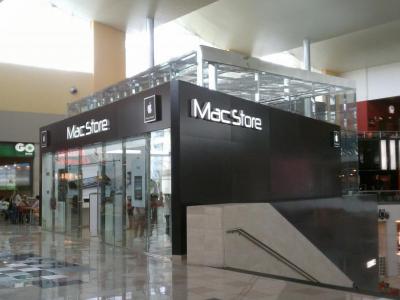
The Multiplaza Pacific is a luxury shopping and entertainment destination. Featuring over 500 stores, every store you can imagine is here, from retail brands to high-end designers.
Shop at Gucci, Hermes, Dolce & Gabbana, Armani, and the Apple Store. You'll also find brands such as Guess, Nautica, Reebok, and Nike. You'll also find cinemas, book stores, electronics, banks, and of course a never-ending variety of clothing stores.
A food court offers American fast-food favorites such as Burger King, Dunkin Donuts, Chuck E. Cheese, and Dairy Queen. If you're in the mood for a sit-down meal, there's a variety of restaurants. Take a break at one of the cafes or smoothie stores. Try Rosselot for delicious desserts. The Multuplaza Pacific mall is so encompassing that you'll even find a grocery store.
After dark, party with the locals at the disco or dine at a fine dining restaurant.
Shop at Gucci, Hermes, Dolce & Gabbana, Armani, and the Apple Store. You'll also find brands such as Guess, Nautica, Reebok, and Nike. You'll also find cinemas, book stores, electronics, banks, and of course a never-ending variety of clothing stores.
A food court offers American fast-food favorites such as Burger King, Dunkin Donuts, Chuck E. Cheese, and Dairy Queen. If you're in the mood for a sit-down meal, there's a variety of restaurants. Take a break at one of the cafes or smoothie stores. Try Rosselot for delicious desserts. The Multuplaza Pacific mall is so encompassing that you'll even find a grocery store.
After dark, party with the locals at the disco or dine at a fine dining restaurant.
7) Cinta Costera (must see)
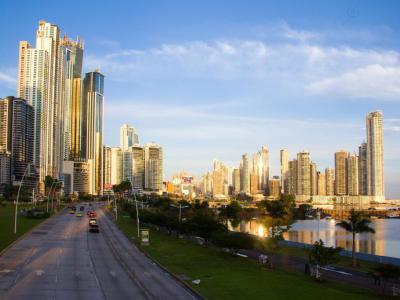
The Cinta Costera, or Coastal Beltway, is the result of a massive land reclamation project. This public oceanfront space is a beautiful addition to downtown Panama City. Tourists and locals alike enjoy the 64 acres of green space.
Visitors will find The Cinta Costera a great place to get some exercise on the bike lanes and running trails. Free workout sessions are offered along The Cinta Costera. Join a Zumba class, yoga session, or try your hand at AeroBox. Join in a game of tennis, volleyball, or basketball and make new friends.
After you've jogged the trails, relax with a picnic in the open space and enjoy views of the city and the bay. Public parties and festivals are often celebrated here. You might join in the Carnival festival or encounter the Pride Parade.
Check out the Seafood Market for the freshest seafood in the city. Watch local fisherman unload their catch and sample different vendor's ceviche.
Cinta Costera is a vibrant location to get some exercise and enjoy the local culture.
Visitors will find The Cinta Costera a great place to get some exercise on the bike lanes and running trails. Free workout sessions are offered along The Cinta Costera. Join a Zumba class, yoga session, or try your hand at AeroBox. Join in a game of tennis, volleyball, or basketball and make new friends.
After you've jogged the trails, relax with a picnic in the open space and enjoy views of the city and the bay. Public parties and festivals are often celebrated here. You might join in the Carnival festival or encounter the Pride Parade.
Check out the Seafood Market for the freshest seafood in the city. Watch local fisherman unload their catch and sample different vendor's ceviche.
Cinta Costera is a vibrant location to get some exercise and enjoy the local culture.
8) Panama Canal Museum (must see)
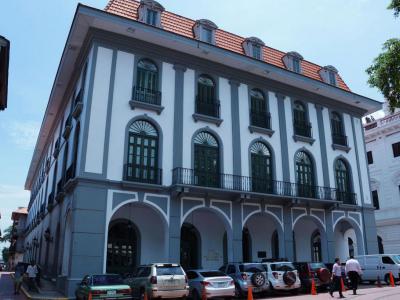
The Panama Canal Museum documents the long and complex history of the canal, tracing its development from early ambitions to its eventual transfer from U.S. control to the Panamanian government in 1999. Through maps, photographs, engineering plans, and personal accounts, the exhibitions explain how one of the world’s most important waterways came into being. In the lobby, visitors will notice a large original Fresnel lens, once used in a lighthouse along the canal route.
The museum building itself is historically significant. Constructed in 1874, it originally served as the headquarters of the French Universal Interoceanic Canal Company, which led the first canal attempt. In 1912, it was repurposed as Panama City’s main post office, further embedding it in the civic life of the city. Inside, the museum is arranged over several levels, each focusing on a different phase of the canal’s history. Exhibits explore the global interest in creating a shortcut between the Atlantic and Pacific oceans, as well as the immense challenges that delayed its realization.
The museum gives particular attention to the French attempt of the 1880s, which was ultimately abandoned after costs spiraled and tens of thousands of workers died, primarily from disease. The narrative then shifts to the American-led effort, highlighting advances in engineering, disease control, and organization that made completion possible. Another key focus is daily life on the canal. Exhibits examine the experiences of workers who arrived from dozens of countries and whose labor made the project possible.
Tip: Most exhibit text is presented in Spanish. An English-language audio guide is available and can be helpful for visitors who prefer narrated explanations.
The museum building itself is historically significant. Constructed in 1874, it originally served as the headquarters of the French Universal Interoceanic Canal Company, which led the first canal attempt. In 1912, it was repurposed as Panama City’s main post office, further embedding it in the civic life of the city. Inside, the museum is arranged over several levels, each focusing on a different phase of the canal’s history. Exhibits explore the global interest in creating a shortcut between the Atlantic and Pacific oceans, as well as the immense challenges that delayed its realization.
The museum gives particular attention to the French attempt of the 1880s, which was ultimately abandoned after costs spiraled and tens of thousands of workers died, primarily from disease. The narrative then shifts to the American-led effort, highlighting advances in engineering, disease control, and organization that made completion possible. Another key focus is daily life on the canal. Exhibits examine the experiences of workers who arrived from dozens of countries and whose labor made the project possible.
Tip: Most exhibit text is presented in Spanish. An English-language audio guide is available and can be helpful for visitors who prefer narrated explanations.
9) Biomuseo (must see)
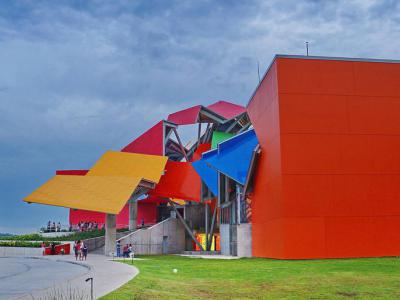
The Biomuseo in Panama City is a striking museum dedicated to the natural and cultural history of the country, particularly focusing on the geological formation and ecological impact of the Isthmus of Panama. Located on the Amador Causeway, a prominent position at the south entrance of the Panama Canal, the museum is a significant cultural landmark designed by the internationally acclaimed architect Frank Gehry. This structure marks Gehry's first architectural venture in Latin America, with its conception dating back to 1999 and its doors opening to the public on October 2, 2014.
Spanning 4,000 square meters, the Biomuseo offers eight permanent galleries, thoughtfully designed by Bruce Mau Design to provide a sequential journey through the natural history of Panama. The initial five galleries, which opened in 2014, include the Gallery of Biodiversity, Panamarama, Building the Bridge, Worlds Collide, and The Human Path. Each of these spaces provides immersive experiences from an introductory panorama of Panama’s biodiversity to interactive displays detailing the creation of the isthmus and its global ecological implications.
In March 2019, the remaining three galleries were introduced, enriching the visitor experience with Oceans Divided, The Living Web, and Panama is the Museum. These exhibits delve deeper into the diverse marine environments created by the separation of the Pacific Ocean and the Caribbean Sea, the interconnectedness of various life forms demonstrated through a living sculpture, and an interactive exploration of Panama's biological and cultural diversity.
The museum complex also includes a public atrium, temporary exhibit spaces, a gift store, a coffee shop, and exterior exhibits set within a botanical garden designed by Edwina von Gal. As a center of learning and cultural engagement, Biomuseo not only celebrates the pivotal role of the Panamanian isthmus in the natural world but also emphasizes the impact of human activity on the environment, urging a reflective consideration of our role in shaping the future of our planet.
Spanning 4,000 square meters, the Biomuseo offers eight permanent galleries, thoughtfully designed by Bruce Mau Design to provide a sequential journey through the natural history of Panama. The initial five galleries, which opened in 2014, include the Gallery of Biodiversity, Panamarama, Building the Bridge, Worlds Collide, and The Human Path. Each of these spaces provides immersive experiences from an introductory panorama of Panama’s biodiversity to interactive displays detailing the creation of the isthmus and its global ecological implications.
In March 2019, the remaining three galleries were introduced, enriching the visitor experience with Oceans Divided, The Living Web, and Panama is the Museum. These exhibits delve deeper into the diverse marine environments created by the separation of the Pacific Ocean and the Caribbean Sea, the interconnectedness of various life forms demonstrated through a living sculpture, and an interactive exploration of Panama's biological and cultural diversity.
The museum complex also includes a public atrium, temporary exhibit spaces, a gift store, a coffee shop, and exterior exhibits set within a botanical garden designed by Edwina von Gal. As a center of learning and cultural engagement, Biomuseo not only celebrates the pivotal role of the Panamanian isthmus in the natural world but also emphasizes the impact of human activity on the environment, urging a reflective consideration of our role in shaping the future of our planet.
