Custom Walk in Bridgetown, Barbados by jenlovessnoopy8422 created on 2026-06-21
Guide Location: Barbados » Bridgetown
Guide Type: Custom Walk
# of Sights: 13
Tour Duration: 3 Hour(s)
Travel Distance: 4.8 Km or 3 Miles
Share Key: LZXGA
Guide Type: Custom Walk
# of Sights: 13
Tour Duration: 3 Hour(s)
Travel Distance: 4.8 Km or 3 Miles
Share Key: LZXGA
How It Works
Please retrieve this walk in the GPSmyCity app. Once done, the app will guide you from one tour stop to the next as if you had a personal tour guide. If you created the walk on this website or come to the page via a link, please follow the instructions below to retrieve the walk in the app.
Retrieve This Walk in App
Step 1. Download the app "GPSmyCity: Walks in 1K+ Cities" on Apple App Store or Google Play Store.



Step 2. In the GPSmyCity app, download(or launch) the guide "Bridgetown Map and Walking Tours".
Step 3. Tap the menu button located at upper right corner of the "Walks" screen and select "Retrieve custom walk". Enter the share key: LZXGA
1) Pelican Craft Centre
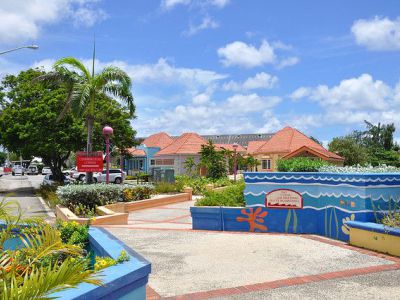
Located along the Princess Alice Highway, near the Bridgetown Port, the Pelican Craft Centre is the largest arts and crafts hub in Barbados-and indeed, the entire Caribbean. More than just a shopping destination, this modern facility is a vibrant showcase of Barbadian creativity, where traditional craftsmanship meets contemporary design.
Spanning an impressive 262,945 square feet, the Centre features 25 retail shops, 14 workshops, an art gallery, an artist wall, a wine bar and bistro, and a restaurant. Visitors can explore an extensive range of 100% Barbadian-made items, from exquisite mahogany carvings and flame glass art to handwoven textiles, pottery, jewelry, and batik. For those in search of authentic souvenirs or one-of-a-kind home décor, Pelican Craft Centre offers a diverse selection of locally crafted goods.
One of the most captivating aspects of the Centre is its live craft demonstrations. Here, artisans bring their work to life before your eyes, whether through basket weaving, molded figure-making, metal and wirecraft, or even cigar rolling. The experience is immersive, offering a glimpse into the island’s rich artistic traditions.
Beyond shopping, the Pelican Craft Centre is also a cultural hub, hosting Pelican Dooflicky, a carnival-style event featuring Barbadian music, dance, and cuisine. This lively celebration, held during the peak tourist season, invites visitors to revel in the festive atmosphere and experience the spirit of Barbados firsthand.
Easily accessible from the Princess Alice Bus Terminal, the Centre boasts air-conditioned shops, disabled-friendly facilities, and ample parking. Whether you’re in search of handmade keepsakes, Caribbean fashion, or a taste of local flavors, the Pelican Craft Centre is a must-visit stop in Bridgetown.
Spanning an impressive 262,945 square feet, the Centre features 25 retail shops, 14 workshops, an art gallery, an artist wall, a wine bar and bistro, and a restaurant. Visitors can explore an extensive range of 100% Barbadian-made items, from exquisite mahogany carvings and flame glass art to handwoven textiles, pottery, jewelry, and batik. For those in search of authentic souvenirs or one-of-a-kind home décor, Pelican Craft Centre offers a diverse selection of locally crafted goods.
One of the most captivating aspects of the Centre is its live craft demonstrations. Here, artisans bring their work to life before your eyes, whether through basket weaving, molded figure-making, metal and wirecraft, or even cigar rolling. The experience is immersive, offering a glimpse into the island’s rich artistic traditions.
Beyond shopping, the Pelican Craft Centre is also a cultural hub, hosting Pelican Dooflicky, a carnival-style event featuring Barbadian music, dance, and cuisine. This lively celebration, held during the peak tourist season, invites visitors to revel in the festive atmosphere and experience the spirit of Barbados firsthand.
Easily accessible from the Princess Alice Bus Terminal, the Centre boasts air-conditioned shops, disabled-friendly facilities, and ample parking. Whether you’re in search of handmade keepsakes, Caribbean fashion, or a taste of local flavors, the Pelican Craft Centre is a must-visit stop in Bridgetown.
2) Constitution River
The Constitution River, more commonly known as The Careenage, is a defining waterway of Bridgetown. Flowing from the island’s interior, the river serves as a crucial drainage channel, managing heavy rain runoff from the higher elevations.
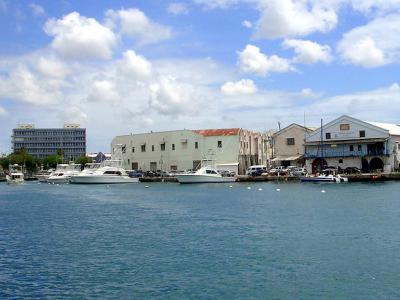
Situated along Carlisle Bay on the southwestern coast of Barbados, the Constitution River runs through the heart of Bridgetown, in the parish of Saint Michael. Its western section forms a sheltered yacht harbor, providing docking space for medium-sized yachts and small craft boats. This makes it both a functional and picturesque part of the city's waterfront.
Roughly 1 kilometer south of the Deep Water Harbour on Princess Alice Highway, the river plays a significant role in the city's urban landscape. Once a key location for maritime activities, the Careenage remains an integral part of Bridgetown’s history, offering a scenic blend of functionality and heritage within the bustling capital.
Situated along Carlisle Bay on the southwestern coast of Barbados, the Constitution River runs through the heart of Bridgetown, in the parish of Saint Michael. Its western section forms a sheltered yacht harbor, providing docking space for medium-sized yachts and small craft boats. This makes it both a functional and picturesque part of the city's waterfront.
Roughly 1 kilometer south of the Deep Water Harbour on Princess Alice Highway, the river plays a significant role in the city's urban landscape. Once a key location for maritime activities, the Careenage remains an integral part of Bridgetown’s history, offering a scenic blend of functionality and heritage within the bustling capital.
3) Independence Arch and Chamberlain Bridge
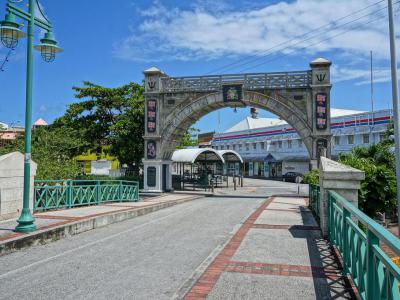
The Independence Arch stands proudly at the southern end of the Chamberlain Bridge in Bridgetown, serving as a lasting tribute to the nation's journey to self-governance. Erected in 1987 to commemorate Barbados' 21st anniversary of independence, the arch celebrates the island’s rich heritage and culture.
Adorned with key national symbols, the arch's pillars feature the flying fish and the pelican-two emblems of Barbadian identity-alongside the Pride of Barbados flower. The arch is crowned with the Coat of Arms of Barbados, which bears the national motto, “Pride and Industry”. At its base, visitors can find the National Pledge, a poignant reminder of the island’s values. Each November 30th, for Independence Day, the arch lights up in Barbados' national colors, blue and gold. Nearby, Independence Square offers a peaceful retreat from the city's hustle.
The Chamberlain Bridge, located in the heart of Bridgetown, has long been an essential crossing over the Careenage (Constitution River) at Carlisle Bay. Originally built as a swing bridge in 1872, it was named after Joseph Chamberlain (1836–1914), the British Colonial Secretary who helped secure funding for its reconstruction following the Great Hurricane of 1898. Over a century later, in 2005–2006, the outdated steel structure was dismantled and replaced with a modern lifting bridge featuring a single-leaf bascule design. Constructed from fiber-reinforced plastic (FRP), the new bridge is lighter, non-corrosive, and built to last.
Together, the Independence Arch and Chamberlain Bridge stand as enduring symbols of Barbados' history, resilience, and national pride, seamlessly blending tradition with modern engineering in the heart of the island’s capital.
Adorned with key national symbols, the arch's pillars feature the flying fish and the pelican-two emblems of Barbadian identity-alongside the Pride of Barbados flower. The arch is crowned with the Coat of Arms of Barbados, which bears the national motto, “Pride and Industry”. At its base, visitors can find the National Pledge, a poignant reminder of the island’s values. Each November 30th, for Independence Day, the arch lights up in Barbados' national colors, blue and gold. Nearby, Independence Square offers a peaceful retreat from the city's hustle.
The Chamberlain Bridge, located in the heart of Bridgetown, has long been an essential crossing over the Careenage (Constitution River) at Carlisle Bay. Originally built as a swing bridge in 1872, it was named after Joseph Chamberlain (1836–1914), the British Colonial Secretary who helped secure funding for its reconstruction following the Great Hurricane of 1898. Over a century later, in 2005–2006, the outdated steel structure was dismantled and replaced with a modern lifting bridge featuring a single-leaf bascule design. Constructed from fiber-reinforced plastic (FRP), the new bridge is lighter, non-corrosive, and built to last.
Together, the Independence Arch and Chamberlain Bridge stand as enduring symbols of Barbados' history, resilience, and national pride, seamlessly blending tradition with modern engineering in the heart of the island’s capital.
4) Independence Square
Independence Square, situated on the waterfront in the heart of Bridgetown, offers a serene environment to relax and absorb the city's historic ambiance. Visitors can rest on benches lining the waterfront, providing picturesque views of notable landmarks such as the Parliament Buildings and National Heroes Square.
At the western end of the square, local vendors display crafts and offer light refreshments on the bridge, presenting an opportunity to purchase unique souvenirs. Adjacent to this area stands the Independence Arch, gracefully spanning the Chamberlain Bridge and serving as a symbolic gateway into the square.
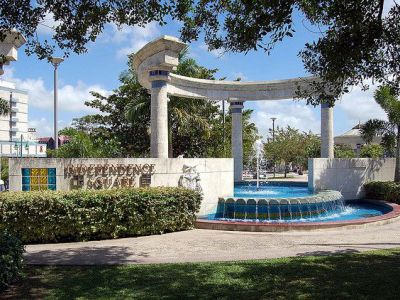
To the west, the wooden Bridgetown boardwalk traces the waterfront, inviting strolls along its path. Independence Square itself is adorned with an amphitheater, two large fountains, intricate paving mosaics, and a statue honoring National Hero, the Right Excellent Errol Walton Barrow. Notably, during November, which marks Barbados' independence celebrations, the square is illuminated in the national colors of blue and gold. The festive decor continues into the Christmas season, with numerous illuminated Christmas trees enhancing the square's charm.
Originally one of Bridgetown's busiest car parks, Independence Square was redesigned and reopened to the public in 2007. Today, it serves as a recreational haven, featuring stone benches, mature trees providing ample shade, and a tranquil view of the river with boats gently bobbing on the water. The prominent statue of Errol Walton Barrow stands at the center, gazing across the river toward National Heroes Square.
Whether visiting during the vibrant independence festivities or at another time of year, Independence Square offers a blend of historical significance and contemporary leisure, making it a must-visit destination in Bridgetown.
At the western end of the square, local vendors display crafts and offer light refreshments on the bridge, presenting an opportunity to purchase unique souvenirs. Adjacent to this area stands the Independence Arch, gracefully spanning the Chamberlain Bridge and serving as a symbolic gateway into the square.
To the west, the wooden Bridgetown boardwalk traces the waterfront, inviting strolls along its path. Independence Square itself is adorned with an amphitheater, two large fountains, intricate paving mosaics, and a statue honoring National Hero, the Right Excellent Errol Walton Barrow. Notably, during November, which marks Barbados' independence celebrations, the square is illuminated in the national colors of blue and gold. The festive decor continues into the Christmas season, with numerous illuminated Christmas trees enhancing the square's charm.
Originally one of Bridgetown's busiest car parks, Independence Square was redesigned and reopened to the public in 2007. Today, it serves as a recreational haven, featuring stone benches, mature trees providing ample shade, and a tranquil view of the river with boats gently bobbing on the water. The prominent statue of Errol Walton Barrow stands at the center, gazing across the river toward National Heroes Square.
Whether visiting during the vibrant independence festivities or at another time of year, Independence Square offers a blend of historical significance and contemporary leisure, making it a must-visit destination in Bridgetown.
5) Carlisle Bay Beaches (must see)
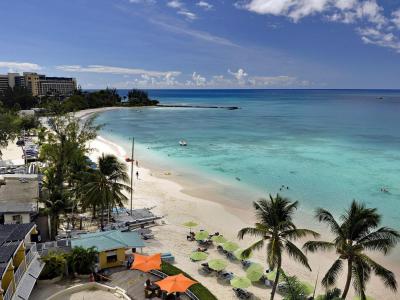
Carlisle Bay stretches from the cruise ship port to the north down to Needham's Point, the location of the Hilton Barbados Resort. The bay is a natural harbor and was Bridgetown's primary anchorage and port location in the early days. You'll likely still see visiting yachts anchored here, but it was full of British Navy and merchant ships back in the day. The location is mostly protected from the prevailing easterly trade winds.
The bay is named after the Earl of Carlisle, James Hay. In the 1600s, he was the Lord Proprietor of Barbados.
South of the river known as the Careenage, the bay's shoreline is one unbroken beautiful sandy beach. You will find many beach clubs and resorts along the shore. The Bay Street Esplanade is a landscaped path that follows the bay's shore. Locals love to gather here after work and watch the sunset.
There is a marine park located in Carlisle Bay that is popular for scuba diving and snorkeling. Along with an abundance of sea life and coral reefs, six shipwrecks lie on the bottom of the bay. You can find the wrecks between 12 and 65 feet below the surface.
Browne's Beach is a calm-water beach with soft sand. It's the perfect spot for sunbathing, swimming, or just relaxing in the sun. The Boatyard is a popular spot if you want to try some watersports, like renting a jetski or trying a sea trampoline.
The bay is named after the Earl of Carlisle, James Hay. In the 1600s, he was the Lord Proprietor of Barbados.
South of the river known as the Careenage, the bay's shoreline is one unbroken beautiful sandy beach. You will find many beach clubs and resorts along the shore. The Bay Street Esplanade is a landscaped path that follows the bay's shore. Locals love to gather here after work and watch the sunset.
There is a marine park located in Carlisle Bay that is popular for scuba diving and snorkeling. Along with an abundance of sea life and coral reefs, six shipwrecks lie on the bottom of the bay. You can find the wrecks between 12 and 65 feet below the surface.
Browne's Beach is a calm-water beach with soft sand. It's the perfect spot for sunbathing, swimming, or just relaxing in the sun. The Boatyard is a popular spot if you want to try some watersports, like renting a jetski or trying a sea trampoline.
6) Bethel Methodist Church
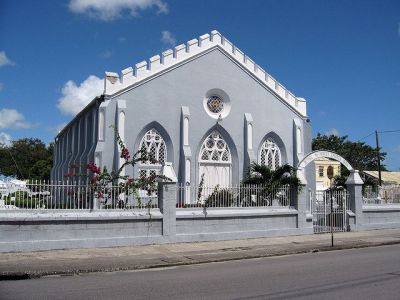
Bethel Methodist Church, nestled in the heart of Bridgetown, stands as a testament to faith, resilience, and history. As part of the Methodist Church in the Caribbean and the Americas, it traces its origins back to 1789, when Methodists arrived in Barbados with the mission of spreading Christianity among the oppressed enslaved population. However, the island's powerful plantocracy viewed Methodism as a disruptive force, resisting its influence. Despite this early opposition, Methodist congregations endured, and today, Bethel Methodist Church remains one of the significant houses of worship still active on the island.
This historic church is not only a place of devotion but also an architectural gem. Its elegant Caribbean-inspired design, with vibrant exteriors and intricate detailing, makes it a striking landmark in Bridgetown. Inside, visitors are greeted by beautifully crafted wooden interiors and stained glass windows, each element telling a story of faith, perseverance, and community.
Beyond its aesthetic appeal, Bethel Methodist Church continues to serve as a spiritual and cultural hub. The warm and welcoming congregation embraces visitors, offering a firsthand experience of local worship traditions. The church’s well-kept gardens provide a serene retreat for reflection, adding to its tranquil atmosphere.
A visit to Bethel Methodist Church is more than just an architectural or historical experience-it is a journey through Barbados' religious and social heritage. Whether attending a service or simply exploring its surroundings, the church invites visitors to connect with the island’s rich past and enduring faith.
This historic church is not only a place of devotion but also an architectural gem. Its elegant Caribbean-inspired design, with vibrant exteriors and intricate detailing, makes it a striking landmark in Bridgetown. Inside, visitors are greeted by beautifully crafted wooden interiors and stained glass windows, each element telling a story of faith, perseverance, and community.
Beyond its aesthetic appeal, Bethel Methodist Church continues to serve as a spiritual and cultural hub. The warm and welcoming congregation embraces visitors, offering a firsthand experience of local worship traditions. The church’s well-kept gardens provide a serene retreat for reflection, adding to its tranquil atmosphere.
A visit to Bethel Methodist Church is more than just an architectural or historical experience-it is a journey through Barbados' religious and social heritage. Whether attending a service or simply exploring its surroundings, the church invites visitors to connect with the island’s rich past and enduring faith.
7) Empire Theater
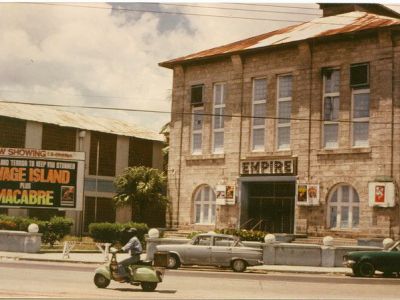
The Empire Theater holds a significant place in Bridgetown’s cultural history as the first venue in the city to showcase motion pictures. Opened in 1922, the theater originally functioned as both a live performance space and a cinema, becoming a vital entertainment hub for decades. Designed in Colonial Revival style, its 859-seat, single-screen auditorium stood as a premier venue for film and stage performances alike.
Before transitioning into a cinema, the Empire Theater hosted vaudeville shows, dance performances, and comedy acts, adapting over time to sustain its operations. Among the many who graced its stage was Frank Collymore, the celebrated Barbadian writer and performer, adding to the theater’s local artistic legacy. By the mid-1940s, ownership had shifted to the British Colonial Film Exchange, solidifying its place as a key player in Barbados’ entertainment scene.
However, despite its early prestige, the Empire Theater closed around 1975, having fallen victim to changing entertainment trends and economic challenges. Since then, the building has stood derelict, a shadow of its former self, yet still hinting at the grandeur it once possessed. For many Barbadians, it remains a nostalgic landmark, evoking memories of kung fu movie screenings and nights spent enjoying live performances.
Recognizing its cultural and architectural value, various Barbadian administrations have proposed restoration efforts, with a notable plan in 2003 to transform it into a home for the national performing arts company.
Before transitioning into a cinema, the Empire Theater hosted vaudeville shows, dance performances, and comedy acts, adapting over time to sustain its operations. Among the many who graced its stage was Frank Collymore, the celebrated Barbadian writer and performer, adding to the theater’s local artistic legacy. By the mid-1940s, ownership had shifted to the British Colonial Film Exchange, solidifying its place as a key player in Barbados’ entertainment scene.
However, despite its early prestige, the Empire Theater closed around 1975, having fallen victim to changing entertainment trends and economic challenges. Since then, the building has stood derelict, a shadow of its former self, yet still hinting at the grandeur it once possessed. For many Barbadians, it remains a nostalgic landmark, evoking memories of kung fu movie screenings and nights spent enjoying live performances.
Recognizing its cultural and architectural value, various Barbadian administrations have proposed restoration efforts, with a notable plan in 2003 to transform it into a home for the national performing arts company.
8) St. Michael's Cathedral (must see)
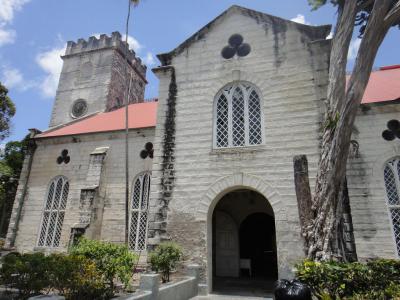
Two blocks east of National Heroes Square, this Anglican church has stood since 1789. It replaced an earlier wooden church built in 1665 that was destroyed by a hurricane in 1780. That first church was located at the site of present-day Saint Mary's Church.
The cathedral is made of coral limestone and features beautiful stained glass windows. In 1938, the Chapel of the Blessed Sacrament was added. The marble baptismal font is from the 17th century. The impressive structure can seat about 1,600 people and has one of the largest pipe organs in the Caribbean.
The church was originally the Saint Michael's Parish Church but was elevated to cathedral status in 1825 when Bishop Coleridge became head of the new Diocese of Barbados and the Leeward Islands.
Some of the most striking stained glass pieces can be seen in the Chapel. The central circular window features the image of Saint Michael. The larger windows to the left and right commemorate the parents of James Challenor Lynch. The windows were made in the late 1800s in London.
In the graveyard, you can see some of Barbados' famous public figures' graves. Sir Grantley Adams, the first chief minister and the only Prime Minister of the West Indies Federation, rests here. His son Tom Adams, the island's second prime minister, is also here.
The cathedral is made of coral limestone and features beautiful stained glass windows. In 1938, the Chapel of the Blessed Sacrament was added. The marble baptismal font is from the 17th century. The impressive structure can seat about 1,600 people and has one of the largest pipe organs in the Caribbean.
The church was originally the Saint Michael's Parish Church but was elevated to cathedral status in 1825 when Bishop Coleridge became head of the new Diocese of Barbados and the Leeward Islands.
Some of the most striking stained glass pieces can be seen in the Chapel. The central circular window features the image of Saint Michael. The larger windows to the left and right commemorate the parents of James Challenor Lynch. The windows were made in the late 1800s in London.
In the graveyard, you can see some of Barbados' famous public figures' graves. Sir Grantley Adams, the first chief minister and the only Prime Minister of the West Indies Federation, rests here. His son Tom Adams, the island's second prime minister, is also here.
9) Parliament Buildings (must see)
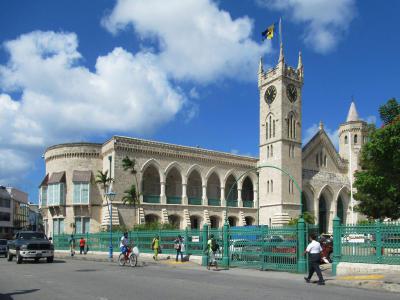
The Parliament Building sits just north of the Careenage on Broad and Rickett Streets. The building was built between 1870 and 1874, but the island's Parliament was established in 1639. That makes it the third oldest Parliament in the Commonwealth. The building is a protected building and part of the UNESCO World Heritage Site of Historic Bridgetown.
The oldest part of the neo-Gothic Victorian-style building is the East Wing, completed in 1873. This is where the chambers of the Senate and House of Assembly are located, which still meet weekly. Over the years, many other offices have been here, too, including the post office, central bank, and public library.
Inside the House of Assembly chambers, you can see stained glass windows showing British sovereigns from the time of James I up to Queen Victoria. In the Senate, the windows show the armorial bearings of past Presidents of the Council and Speakers of the House of Assembly.
The West Wing currently houses the National Heroes Gallery and the Museum of Parliament. In the past, it has housed offices for government officials like the Colonial Secretary and Treasurer, Provost Marshal, and Comptroller of Customs.
The clocktowers and bells above the West Wing were originally located on the East Wing but were moved in 1886. Poor soil at the previous location caused the tower to begin to sink within ten years of being built. The tower is built from coral limestone and is a prominent landmark throughout town.
The oldest part of the neo-Gothic Victorian-style building is the East Wing, completed in 1873. This is where the chambers of the Senate and House of Assembly are located, which still meet weekly. Over the years, many other offices have been here, too, including the post office, central bank, and public library.
Inside the House of Assembly chambers, you can see stained glass windows showing British sovereigns from the time of James I up to Queen Victoria. In the Senate, the windows show the armorial bearings of past Presidents of the Council and Speakers of the House of Assembly.
The West Wing currently houses the National Heroes Gallery and the Museum of Parliament. In the past, it has housed offices for government officials like the Colonial Secretary and Treasurer, Provost Marshal, and Comptroller of Customs.
The clocktowers and bells above the West Wing were originally located on the East Wing but were moved in 1886. Poor soil at the previous location caused the tower to begin to sink within ten years of being built. The tower is built from coral limestone and is a prominent landmark throughout town.
10) National Heroes Square
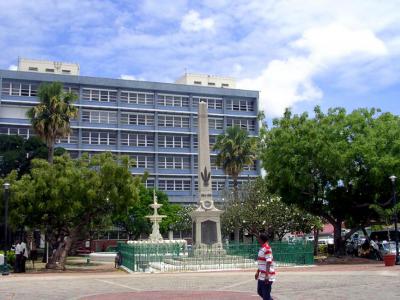
Located between Upper Broad Street, The Wharf Road, and the Careenage, National Heroes Square is one of the centerpieces of Bridgetown. Before 1998, the square was called Trafalgar Square.
The square is dedicated to the Order of National Heroes, and National Heroes Day is celebrated on April 28. On the first commemoration of the day, Trafalgar Square was renamed for the Order. Only 11 people have made the list of National Heroes and have been given the title "The Right Excellent." Of the people on the list, only Sir Garfield Sobers, a former cricketer, and Rhianna, a singer and businesswoman, are alive today.
The large monuments in the square include the Cenotaph War Memorial and Fountain Gardens. A large fountain commemorates the piping of water into town in 1865.
With its location at the center of town, the square is a great place to spot other attractions. You can see the Barbados Parliament Buildings, the Department of Inland Revenue, and the Chamberlain Bridge.
The square is dedicated to the Order of National Heroes, and National Heroes Day is celebrated on April 28. On the first commemoration of the day, Trafalgar Square was renamed for the Order. Only 11 people have made the list of National Heroes and have been given the title "The Right Excellent." Of the people on the list, only Sir Garfield Sobers, a former cricketer, and Rhianna, a singer and businesswoman, are alive today.
The large monuments in the square include the Cenotaph War Memorial and Fountain Gardens. A large fountain commemorates the piping of water into town in 1865.
With its location at the center of town, the square is a great place to spot other attractions. You can see the Barbados Parliament Buildings, the Department of Inland Revenue, and the Chamberlain Bridge.
11) Broad Street
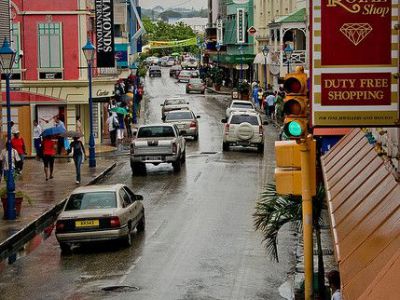
Located in the heart of Bridgetown, Broad Street serves as the city’s central commercial artery, bustling with activity and rich in history. This prominent thoroughfare is the epicenter of shopping, finance, and dining, making it a prime destination for both locals and visitors.
Historically, Broad Street was once part of a longer and narrower street known as Cheapside. Today, Cheapside lies at the western end of the city, home to the General Post Office and Cheapside Market. Broad Street itself has evolved into a vibrant commercial hub, drawing in shoppers with its array of duty-free stores, high-end jewelry boutiques, and major department stores. Well-known retailers such as Cave Shepherd & Company, Harrisons, Diamonds International, Colombian Emeralds, and Little Switzerland line the street, offering everything from luxury goods to everyday essentials.
In addition to its reputation as a shopping destination, Broad Street houses several key financial institutions. Major commercial banks, including the Royal Bank of Canada, Republic Bank of Trinidad and Tobago, FirstCaribbean International Bank Ltd, Barbados National Bank Ltd, Bank of Nova Scotia, and Butterfield Bank, have their main branches here. The presence of these institutions solidifies Broad Street’s role as a financial hub in the capital city.
Broad Street is also an architectural showcase, featuring a mix of modern and historic buildings. It is divided into Upper and Lower Broad Street, with Upper Broad Street near the well-known Lord Nelson Statue and Lower Broad Street situated near the Old Mutual Building, an architectural landmark that now houses a branch of Butterfield Bank. The street stretches from Saint Mary’s Church and the Old Town Hall on its western side to Bridge Street, close to National Heroes Square and the Parliament Buildings. Running parallel to Constitution River, it offers easy access to harbor cruises and boat rides along the waterfront.
A hive of daily activity, Broad Street is particularly popular among tourists, many of whom arrive from the nearby cruise ship port. However, visitors should note that most shops close on Sundays. Despite this, the street remains an essential part of the Bridgetown experience, offering a seamless blend of commerce, history, and vibrant city life.
Historically, Broad Street was once part of a longer and narrower street known as Cheapside. Today, Cheapside lies at the western end of the city, home to the General Post Office and Cheapside Market. Broad Street itself has evolved into a vibrant commercial hub, drawing in shoppers with its array of duty-free stores, high-end jewelry boutiques, and major department stores. Well-known retailers such as Cave Shepherd & Company, Harrisons, Diamonds International, Colombian Emeralds, and Little Switzerland line the street, offering everything from luxury goods to everyday essentials.
In addition to its reputation as a shopping destination, Broad Street houses several key financial institutions. Major commercial banks, including the Royal Bank of Canada, Republic Bank of Trinidad and Tobago, FirstCaribbean International Bank Ltd, Barbados National Bank Ltd, Bank of Nova Scotia, and Butterfield Bank, have their main branches here. The presence of these institutions solidifies Broad Street’s role as a financial hub in the capital city.
Broad Street is also an architectural showcase, featuring a mix of modern and historic buildings. It is divided into Upper and Lower Broad Street, with Upper Broad Street near the well-known Lord Nelson Statue and Lower Broad Street situated near the Old Mutual Building, an architectural landmark that now houses a branch of Butterfield Bank. The street stretches from Saint Mary’s Church and the Old Town Hall on its western side to Bridge Street, close to National Heroes Square and the Parliament Buildings. Running parallel to Constitution River, it offers easy access to harbor cruises and boat rides along the waterfront.
A hive of daily activity, Broad Street is particularly popular among tourists, many of whom arrive from the nearby cruise ship port. However, visitors should note that most shops close on Sundays. Despite this, the street remains an essential part of the Bridgetown experience, offering a seamless blend of commerce, history, and vibrant city life.
12) Swan Street
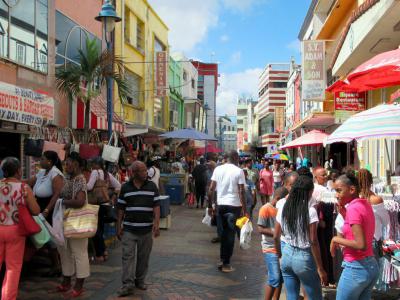
Swan Street parallels Broad Street to the north. It's a narrow alleyway of a street lined with shops and restaurants. It's pedestrian-only, so while it can be quite crowded, it's a great place to wander to meet the locals. There are several electronics stores, home goods, a shopping mall, and takeaway restaurants.
The buildings on Swan Street are traditional homes, with the businesses built on the lower levels. At one time, the street was known as Jew's Street because of the community's successful Jewish merchants. Many of the shopkeepers lived in the upper stories of the buildings. Unfortunately, a major fire swept through the area in 1845. After which, the street was part of what the locals dubbed the Burnt District.
Today, you'll see businesses and haberdasheries from around the world here. But the upper levels are no longer homes. Instead, they are mostly used as warehouses now.
Historians are unsure how the street got its official name. Some suggest that there was an inn named The Swan. Others say it was s tribute to a local surveyor, Captain Swan.
It's a busy place, favored by the locals more than the tourists. Swan Street is a must-see if you're looking for island goods and good prices. This street keeps the Barbadian spirit alive--you can find everything here, from fresh fruit and veggies to local island jewelry and crafts.
The buildings on Swan Street are traditional homes, with the businesses built on the lower levels. At one time, the street was known as Jew's Street because of the community's successful Jewish merchants. Many of the shopkeepers lived in the upper stories of the buildings. Unfortunately, a major fire swept through the area in 1845. After which, the street was part of what the locals dubbed the Burnt District.
Today, you'll see businesses and haberdasheries from around the world here. But the upper levels are no longer homes. Instead, they are mostly used as warehouses now.
Historians are unsure how the street got its official name. Some suggest that there was an inn named The Swan. Others say it was s tribute to a local surveyor, Captain Swan.
It's a busy place, favored by the locals more than the tourists. Swan Street is a must-see if you're looking for island goods and good prices. This street keeps the Barbadian spirit alive--you can find everything here, from fresh fruit and veggies to local island jewelry and crafts.
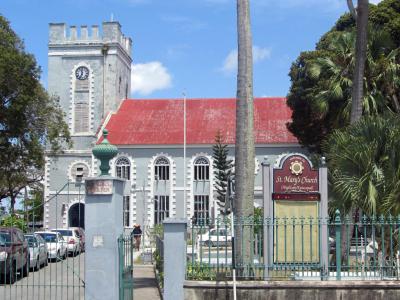
13) St. Mary's Anglican Church
You'll find Saint Mary's Church at the junction of Cheapside Road, Harts Street, and Suttle Street, directly across from the Old Town Hall. This is an active church serving Bridgetown, but it feels like a rural parish church even in the hustle of the big city.
Part of this church's charm comes from its lovely grounds, protected from the outside world by a simple wrought iron fence. In addition, the colonial style adds to the ambiance, making one feel like they're in a rural parish in England.
The building is next to the Jubilee Garden, which was built to commemorate Queen Victoria's golden jubilee. The garden was abandoned and used as a bus terminal for some years but was restored to its former glory in 2005.
The site of Saint Mary's is where the first church was built on the island back in 1641. That wooden church was Saint Michael's, and a hurricane destroyed it in 1780. Even before the storm, however, the decision to move Saint Michael's had been made.
After Saint Michaels was moved, this site sat vacant for 45 years. Finally, in 1825, the legislature decided to build a new church here, and Saint Mary's Church was consecrated in 1827.
Several local persons of note are buried here, including National Hero Samual Jackman Prescod, the first non-white person elected to Parliament. On the east end of the church grounds, you can find the Justice Tree. This large cotton tree was, at one time, the site of public hangings.
Part of this church's charm comes from its lovely grounds, protected from the outside world by a simple wrought iron fence. In addition, the colonial style adds to the ambiance, making one feel like they're in a rural parish in England.
The building is next to the Jubilee Garden, which was built to commemorate Queen Victoria's golden jubilee. The garden was abandoned and used as a bus terminal for some years but was restored to its former glory in 2005.
The site of Saint Mary's is where the first church was built on the island back in 1641. That wooden church was Saint Michael's, and a hurricane destroyed it in 1780. Even before the storm, however, the decision to move Saint Michael's had been made.
After Saint Michaels was moved, this site sat vacant for 45 years. Finally, in 1825, the legislature decided to build a new church here, and Saint Mary's Church was consecrated in 1827.
Several local persons of note are buried here, including National Hero Samual Jackman Prescod, the first non-white person elected to Parliament. On the east end of the church grounds, you can find the Justice Tree. This large cotton tree was, at one time, the site of public hangings.
