Custom Walk in Gothenburg, Sweden by nelsoj3_233b96 created on 2026-06-30
Guide Location: Sweden » Gothenburg
Guide Type: Custom Walk
# of Sights: 12
Tour Duration: 3 Hour(s)
Travel Distance: 5.9 Km or 3.7 Miles
Share Key: F9PDL
Guide Type: Custom Walk
# of Sights: 12
Tour Duration: 3 Hour(s)
Travel Distance: 5.9 Km or 3.7 Miles
Share Key: F9PDL
How It Works
Please retrieve this walk in the GPSmyCity app. Once done, the app will guide you from one tour stop to the next as if you had a personal tour guide. If you created the walk on this website or come to the page via a link, please follow the instructions below to retrieve the walk in the app.
Retrieve This Walk in App
Step 1. Download the app "GPSmyCity: Walks in 1K+ Cities" on Apple App Store or Google Play Store.



Step 2. In the GPSmyCity app, download(or launch) the guide "Gothenburg Map and Walking Tours".
Step 3. Tap the menu button located at upper right corner of the "Walks" screen and select "Retrieve custom walk". Enter the share key: F9PDL
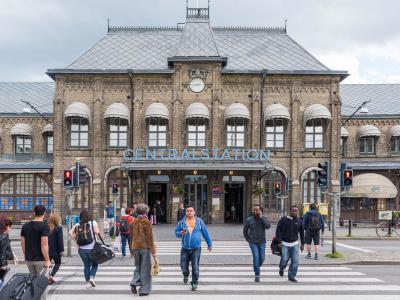
1) Gothenburg Central Station
The Gothenburg Central Station serves as the primary railway hub in Gothenburg, being the third largest of its kind in Sweden. Initially erected between 1856 and 1857 on the site of a former prison, the original structure featured a spacious entrance hall, two waiting areas, and several dining establishments. In 1923, a reconstruction and expansion project, led by architect Folke Zettervall, the official SJ architect at the time, was undertaken. Unfortunately, a fire on March 14, 1923, ravaged significant portions of the station. Subsequently, from 1928 to 1930, further enlargement occurred due to increased traffic demands. Later modifications included the construction of a new restaurant facing Drottningtorget.
In 1993, efforts were made to restore the Central Station, with additional renovations taking place between 2000 and 2003, resulting in the addition of the Central House extension. Presently, the interior design mirrors that of the 1923 model, featuring wooden pillars, a glass ceiling, and a limestone floor. Notably, in the 1940s, there was consideration to demolish the waiting hall; however, its preservation was deemed necessary due to its adornment with paintings by artist Filip Månsson. Despite the inability to salvage the original paintings, the decision was made to retain the hall.
During the 19th and early 20th centuries, approximately one million Swedish emigrants traversed through the station en route to the harbor, with their ultimate destination being America.
In 1993, efforts were made to restore the Central Station, with additional renovations taking place between 2000 and 2003, resulting in the addition of the Central House extension. Presently, the interior design mirrors that of the 1923 model, featuring wooden pillars, a glass ceiling, and a limestone floor. Notably, in the 1940s, there was consideration to demolish the waiting hall; however, its preservation was deemed necessary due to its adornment with paintings by artist Filip Månsson. Despite the inability to salvage the original paintings, the decision was made to retain the hall.
During the 19th and early 20th centuries, approximately one million Swedish emigrants traversed through the station en route to the harbor, with their ultimate destination being America.
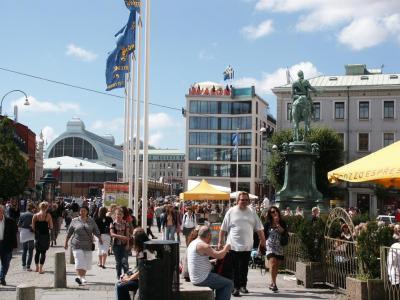
2) Kungsportsplatsen (King's Gate Square)
King’s Gate Square is one of Gothenburg’s most historic and recognizable public spaces. Built in 1852, it was named after the former King’s Gate, once part of the city’s defensive walls. During the 17th century, Gothenburg was protected by walls and moats, but as the city expanded, these fortifications became unnecessary and were torn down in the early 19th century.
Located at the northern end of Kingsgate Avenue, the square still recalls the city’s fortified past. It sits beside the historic moat, one of the few surviving reminders of the old defences. Today, visitors will find a lively urban scene, with residents and tourists passing through on their way across the city and vendors sometimes selling hand-crafted wicker baskets.
At the centre of the square stands the statue of King Charles IX, inaugurated in 1904. Charles IX defended Sweden against Danish invasions, championed the Protestant cause, and became king in 1604, marking the final chapter of the Reformation in Sweden. He also founded an earlier version of Gothenburg in 1603, though it was later destroyed by the Danes. His son, Gustav II Adolf, founded Gothenburg in its present location in 1621.
King’s Gate Square offers history, city life, and a useful starting point for exploring Kingsgate Avenue, the moat, and the surrounding centre of Gothenburg.
Located at the northern end of Kingsgate Avenue, the square still recalls the city’s fortified past. It sits beside the historic moat, one of the few surviving reminders of the old defences. Today, visitors will find a lively urban scene, with residents and tourists passing through on their way across the city and vendors sometimes selling hand-crafted wicker baskets.
At the centre of the square stands the statue of King Charles IX, inaugurated in 1904. Charles IX defended Sweden against Danish invasions, championed the Protestant cause, and became king in 1604, marking the final chapter of the Reformation in Sweden. He also founded an earlier version of Gothenburg in 1603, though it was later destroyed by the Danes. His son, Gustav II Adolf, founded Gothenburg in its present location in 1621.
King’s Gate Square offers history, city life, and a useful starting point for exploring Kingsgate Avenue, the moat, and the surrounding centre of Gothenburg.
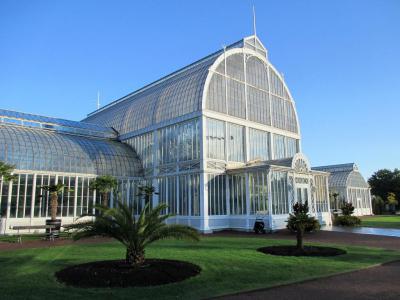
3) Garden Society of Gothenburg (must see)
The Garden Society of Gothenburg is one of Sweden’s best-preserved 19th-century parks and a peaceful green retreat in the heart of the city. Founded in 1842, it was created to promote gardening, botany, and public enjoyment of nature. Today, it remains one of Europe’s most admired historic parks, combining elegant landscaping with a relaxed atmosphere that appeals to both locals and visitors.
As soon as you enter the gardens through the gate close to Kingsgate Avenue, you will find Café Gröntugan sitting right at the entryway. From here, choose the central path heading straight into the heart of the park to find the historic Palm House. Dominating the central lawn, this magnificent glasshouse was built in 1878. Inspired by the great glass-and-iron architecture of the Victorian era, it shelters tropical and subtropical plants, including palm trees and other exotic species. For many visitors, stepping inside this towering, light-filled iron dome feels like entering a lush world far removed from the Nordic climate outside.
Exit the glasshouse and take a short stroll along the winding paths toward the northeastern sector of the park. Set within its own dedicated, manicured courtyard is the Northern European Rose Garden. It features one of the most celebrated rosariums in northern Europe, where more than 1,200 unique varieties of roses bloom in dense clusters, filling the air with colour and fragrance during the warmer months. Nearby options like the Rose Café—housed in one of the garden’s original 1874 buildings—provide an excellent, atmospheric place to pause.
For the final highlight, walk across the lawns to the far northwestern corner of the grounds near the canal to locate the Alfie Atkins Cultural Centre. This playful complex is a multi-storey indoor play world filled with paths, slides, a reading corner, and learning spaces inspired by the famous Swedish children’s book character. The centre serves as a joyful educational hub and stands right beside the park’s demonstration beehive.
As soon as you enter the gardens through the gate close to Kingsgate Avenue, you will find Café Gröntugan sitting right at the entryway. From here, choose the central path heading straight into the heart of the park to find the historic Palm House. Dominating the central lawn, this magnificent glasshouse was built in 1878. Inspired by the great glass-and-iron architecture of the Victorian era, it shelters tropical and subtropical plants, including palm trees and other exotic species. For many visitors, stepping inside this towering, light-filled iron dome feels like entering a lush world far removed from the Nordic climate outside.
Exit the glasshouse and take a short stroll along the winding paths toward the northeastern sector of the park. Set within its own dedicated, manicured courtyard is the Northern European Rose Garden. It features one of the most celebrated rosariums in northern Europe, where more than 1,200 unique varieties of roses bloom in dense clusters, filling the air with colour and fragrance during the warmer months. Nearby options like the Rose Café—housed in one of the garden’s original 1874 buildings—provide an excellent, atmospheric place to pause.
For the final highlight, walk across the lawns to the far northwestern corner of the grounds near the canal to locate the Alfie Atkins Cultural Centre. This playful complex is a multi-storey indoor play world filled with paths, slides, a reading corner, and learning spaces inspired by the famous Swedish children’s book character. The centre serves as a joyful educational hub and stands right beside the park’s demonstration beehive.
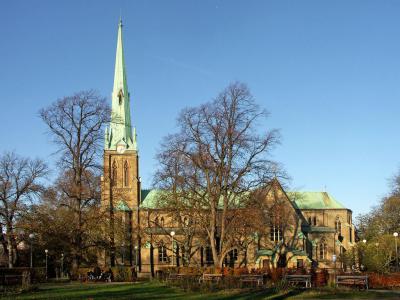
4) Hagakyrkan (Haga Church)
Haga Church (Hagakyrkan), situated in the heart of Gothenburg, is a remarkable example of Neo-Gothic architecture and a testament to the city's rich history. Built in 1859 and consecrated on the first Sunday of Advent, it serves not only as a place of worship but also as a significant symbol of the city's development, particularly in the popular Haga district.
Haga, known for its charming 19th-century ambiance with its picturesque houses, quaint shops, and cozy cafés, was established as Gothenburg's first suburb in the mid-17th century. Despite its early foundation, it took two centuries for the district to have its own church. The construction of Haga Church was made possible through a collaborative effort, with substantial donations from private individuals, municipal support, and a significant contribution from David Carnegie Jr., a Scottish/Swedish businessman.
Carnegie's involvement went beyond financial assistance; he played a crucial role in obtaining blueprints for the church's design from an English organization. Architect Adolf W. Edelsvärd, renowned for his work on Sweden's major railway stations, was tasked with realizing the vision of Haga Church. He adapted the English plans to suit local conditions and infused the church with a distinctive Neo-Gothic style, meticulously designing every aspect of the interior.
The architectural design of Haga Church is notable for its three-aisled basilica structure, cross-shaped ground plan, tri-sided choir room termination, and towering spire that dominates the city skyline. Built with a combination of traditional granite foundation and innovative materials such as cast iron columns, English slate roofing, sandstone frames from Scotland, and yellow bricks from Flensburg, the church showcases a blend of local and international craftsmanship. Behind the church, visitors will find a monument to Raoul Wallenberg, who saved thousands of Hungarian Jews during World War II.
The organ, initially installed in 1861 by Marcussen & Søn for 20,000 Swedish crowns, underwent renovations in 1911 and 1945–1951 by Magnusson organ builders. It was restored to its original condition from 2002 to 2004 by Åkerman & Lund.
Today, Haga Church remains a symbol of the enduring charm of Neo-Gothic architecture and holds a special place in Gothenburg's urban landscape, connecting the city's past with its present.
Haga, known for its charming 19th-century ambiance with its picturesque houses, quaint shops, and cozy cafés, was established as Gothenburg's first suburb in the mid-17th century. Despite its early foundation, it took two centuries for the district to have its own church. The construction of Haga Church was made possible through a collaborative effort, with substantial donations from private individuals, municipal support, and a significant contribution from David Carnegie Jr., a Scottish/Swedish businessman.
Carnegie's involvement went beyond financial assistance; he played a crucial role in obtaining blueprints for the church's design from an English organization. Architect Adolf W. Edelsvärd, renowned for his work on Sweden's major railway stations, was tasked with realizing the vision of Haga Church. He adapted the English plans to suit local conditions and infused the church with a distinctive Neo-Gothic style, meticulously designing every aspect of the interior.
The architectural design of Haga Church is notable for its three-aisled basilica structure, cross-shaped ground plan, tri-sided choir room termination, and towering spire that dominates the city skyline. Built with a combination of traditional granite foundation and innovative materials such as cast iron columns, English slate roofing, sandstone frames from Scotland, and yellow bricks from Flensburg, the church showcases a blend of local and international craftsmanship. Behind the church, visitors will find a monument to Raoul Wallenberg, who saved thousands of Hungarian Jews during World War II.
The organ, initially installed in 1861 by Marcussen & Søn for 20,000 Swedish crowns, underwent renovations in 1911 and 1945–1951 by Magnusson organ builders. It was restored to its original condition from 2002 to 2004 by Åkerman & Lund.
Today, Haga Church remains a symbol of the enduring charm of Neo-Gothic architecture and holds a special place in Gothenburg's urban landscape, connecting the city's past with its present.
5) Haga New Street and Haga District (must see)
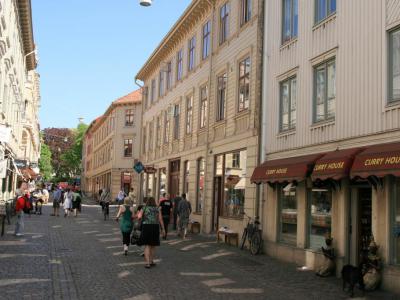
Haga is one of Gothenburg’s oldest and most beloved historic districts. Established in 1648 by Queen Kristina just outside the original city walls, it began as a working-class neighbourhood of craftsmen, labourers, and sailors. During the 20th century, much of the area faced demolition as part of urban renewal plans, but local opposition helped preserve its unique character. The historic buildings were restored in the 1980s, and today Haga is known for its cobbled, pedestrian-only streets and relaxed, village-like atmosphere.
At the heart of the district lies Haga New Street, the area’s main pedestrian shopping street. Lined with historic homes, independent boutiques, art galleries, craft shops, cafés, and restaurants, it is one of the most charming streets in Gothenburg. Visitors can browse for unique gifts, homewares, antiques, and sweet treats while enjoying a setting that feels pleasantly removed from the age of cars.
Haga New Street is especially famous for its cafés, and it doesn’t wait long to surprise you. Café Husaren can be found on your right just 50 metres from the intersection of Haga New Street and Sprängkullsgatan. Inside the café’s preserved 19th-century storefront is the neighbourhood’s most celebrated culinary landmark. The indoor counters feature mountains of enormous, plate-sized cinnamon buns known locally as hagabullar, serving as the ultimate oversized symbol of the unapologetic indulgence associated with the traditional Swedish fika coffee break.
Next up, rising directly from the street frontage, are the Governor’s Houses. They can be found just a short walk down the cobblestones where the side streets intersect. Looking closely at these unique buildings reveals a ground floor built entirely of solid brick, topped by two upper levels constructed of beautifully crafted wood. This hybrid style was developed because old city regulations strictly banned wooden structures from exceeding two storeys as a fire-safety measure.
The final highlight is the Haga Baths. The moment you enter this historic spa complex, which originally opened in 1876, look inside the main bathing pavilion to find the elegant swimming pool. The interior is decorated with stunning artistic murals and rich ceiling frescoes that immerse bathers in Art Nouveau luxury. The entire complex stands as a masterpiece of late 19th-century civic design. The baths are not located on Haga New Street, however. After admiring the Governor’s Houses, turn right onto the next intersecting side street and walk one short block to reach the parallel street. The building housing the baths is imposing and is easily identified by the flags displaying the word "Hagabadet.''
At the heart of the district lies Haga New Street, the area’s main pedestrian shopping street. Lined with historic homes, independent boutiques, art galleries, craft shops, cafés, and restaurants, it is one of the most charming streets in Gothenburg. Visitors can browse for unique gifts, homewares, antiques, and sweet treats while enjoying a setting that feels pleasantly removed from the age of cars.
Haga New Street is especially famous for its cafés, and it doesn’t wait long to surprise you. Café Husaren can be found on your right just 50 metres from the intersection of Haga New Street and Sprängkullsgatan. Inside the café’s preserved 19th-century storefront is the neighbourhood’s most celebrated culinary landmark. The indoor counters feature mountains of enormous, plate-sized cinnamon buns known locally as hagabullar, serving as the ultimate oversized symbol of the unapologetic indulgence associated with the traditional Swedish fika coffee break.
Next up, rising directly from the street frontage, are the Governor’s Houses. They can be found just a short walk down the cobblestones where the side streets intersect. Looking closely at these unique buildings reveals a ground floor built entirely of solid brick, topped by two upper levels constructed of beautifully crafted wood. This hybrid style was developed because old city regulations strictly banned wooden structures from exceeding two storeys as a fire-safety measure.
The final highlight is the Haga Baths. The moment you enter this historic spa complex, which originally opened in 1876, look inside the main bathing pavilion to find the elegant swimming pool. The interior is decorated with stunning artistic murals and rich ceiling frescoes that immerse bathers in Art Nouveau luxury. The entire complex stands as a masterpiece of late 19th-century civic design. The baths are not located on Haga New Street, however. After admiring the Governor’s Houses, turn right onto the next intersecting side street and walk one short block to reach the parallel street. The building housing the baths is imposing and is easily identified by the flags displaying the word "Hagabadet.''
6) Skansen Kronan (Crown Sconce)
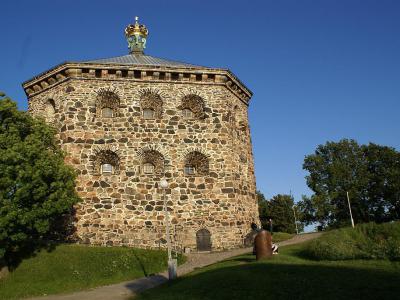
The Crown Sconce (Skansen Kronan) stands in the Haga district of Gothenburg. It, along with its counterpart Skansen Lejonet, was constructed to defend Gothenburg from potential Danish attacks, similar to the purpose of the nearby sea fort, New Älvsborg.
Gothenburg was established in 1621 and fortified with an impressive system of defenses. However, military strategists were concerned about two hills, Gullberg and Risåsberg, overlooking the city. To counter this vulnerability, forts were built atop both hills. Designed by Erik Dahlbergh, the Crown Sconce sits atop Risåsberg while Skansen Lejonet occupies Gullberg.
Construction on Crown Sconce began in 1687, officially completed in 1698 with 23 guns installed, though the roof wasn't finished until 1700. Its formidable walls, made of granite, gneiss, and diabase, measure 4-5 meters thick. Despite its readiness, the fortress never faced attack, and its cannons remained silent.
In the early 1900s, the decision was made to repurpose the fortress as a military museum, which opened in November 1904. The museum closed in September 2004, transferring its collections to the Museum of Gothenburg. The Crown Sconce received protected status as a listed building in 1935.
Originally outside the city walls, the Crown Sconce is now nestled within the urban fabric of Haga in Gothenburg's west-central area. Today, it's privately owned and serves as a venue for conferences and private events. Beyond its historical significance, the old fortress provides panoramic views of the city.
Gothenburg was established in 1621 and fortified with an impressive system of defenses. However, military strategists were concerned about two hills, Gullberg and Risåsberg, overlooking the city. To counter this vulnerability, forts were built atop both hills. Designed by Erik Dahlbergh, the Crown Sconce sits atop Risåsberg while Skansen Lejonet occupies Gullberg.
Construction on Crown Sconce began in 1687, officially completed in 1698 with 23 guns installed, though the roof wasn't finished until 1700. Its formidable walls, made of granite, gneiss, and diabase, measure 4-5 meters thick. Despite its readiness, the fortress never faced attack, and its cannons remained silent.
In the early 1900s, the decision was made to repurpose the fortress as a military museum, which opened in November 1904. The museum closed in September 2004, transferring its collections to the Museum of Gothenburg. The Crown Sconce received protected status as a listed building in 1935.
Originally outside the city walls, the Crown Sconce is now nestled within the urban fabric of Haga in Gothenburg's west-central area. Today, it's privately owned and serves as a venue for conferences and private events. Beyond its historical significance, the old fortress provides panoramic views of the city.
7) Feskekôrka (Fish Church)
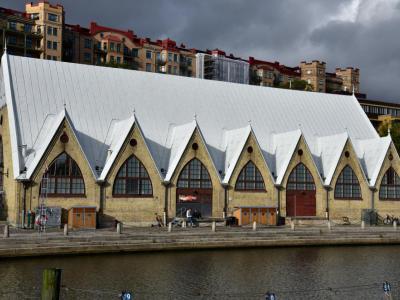
Don't be fooled by its name, Fish Church is not a church, but rather an indoor fish market housed in a building that looks like a Neo-Gothic church. Fish Church opened in 1874 to house the city's vibrant fish trade. Fishing is one of Gothenburg's oldest and most enduring trades. Visitors can buy fish that was swimming in the sea just a few hours earlier.
The market features fish, shellfish, and crustaceans. Vendors also serve ready-to-eat snacks and prepared dishes. In addition to the fish market, Fish Church houses a seafood restaurant. The restaurant has outdoor seating with a view of the Rosenlunds Canal.
Swedish architect Victor von Gegerfelt designed Fish Church. At the time, this building was considered futuristic. The interior's large hall doesn't have supporting pillars or walls as the roof's substructure provides the building's support. The building was originally called Fish Hall. However, residents quickly renamed it due to its resemblance to a church.
The market features fish, shellfish, and crustaceans. Vendors also serve ready-to-eat snacks and prepared dishes. In addition to the fish market, Fish Church houses a seafood restaurant. The restaurant has outdoor seating with a view of the Rosenlunds Canal.
Swedish architect Victor von Gegerfelt designed Fish Church. At the time, this building was considered futuristic. The interior's large hall doesn't have supporting pillars or walls as the roof's substructure provides the building's support. The building was originally called Fish Hall. However, residents quickly renamed it due to its resemblance to a church.
8) Magasinsgatan (Warehouse Street)
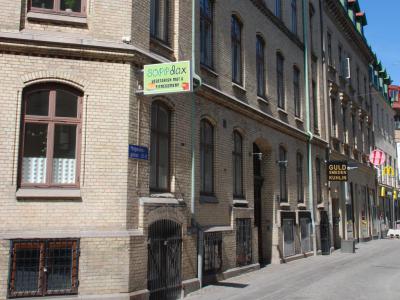
Warehouse Street is one of Gothenburg’s most fashionable and characterful streets and a popular shopping destination in the city centre. Known locally as Magasinsgatan, its name does not stem from a printed publication, but rather from the Swedish word magasin, referring to the grand crown granaries and government warehouses that once stood here. Located within the historic fortified city centre, the area was never a working-class residential slum. Instead, it served as an institutional military district housing royal artillery stables and merchant storage facilities before gradually transforming into one of Gothenburg’s trendiest districts.
Today, Warehouse Street is known for its relaxed atmosphere, attractive architecture, and concentration of local brands and independent businesses. Fashion-conscious visitors can browse boutiques such as Acne, Emma och Malena, and Velour, while stores like Grandpa and the second-hand favourite Pop Boutique offer everything from contemporary Scandinavian design to pre-loved treasures.
The street has become a favourite gathering place for both locals and tourists, particularly those interested in fashion, design, and food. Outdoor seating areas and pedestrian-friendly spaces create an inviting environment for strolling and people-watching. Warehouse Street is also renowned for its cafés, where skilled baristas serve some of the city’s finest coffee.
Food is another major attraction. Restaurants, cafés, and visiting food trucks offer a wide variety of international cuisines, ensuring there is always something new to try. As evening falls, the area takes on a livelier character, with bars and restaurants filling up with locals enjoying meals, music, and drinks outdoors.
Today, Warehouse Street is known for its relaxed atmosphere, attractive architecture, and concentration of local brands and independent businesses. Fashion-conscious visitors can browse boutiques such as Acne, Emma och Malena, and Velour, while stores like Grandpa and the second-hand favourite Pop Boutique offer everything from contemporary Scandinavian design to pre-loved treasures.
The street has become a favourite gathering place for both locals and tourists, particularly those interested in fashion, design, and food. Outdoor seating areas and pedestrian-friendly spaces create an inviting environment for strolling and people-watching. Warehouse Street is also renowned for its cafés, where skilled baristas serve some of the city’s finest coffee.
Food is another major attraction. Restaurants, cafés, and visiting food trucks offer a wide variety of international cuisines, ensuring there is always something new to try. As evening falls, the area takes on a livelier character, with bars and restaurants filling up with locals enjoying meals, music, and drinks outdoors.
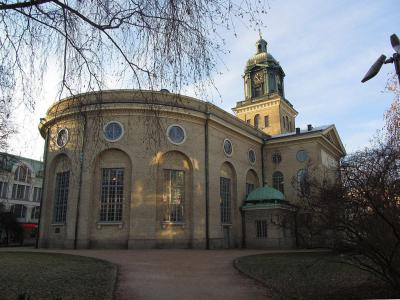
9) Gothenburg Cathedral
Gothenburg Cathedral is the principal church of the city and one of its most important historic landmarks. A church has stood on this site since the early 1600s, when a small rectory served as Gothenburg’s first church and one of the new city’s earliest buildings. Construction of the first cathedral was completed in 1633.
Fire has shaped much of the cathedral’s story. The building burned on April 15, 1721, though its original walls survived. A far more destructive fire on December 20, 1802, also damaged the cemetery and destroyed 179 houses, making a complete rebuild necessary. The present cathedral was completed in 1815, while the tower was finished in 1825 and given copper cladding.
The current building is Classical in style, with an impressive main portal supported by four Doric columns. Inside, visitors will find a bright, elegant interior combining Classical and Empire features, including white-and-gold fittings, Ionic pilasters, and an Empire-style pulpit decorated with gilded leaves. The altar includes 18th-century Baroque angel figures, while the grandfather clock, made in 1751, survived the 1802 fire. The organ dates from 1962 but retains a traditional white-and-gold façade.
For tourists, Gothenburg Cathedral offers history, architecture, quiet reflection, and regular concerts in the heart of the city centre.
Fire has shaped much of the cathedral’s story. The building burned on April 15, 1721, though its original walls survived. A far more destructive fire on December 20, 1802, also damaged the cemetery and destroyed 179 houses, making a complete rebuild necessary. The present cathedral was completed in 1815, while the tower was finished in 1825 and given copper cladding.
The current building is Classical in style, with an impressive main portal supported by four Doric columns. Inside, visitors will find a bright, elegant interior combining Classical and Empire features, including white-and-gold fittings, Ionic pilasters, and an Empire-style pulpit decorated with gilded leaves. The altar includes 18th-century Baroque angel figures, while the grandfather clock, made in 1751, survived the 1802 fire. The organ dates from 1962 but retains a traditional white-and-gold façade.
For tourists, Gothenburg Cathedral offers history, architecture, quiet reflection, and regular concerts in the heart of the city centre.
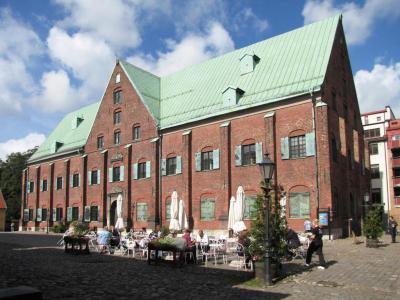
10) Kronhuset (Crown House)
The Crown House (Kronhuset) is a prominent redbrick structure in Västra Nordstaden, Gothenburg. Its construction, spanning from 1643 to 1654, aligns it as one of Gothenburg's oldest secular buildings, sharing this honor with the Torstenson Palace. Simon de la Vallée, a notable royal architect, is credited with its design, characterized by Dutch architectural influences.
Originally serving as an arsenal for the city garrison and a granary to safeguard food supplies during sieges, the Crown House transitioned from state ownership to that of Gothenburg Municipality in 1927. Its historical significance led to its listing as a protected building in 1968.
The architectural features of the Crown House are distinctive, showcasing Dutch influences, particularly evident in the Rikssal (national hall) on the ground floor. Notably, the absence of load-bearing pillars in the Rikssal is a testament to the innovative construction techniques employed during its era. Additionally, the Flemish tapestry, dating back to around 1690, adds to the building's cultural heritage.
Over the centuries, the Crown House underwent modifications, including window alterations and the installation of wooden emblems, possibly salvaged from the demolished Kungsporten, during the 18th and 19th centuries, respectively.
Adjacent to Crown House are the Crown House sheds (Kronhusbodarna), eighteenth-century structures painted in vibrant yellow hues, encircling the courtyard. Recognized as listed buildings since 1968, these sheds now accommodate various shops and tenants, offering pottery, glassware, leather products, interior furnishings, a watchmaker, and a cafe. Moreover, an annual arts and crafts market held in the courtyard has become a tradition since the early 2000s.
At the rear of the sheds lies the Crown Park (Kronhusparken), a small park established in 1930 and renovated in 1964 following its acquisition by the city. Covering approximately 2000 square meters, the park features a bust of the poet Johan Anders Wadman, sculpted by Johan Peter Molin, commemorating his residency in Gothenburg from 1814 to 1838.
Originally serving as an arsenal for the city garrison and a granary to safeguard food supplies during sieges, the Crown House transitioned from state ownership to that of Gothenburg Municipality in 1927. Its historical significance led to its listing as a protected building in 1968.
The architectural features of the Crown House are distinctive, showcasing Dutch influences, particularly evident in the Rikssal (national hall) on the ground floor. Notably, the absence of load-bearing pillars in the Rikssal is a testament to the innovative construction techniques employed during its era. Additionally, the Flemish tapestry, dating back to around 1690, adds to the building's cultural heritage.
Over the centuries, the Crown House underwent modifications, including window alterations and the installation of wooden emblems, possibly salvaged from the demolished Kungsporten, during the 18th and 19th centuries, respectively.
Adjacent to Crown House are the Crown House sheds (Kronhusbodarna), eighteenth-century structures painted in vibrant yellow hues, encircling the courtyard. Recognized as listed buildings since 1968, these sheds now accommodate various shops and tenants, offering pottery, glassware, leather products, interior furnishings, a watchmaker, and a cafe. Moreover, an annual arts and crafts market held in the courtyard has become a tradition since the early 2000s.
At the rear of the sheds lies the Crown Park (Kronhusparken), a small park established in 1930 and renovated in 1964 following its acquisition by the city. Covering approximately 2000 square meters, the park features a bust of the poet Johan Anders Wadman, sculpted by Johan Peter Molin, commemorating his residency in Gothenburg from 1814 to 1838.
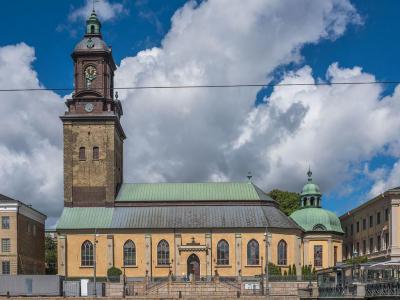
11) Tyska Kyrkan (German Church)
The German Church (Tyska Kyrkan) or Christian Church (Christinenkirche) is a significant landmark situated on Norra Hamngatan in the vibrant center of Gothenburg. It holds historical and architectural importance, serving the German Christinae parish without being confined to a specific territory, thus making a notable cultural and religious impact in the city. Named after Queen Christina, daughter of King Gustav II Adolf, it reflects the enduring historical connections and respect for the Swedish monarchy. Officially opened in 1748, it has become a crucial place of worship for both German and Dutch congregations residing in Gothenburg.
The church's main structure, constructed from yellow brick and adorned with yellow plaster, stands out with its welcoming appearance. Designed by Carl Fredrik Adelcrantz, a renowned architect from Stockholm known for his work on notable buildings like the Drottningholm Theater and parts of Stockholm's Castle, the church holds significance in Sweden's architectural heritage.
Noteworthy features include the tower, separate from the main building, and the chancel, meticulously designed to harmonize with the cityscape. Inside, the altarpiece by Louis Jean Desprez and the chancel windows by Reinhold Callmander add artistic and spiritual dimensions to the worship space.
A highlight of the church is its carillon, installed in 1961, boasting 42 bells, including one with a rich history dating back to 1687. This bell, along with others recast after a fire in 1746, contributes to the church's auditory landscape, echoing through Gothenburg's streets and calling worshippers to prayer. The involvement of figures like Governor Nils Assersson Mannersköld and Admiral Martin Anckarhjelm in the carillon's history underscores the community's enduring support for the church.
The church's main structure, constructed from yellow brick and adorned with yellow plaster, stands out with its welcoming appearance. Designed by Carl Fredrik Adelcrantz, a renowned architect from Stockholm known for his work on notable buildings like the Drottningholm Theater and parts of Stockholm's Castle, the church holds significance in Sweden's architectural heritage.
Noteworthy features include the tower, separate from the main building, and the chancel, meticulously designed to harmonize with the cityscape. Inside, the altarpiece by Louis Jean Desprez and the chancel windows by Reinhold Callmander add artistic and spiritual dimensions to the worship space.
A highlight of the church is its carillon, installed in 1961, boasting 42 bells, including one with a rich history dating back to 1687. This bell, along with others recast after a fire in 1746, contributes to the church's auditory landscape, echoing through Gothenburg's streets and calling worshippers to prayer. The involvement of figures like Governor Nils Assersson Mannersköld and Admiral Martin Anckarhjelm in the carillon's history underscores the community's enduring support for the church.
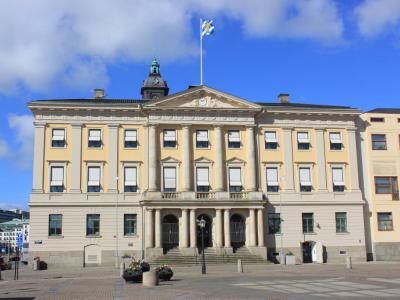
12) Gothenburg City Hall
Gothenburg City Hall stands as a complex situated at Gustaf Adolf's Square. It comprises an older segment, finalized in 1672 and crafted by Nicodemus Tessin, alongside a newer addition completed in 1936, designed by architect Gunnar Asplund.
The inception of a permanent stone town hall commenced in the mid-1660s, evidenced by foundation walls, possibly intended for a residence, on the site. Nicodemus Tessin, the Elder, was tasked with the design of the new edifice. After adjustments, the architectural blueprints were finalized by 1670. Construction was initiated in 1668 under the supervision of master mason L. Olofsson from Stockholm. By the summer of 1672, the section facing Stora Hamnkanalen was completed, with the entire structure subsequently plastered and "brushed."
As time progressed, the town hall proved inadequate in size, prompting discussions regarding expansion as early as 1885. However, it wasn't until October 22, 1936, that the scaffolding came down, revealing the sleek, functionalist extension, commonly referred to as the Asplund extension. Internally, it features a luminous town hall space with a glass facade overlooking the city. The extension is adorned with Eric Grate's relief series "The Four Winds" (1937–1941).
Historically, the town hall accommodated the former city council of Gothenburg, later transitioning to house the Gothenburg town hall court and portions of the Gothenburg district court. On February 15, 2010, the district court relocated to Rättscentrum Göteborg on Ullevigatan 15, leaving the building vacant until 2012 when it underwent renovation and transformation into Gothenburg City Hall. The reopening ceremony occurred on April 13, 2014, presided over by the municipal board chair, Anneli Hultén. Presently, it serves as the administrative hub for both municipal and city management.
Designated as a listed building on October 24, 1968, and again on October 25, 1982, Gothenburg City Hall is owned by the municipality of Gothenburg and overseen by Higab.
The inception of a permanent stone town hall commenced in the mid-1660s, evidenced by foundation walls, possibly intended for a residence, on the site. Nicodemus Tessin, the Elder, was tasked with the design of the new edifice. After adjustments, the architectural blueprints were finalized by 1670. Construction was initiated in 1668 under the supervision of master mason L. Olofsson from Stockholm. By the summer of 1672, the section facing Stora Hamnkanalen was completed, with the entire structure subsequently plastered and "brushed."
As time progressed, the town hall proved inadequate in size, prompting discussions regarding expansion as early as 1885. However, it wasn't until October 22, 1936, that the scaffolding came down, revealing the sleek, functionalist extension, commonly referred to as the Asplund extension. Internally, it features a luminous town hall space with a glass facade overlooking the city. The extension is adorned with Eric Grate's relief series "The Four Winds" (1937–1941).
Historically, the town hall accommodated the former city council of Gothenburg, later transitioning to house the Gothenburg town hall court and portions of the Gothenburg district court. On February 15, 2010, the district court relocated to Rättscentrum Göteborg on Ullevigatan 15, leaving the building vacant until 2012 when it underwent renovation and transformation into Gothenburg City Hall. The reopening ceremony occurred on April 13, 2014, presided over by the municipal board chair, Anneli Hultén. Presently, it serves as the administrative hub for both municipal and city management.
Designated as a listed building on October 24, 1968, and again on October 25, 1982, Gothenburg City Hall is owned by the municipality of Gothenburg and overseen by Higab.
