Custom Walk in Genoa, Italy by meave_aa9bbb created on 2026-07-08
Guide Location: Italy » Genoa
Guide Type: Custom Walk
# of Sights: 5
Tour Duration: 1 Hour(s)
Travel Distance: 2.3 Km or 1.4 Miles
Share Key: 2ZREE
Guide Type: Custom Walk
# of Sights: 5
Tour Duration: 1 Hour(s)
Travel Distance: 2.3 Km or 1.4 Miles
Share Key: 2ZREE
How It Works
Please retrieve this walk in the GPSmyCity app. Once done, the app will guide you from one tour stop to the next as if you had a personal tour guide. If you created the walk on this website or come to the page via a link, please follow the instructions below to retrieve the walk in the app.
Retrieve This Walk in App
Step 1. Download the app "GPSmyCity: Walks in 1K+ Cities" on Apple App Store or Google Play Store.



Step 2. In the GPSmyCity app, download(or launch) the guide "Genoa Map and Walking Tours".
Step 3. Tap the menu button located at upper right corner of the "Walks" screen and select "Retrieve custom walk". Enter the share key: 2ZREE
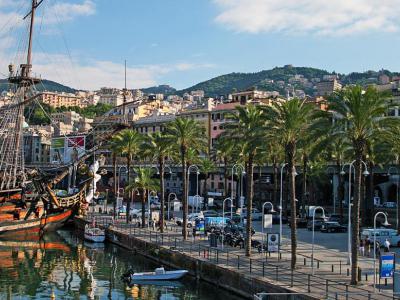
1) Porto Antico di Genova (Genoa Old Port) (must see)
Genoa’s Old Port is where the city casually reminds you that it once ruled the waves-and then invites you to hang around and enjoy the view. This is Genoa’s maritime past brought back to life with a distinctly modern attitude. In the harbor, old-style galleons share space with polished yachts and towering cruise ships, all floating together like different centuries decided to meet for an aperitivo.
There’s plenty to keep you busy without ever leaving the waterfront. You’ll find restaurants, museums, an aquarium, an auditorium, and even a botanical garden sealed inside a glass bubble. And yes, there’s also a giant octopus-shaped crane, which politely lifts visitors into the air for a better look-because in Genoa, even heavy machinery appears to enjoy a bit of showmanship. The Old Port works just as well for a slow sunset walk as it does for a late-evening stroll, when the lights reflect off the water, and the city feels momentarily hushed.
This transformation didn’t happen by accident. The redesign followed the vision of Renzo Piano, a world-renowned architect, who happens to be a Genoa native. He aimed to turn a neglected industrial harbor into a cultural and social hub-less rust and warehouses, more people, views, and public space. The result is a port that feels open and inviting, without pretending it ever stopped being a working harbor.
The official comeback moment came in 1992, during the International Exhibition known as Genoa ’92 – Colombo ’92. Held from May to August, the event marked 500 years since Christopher Columbus’s first voyage to the Americas and served as the grand debut of the restored Old Port. Its theme-“Christopher Columbus, the Ship, and the Sea”-could hardly have been more fitting. Since then, the Old Port has remained one of the clearest places to see how Genoa connects its past to the present, without losing its sea legs along the way.
There’s plenty to keep you busy without ever leaving the waterfront. You’ll find restaurants, museums, an aquarium, an auditorium, and even a botanical garden sealed inside a glass bubble. And yes, there’s also a giant octopus-shaped crane, which politely lifts visitors into the air for a better look-because in Genoa, even heavy machinery appears to enjoy a bit of showmanship. The Old Port works just as well for a slow sunset walk as it does for a late-evening stroll, when the lights reflect off the water, and the city feels momentarily hushed.
This transformation didn’t happen by accident. The redesign followed the vision of Renzo Piano, a world-renowned architect, who happens to be a Genoa native. He aimed to turn a neglected industrial harbor into a cultural and social hub-less rust and warehouses, more people, views, and public space. The result is a port that feels open and inviting, without pretending it ever stopped being a working harbor.
The official comeback moment came in 1992, during the International Exhibition known as Genoa ’92 – Colombo ’92. Held from May to August, the event marked 500 years since Christopher Columbus’s first voyage to the Americas and served as the grand debut of the restored Old Port. Its theme-“Christopher Columbus, the Ship, and the Sea”-could hardly have been more fitting. Since then, the Old Port has remained one of the clearest places to see how Genoa connects its past to the present, without losing its sea legs along the way.
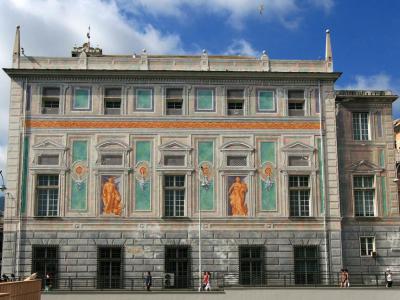
2) Palazzo San Giorgio (Palace of St. George)
Once upon a time in the 13th century, Byzantine Emperor Michael VIII Palaiologos felt seriously indebted to Genoa. The city backed him in his fight against the Latin Empire, and his gratitude came in a very specific form-recycled enemy property. In 1260, marble and building materials stripped from the Venetian embassy in Constantinople were shipped west and handed to Genoese noble Guglielmo Boccanegra, who promptly turned them into his waterfront dream palace. Indeed, nothing says “thank you” quite like the repurposed Venetian stone...
To underline the point, stone lions-symbols of Venice’s patron saint, Mark-were set into the façade. A bold move (possibly, too bold). Just two years later, Boccanegra was overthrown as Captain of the People and sent into exile, and his shiny palace took a sharp turn in function. It became a prison. History, as usual, has a sense of humor...
The most famous inmate was Marco Polo, who passed the time by dictating his travel stories to Rustichello of Pisa, a writer of chivalric romances. Somewhere behind these walls, tales of faraway Asia were shaped for European ears-a neat illustration that even a Genoese prison could produce a bestseller.
Still, the building had bigger ambitions than incarceration. Designed by Frate Oliverio, a Cistercian monk with architectural skills, it was also meant to serve the port authorities. By 1400, it entered a new phase as the headquarters of the Bank of San Giorgio, one of the earliest banking institutions in Italy and a financial powerhouse of its day. Commerce, it turns out, was always the long game.
Expansion followed. In 1570, an east wing appeared to house customs offices, archives, and vaults. In 1608, the façade received a full makeover with heroic frescoes, dominated by Saint George slaying the dragon. A clock tower was added above, keeping both time and watch over the harbor.
Look closely at the façade today, and you’ll spot statues of Genoese heavyweights: Christopher Columbus, Andrea Doria, Simone Boccanegra, and others who once steered the city’s fortunes. Now known as the Palace of St. George, the building still runs port business-having moved, over the centuries, from imperial favor to prison cells to financial nerve center, without ever leaving the waterfront.
To underline the point, stone lions-symbols of Venice’s patron saint, Mark-were set into the façade. A bold move (possibly, too bold). Just two years later, Boccanegra was overthrown as Captain of the People and sent into exile, and his shiny palace took a sharp turn in function. It became a prison. History, as usual, has a sense of humor...
The most famous inmate was Marco Polo, who passed the time by dictating his travel stories to Rustichello of Pisa, a writer of chivalric romances. Somewhere behind these walls, tales of faraway Asia were shaped for European ears-a neat illustration that even a Genoese prison could produce a bestseller.
Still, the building had bigger ambitions than incarceration. Designed by Frate Oliverio, a Cistercian monk with architectural skills, it was also meant to serve the port authorities. By 1400, it entered a new phase as the headquarters of the Bank of San Giorgio, one of the earliest banking institutions in Italy and a financial powerhouse of its day. Commerce, it turns out, was always the long game.
Expansion followed. In 1570, an east wing appeared to house customs offices, archives, and vaults. In 1608, the façade received a full makeover with heroic frescoes, dominated by Saint George slaying the dragon. A clock tower was added above, keeping both time and watch over the harbor.
Look closely at the façade today, and you’ll spot statues of Genoese heavyweights: Christopher Columbus, Andrea Doria, Simone Boccanegra, and others who once steered the city’s fortunes. Now known as the Palace of St. George, the building still runs port business-having moved, over the centuries, from imperial favor to prison cells to financial nerve center, without ever leaving the waterfront.
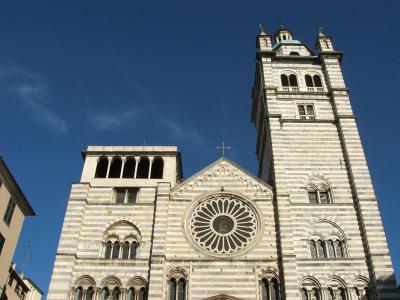
3) Cattedrale di San Lorenzo (Cathedral of St. Lawrence) (must see)
The Cathedral of San Lorenzo doesn’t just stand in Genoa-it dominates the conversation. Construction began around 1098, and by 1118, Pope Gelasius II was here to inaugurate it, which already tells you this wasn’t a modest parish project. Once the city walls went up, the area around San Lorenzo became Genoa’s beating heart. In medieval times, this wasn’t only a place to pray; it was where religion, politics, and public life all collided, usually quite loudly.
Disaster struck in 1296 when a fire tore through the building, but Genoa responded the way Genoa usually does: by rebuilding bigger and better. The striped façade you see today was finished in 1312, colonnades were restored, matron galleries added, and work continued well into the 17th century. Later still, between 1894 and 1900, restorers stepped in to tidy up the medieval sections and the dome, making sure San Lorenzo looked suitably timeless for the modern age.
Take a moment to face the main façade. Three Gothic portals open beneath recessed arches, with Christ and Saint Lawrence watching calmly from the lunette above the central door. A large rose window sits above, because understatement clearly didn’t make the cut. Two stone lions flank the steps, looking eternally unimpressed, while two towers of different heights rise above them-a reminder that architectural symmetry was never a strict requirement.
Inside, the cathedral follows a basilica plan with a transept and choir. Three naves stretch ahead, divided by marble columns and striped arches in alternating light and dark stone. Above them, smaller Romanesque arches in grey stone add another visual rhythm, creating an interior that feels both ordered and dramatic.
On the left, you’ll find the chapel dedicated to Saint John the Baptist, Genoa’s patron saint. Inside is an urn holding his relics, brought here at the end of the First Crusade-because Genoa never missed an opportunity to bring something significant home.
And then there’s the shell. On February 9, 1941, an English battleship fired an armor-piercing shell straight into the cathedral. It punched through a corner of the nave and… didn’t explode. The shell is still there today, quietly minding its own business. Keep an eye out-it’s one of the most unusual souvenirs of World War II.
Entry to the cathedral is free, though you’ll need a ticket for the treasure museum. Either way, San Lorenzo makes it very clear why it has been running the show in Genoa for centuries.
Disaster struck in 1296 when a fire tore through the building, but Genoa responded the way Genoa usually does: by rebuilding bigger and better. The striped façade you see today was finished in 1312, colonnades were restored, matron galleries added, and work continued well into the 17th century. Later still, between 1894 and 1900, restorers stepped in to tidy up the medieval sections and the dome, making sure San Lorenzo looked suitably timeless for the modern age.
Take a moment to face the main façade. Three Gothic portals open beneath recessed arches, with Christ and Saint Lawrence watching calmly from the lunette above the central door. A large rose window sits above, because understatement clearly didn’t make the cut. Two stone lions flank the steps, looking eternally unimpressed, while two towers of different heights rise above them-a reminder that architectural symmetry was never a strict requirement.
Inside, the cathedral follows a basilica plan with a transept and choir. Three naves stretch ahead, divided by marble columns and striped arches in alternating light and dark stone. Above them, smaller Romanesque arches in grey stone add another visual rhythm, creating an interior that feels both ordered and dramatic.
On the left, you’ll find the chapel dedicated to Saint John the Baptist, Genoa’s patron saint. Inside is an urn holding his relics, brought here at the end of the First Crusade-because Genoa never missed an opportunity to bring something significant home.
And then there’s the shell. On February 9, 1941, an English battleship fired an armor-piercing shell straight into the cathedral. It punched through a corner of the nave and… didn’t explode. The shell is still there today, quietly minding its own business. Keep an eye out-it’s one of the most unusual souvenirs of World War II.
Entry to the cathedral is free, though you’ll need a ticket for the treasure museum. Either way, San Lorenzo makes it very clear why it has been running the show in Genoa for centuries.
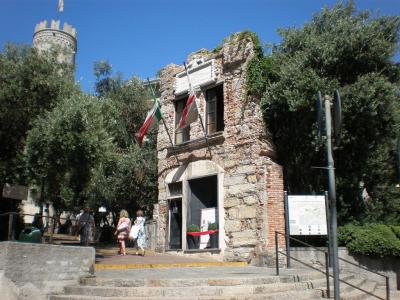
4) Casa della Famiglia Colombo (Columbus' House)
Just outside the old city walls near Porta Soprana and the cloister of Sant’Andrea, Columbus’ House stands on the site where the explorer is believed to have spent part of his childhood. The current two-story building is an 18th-century reconstruction, raised on the remains of a medieval home damaged in the 1684 bombardment of Genoa. Historical documents trace the Colombo family here between 1455 and 1470, with young Christopher living in the house from the age of four. The ground floor once housed a wool workshop run by his father, Domenico, featuring a kitchen space, a basin for water collection, and a basic latrine.
A wooden truss ceiling separates the lower level from the family quarters above, where two small rooms served for daily living. Though the house may have once risen to three stories, later additions were removed in the early 1900s during urban redevelopment, preserving the structure at its current height. A plaque on the front affirms the home’s significance as a place of origin. Since 1887, when the Municipality of Genoa acquired the site, Columbus’ House has functioned as a compact museum.
A wooden truss ceiling separates the lower level from the family quarters above, where two small rooms served for daily living. Though the house may have once risen to three stories, later additions were removed in the early 1900s during urban redevelopment, preserving the structure at its current height. A plaque on the front affirms the home’s significance as a place of origin. Since 1887, when the Municipality of Genoa acquired the site, Columbus’ House has functioned as a compact museum.

5) Via Giuseppe Garibaldi (Giuseppe Garibaldi Street) (must see)
Giuseppe Garibaldi Street is where Genoa is showing off-and doing it with historical justification. This was one of the famous “New Streets,” laid out in 1583 when Genoese aristocrats decided their medieval lanes no longer matched their wealth.
At first, it went by practical names like Strada Maggiore (or Major Street) and Strada Nuova (New Street) before confidence kicked in, and it earned the nickname Strada Aurea, the Golden Street. Only in 1882 did it take on the name Giuseppe Garibaldi in honor of the general and revolutionary who greatly contributed to the Unification of Italy. The street's measurements were precise, but the ambition was anything but modest: just under a 1,000 feet long, relatively narrow, and packed edge to edge with palaces.
By the late 16th and 17th centuries, Genoa had enough money to burn and no interest in hiding it. The city’s oligarchs pushed north, reshaping the urban map and imagining a city of grand palaces and elegant villas beyond the old medieval core. This street became their architectural calling card-a place where wealth, taste, and rivalry all competed for attention, façade by façade.
Names changed as fortunes rose, but the message stayed the same. Today, Garibaldi Street anchors the New Streets Museum complex, linking three high-end properties: the Doria Tursi Palace, now Genoa’s City Hall; the White Palace, home to major art collections; and the former Podestà’s Palace. Together, they read like a résumé written in stone.
Back in the days of the Republic, these palaces served a very practical purpose. Genoa kept official Rolli lists-ranked registers of noble homes approved to host visiting kings, princes, diplomats, and church authorities. The higher the guest, the grander the palace. Hospitality here was a civic duty, but also a competitive sport.
Today, you can time your visit with Rolli Days, held each spring and autumn, when normally closed palaces open their doors to the public. And if you’re wondering whether all this repetition ever becomes too much, Charles Dickens had an answer. Writing in Pictures from Italy, he confessed he couldn’t forget these “streets of palaces,” where one grand building follows another, again and again. Genoa, it seems, has always liked to leave a strong impression-and then add one more...
At first, it went by practical names like Strada Maggiore (or Major Street) and Strada Nuova (New Street) before confidence kicked in, and it earned the nickname Strada Aurea, the Golden Street. Only in 1882 did it take on the name Giuseppe Garibaldi in honor of the general and revolutionary who greatly contributed to the Unification of Italy. The street's measurements were precise, but the ambition was anything but modest: just under a 1,000 feet long, relatively narrow, and packed edge to edge with palaces.
By the late 16th and 17th centuries, Genoa had enough money to burn and no interest in hiding it. The city’s oligarchs pushed north, reshaping the urban map and imagining a city of grand palaces and elegant villas beyond the old medieval core. This street became their architectural calling card-a place where wealth, taste, and rivalry all competed for attention, façade by façade.
Names changed as fortunes rose, but the message stayed the same. Today, Garibaldi Street anchors the New Streets Museum complex, linking three high-end properties: the Doria Tursi Palace, now Genoa’s City Hall; the White Palace, home to major art collections; and the former Podestà’s Palace. Together, they read like a résumé written in stone.
Back in the days of the Republic, these palaces served a very practical purpose. Genoa kept official Rolli lists-ranked registers of noble homes approved to host visiting kings, princes, diplomats, and church authorities. The higher the guest, the grander the palace. Hospitality here was a civic duty, but also a competitive sport.
Today, you can time your visit with Rolli Days, held each spring and autumn, when normally closed palaces open their doors to the public. And if you’re wondering whether all this repetition ever becomes too much, Charles Dickens had an answer. Writing in Pictures from Italy, he confessed he couldn’t forget these “streets of palaces,” where one grand building follows another, again and again. Genoa, it seems, has always liked to leave a strong impression-and then add one more...
