Custom Walk in Antwerp, Belgium by glennysaj_46244 created on 2026-07-08
Guide Location: Belgium » Antwerp
Guide Type: Custom Walk
# of Sights: 15
Tour Duration: 5 Hour(s)
Travel Distance: 12.5 Km or 7.8 Miles
Share Key: J4LHC
Guide Type: Custom Walk
# of Sights: 15
Tour Duration: 5 Hour(s)
Travel Distance: 12.5 Km or 7.8 Miles
Share Key: J4LHC
How It Works
Please retrieve this walk in the GPSmyCity app. Once done, the app will guide you from one tour stop to the next as if you had a personal tour guide. If you created the walk on this website or come to the page via a link, please follow the instructions below to retrieve the walk in the app.
Retrieve This Walk in App
Step 1. Download the app "GPSmyCity: Walks in 1K+ Cities" on Apple App Store or Google Play Store.



Step 2. In the GPSmyCity app, download(or launch) the guide "Antwerp Map and Walking Tours".
Step 3. Tap the menu button located at upper right corner of the "Walks" screen and select "Retrieve custom walk". Enter the share key: J4LHC
1) Antwerpen-Centraal (Antwerp Central Station) (must see)
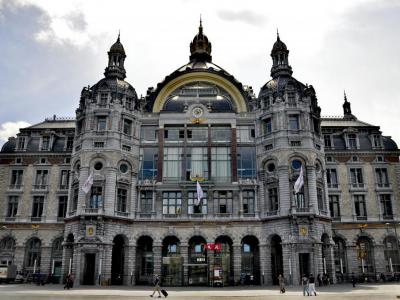
Antwerp Central Station stands as one of the most recognizable landmarks in Antwerp and one of the finest examples of railway architecture in Belgium. Constructed between 1895 and 1905, it replaced the earlier terminus of the Brussels–Mechelen–Antwerp railway as rail travel expanded across the country.
Designed by architect Louis Delacenserie, the original stone-clad structure with its steel platform covering reflects an eclectic mix of styles. As you enter the historic station building, you will find yourself in the monumental entrance hall. Look up to see the massive dome that rises 75 metres above the floor, constructed from over twenty different types of marble and stone. The hall's grand staircase was inspired by the Palais Garnier, with an intricate coat of arms and clock face integrated into the stone walls. This architectural ambition earned the station its nickname, the “railway cathedral,” and contributed to its ranking among the world’s most impressive railway stations.
Originally built as a terminus, the station eventually faced capacity limits. A major transformation between 1998 and 2007 reconfigured it into a through station, introducing a multi-level system with platforms arranged across several tiers. To see this modern engineering, stand near the center of the station and look down over the railings at the multi-level platform atrium. Here, the tracks are stacked on four distinct levels, allowing high-speed international services like the Thalys to pass through the city underground via massive concrete pillars and a network of escalators.
Inside, the main hall draws attention with its monumental staircase and central clock beneath the dome. Directly behind this stone hall is the Great Train Shed, designed by engineer Clément Van Bogaert. This iron and glass roof spans 185 metres in length and reaches a height of 44 metres, allowing natural light to flood the platforms.
Look for the delicate ironwork, along with subtle traces of history, such as the wave-like distortions in the roof caused by V-2 rocket damage during World War II. The layered structure allows visitors to observe both the historic upper levels and the modern infrastructure below.
Designed by architect Louis Delacenserie, the original stone-clad structure with its steel platform covering reflects an eclectic mix of styles. As you enter the historic station building, you will find yourself in the monumental entrance hall. Look up to see the massive dome that rises 75 metres above the floor, constructed from over twenty different types of marble and stone. The hall's grand staircase was inspired by the Palais Garnier, with an intricate coat of arms and clock face integrated into the stone walls. This architectural ambition earned the station its nickname, the “railway cathedral,” and contributed to its ranking among the world’s most impressive railway stations.
Originally built as a terminus, the station eventually faced capacity limits. A major transformation between 1998 and 2007 reconfigured it into a through station, introducing a multi-level system with platforms arranged across several tiers. To see this modern engineering, stand near the center of the station and look down over the railings at the multi-level platform atrium. Here, the tracks are stacked on four distinct levels, allowing high-speed international services like the Thalys to pass through the city underground via massive concrete pillars and a network of escalators.
Inside, the main hall draws attention with its monumental staircase and central clock beneath the dome. Directly behind this stone hall is the Great Train Shed, designed by engineer Clément Van Bogaert. This iron and glass roof spans 185 metres in length and reaches a height of 44 metres, allowing natural light to flood the platforms.
Look for the delicate ironwork, along with subtle traces of history, such as the wave-like distortions in the roof caused by V-2 rocket damage during World War II. The layered structure allows visitors to observe both the historic upper levels and the modern infrastructure below.
2) Antwerp Zoo (must see)
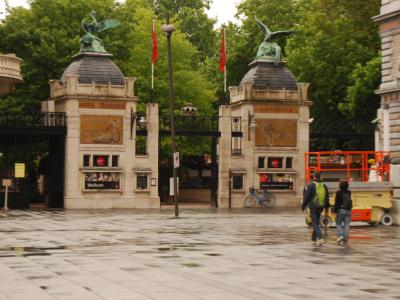
Established in 1843, the Antwerp Zoo is one of the oldest zoos in the world and is home to the Centre for Research and Conservation (CRC) along with the many animals and their various exhibits. Open all seven days of the week, the Zoo is located right next to Antwerp Centraal Railway Station at the Astrid Square.
The Zoo that started off in a small area of about 4 acres occupies over 26 acres of land today and is home to almost 950 different species of animals. From penguins to sea lions, from zebras to macaws and toucans and from commonly occurring apes to the near threatened okapis, the Zoo has them all. For some period, the Zoo also housed dolphins but the infrastructure demands could not be accommodated by a Zoo that was right in the center of the city.
From its inception, the Zoo has promoted wildlife preservation and through its recreational and educational exhibits pitches the importance of conservation to its 1.5 million visitors every year. The Zoo participates in the European Endangered Species Programme and has helped in the breeding of okapis, peafowls, tamarins and otters to name a few.
The Antwerp Zoo deserves at least half a day’s attention and once you are there, we are sure you will stay for more. But do not forget to pick up the schedule of the feeding times for these natural wonders at the entrance to see them interact with the Zoo staff.
The Zoo that started off in a small area of about 4 acres occupies over 26 acres of land today and is home to almost 950 different species of animals. From penguins to sea lions, from zebras to macaws and toucans and from commonly occurring apes to the near threatened okapis, the Zoo has them all. For some period, the Zoo also housed dolphins but the infrastructure demands could not be accommodated by a Zoo that was right in the center of the city.
From its inception, the Zoo has promoted wildlife preservation and through its recreational and educational exhibits pitches the importance of conservation to its 1.5 million visitors every year. The Zoo participates in the European Endangered Species Programme and has helped in the breeding of okapis, peafowls, tamarins and otters to name a few.
The Antwerp Zoo deserves at least half a day’s attention and once you are there, we are sure you will stay for more. But do not forget to pick up the schedule of the feeding times for these natural wonders at the entrance to see them interact with the Zoo staff.
3) Weekend Markets
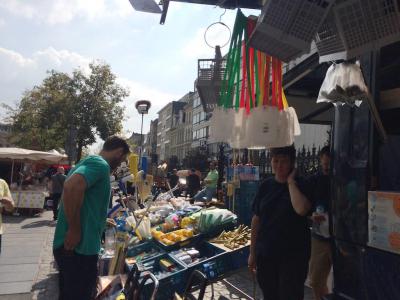
Antwerp, a city renowned for its rich commercial heritage dating back to the 16th century, continues to thrive as a triumphant shopping city. Among its vibrant array of markets, the Weekend Markets at Theater Square (Theaterplein) stands out as a prime destination for both locals and tourists. These markets are held in front of the City Theater (Stadsschouwburg), offering a diverse shopping experience that includes food, household goods, bicycles, antiques, and clothing. Sundays are particularly bustling, with an increase in vendors compared to Saturdays.
A special highlight of these weekend festivities is the International Exotic Market, which operates every Saturday from 8 am to 4 pm This market is a culinary paradise, drawing crowds eager to explore its vast selection of local and exotic offerings. Visitors can indulge in an array of international delicacies such as Moroccan pancakes, freshly shucked French oysters accompanied by champagne or white wine, Mexican churros, Vietnamese egg rolls, and an assortment of cheeses from the Netherlands, France, and Greece. The market also features Spanish and Italian hams, French dry-cured sausages, North African herbs and spices, and much more.
In addition to food, the market offers fresh pasta, bread, seasonal fruits and vegetables, and products from a local goat farm. Artisanal vendors sell mustards, jellies, jams, and both fresh and dried flowers, including colorful bouquets that maintain their beauty long after purchase.
The Weekend Markets not only showcase Antwerp’s continuing tradition as a shopping haven but also enrich it with a unique blend of local charm and global flavors. A visit to these markets is an essential Antwerp experience, providing a delightful taste of the world in one of the city’s most historic and lively squares.
A special highlight of these weekend festivities is the International Exotic Market, which operates every Saturday from 8 am to 4 pm This market is a culinary paradise, drawing crowds eager to explore its vast selection of local and exotic offerings. Visitors can indulge in an array of international delicacies such as Moroccan pancakes, freshly shucked French oysters accompanied by champagne or white wine, Mexican churros, Vietnamese egg rolls, and an assortment of cheeses from the Netherlands, France, and Greece. The market also features Spanish and Italian hams, French dry-cured sausages, North African herbs and spices, and much more.
In addition to food, the market offers fresh pasta, bread, seasonal fruits and vegetables, and products from a local goat farm. Artisanal vendors sell mustards, jellies, jams, and both fresh and dried flowers, including colorful bouquets that maintain their beauty long after purchase.
The Weekend Markets not only showcase Antwerp’s continuing tradition as a shopping haven but also enrich it with a unique blend of local charm and global flavors. A visit to these markets is an essential Antwerp experience, providing a delightful taste of the world in one of the city’s most historic and lively squares.
4) Rubenshuis (Rubens House) (must see)
The Rubens House is closely tied to the life and work of Peter Paul Rubens—a leading Baroque artist of the early 17th century known for his Counter-Reformation paintings, as well as his roles as a diplomat and scholar.
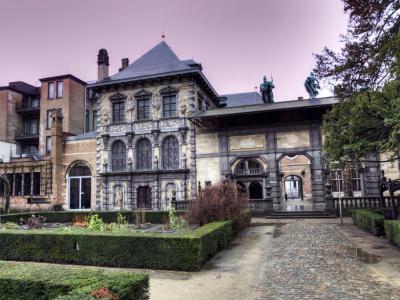
Purchased by Rubens in 1610 after his return from Italy, the house was transformed into a grand residence and studio that he designed himself. Drawing on Italian Renaissance and Greco-Roman influences, he added a gallery, a triumphal arch-style porch, and a large studio.
Within these walls, Rubens produced many of his major works while running a prolific workshop that attracted notable pupils and collaborators, including Anthony van Dyck. While Jacob Jordaens was a contemporary and frequent collaborator, he was never technically a pupil in Rubens's workshop. After Rubens’ death in 1640, the house passed through various owners until 1937, when it was designated a monument and meticulously restored by the city of Antwerp to its 17th-century glory.
Today, visitors can explore furnished rooms that evoke 17th-century domestic life, along with studio spaces where large-scale paintings were created. The collection includes works such as Saint Clare of Assisi, The Annunciation, and Adam and Eve, alongside pieces by Rubens’ contemporaries. The house also displays decorative objects from the period.
Outside, the Renaissance garden—redesigned in 1993 and inspired by Rubens’ own paintings—provides a quiet, carefully composed space. Notably, the garden underwent a second major redesign in 2024 to feature year-round color and over 17,000 new plants.
In 2024, the museum entered a new chapter with the opening of the Rubens Experience at Hopland 13. This modern, light-filled building serves as the new grand entrance and features an immersive multimedia center. Using 360-degree projections and interactive displays, it brings Rubens’ world to life, detailing his international travels and his immense artistic output. The new wing also houses a vast research library and a rooftop terrace with views of the historic courtyard.
Editor's note: While the new Rubens Experience wing and the redesigned garden are currently open to the public, the original 17th-century Rubens House residence and studio remain closed for extensive renovations until 2030.
Purchased by Rubens in 1610 after his return from Italy, the house was transformed into a grand residence and studio that he designed himself. Drawing on Italian Renaissance and Greco-Roman influences, he added a gallery, a triumphal arch-style porch, and a large studio.
Within these walls, Rubens produced many of his major works while running a prolific workshop that attracted notable pupils and collaborators, including Anthony van Dyck. While Jacob Jordaens was a contemporary and frequent collaborator, he was never technically a pupil in Rubens's workshop. After Rubens’ death in 1640, the house passed through various owners until 1937, when it was designated a monument and meticulously restored by the city of Antwerp to its 17th-century glory.
Today, visitors can explore furnished rooms that evoke 17th-century domestic life, along with studio spaces where large-scale paintings were created. The collection includes works such as Saint Clare of Assisi, The Annunciation, and Adam and Eve, alongside pieces by Rubens’ contemporaries. The house also displays decorative objects from the period.
Outside, the Renaissance garden—redesigned in 1993 and inspired by Rubens’ own paintings—provides a quiet, carefully composed space. Notably, the garden underwent a second major redesign in 2024 to feature year-round color and over 17,000 new plants.
In 2024, the museum entered a new chapter with the opening of the Rubens Experience at Hopland 13. This modern, light-filled building serves as the new grand entrance and features an immersive multimedia center. Using 360-degree projections and interactive displays, it brings Rubens’ world to life, detailing his international travels and his immense artistic output. The new wing also houses a vast research library and a rooftop terrace with views of the historic courtyard.
Editor's note: While the new Rubens Experience wing and the redesigned garden are currently open to the public, the original 17th-century Rubens House residence and studio remain closed for extensive renovations until 2030.
5) Groenplaats (Green Square)
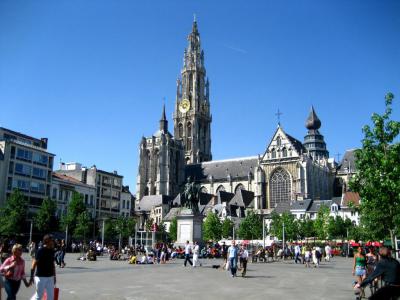
Green Square is one of the central open spaces in Antwerp, located just in front of the Cathedral of Our Lady, whose elegant façade overlooks the square from the north. Despite its lively present-day character, the square has a more somber past: from the Middle Ages until the late 18th century, this area served as a cemetery attached to the cathedral. During the Austrian period, Emperor Joseph II abolished burial grounds within city walls, and the site was cleared and converted into a public square. Although its function changed, the historic name endured, even if the space today is not particularly green.
At the centre of the square stands the statue of Peter Paul Rubens, installed in 1843, replacing an earlier crucifix that once marked the cemetery. The monument reflects Antwerp’s strong artistic heritage, linking the square to the nearby cathedral, where several of Rubens’ works are displayed. Surrounding buildings now house cafés, restaurants, and hotels, contributing to the square’s social character.
Today, Green Square is especially popular during warmer months and weekends, when locals and visitors gather to relax on terraces or watch the rhythm of city life unfold. Its open layout, framed by historic architecture and anchored by the cathedral, makes it both a convenient meeting place and a comfortable setting to pause while exploring the city.
At the centre of the square stands the statue of Peter Paul Rubens, installed in 1843, replacing an earlier crucifix that once marked the cemetery. The monument reflects Antwerp’s strong artistic heritage, linking the square to the nearby cathedral, where several of Rubens’ works are displayed. Surrounding buildings now house cafés, restaurants, and hotels, contributing to the square’s social character.
Today, Green Square is especially popular during warmer months and weekends, when locals and visitors gather to relax on terraces or watch the rhythm of city life unfold. Its open layout, framed by historic architecture and anchored by the cathedral, makes it both a convenient meeting place and a comfortable setting to pause while exploring the city.
6) Vlaeykensgang Historic Alley
Hidden behind an almost unnoticeable wooden gate in the historic centre of Antwerp, Vlaeykensgang is one of the city’s most evocative survivals from the late 16th century. Established between 1590 and 1591, this narrow alley forms part of a network of small passages running parallel to nearby squares.
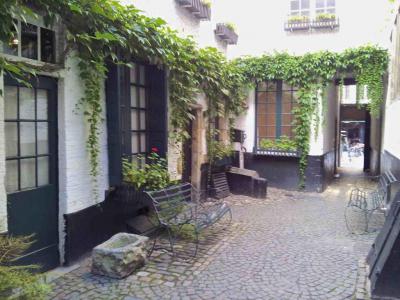
Entered through a modest doorway that is easy to overlook, it opens into a compact cluster of cobbled paths, courtyards, and modest houses once inhabited by shoemakers and craftsmen. Living conditions were far from romantic—crowded, unsanitary, and often shared by large families—yet the alley is also said to have served as a practical shortcut for cathedral bell-ringers.
Over time, Vlaeykensgang survived while much of the surrounding city modernised around it. Though threatened with demolition in the 1960s, it was ultimately preserved and carefully restored, remaining one of the last examples of a traditional medieval alley, in Antwerp.
Today, walking through Vlaeykensgang feels like stepping back into the 16th century. Ivy-covered brick walls, uneven cobblestones, and preserved peasant houses create a quiet, enclosed atmosphere. Now home to private residences, small cultural spaces, antique shops, and a few refined restaurants, the alley has transformed from a once-impoverished quarter into an unexpectedly calm and artistic refuge within the city.
Entered through a modest doorway that is easy to overlook, it opens into a compact cluster of cobbled paths, courtyards, and modest houses once inhabited by shoemakers and craftsmen. Living conditions were far from romantic—crowded, unsanitary, and often shared by large families—yet the alley is also said to have served as a practical shortcut for cathedral bell-ringers.
Over time, Vlaeykensgang survived while much of the surrounding city modernised around it. Though threatened with demolition in the 1960s, it was ultimately preserved and carefully restored, remaining one of the last examples of a traditional medieval alley, in Antwerp.
Today, walking through Vlaeykensgang feels like stepping back into the 16th century. Ivy-covered brick walls, uneven cobblestones, and preserved peasant houses create a quiet, enclosed atmosphere. Now home to private residences, small cultural spaces, antique shops, and a few refined restaurants, the alley has transformed from a once-impoverished quarter into an unexpectedly calm and artistic refuge within the city.
7) Cathedral of Our Lady (must see)
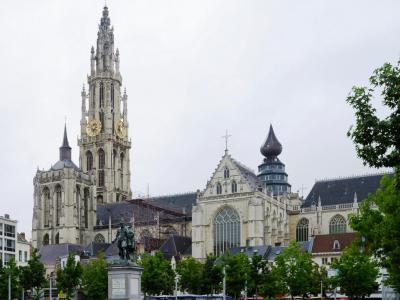
The Cathedral of Our Lady stands as the most prominent landmark in Antwerp, overlooking the city since the 14th century and continuing to dominate its skyline with a 123-metre Gothic tower—the tallest church tower in the Benelux region.
Construction began in 1352 on the site of earlier religious buildings, including a small chapel dating back to the early 10th century and a later Romanesque church. Although the cathedral took more than a century to complete and was originally planned with two towers, only the north tower was finished, giving the structure its distinctive asymmetrical profile. Considered one of the largest and most impressive Gothic churches of its time, the cathedral has endured a turbulent history marked by fires, raids, and iconoclastic destruction, yet it has been repeatedly restored and remains a defining presence in the city.
Inside, the cathedral opens into a vast, light-filled space shaped by soaring columns, wide aisles, and intricate Gothic detailing, with Baroque elements enriching parts of the interior. One of its main attractions is its exceptional collection of artworks, most notably masterpieces by Peter Paul Rubens. In the North Transept, located to the left as you face the main altar, stands The Raising of the Cross. Painted in 1610, this triptych is known for its Baroque energy; notice the diagonal composition of Christ’s body and the strained muscles of the men struggling to lift the cross.
Directly opposite, in the South Transept, is its companion piece, The Descent from the Cross. Here, look for the pale, luminescent body of Christ being lowered, with the figure in red holding him representing St. John.
At the far eastern end of the nave, positioned directly above the High Altar, is The Assumption of the Virgin Mary. This 1626 altarpiece is the only Rubens masterpiece in the cathedral that still sits in the exact location for which it was originally painted; observe the swirling movement of the angels, designed to draw the eye toward the light of the choir windows.
Construction began in 1352 on the site of earlier religious buildings, including a small chapel dating back to the early 10th century and a later Romanesque church. Although the cathedral took more than a century to complete and was originally planned with two towers, only the north tower was finished, giving the structure its distinctive asymmetrical profile. Considered one of the largest and most impressive Gothic churches of its time, the cathedral has endured a turbulent history marked by fires, raids, and iconoclastic destruction, yet it has been repeatedly restored and remains a defining presence in the city.
Inside, the cathedral opens into a vast, light-filled space shaped by soaring columns, wide aisles, and intricate Gothic detailing, with Baroque elements enriching parts of the interior. One of its main attractions is its exceptional collection of artworks, most notably masterpieces by Peter Paul Rubens. In the North Transept, located to the left as you face the main altar, stands The Raising of the Cross. Painted in 1610, this triptych is known for its Baroque energy; notice the diagonal composition of Christ’s body and the strained muscles of the men struggling to lift the cross.
Directly opposite, in the South Transept, is its companion piece, The Descent from the Cross. Here, look for the pale, luminescent body of Christ being lowered, with the figure in red holding him representing St. John.
At the far eastern end of the nave, positioned directly above the High Altar, is The Assumption of the Virgin Mary. This 1626 altarpiece is the only Rubens masterpiece in the cathedral that still sits in the exact location for which it was originally painted; observe the swirling movement of the angels, designed to draw the eye toward the light of the choir windows.
8) Church of Carolus Borromeus
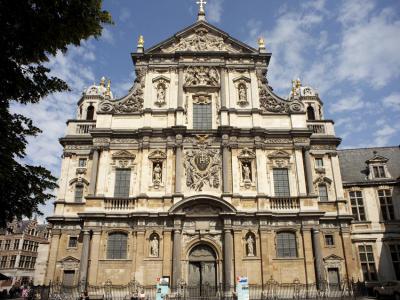
The Spanish invasion of 1584 brought in a wave of forced Catholicism to Antwerp. Protestants either left the city or were converted to Catholicism. The Jesuits decided to counter this reformation and François d'Aguilon, a Jesuit mathematician began work on a Baroque styled church. Similar to the Chiesa del Gesù in Rome, this new church in Antwerp was completed in 1621 and was called the Ignatius Church. Much of the interiors including many ceiling paintings were completed by the local artist, P.P.Rubens. A unique feature of the Church is the mechanism to change the painting at the altar.
The Fire of 1718 destroyed most of Rubens’ work but the mechanism to change paintings survives to this day. The structure became a Parish Church in 1803 when it was given its current name. Today, it stands neatly tucked away behind some modern buildings at the Hendrik Conscience Square. Several protests during the 1960s and 70s have made this area a pedestrian zone which gives the area its instantly appreciated serenity. During your walk to the Church you might come across the soothing notes of violin being played to make your visit very special. We request you to please check the open hours of the Church before visiting. The Artist’s mass on Sundays and other holidays should not be missed.
The Fire of 1718 destroyed most of Rubens’ work but the mechanism to change paintings survives to this day. The structure became a Parish Church in 1803 when it was given its current name. Today, it stands neatly tucked away behind some modern buildings at the Hendrik Conscience Square. Several protests during the 1960s and 70s have made this area a pedestrian zone which gives the area its instantly appreciated serenity. During your walk to the Church you might come across the soothing notes of violin being played to make your visit very special. We request you to please check the open hours of the Church before visiting. The Artist’s mass on Sundays and other holidays should not be missed.
9) Grote Markt (Great Market Square) (must see)
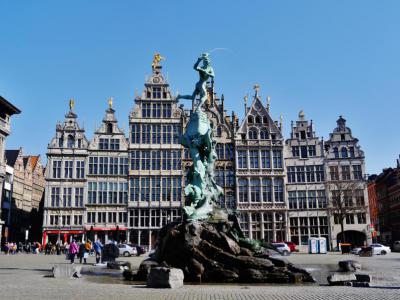
Great Market Square forms the historic and visual centre of Antwerp. Its origins date back to the Middle Ages, when the area developed as the city’s main marketplace. Merchants once gathered here to exchange goods arriving through the nearby Scheldt River, while guilds—representing trades such as brewing, baking, and shipping—established their presence around the square.
Dominating the western side of the square is the Antwerp City Hall, completed in 1565. Its façade blends Flemish and Italian Renaissance elements. Examine the central section of the façade, which is heavily decorated with flags; at the very top of this section, look for the statue of the Virgin Mary, the city's patron saint, which stands between figures representing Justice and Prudence.
Opposite it stands a row of richly decorated guild houses and former patrician residences, many of which were rebuilt in the late 19th century in historic styles. To see the symbols of the city's old trade power, look for the gilded statues atop the stepped gables. The tallest of these, House No. 7, is the House of the Great Crossbowmen, identifiable by the gilded figure of Saint George and the Dragon crowning its peak. These buildings’ stepped gables, gilded details, and sculptural ornamentation make the square particularly appealing for those interested in urban architecture.
At the centre stands the Brabo Fountain, depicting the legendary Roman soldier who, according to local lore, defeated the giant Druon Antigoon and threw his severed hand into the river. Notice that the bronze hero is positioned at the very top, in the act of throwing the hand. A unique detail to observe is the base of the monument: it was intentionally designed without a water basin, so the water splashes directly onto the square's paving stones.
Cafés and restaurants line its edges, making it a natural place to pause—whether to sit on an open terrace with a glass of Belgian beer, enjoy a traditional meal, or simply take in the surroundings. Nearby, the Cathedral of Our Lady rises above the rooftops, anchoring the skyline. The space is often animated by seasonal events, casual strolls, and the steady rhythm of daily life.
Dominating the western side of the square is the Antwerp City Hall, completed in 1565. Its façade blends Flemish and Italian Renaissance elements. Examine the central section of the façade, which is heavily decorated with flags; at the very top of this section, look for the statue of the Virgin Mary, the city's patron saint, which stands between figures representing Justice and Prudence.
Opposite it stands a row of richly decorated guild houses and former patrician residences, many of which were rebuilt in the late 19th century in historic styles. To see the symbols of the city's old trade power, look for the gilded statues atop the stepped gables. The tallest of these, House No. 7, is the House of the Great Crossbowmen, identifiable by the gilded figure of Saint George and the Dragon crowning its peak. These buildings’ stepped gables, gilded details, and sculptural ornamentation make the square particularly appealing for those interested in urban architecture.
At the centre stands the Brabo Fountain, depicting the legendary Roman soldier who, according to local lore, defeated the giant Druon Antigoon and threw his severed hand into the river. Notice that the bronze hero is positioned at the very top, in the act of throwing the hand. A unique detail to observe is the base of the monument: it was intentionally designed without a water basin, so the water splashes directly onto the square's paving stones.
Cafés and restaurants line its edges, making it a natural place to pause—whether to sit on an open terrace with a glass of Belgian beer, enjoy a traditional meal, or simply take in the surroundings. Nearby, the Cathedral of Our Lady rises above the rooftops, anchoring the skyline. The space is often animated by seasonal events, casual strolls, and the steady rhythm of daily life.
10) Het Steen (Steen Castle)
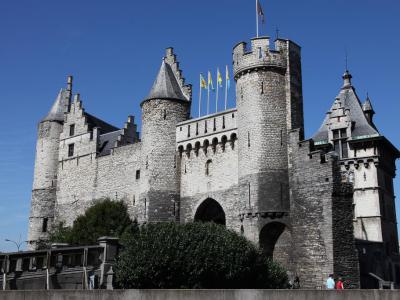
Steen Castle is one of the oldest surviving buildings in the city and a key landmark along the Scheldt River. Its origins date back to the early 13th century, when it was constructed between 1200 and 1225 as part of Antwerp’s first stone fortifications, replacing earlier wooden defenses. Originally serving as a gateway to a larger castle complex belonging to the Dukes of Brabant—now largely lost—it controlled access to the Scheldt, a vital economic and strategic waterway.
Over time, the castle underwent several transformations. In the early 16th century, under Emperor Charles V, it was expanded. While it retained its medieval character, with thick stone walls and a compact, fortress-like form, its function evolved from a defensive stronghold to a prison, operating as such from 1303 to 1827. It later housed administrative institutions, including the Aldermen’s House and court of justice.
Much of the original fortress was demolished in the 19th century to allow for urban development, leaving only part of the structure visible today. The building went on to serve as a museum, first focused on shipping and later on archaeology.
Visitors will also notice cultural details around the entrance, including a bas-relief of Semini, a figure associated with fertility, and the nearby statue of Lange Wapper, a folkloric giant. Today, the castle functions as a visitor centre, offering insight into Antwerp’s past and its long-standing connection to the river.
Over time, the castle underwent several transformations. In the early 16th century, under Emperor Charles V, it was expanded. While it retained its medieval character, with thick stone walls and a compact, fortress-like form, its function evolved from a defensive stronghold to a prison, operating as such from 1303 to 1827. It later housed administrative institutions, including the Aldermen’s House and court of justice.
Much of the original fortress was demolished in the 19th century to allow for urban development, leaving only part of the structure visible today. The building went on to serve as a museum, first focused on shipping and later on archaeology.
Visitors will also notice cultural details around the entrance, including a bas-relief of Semini, a figure associated with fertility, and the nearby statue of Lange Wapper, a folkloric giant. Today, the castle functions as a visitor centre, offering insight into Antwerp’s past and its long-standing connection to the river.
11) Saint Anna Tunnel
The Saint Anna Tunnel is one of Antwerp’s most distinctive pieces of infrastructure, linking the historic city centre with the Left Bank beneath the Scheldt River, which bisects the city. Constructed in 1931 and opened in 1933, it was built as an alternative to a bridge that would have disrupted the heavy ship traffic essential to Antwerp’s port. Designed for pedestrians and cyclists, the tunnel extends 572 meters and reaches a depth of over 31 meters below the river’s surface.
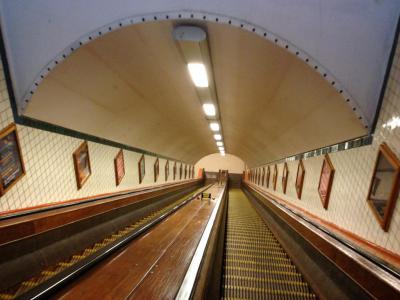
Built in an Art Deco style, the tunnel is especially known for its original wooden escalators, which remain in operation today. These long, steep escalators descend deep below ground, offering a rare and well-preserved example of early 20th-century engineering. Their warm tones and steady motion create a distinctive first impression as you enter the tunnel.
Inside, the passage is lined with ceramic tiles and follows a gently curving route beneath the river. The space is functional yet atmospheric, occasionally interrupted by historical photographs and displays explaining the tunnel’s construction and role in the city’s development. Although it suffered damage during World War II, it has since been carefully restored and continues to serve as a vital route for daily commuters.
Emerging on the Left Bank, visitors are rewarded with one of the most open views of Antwerp’s skyline, including the tower of the Cathedral of Our Lady rising above the city.
Built in an Art Deco style, the tunnel is especially known for its original wooden escalators, which remain in operation today. These long, steep escalators descend deep below ground, offering a rare and well-preserved example of early 20th-century engineering. Their warm tones and steady motion create a distinctive first impression as you enter the tunnel.
Inside, the passage is lined with ceramic tiles and follows a gently curving route beneath the river. The space is functional yet atmospheric, occasionally interrupted by historical photographs and displays explaining the tunnel’s construction and role in the city’s development. Although it suffered damage during World War II, it has since been carefully restored and continues to serve as a vital route for daily commuters.
Emerging on the Left Bank, visitors are rewarded with one of the most open views of Antwerp’s skyline, including the tower of the Cathedral of Our Lady rising above the city.
12) Waterpoort
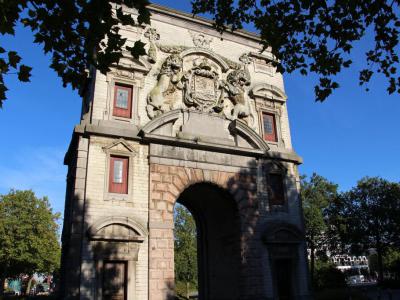
The Waterpoort or the Water Gate, also known as the Walking Gate is an elegant 15th century arch that stands in the Gillisplaats square in the southern neighborhood of Antwerp. Designed by P.P. Rubens, the construction of the gate was commissioned by the Spanish in honor of King Phillip IV.
Originally known as the Porta Regia, the role of the Waterpoort changed constantly throughout history. From serving as a part of the city’s defense wall to standing as an elegant memento of the city’s glorious past, the structure has done it all. Ever since its inception, the Waterpoort has served as a part of the city wall and has given access to the river bank, which is also where it gets its name from.
With the redevelopment of the city’s quay in the 19th century, the location of the Waterpoort had to be shifted. It was moved towards the south facing the riverfront at the Sint-Jansvliet. However, this place was not destined for the gate and it had to be temporarily stored in the municipal depot for five years since it acted as an hindrance during the construction of the pedestrian tunnel under the Scheldt. The Waterpoort was finally installed in the Gillisplaats, where it stands even today.
Originally known as the Porta Regia, the role of the Waterpoort changed constantly throughout history. From serving as a part of the city’s defense wall to standing as an elegant memento of the city’s glorious past, the structure has done it all. Ever since its inception, the Waterpoort has served as a part of the city wall and has given access to the river bank, which is also where it gets its name from.
With the redevelopment of the city’s quay in the 19th century, the location of the Waterpoort had to be shifted. It was moved towards the south facing the riverfront at the Sint-Jansvliet. However, this place was not destined for the gate and it had to be temporarily stored in the municipal depot for five years since it acted as an hindrance during the construction of the pedestrian tunnel under the Scheldt. The Waterpoort was finally installed in the Gillisplaats, where it stands even today.
13) Five Continents
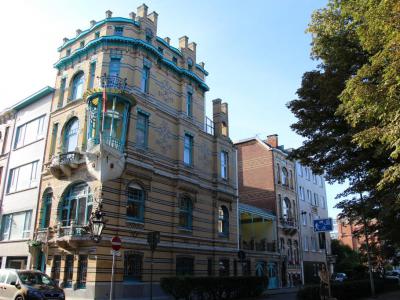
Antwerp is truly the haven for those who love to spend hours admiring architecture, where one can not only browse through numerous stylized building reflecting distinct styles but also learn to become a clever critic. Another popular name among the architecturally rich neighborhood that adds character to the city’s skyline is the Five Continents. Just a stone throw away from the famous Main Synagogue in Bouwmeesterstraat, the Five Continents is an interesting complex consisting of four houses designed in the Art Nouveau style.
Built in 1901, the Five Continents are one of the best examples of the Art Nouveau designs. With the houses having the characteristic layered yellow brick, use of vibrant curved lines that is a typical trait of an Art Nouveau design and the elaborate detailing and decorations, Five Continents is a place you cannot afford to miss at all. When constructed, the Five Continents comprised of a complex of four houses, however, there are only three that stand today.
Although the architecture may attract many to the Five Continents, the most unique feature that is associated with this complex is the ship’s bow that protrudes out. This unique feature that went from being an eye sore, to one that is taken pride in was commissioned by P. Rouis, a ship builder.
Built in 1901, the Five Continents are one of the best examples of the Art Nouveau designs. With the houses having the characteristic layered yellow brick, use of vibrant curved lines that is a typical trait of an Art Nouveau design and the elaborate detailing and decorations, Five Continents is a place you cannot afford to miss at all. When constructed, the Five Continents comprised of a complex of four houses, however, there are only three that stand today.
Although the architecture may attract many to the Five Continents, the most unique feature that is associated with this complex is the ship’s bow that protrudes out. This unique feature that went from being an eye sore, to one that is taken pride in was commissioned by P. Rouis, a ship builder.
14) Cogels Osylei
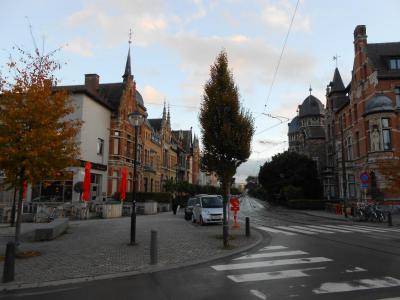
A well maintained building of the past may be a very common sight in many cities, but seldom does one come across an entire neighborhood filled with structures from yesteryears, which not only boast some exquisite architecture but whose buildings are in the best of conditions. Antwerp has one such neighborhood that is treasured and cherished in the city.
Boasting a wide array of architectural styles, the neighborhood of Cogels Osylei boasts a collection of houses that stand as a testament to the city’s rich artistic culture and opulence. It is here that one can see the Art Nouveau and the Neo Gothic styled structures rub shoulders with the Neo Renaissance and Byzantine styles of architecture. Built between 1894 and 1906, some of the houses were designed by renowned architects of the era. The Cogels Osylei is a paradise not only for those who admire architecture but is also a haven for those who love to hear the tales of the city’s past.
The neighborhood is not only a unique blend of different designs and patterns of architecture, but is also a fun place if you fancy long walks or a bike ride. Definitely one of a kind in the entire world, the Cogel Osylei is a must visit when in Antwerp.
Boasting a wide array of architectural styles, the neighborhood of Cogels Osylei boasts a collection of houses that stand as a testament to the city’s rich artistic culture and opulence. It is here that one can see the Art Nouveau and the Neo Gothic styled structures rub shoulders with the Neo Renaissance and Byzantine styles of architecture. Built between 1894 and 1906, some of the houses were designed by renowned architects of the era. The Cogels Osylei is a paradise not only for those who admire architecture but is also a haven for those who love to hear the tales of the city’s past.
The neighborhood is not only a unique blend of different designs and patterns of architecture, but is also a fun place if you fancy long walks or a bike ride. Definitely one of a kind in the entire world, the Cogel Osylei is a must visit when in Antwerp.
15) Rivierenhof Castle and Garden
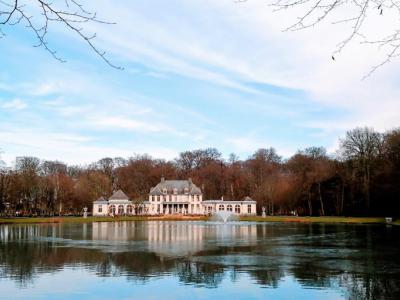
Both the Sterckshof and Rivierenhof Castle make for a perfect trip with friends and family on a warm summer’s day. If you enjoy picnics, greenery with a backdrop from the medieval era, the Rivierenhof Castle is the place to be.
A popular destination for the locals on weekends, the Rivierenhof Castle is the perfect excuse for a long bike ride. Sharing the same history as the Sterckshof, the Rivierenhof Castle is equally splendid and worth a visit.
During the middle ages, the grounds that now hold the Rivierenhof Castle were a lush green farm land in the outskirts of the city. The farm land known as Hooftvunder soon grew to become the largest farm in the region. While the turn of the century saw a part of the farm sold to the Stercks, a wealthy banker family, the other part of it was purchased by yet another wealthy merchant who built a gorgeous country house and an orchard.
As years passed by, the land was purchased by the Cogel Family who built, in place of the country house, an elaborate and opulent castle that stands to this day. Around this Castle was maintained a beautiful garden, which has now become the largest park in Antwerp.
Rivierenhof Garden houses the Sterckshof Museum and castle, several sports fields, an amphitheater, the family farm Schranshoeve, a beautiful rose garden designed in 1926, the Witches Tale House, chess tables and more. It is a great place to have fun with the entire family.
A popular destination for the locals on weekends, the Rivierenhof Castle is the perfect excuse for a long bike ride. Sharing the same history as the Sterckshof, the Rivierenhof Castle is equally splendid and worth a visit.
During the middle ages, the grounds that now hold the Rivierenhof Castle were a lush green farm land in the outskirts of the city. The farm land known as Hooftvunder soon grew to become the largest farm in the region. While the turn of the century saw a part of the farm sold to the Stercks, a wealthy banker family, the other part of it was purchased by yet another wealthy merchant who built a gorgeous country house and an orchard.
As years passed by, the land was purchased by the Cogel Family who built, in place of the country house, an elaborate and opulent castle that stands to this day. Around this Castle was maintained a beautiful garden, which has now become the largest park in Antwerp.
Rivierenhof Garden houses the Sterckshof Museum and castle, several sports fields, an amphitheater, the family farm Schranshoeve, a beautiful rose garden designed in 1926, the Witches Tale House, chess tables and more. It is a great place to have fun with the entire family.
