Custom Walk in Innsbruck, Austria by ashley_klemke_fa7ca7 created on 2026-07-09
Guide Location: Austria » Innsbruck
Guide Type: Custom Walk
# of Sights: 6
Tour Duration: 1 Hour(s)
Travel Distance: 1.3 Km or 0.8 Miles
Share Key: 34W3D
Guide Type: Custom Walk
# of Sights: 6
Tour Duration: 1 Hour(s)
Travel Distance: 1.3 Km or 0.8 Miles
Share Key: 34W3D
How It Works
Please retrieve this walk in the GPSmyCity app. Once done, the app will guide you from one tour stop to the next as if you had a personal tour guide. If you created the walk on this website or come to the page via a link, please follow the instructions below to retrieve the walk in the app.
Retrieve This Walk in App
Step 1. Download the app "GPSmyCity: Walks in 1K+ Cities" on Apple App Store or Google Play Store.



Step 2. In the GPSmyCity app, download(or launch) the guide "Innsbruck Map and Walking Tours".
Step 3. Tap the menu button located at upper right corner of the "Walks" screen and select "Retrieve custom walk". Enter the share key: 34W3D
1) Dom zu St. Jakob (Saint Jakob Cathedral) (must see)
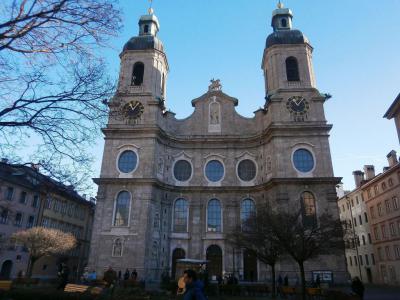
Saint Jakob Cathedral, also known as Innsbruck Cathedral, is one of the most important Baroque churches in Tyrol and a major landmark of the city’s Old Town. A church attached to Wilten Abbey stood on this site by 1180, but a 1689 earthquake and fires during the 13th and 14th centuries left it beyond repair. In 1717, it was decided to replace the aging building with an entirely new church.
The present cathedral was inaugurated in 1724, thanks to generous contributions from parishioners and the Tyrolean nobility. Its twin bell towers, copper-clad onion dome, and elegant limestone-and-marble façade, adorned with statues of Tyrolean saints and Saint James, make it one of Innsbruck's most recognizable landmarks.
Step inside to discover one of Austria's finest Baroque interiors. The cruciform church is organized around a spacious double-bayed nave and semicircular transept, both crowned by richly decorated domes that flood the interior with light. Massive columns support soaring rounded arches that frame the sanctuary, drawing your attention toward the magnificent marble high altar beneath the central dome. Look up to admire the illusionistic ceiling frescoes, whose dramatic compositions create a remarkable sense of height and movement, while the gilded decoration and ornate stucco work complete the Baroque setting.
The cathedral's greatest artistic treasure is the celebrated Maria Hilf painting by the German Renaissance painter Lucas Cranach the Elder, completed in 1530 and displayed on the high altar. This image of the Virgin and Child became one of the most venerated Marian icons in the German-speaking world. Also be sure to visit the canopied tomb of Archduke Maximilian III, Grand Master of the Teutonic Order, whose richly decorated monument adds another layer of Habsburg history to the church.
The present cathedral was inaugurated in 1724, thanks to generous contributions from parishioners and the Tyrolean nobility. Its twin bell towers, copper-clad onion dome, and elegant limestone-and-marble façade, adorned with statues of Tyrolean saints and Saint James, make it one of Innsbruck's most recognizable landmarks.
Step inside to discover one of Austria's finest Baroque interiors. The cruciform church is organized around a spacious double-bayed nave and semicircular transept, both crowned by richly decorated domes that flood the interior with light. Massive columns support soaring rounded arches that frame the sanctuary, drawing your attention toward the magnificent marble high altar beneath the central dome. Look up to admire the illusionistic ceiling frescoes, whose dramatic compositions create a remarkable sense of height and movement, while the gilded decoration and ornate stucco work complete the Baroque setting.
The cathedral's greatest artistic treasure is the celebrated Maria Hilf painting by the German Renaissance painter Lucas Cranach the Elder, completed in 1530 and displayed on the high altar. This image of the Virgin and Child became one of the most venerated Marian icons in the German-speaking world. Also be sure to visit the canopied tomb of Archduke Maximilian III, Grand Master of the Teutonic Order, whose richly decorated monument adds another layer of Habsburg history to the church.
2) Goldenes Dachl (The Golden Roof) (must see)
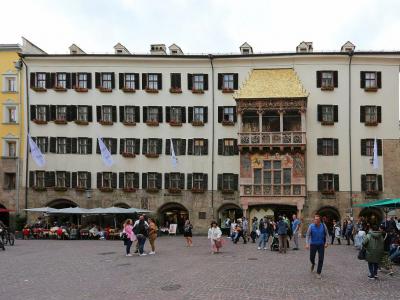
The Golden Roof is the unmistakable symbol of Innsbruck and one of Austria's most famous historic landmarks. Although the building itself was constructed in the early 15th century by Archduke Frederick IV as a residence for the rulers of Tyrol, it achieved lasting fame after Emperor Maximilian I moved in. Around 1500, amid rumors that the emperor's finances were failing, Maximilian commissioned his court architect to transform the façade with an extravagant viewing balcony. Ostensibly created to celebrate his marriage to Bianca Maria Sforza of Milan, the lavish addition also served as a powerful display of Habsburg wealth and prestige.
As you approach the building, look upward to admire the projecting double-decker oriel. To fully appreciate this iconic sight from the center of the Old Town square on Herzog-Friedrich Street, position yourself directly opposite the ornate façade and look up at the shingled canopy, which forms the steeply pitched roof capping the structure. Despite its name, the roof is not made of gold but of 2,657 fire-gilded copper tiles that glitter brilliantly in the sunlight.
The upper balcony served as the imperial box, allowing Maximilian and Bianca to watch tournaments, festivals, parades, and other celebrations unfolding in the square below. Supporting the balconies are richly carved stone brackets, while the façade is decorated with colorful frescoes and sculptural reliefs.
Step even closer to examine the eight finely carved reliefs decorating the upper balustrade. Shift your gaze down from the roofline to the stone panels along the upper balcony railing. At the center, one relief portrays Maximilian flanked by his first wife, Mary of Burgundy, and his current wife, Bianca Maria Sforza, who is shown holding an apple. Another depicts the emperor alongside his court jester and chancellor, while the remaining reliefs feature lively Moorish dancers.
The frescoes that once adorned the interior of the loggia, depicting scenes of aristocratic life, are now represented by faithful reproductions; the originals are preserved in the Tyrolean State Museum. To find these painted murals, look past the stone columns into the open window alcove behind the reliefs, where you can see coats of arms, painted emblems, and heraldic shields representing Habsburg territories.
Today, the building houses the Golden Roof Museum. Inside, visitors can explore exhibitions featuring historical documents, multimedia displays, and the permanent exhibition "What Remains?", which examines Maximilian's enduring influence.
As you approach the building, look upward to admire the projecting double-decker oriel. To fully appreciate this iconic sight from the center of the Old Town square on Herzog-Friedrich Street, position yourself directly opposite the ornate façade and look up at the shingled canopy, which forms the steeply pitched roof capping the structure. Despite its name, the roof is not made of gold but of 2,657 fire-gilded copper tiles that glitter brilliantly in the sunlight.
The upper balcony served as the imperial box, allowing Maximilian and Bianca to watch tournaments, festivals, parades, and other celebrations unfolding in the square below. Supporting the balconies are richly carved stone brackets, while the façade is decorated with colorful frescoes and sculptural reliefs.
Step even closer to examine the eight finely carved reliefs decorating the upper balustrade. Shift your gaze down from the roofline to the stone panels along the upper balcony railing. At the center, one relief portrays Maximilian flanked by his first wife, Mary of Burgundy, and his current wife, Bianca Maria Sforza, who is shown holding an apple. Another depicts the emperor alongside his court jester and chancellor, while the remaining reliefs feature lively Moorish dancers.
The frescoes that once adorned the interior of the loggia, depicting scenes of aristocratic life, are now represented by faithful reproductions; the originals are preserved in the Tyrolean State Museum. To find these painted murals, look past the stone columns into the open window alcove behind the reliefs, where you can see coats of arms, painted emblems, and heraldic shields representing Habsburg territories.
Today, the building houses the Golden Roof Museum. Inside, visitors can explore exhibitions featuring historical documents, multimedia displays, and the permanent exhibition "What Remains?", which examines Maximilian's enduring influence.
3) Stadtturm (Town Tower) (must see)
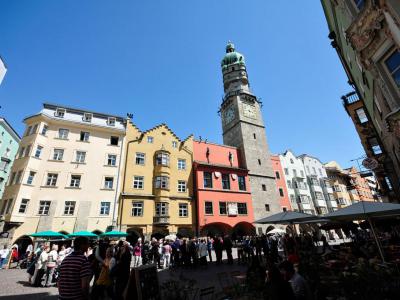
The Town Tower, known locally as the Stadtturm, has watched over Innsbruck's medieval Old Town for nearly 580 years and remains one of the city's most recognizable landmarks. Built around 1444 as part of the Old Town Hall, the 51-meter, or 166-foot, tower served as the city's principal watchtower, with guards known as Türmer keeping constant watch for fires, floods, and approaching danger.
Originally crowned with a Gothic roof, it received its distinctive green onion dome in 1560, when the upper section was remodeled in the Renaissance style that still defines the city's skyline. Four wrought-iron gargoyles and the first tower clock were added in 1603, while the tower's lower floors also served as the municipal prison. To appreciate these architectural features from street level, stand in the middle of Herzog-Friedrich Street and look up toward the top of the tower. There you can spot the copper-sheeted bulbous roof and the four decorative wrought-iron spouts jutting out over the street.
The Town Tower offers one of the finest panoramic viewpoints in Innsbruck. The main challenge is reaching the observation deck, located 30 meters, or 98 feet, above the streets. Climb the 133 narrow steps, paying attention to the unusual double-helix staircase, whose separate stairways were ingeniously designed to keep ascending and descending visitors apart. Go through the entrance door into the central cylinder of the structure to find the staircase, where two completely independent flights of steps coil around each other up the central shaft.
Once you reach the wooden observation gallery, the reward is a breathtaking 360-degree panorama. Push open the wooden access door at the top of the stairs to step onto the iron-railed platform that wraps around the outer stone midsection of the tower. From here, you can look down on the maze of medieval lanes, colorful historic houses, and the glittering Golden Roof, while the River Inn winds through the valley below. Beyond the rooftops rise the dramatic peaks of the Nordkette mountain range, and to the south you can spot the Bergisel Ski Jump. The narrow gallery accommodates only a limited number of visitors at a time, allowing you to enjoy the views at a leisurely pace.
Originally crowned with a Gothic roof, it received its distinctive green onion dome in 1560, when the upper section was remodeled in the Renaissance style that still defines the city's skyline. Four wrought-iron gargoyles and the first tower clock were added in 1603, while the tower's lower floors also served as the municipal prison. To appreciate these architectural features from street level, stand in the middle of Herzog-Friedrich Street and look up toward the top of the tower. There you can spot the copper-sheeted bulbous roof and the four decorative wrought-iron spouts jutting out over the street.
The Town Tower offers one of the finest panoramic viewpoints in Innsbruck. The main challenge is reaching the observation deck, located 30 meters, or 98 feet, above the streets. Climb the 133 narrow steps, paying attention to the unusual double-helix staircase, whose separate stairways were ingeniously designed to keep ascending and descending visitors apart. Go through the entrance door into the central cylinder of the structure to find the staircase, where two completely independent flights of steps coil around each other up the central shaft.
Once you reach the wooden observation gallery, the reward is a breathtaking 360-degree panorama. Push open the wooden access door at the top of the stairs to step onto the iron-railed platform that wraps around the outer stone midsection of the tower. From here, you can look down on the maze of medieval lanes, colorful historic houses, and the glittering Golden Roof, while the River Inn winds through the valley below. Beyond the rooftops rise the dramatic peaks of the Nordkette mountain range, and to the south you can spot the Bergisel Ski Jump. The narrow gallery accommodates only a limited number of visitors at a time, allowing you to enjoy the views at a leisurely pace.
4) Maria-Theresien Strasse (Maria Theresa Street) (must see)
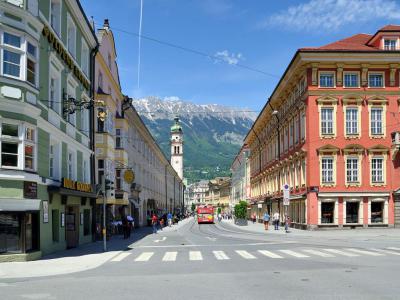
Maria Theresa Street is Innsbruck's principal boulevard and one of Austria's most attractive shopping promenades. About 500 yards long, it runs from the intersection of Castle Ditch and Market Ditch in the north to the Triumphal Arch in the south. Today, much of the street is pedestrianized, creating a lively atmosphere of cafés, boutiques, benches, ornate streetlamps, and constant movement.
In earlier centuries, this was one of Innsbruck's most desirable addresses. Wealthy merchants, nobles, and aristocratic families built elegant townhouses and palaces here, giving the street its rich mixture of Baroque, Rococo, and Renaissance façades. As you walk north, the view becomes especially dramatic, with the Nordkette mountains rising behind the rooftops and framing the Old Town.
One of the street's most important landmarks is Saint Anne's Column, erected in 1706 to commemorate the defeat of Bavarian forces in 1703. The Virgin Mary, depicted in her Immaculate Conception, stands on a crescent moon at the top of the tall red marble Corinthian column. Around the base are statues of Saint Anne—the column's namesake, whose feast day marked the victory—alongside Saints George, Cassian, and Vigilius.
Maria Theresa Street is also a major shopping destination. Modern complexes such as Tyrol Shopping Mall, with nearly 50 shops, and the glass-roofed Town Hall Galleries, with stores and restaurants, add a contemporary layer to the historic setting. From November into January, the annual Christmas Market fills the street with lights, glass ornaments, crystals, and festive stalls, turning the boulevard into one of Innsbruck's most atmospheric winter scenes.
In earlier centuries, this was one of Innsbruck's most desirable addresses. Wealthy merchants, nobles, and aristocratic families built elegant townhouses and palaces here, giving the street its rich mixture of Baroque, Rococo, and Renaissance façades. As you walk north, the view becomes especially dramatic, with the Nordkette mountains rising behind the rooftops and framing the Old Town.
One of the street's most important landmarks is Saint Anne's Column, erected in 1706 to commemorate the defeat of Bavarian forces in 1703. The Virgin Mary, depicted in her Immaculate Conception, stands on a crescent moon at the top of the tall red marble Corinthian column. Around the base are statues of Saint Anne—the column's namesake, whose feast day marked the victory—alongside Saints George, Cassian, and Vigilius.
Maria Theresa Street is also a major shopping destination. Modern complexes such as Tyrol Shopping Mall, with nearly 50 shops, and the glass-roofed Town Hall Galleries, with stores and restaurants, add a contemporary layer to the historic setting. From November into January, the annual Christmas Market fills the street with lights, glass ornaments, crystals, and festive stalls, turning the boulevard into one of Innsbruck's most atmospheric winter scenes.
5) Hofkirche (Court Church) (must see)
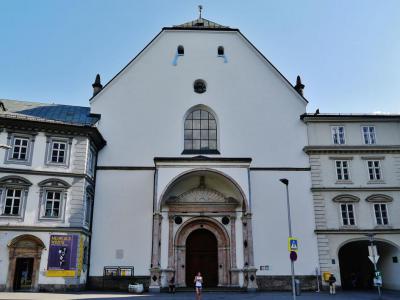
The Court Church is one of Innsbruck's greatest historical treasures and a Renaissance monument. It owes its existence to an unusual story. In his later years, Holy Roman Emperor Maximilian I became deeply preoccupied with death and the legacy he would leave behind. He is even said to have traveled with his own coffin, constantly contemplating his future tomb. Although Maximilian was ultimately buried in the city of Wiener Neustadt, his son Charles V and grandson Ferdinand I financed an elaborate memorial in Innsbruck instead. Construction of the Court Church began in 1553, creating one of Europe's grandest cenotaphs—a magnificent tomb without the emperor's remains.
Before entering, notice the Renaissance portal. Inside, look up to appreciate the soaring nave with its slender red marble columns topped by white capitals and the Baroque vault added in the 17th century. At the eastern end stands the richly decorated high altar, completed in 1755 and flanked by statues of Saint Francis of Assisi and Saint Teresa of Ávila.
However, the first highlight stands at the very center of the nave. The so-called "Black Men" bronze statues are a true sculptural marvel. The ensemble consists of twenty-eight colossal, dark-patinated bronze figures, whose armor and heavy royal robes are rendered in such exquisite detail that you can make out individual links of chainmail, embroidered fabrics, and finely modeled facial features. Representing members of the Habsburg dynasty, legendary heroes, and historical rulers, they form one of the finest collections of Renaissance bronze sculpture in Europe.
Positioned directly among these bronze sentinels is the black marble cenotaph of Emperor Maximilian I. Rising prominently from the stone floor and enclosed by an ornate iron grille, it is impossible to overlook. The monument consists of a massive black marble sarcophagus surrounded by twenty-four intricately carved white marble relief panels depicting key moments from Maximilian's life. At the top, a lifelike bronze figure of the emperor kneels in prayer, accompanied by four allegorical statues representing the Christian Virtues.
Finally, don't miss the Silver Chapel on the northern side of the church. From the main nave, walk back toward the entrance foyer, turn right, and ascend the stone staircase. Here you'll find one of the church's most remarkable artistic treasures: an altar crafted from embossed silver, approximately 300 kilograms of ebony, and three elephant tusks. At its center stands a silver image of the Virgin Mary surrounded by reliefs illustrating the Litany of Loreto.
Before entering, notice the Renaissance portal. Inside, look up to appreciate the soaring nave with its slender red marble columns topped by white capitals and the Baroque vault added in the 17th century. At the eastern end stands the richly decorated high altar, completed in 1755 and flanked by statues of Saint Francis of Assisi and Saint Teresa of Ávila.
However, the first highlight stands at the very center of the nave. The so-called "Black Men" bronze statues are a true sculptural marvel. The ensemble consists of twenty-eight colossal, dark-patinated bronze figures, whose armor and heavy royal robes are rendered in such exquisite detail that you can make out individual links of chainmail, embroidered fabrics, and finely modeled facial features. Representing members of the Habsburg dynasty, legendary heroes, and historical rulers, they form one of the finest collections of Renaissance bronze sculpture in Europe.
Positioned directly among these bronze sentinels is the black marble cenotaph of Emperor Maximilian I. Rising prominently from the stone floor and enclosed by an ornate iron grille, it is impossible to overlook. The monument consists of a massive black marble sarcophagus surrounded by twenty-four intricately carved white marble relief panels depicting key moments from Maximilian's life. At the top, a lifelike bronze figure of the emperor kneels in prayer, accompanied by four allegorical statues representing the Christian Virtues.
Finally, don't miss the Silver Chapel on the northern side of the church. From the main nave, walk back toward the entrance foyer, turn right, and ascend the stone staircase. Here you'll find one of the church's most remarkable artistic treasures: an altar crafted from embossed silver, approximately 300 kilograms of ebony, and three elephant tusks. At its center stands a silver image of the Virgin Mary surrounded by reliefs illustrating the Litany of Loreto.
6) Kaiserliche Hofburg (Imperial Palace) (must see)
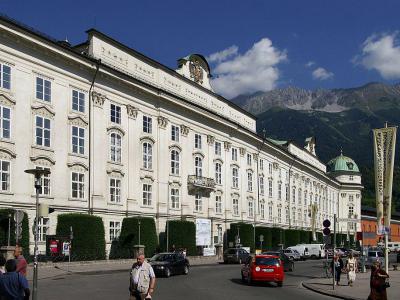
The Imperial Palace ranks among Austria's most important royal residences and, together with the Hofburg and Schönbrunn Palace in Vienna, is considered one of the country's three most significant historic palaces. For centuries, it served as the principal Habsburg residence in Tyrol. The palace originated around 1460, when Archduke Sigismund transformed sections of the medieval city fortifications into a residential complex.
Over the following 250 years, successive rulers enlarged and remodeled the building, but its present appearance is largely the result of the magnificent Baroque renovation commissioned by Empress Maria Theresa in the 18th century. Following the death of her husband, Emperor Francis Stephen, in Innsbruck in 1765, she ordered extensive alterations, including the completion of the Rennweg façade, the decoration of the Giant Hall, and the conversion of the emperor's death chamber into a permanent palace memorial chapel.
Entering through the grand staircase, visitors are welcomed by marble columns, elaborate stucco ceilings, crystal chandeliers, and richly decorated walls that lead to the palace's finest ceremonial rooms. The highlight is the magnificent Giant Hall, a dazzling Rococo state room adorned with glittering chandeliers, white-and-gold ornamentation, and impressive ceiling frescoes. Portraits of Maria Theresa and her sixteen children line the walls, celebrating the Habsburg dynasty at the height of its power.
The Imperial Apartments offer a more intimate glimpse into court life, with period furniture, silk wall coverings, porcelain stoves, portraits, and decorative arts preserved in richly furnished rooms. Don't miss the Gothic Hall, built around 1500, whose cross-groined vaults provide a striking contrast to the palace's later Baroque interiors. Step into the cobbled inner courtyard, often regarded as Innsbruck's most beautiful, where Baroque pilasters, cornices, cartouches, and four elegant portals frame the peaceful space.
The palace complex also encompasses two chapels, including the Imperial Chapel, and stands at the heart of a remarkable historic ensemble that includes the Court Church, the Silver Chapel, the Court Garden, and the Tyrolean Folk Art Museum.
Over the following 250 years, successive rulers enlarged and remodeled the building, but its present appearance is largely the result of the magnificent Baroque renovation commissioned by Empress Maria Theresa in the 18th century. Following the death of her husband, Emperor Francis Stephen, in Innsbruck in 1765, she ordered extensive alterations, including the completion of the Rennweg façade, the decoration of the Giant Hall, and the conversion of the emperor's death chamber into a permanent palace memorial chapel.
Entering through the grand staircase, visitors are welcomed by marble columns, elaborate stucco ceilings, crystal chandeliers, and richly decorated walls that lead to the palace's finest ceremonial rooms. The highlight is the magnificent Giant Hall, a dazzling Rococo state room adorned with glittering chandeliers, white-and-gold ornamentation, and impressive ceiling frescoes. Portraits of Maria Theresa and her sixteen children line the walls, celebrating the Habsburg dynasty at the height of its power.
The Imperial Apartments offer a more intimate glimpse into court life, with period furniture, silk wall coverings, porcelain stoves, portraits, and decorative arts preserved in richly furnished rooms. Don't miss the Gothic Hall, built around 1500, whose cross-groined vaults provide a striking contrast to the palace's later Baroque interiors. Step into the cobbled inner courtyard, often regarded as Innsbruck's most beautiful, where Baroque pilasters, cornices, cartouches, and four elegant portals frame the peaceful space.
The palace complex also encompasses two chapels, including the Imperial Chapel, and stands at the heart of a remarkable historic ensemble that includes the Court Church, the Silver Chapel, the Court Garden, and the Tyrolean Folk Art Museum.
