Custom Walk in Sorrento, Italy by portellimario5_dff9fb created on 2026-07-13
Guide Location: Italy » Sorrento
Guide Type: Custom Walk
# of Sights: 14
Tour Duration: 2 Hour(s)
Travel Distance: 3.3 Km or 2.1 Miles
Share Key: 3PV2A
Guide Type: Custom Walk
# of Sights: 14
Tour Duration: 2 Hour(s)
Travel Distance: 3.3 Km or 2.1 Miles
Share Key: 3PV2A
How It Works
Please retrieve this walk in the GPSmyCity app. Once done, the app will guide you from one tour stop to the next as if you had a personal tour guide. If you created the walk on this website or come to the page via a link, please follow the instructions below to retrieve the walk in the app.
Retrieve This Walk in App
Step 1. Download the app "GPSmyCity: Walks in 1K+ Cities" on Apple App Store or Google Play Store.



Step 2. In the GPSmyCity app, download(or launch) the guide "Sorrento Map and Walking Tours".
Step 3. Tap the menu button located at upper right corner of the "Walks" screen and select "Retrieve custom walk". Enter the share key: 3PV2A
1) Teatro Tasso (Tasso Theater)
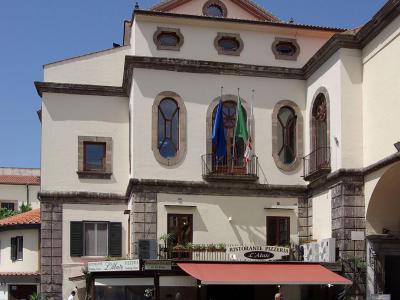
Tasso Theater (Teatro Tasso) is an ancient theater steeped in history and artistry. Dating back to the 16th century, this theater has weathered the passage of time, enduring a decade-long closure only to emerge anew through meticulous reconstruction efforts. Despite its hiatus, the theater has retained its original architectural charm while adapting to modern audiences' needs.
Establishing its cultural importance in 1920 with the inaugural performances on the peninsula, Tasso Theater has since become a cornerstone of the local arts scene. Today, it is celebrated for its diverse range of musical shows catering to varied tastes, spanning from light opera to jazz.
Originally serving as a convent for the Theatines religious order, the theater underwent a significant transformation in the 1920s, transitioning into a cinema before evolving into the dynamic performance space it is today. It is especially renowned for showcasing local folklore, providing a platform for the region's cultural traditions to thrive.
Among its notable offerings is the Sorrento Amarcord show, a captivating celebration of Neapolitan folk music, dance, and stories. Featuring traditional songs and dances like the tarantella, the show invites audience participation, creating an immersive experience that resonates with the essence of Neapolitan culture.
Tasso Theater not only preserves Sorrento's historical legacy but also serves as a vibrant hub where the arts flourish, bridging the past and present through the universal language of performance.
Establishing its cultural importance in 1920 with the inaugural performances on the peninsula, Tasso Theater has since become a cornerstone of the local arts scene. Today, it is celebrated for its diverse range of musical shows catering to varied tastes, spanning from light opera to jazz.
Originally serving as a convent for the Theatines religious order, the theater underwent a significant transformation in the 1920s, transitioning into a cinema before evolving into the dynamic performance space it is today. It is especially renowned for showcasing local folklore, providing a platform for the region's cultural traditions to thrive.
Among its notable offerings is the Sorrento Amarcord show, a captivating celebration of Neapolitan folk music, dance, and stories. Featuring traditional songs and dances like the tarantella, the show invites audience participation, creating an immersive experience that resonates with the essence of Neapolitan culture.
Tasso Theater not only preserves Sorrento's historical legacy but also serves as a vibrant hub where the arts flourish, bridging the past and present through the universal language of performance.
2) Piazza Sant'Antonino (Sant'Antonino Square)
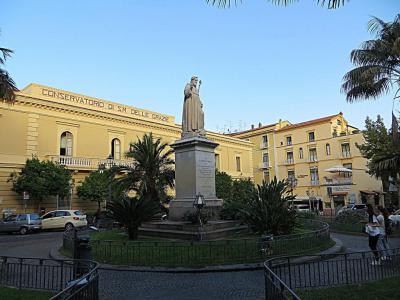
In the heart of Sorrento, lies Sant'Antonino Square, a tranquil spot amidst the lively city center, where visitors can delve into the area's rich history and culture. Named after the city's patron saint, Saint Antonino, the square is home to the Basilica of Saint Antonino, which holds his tomb and stands as a significant landmark. Surrounded by lush greenery and the sweet scent of flowers, palm, and orange trees, it's a perfect spot for a peaceful retreat.
The square is lined with charming bars and restaurants, offering a chance to enjoy local cuisine while taking in the beautiful views. With the town hall and the ancient 11th-century basilica nearby, there's plenty of history to explore. A statue of Saint Antonino Abate greets visitors, symbolizing the saint's acts of heroism and kindness towards the city's people.
The basilica itself is a treasure trove of art and history, being the oldest church in Sorrento. Inside, visitors can admire a collection of artworks, including a painting depicting the 1648 siege of Sorrento. The crypt beneath the basilica provides an opportunity for a spiritual encounter with the saint's tomb and relics of other saints.
Across the square, the Santa Maria delle Grazie Conservatory School (Conservatorio Scuola Santa Maria delle Grazie) adds another layer to Sorrento's cultural heritage. This 16th-century building, part of a larger church complex, houses religious art, statues, and a remarkable majolica floor, enriching visitors' experience with its historical and artistic significance.
Sant'Antonino Square, near Tasso Square in Sorrento, is a tranquil haven rich in natural beauty, history, and spiritual significance, ideal for those wanting to experience Sorrento's essence.
The square is lined with charming bars and restaurants, offering a chance to enjoy local cuisine while taking in the beautiful views. With the town hall and the ancient 11th-century basilica nearby, there's plenty of history to explore. A statue of Saint Antonino Abate greets visitors, symbolizing the saint's acts of heroism and kindness towards the city's people.
The basilica itself is a treasure trove of art and history, being the oldest church in Sorrento. Inside, visitors can admire a collection of artworks, including a painting depicting the 1648 siege of Sorrento. The crypt beneath the basilica provides an opportunity for a spiritual encounter with the saint's tomb and relics of other saints.
Across the square, the Santa Maria delle Grazie Conservatory School (Conservatorio Scuola Santa Maria delle Grazie) adds another layer to Sorrento's cultural heritage. This 16th-century building, part of a larger church complex, houses religious art, statues, and a remarkable majolica floor, enriching visitors' experience with its historical and artistic significance.
Sant'Antonino Square, near Tasso Square in Sorrento, is a tranquil haven rich in natural beauty, history, and spiritual significance, ideal for those wanting to experience Sorrento's essence.
3) Villa Comunale Park (must see)
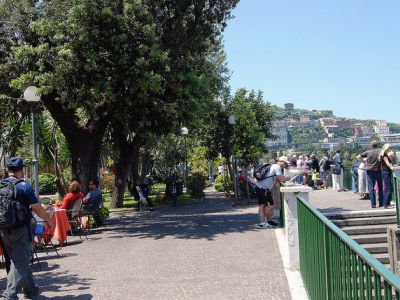
Villa Comunale Park in Sorrento is a beautiful and historically significant location that attracts visitors with its natural charm. Positioned near the Saint Francis Church and Cloister, this small park is a lush haven filled with palm trees, oaks, holm oaks, and ancient pines. Perched on the cliffs of Sorrento, it offers stunning views of Marina Grande and the coastline, making it more famous for its panoramic vistas than its greenery.
One distinctive feature of the park is its elevators, which provide access to Marina Piccola ferry and the San Francisco swim towers, offering a convenient route to the sea. Elevated above the bay and Mount Vesuvius, the park boasts well-maintained flower beds, manicured lawns, and tall palm trees. A cozy café within the park serves espresso, pastries, and ice cream, with sunset being the ideal time to enjoy its tranquil atmosphere.
Located a short walk from Tasso Square in the city center, the path to Villa Comunale Park passes by the historic 11th-century Church of Saint Antonino, adding a touch of history to the journey. Established between 1877 and 1879 on the former gardens of Franciscan friars, the park reflects the region's cultural heritage. Visitors can relax in the shade, stroll through well-kept gardens, and admire centuries-old olive trees.
The park also features two notable busts from the early twentieth century, honoring historian Bartolomeo Capasso and magistrate Francesco Saverio Gargiulo, contributing to its cultural ambiance. Additionally, it houses a museum displaying archaeological discoveries from Sorrento and a precious mosaic depicting a nymphaeum, adding to the historical appeal.
Villa Comunale Park serves not only as a natural oasis but also as a cultural center. Its terrace often hosts musical and theatrical performances, and during the Christmas season, it is adorned with festive lights. For those interested in exploring the beach below, the park offers access to the sea and an elevator for convenience, ensuring that all visitors can enjoy Sorrento's beauty and the majestic Gulf of Naples, with Vesuvius in the background.
One distinctive feature of the park is its elevators, which provide access to Marina Piccola ferry and the San Francisco swim towers, offering a convenient route to the sea. Elevated above the bay and Mount Vesuvius, the park boasts well-maintained flower beds, manicured lawns, and tall palm trees. A cozy café within the park serves espresso, pastries, and ice cream, with sunset being the ideal time to enjoy its tranquil atmosphere.
Located a short walk from Tasso Square in the city center, the path to Villa Comunale Park passes by the historic 11th-century Church of Saint Antonino, adding a touch of history to the journey. Established between 1877 and 1879 on the former gardens of Franciscan friars, the park reflects the region's cultural heritage. Visitors can relax in the shade, stroll through well-kept gardens, and admire centuries-old olive trees.
The park also features two notable busts from the early twentieth century, honoring historian Bartolomeo Capasso and magistrate Francesco Saverio Gargiulo, contributing to its cultural ambiance. Additionally, it houses a museum displaying archaeological discoveries from Sorrento and a precious mosaic depicting a nymphaeum, adding to the historical appeal.
Villa Comunale Park serves not only as a natural oasis but also as a cultural center. Its terrace often hosts musical and theatrical performances, and during the Christmas season, it is adorned with festive lights. For those interested in exploring the beach below, the park offers access to the sea and an elevator for convenience, ensuring that all visitors can enjoy Sorrento's beauty and the majestic Gulf of Naples, with Vesuvius in the background.
4) Piazza della Vittoria (Victory Square)
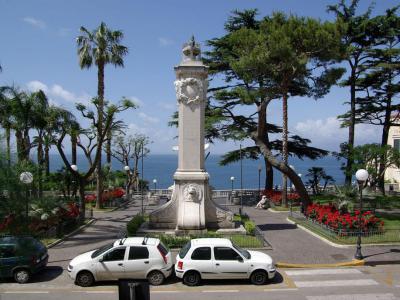
Victory Square sits between Sorrento’s Big Marina and Small Marina. At its center is a small garden shaded by palm trees, a comfortable place to pause during a walk. From here, visitors enjoy clear views across the Bay of Naples, a scene that naturally slows the pace and encourages people to linger.
Along one edge of the square stands the Imperial Hotel Tramontano, a historic property closely tied to the cultural life of Sorrento. In 1881, the Norwegian playwright Henrik Ibsen lived here for six months. During his stay he completed Ghosts, one of his major works. Ibsen had left Norway feeling disheartened by criticism at home, and he moved with his family to Sorrento, where he spent four productive years. His time here is remembered with a plaque placed on the corner of Victory Square and Vittoria Veneto Street, just beside the hotel’s graceful bridge crossing the road.
The history of the site reaches even farther back. Part of the current hotel incorporates the former Villa Laurito Mastrogiudice, the birthplace of Sorrento’s celebrated poet Torquato Tasso. He was born there on March 11, 1544, long before the area became a center of international tourism.
Today, Victory Square brings together views, history, and a relaxed coastal atmosphere. It is a natural stopping point for visitors exploring the town or making their way between the marinas, offering a short but meaningful connection to the artists and thinkers who once found inspiration in the same landscape.
Along one edge of the square stands the Imperial Hotel Tramontano, a historic property closely tied to the cultural life of Sorrento. In 1881, the Norwegian playwright Henrik Ibsen lived here for six months. During his stay he completed Ghosts, one of his major works. Ibsen had left Norway feeling disheartened by criticism at home, and he moved with his family to Sorrento, where he spent four productive years. His time here is remembered with a plaque placed on the corner of Victory Square and Vittoria Veneto Street, just beside the hotel’s graceful bridge crossing the road.
The history of the site reaches even farther back. Part of the current hotel incorporates the former Villa Laurito Mastrogiudice, the birthplace of Sorrento’s celebrated poet Torquato Tasso. He was born there on March 11, 1544, long before the area became a center of international tourism.
Today, Victory Square brings together views, history, and a relaxed coastal atmosphere. It is a natural stopping point for visitors exploring the town or making their way between the marinas, offering a short but meaningful connection to the artists and thinkers who once found inspiration in the same landscape.
5) Marina Grande (Big Marina) (must see)
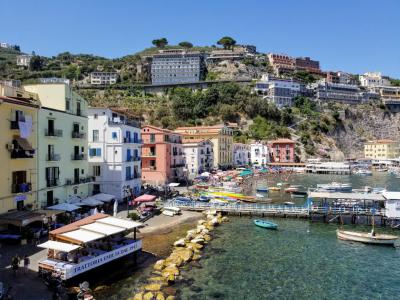
Despite its name, Marina Grande, or “Big Marina,” is actually smaller than Marina Piccola. Rather than being a transport hub, it is a fishing village and a destination in itself. As you walk through the marina, you will find restaurants and bars serving fresh seafood, small hotels, and even a local church. The area has preserved a sense of rustic charm, making it feel like a little world tucked away from the bustle of Sorrento’s main streets.
The marina lies in a protected nook of the Amalfi Coast, secluded by a rocky promontory. Local tradition says this was once the site of a Roman villa belonging to Marcellus, the nephew of Emperor Augustus. As you stroll along the waterfront, notice the small details that reflect its pre-industrial life. At sunset, fishermen pull in their nets, prepare their boats for the next day, and go about daily routines that have changed little over the centuries. Watching this is a way to experience the rhythms of a Sorrento that existed long before tourism became the town’s main industry.
Walking through Big Marina, you will see how it maintains a balance between community life and hospitality for visitors. Small shops and trattorias line narrow streets, while paths along the water offer calm places to pause and enjoy the view. This is a living village, not just a scenic stop, so take time to absorb the sounds, smells, and everyday life that give Big Marina its distinctive character. By the time you leave, you will understand why many visitors feel it is one of Sorrento’s most authentic corners.
The marina lies in a protected nook of the Amalfi Coast, secluded by a rocky promontory. Local tradition says this was once the site of a Roman villa belonging to Marcellus, the nephew of Emperor Augustus. As you stroll along the waterfront, notice the small details that reflect its pre-industrial life. At sunset, fishermen pull in their nets, prepare their boats for the next day, and go about daily routines that have changed little over the centuries. Watching this is a way to experience the rhythms of a Sorrento that existed long before tourism became the town’s main industry.
Walking through Big Marina, you will see how it maintains a balance between community life and hospitality for visitors. Small shops and trattorias line narrow streets, while paths along the water offer calm places to pause and enjoy the view. This is a living village, not just a scenic stop, so take time to absorb the sounds, smells, and everyday life that give Big Marina its distinctive character. By the time you leave, you will understand why many visitors feel it is one of Sorrento’s most authentic corners.
6) House of Cornelia Tasso
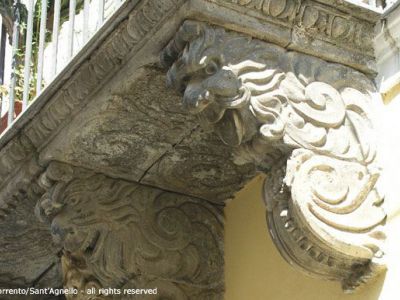
The House of Cornelia Tasso in Sorrento offers a unique glimpse into the Renaissance era and the life of one of its most eminent literary figures. Situated in the historic core of Sorrento, this ancient dwelling, sometimes referred to as the Sersale house, was once the abode of Cornelia, the sister of the celebrated poet Torquato Tasso.
Cornelia married Marzio Sersale in 1558 and continued to reside in this house with her sons, Antonino and Alessandro, even after becoming a widow. The residence is distinguishable by its charming balcony adorned with decorative stonework, a feature that marks its historical significance.
Torquato Tasso, born in Sorrento in 1544, is renowned for his epic poem "Gerusalemme Liberata" ("Jerusalem Delivered"), a creative rendition of the Christian-Muslim conflicts during the first Crusade's siege of Jerusalem. Tasso emerged as the preeminent Italian poet of the Renaissance, captivating readers across Europe until the 19th century. His literary achievements inspired subsequent luminaries, including Spencer and Byron.
Despite his nomadic lifestyle, Tasso harbored a strong bond with his sister, Cornelia. Returning to Sorrento amid growing paranoia and persecution fears, he sought refuge in a Franciscan convent, then tested Cornelia's loyalty by posing as a peasant reporting his death. Despite brief solace in Sorrento, he yearned for the familiar Ferrara court and eventually returned, only to be later confined to a madhouse due to erratic behavior. Despite regaining freedom, his health declined, leading to his death in Rome at 51 in April 1595.
The House of Cornelia Tasso stands as a tribute to the Tasso family's legacy and Torquato Tasso's lasting influence on European literature, reflecting his intricate personal history.
Cornelia married Marzio Sersale in 1558 and continued to reside in this house with her sons, Antonino and Alessandro, even after becoming a widow. The residence is distinguishable by its charming balcony adorned with decorative stonework, a feature that marks its historical significance.
Torquato Tasso, born in Sorrento in 1544, is renowned for his epic poem "Gerusalemme Liberata" ("Jerusalem Delivered"), a creative rendition of the Christian-Muslim conflicts during the first Crusade's siege of Jerusalem. Tasso emerged as the preeminent Italian poet of the Renaissance, captivating readers across Europe until the 19th century. His literary achievements inspired subsequent luminaries, including Spencer and Byron.
Despite his nomadic lifestyle, Tasso harbored a strong bond with his sister, Cornelia. Returning to Sorrento amid growing paranoia and persecution fears, he sought refuge in a Franciscan convent, then tested Cornelia's loyalty by posing as a peasant reporting his death. Despite brief solace in Sorrento, he yearned for the familiar Ferrara court and eventually returned, only to be later confined to a madhouse due to erratic behavior. Despite regaining freedom, his health declined, leading to his death in Rome at 51 in April 1595.
The House of Cornelia Tasso stands as a tribute to the Tasso family's legacy and Torquato Tasso's lasting influence on European literature, reflecting his intricate personal history.

7) Taverna dell' 800
The Taverna Dell' 800, located in the charming town of Sorrento, embodies the essence of traditional Italian hospitality and culinary excellence. This family-owned restaurant has been providing an authentic dining experience for many years, fueled by passion, dedication, and professionalism. It's renowned for its skilled and friendly staff who strive to exceed the expectations of every diner, ensuring a memorable visit for both locals and tourists.
The menu at Taverna Dell' 800 is centered around a commitment to quality, with each dish carefully crafted from the finest ingredients to showcase the flavors of the Mediterranean. They take pride in offering a diverse selection of local cuisine, including seafood and land-based options, catering to various tastes and preferences.
Aside from their delicious food, Taverna Dell' 800 also offers a range of services to enhance the dining experience. This includes a wide selection of beers and wines to complement meals, as well as the option to host private events. Their bar activities and efficient takeaway service provide flexibility for patrons who wish to enjoy their culinary delights in different settings.
For those seeking an authentic taste of Sorrento and the Mediterranean, Taverna Dell' 800 is a shining example of Italian culinary heritage, inviting diners to embark on a truly remarkable gastronomic journey.
The menu at Taverna Dell' 800 is centered around a commitment to quality, with each dish carefully crafted from the finest ingredients to showcase the flavors of the Mediterranean. They take pride in offering a diverse selection of local cuisine, including seafood and land-based options, catering to various tastes and preferences.
Aside from their delicious food, Taverna Dell' 800 also offers a range of services to enhance the dining experience. This includes a wide selection of beers and wines to complement meals, as well as the option to host private events. Their bar activities and efficient takeaway service provide flexibility for patrons who wish to enjoy their culinary delights in different settings.
For those seeking an authentic taste of Sorrento and the Mediterranean, Taverna Dell' 800 is a shining example of Italian culinary heritage, inviting diners to embark on a truly remarkable gastronomic journey.
8) Ancient Walls and Parsano Bastion
In 420 BC, as Greek influence began to wane in the ancient town of Sureo before it became known as Sorrento, the Samnites invaded the south. But Sureo was protected by its Greek fortifications and the Sammnites stopped at Naples. The walls of Sorrento have always protected the town. Today they are a defensive anachronism, but they are in better shape than ever.
Ruins of the ancient Greek and Roman walls were discovered during excavations of the Parsano Gate in 1921. This was verified by a plaque thoughtfully installed there in the age of Augustus. The Romans had filled and bricked up the Greek gateway.
In the time of the Roman Empire the town was completely wrapped in walls. There were five fortified gates guarding against attacks from the sea or land, especially from the sea. When attackers were sighted alarms would sound, calling people to come inside the walls.
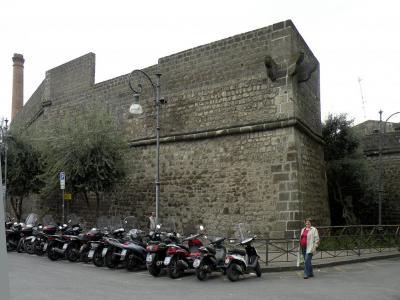
During Spanish rule a renewal of the walls was begun in 1551, after the end of the wars between the Angevins and the Aragonese. It was a little late for that, however. The Saracens successfully invaded in 1558, breaking through the Big Marina Gate. The movement to strengthen the walls and gates then became the all-important thing to do.
Spanish engineer Pedro Trevino rebuilt the south wall with tufa blocks plastered over. The Greek and Roman fortifications were preserved where possible. He restored four remaining bastions and joined them together with tracks called "corrine."
The Parsano Gate was built in the 17th century. Originally called the Gate of Anastasi, it was built on the ruins of the old Greek walls.
Ruins of the ancient Greek and Roman walls were discovered during excavations of the Parsano Gate in 1921. This was verified by a plaque thoughtfully installed there in the age of Augustus. The Romans had filled and bricked up the Greek gateway.
In the time of the Roman Empire the town was completely wrapped in walls. There were five fortified gates guarding against attacks from the sea or land, especially from the sea. When attackers were sighted alarms would sound, calling people to come inside the walls.
During Spanish rule a renewal of the walls was begun in 1551, after the end of the wars between the Angevins and the Aragonese. It was a little late for that, however. The Saracens successfully invaded in 1558, breaking through the Big Marina Gate. The movement to strengthen the walls and gates then became the all-important thing to do.
Spanish engineer Pedro Trevino rebuilt the south wall with tufa blocks plastered over. The Greek and Roman fortifications were preserved where possible. He restored four remaining bastions and joined them together with tracks called "corrine."
The Parsano Gate was built in the 17th century. Originally called the Gate of Anastasi, it was built on the ruins of the old Greek walls.
9) Cattedrale di Sorrento (Sorrento Cathedral)
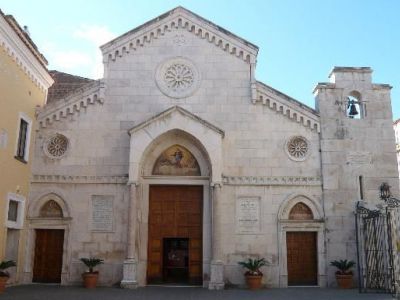
The Sorrento Cathedral, dedicated to the Virgin of the Assumption and the Apostles Philip and James, stands at the heart of the town. Consecrated in 1113, the cathedral has undergone several transformations, particularly between 1450 and 1573. Its current facade, completed in 1924, reflects a neo-Gothic style, while the church itself was originally built in Baroque fashion on the site of an ancient Greek temple, thought to have been dedicated to Zeus.
As you approach, notice the three entrances. The 16th-century central doorway, framed by antique marble columns, is topped with an ogival arch. Each entrance features a lunette: the larger central one honors the Virgin Mary, while the smaller ones depict Saints Philip and James. Above, the facade rises with battlements and a blind rose window, adding an unusual but charming character to the building.
Step inside, and you will see a Latin-cross layout with three naves, separated by fourteen sturdy pillars. The ceiling is flat, adorned with paintings of 2nd-century martyrs, and the dome, frescoed in 1902 by Pietro Barone and Augusto Moriani, adds a soft luminosity to the interior. On the right side of the altar, don’t miss the small chapel where the poet Torquato Tasso was baptized, linking the cathedral to one of Sorrento’s most celebrated historical figures.
Almost 200 feet away, the bell tower stands slightly apart from the main structure. Its 11th-century Romanesque base supports four square sections featuring arches, niches, cornices, ceramic tiles, and a clock, giving visitors a glimpse of architectural layers spanning centuries.
As you approach, notice the three entrances. The 16th-century central doorway, framed by antique marble columns, is topped with an ogival arch. Each entrance features a lunette: the larger central one honors the Virgin Mary, while the smaller ones depict Saints Philip and James. Above, the facade rises with battlements and a blind rose window, adding an unusual but charming character to the building.
Step inside, and you will see a Latin-cross layout with three naves, separated by fourteen sturdy pillars. The ceiling is flat, adorned with paintings of 2nd-century martyrs, and the dome, frescoed in 1902 by Pietro Barone and Augusto Moriani, adds a soft luminosity to the interior. On the right side of the altar, don’t miss the small chapel where the poet Torquato Tasso was baptized, linking the cathedral to one of Sorrento’s most celebrated historical figures.
Almost 200 feet away, the bell tower stands slightly apart from the main structure. Its 11th-century Romanesque base supports four square sections featuring arches, niches, cornices, ceramic tiles, and a clock, giving visitors a glimpse of architectural layers spanning centuries.
10) The Cathedral’s Bell Tower
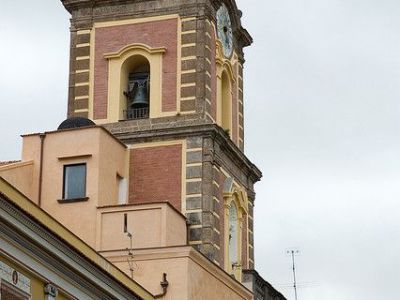
The Bell Tower of the Cathedral in Sorrento is a prominent landmark that rises three stories above the surrounding buildings. Its unique red and yellow stone facade makes it easily recognizable from various points in the town's historic center.
The lower two stories of the tower date back to the 11th century, coinciding with the initial construction of the Cathedral. This period marked the beginning of Sorrento's ecclesiastical architectural development. However, the tower's current appearance is largely the result of renovations in the 15th century, when the Cathedral was reconstructed in a Romanesque style, dedicated to San Filippo and San Giacomo. During this renovation, three additional stories were added to the bell tower, significantly changing its appearance within the town.
A notable decorative feature of the tower is its blue majolica clock, which adds to its visual appeal. This clock not only enhances the tower's aesthetic but also serves a practical purpose, providing timekeeping for both residents and visitors of Sorrento.
Throughout Sorrento's history, the bell tower has been more than just a piece of architecture; it has been an integral part of community life. The ground floor, located under an archway from Pietà Street (Via Pietà), served as a central gathering place during medieval times. Even after the construction of a castle in what is now Tasso Square (Piazza Tasso)-another gathering place that has since been demolished-the bell tower remained a focal point for communal activities. The columns supporting the tower at ground level believed to be of ancient Roman or early Byzantine origin, attest to the tower's enduring presence and significance in Sorrento's urban landscape.
The lower two stories of the tower date back to the 11th century, coinciding with the initial construction of the Cathedral. This period marked the beginning of Sorrento's ecclesiastical architectural development. However, the tower's current appearance is largely the result of renovations in the 15th century, when the Cathedral was reconstructed in a Romanesque style, dedicated to San Filippo and San Giacomo. During this renovation, three additional stories were added to the bell tower, significantly changing its appearance within the town.
A notable decorative feature of the tower is its blue majolica clock, which adds to its visual appeal. This clock not only enhances the tower's aesthetic but also serves a practical purpose, providing timekeeping for both residents and visitors of Sorrento.
Throughout Sorrento's history, the bell tower has been more than just a piece of architecture; it has been an integral part of community life. The ground floor, located under an archway from Pietà Street (Via Pietà), served as a central gathering place during medieval times. Even after the construction of a castle in what is now Tasso Square (Piazza Tasso)-another gathering place that has since been demolished-the bell tower remained a focal point for communal activities. The columns supporting the tower at ground level believed to be of ancient Roman or early Byzantine origin, attest to the tower's enduring presence and significance in Sorrento's urban landscape.
11) Piazza Angelina Lauro (Angelina Lauro Square)
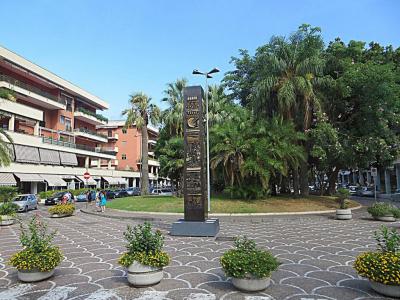
Angelina Lauro Square, located at the heart of Sorrento, is one of the city's main squares, embodying the lively atmosphere and culture of this beautiful area. Established in the late 19th century, it sits in the bustling commercial area of Sorrento, at the intersection of Corso Italia and the Circumvesuviana railway station. This charming plaza, often described as a peaceful oasis in the midst of city life, is surrounded by greenery and a mix of shops and residences, attracting locals and tourists alike to enjoy its serene ambiance.
A typical day at Lauro Square might start with enjoying a coffee and local pastry at one of the nearby cafes, as the sunlight filters through the palm trees, gently waking up the city. It's a moment to plan the day's activities, maybe flipping through a guidebook before heading to explore Sorrento's seaside and historic Old Town from the nearby Circumvesuviana station.
As night falls, Lauro Square comes alive, reflecting Sorrento's vibrant social scene. The evening air is filled with the chatter of diners at the surrounding restaurants, where both locals and tourists gather to enjoy delicious food and drinks under the modernist architectural backdrop of the square. This architectural style, emerging in the 1970s, signifies the modernization of southern Italy in the latter part of the 20th century, making the square not only a social hub but also a symbol of architectural progress.
A typical day at Lauro Square might start with enjoying a coffee and local pastry at one of the nearby cafes, as the sunlight filters through the palm trees, gently waking up the city. It's a moment to plan the day's activities, maybe flipping through a guidebook before heading to explore Sorrento's seaside and historic Old Town from the nearby Circumvesuviana station.
As night falls, Lauro Square comes alive, reflecting Sorrento's vibrant social scene. The evening air is filled with the chatter of diners at the surrounding restaurants, where both locals and tourists gather to enjoy delicious food and drinks under the modernist architectural backdrop of the square. This architectural style, emerging in the 1970s, signifies the modernization of southern Italy in the latter part of the 20th century, making the square not only a social hub but also a symbol of architectural progress.
12) Valley of the Mills
Some 35,000 years ago, in today's Sorrento, a volcano erupted. It cut a deep gorge through the limestone on the spot where the city's center is currently located. Waters, moving through the canyon, sculpted out fast-running channels to the sea. Over the centuries, settlements arose, leaving historical evidence of their passing in the area's caves.
There are mysteries and legends about the caves. Many people of Sorrento believed the gorge was patrolled at night by a huge medieval figure, armed head to foot. It was the mission of the ghost to kill anyone who did not know the magic words to unlock the treasure of the caves.
While there may not have been a ghost, there was "treasure." In 1885, Leonardo Lorenzoni, director of the Technical School of Vigiano, discovered several rare and precious artifacts of early settlers. He donated his find to professor Justinian Nicolucci of the University of Naples. He called the artifact cave "Nicolucci's Cave."
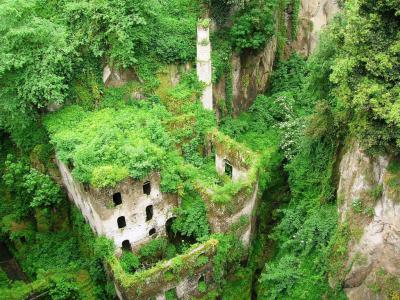
A good view of the mills is from behind Tasso Square. There are two streams, the Casariano-Cesarano, and Saint Antonino. Where the two streams meet is where the mills were built. Mills of one sort or another have been in the gorge since the 10th century. A grain mill, a sawmill, and an old washhouse are among the ruins.
The mills were isolated from the sea when Tasso Square was built in 1866. They were later abandoned. The gorge was taken over by exotic vegetation and rare ferns.
There are mysteries and legends about the caves. Many people of Sorrento believed the gorge was patrolled at night by a huge medieval figure, armed head to foot. It was the mission of the ghost to kill anyone who did not know the magic words to unlock the treasure of the caves.
While there may not have been a ghost, there was "treasure." In 1885, Leonardo Lorenzoni, director of the Technical School of Vigiano, discovered several rare and precious artifacts of early settlers. He donated his find to professor Justinian Nicolucci of the University of Naples. He called the artifact cave "Nicolucci's Cave."
A good view of the mills is from behind Tasso Square. There are two streams, the Casariano-Cesarano, and Saint Antonino. Where the two streams meet is where the mills were built. Mills of one sort or another have been in the gorge since the 10th century. A grain mill, a sawmill, and an old washhouse are among the ruins.
The mills were isolated from the sea when Tasso Square was built in 1866. They were later abandoned. The gorge was taken over by exotic vegetation and rare ferns.
13) Piazza Tasso (Tasso Square) (must see)
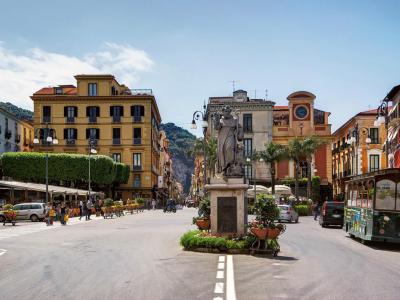
Torquato Tasso, born in 1544, stands on a granite pedestal in the square named for him. Tasso was the greatest poet of his era. He died in 1595, days before being crowned King of Poets by Pope Clement VIII. His statue shares the square with that of Saint Antonino, who sought asylum in Sorrento during the Lombard invasions of the 6th century.
The square was initially called Castle Square. Where the statue of Saint Antonino stands today was once the location of the 15th-century castle of Ferdinand of Aragon, demolished in 1843. The monument of Torquato Tasso was dedicated in 1870. The square sits astride the deep gorge that divides the center of Sorrento.
Surrounding the square are several notable historical buildings. In the southwestern part, you will find the Correale Palace, with its tiled courtyard, rebuilt in 1768. On the northern side of the square stands the Church of Santa Maria del Carmine. Inside, don’t miss the 1710 ceiling painting by Onofrio Avellino depicting the Virgin with Saint Simon, as well as the 16th-century gilded reliquaries containing saints’ bones.
Tasso Square is the entry point to the historic old town. Shops, restaurants, and bars line the square, creating a lively atmosphere. The Fauno Bar, located near the statue of Torquato Tasso, is a popular spot for cappuccino and pastries. Corso Italia, the main shopping street, branches off from the square, while smaller side streets offer additional boutiques and local shops to explore.
Cross over the forbidding gorge to find access to Sorrento Big Marina. It is where one may catch the water bus to the Isla of Capri, Tiberius's exotic playground. There are tour trolleys and hop-on, hop-off open-top sight-seeing busses from the square. Did we mention horse carriages as well? Yes, we did, just now.
As inviting as it is, Tasso Square stays busy throughout the day, so keep an eye out for scooters and traffic as you explore.
The square was initially called Castle Square. Where the statue of Saint Antonino stands today was once the location of the 15th-century castle of Ferdinand of Aragon, demolished in 1843. The monument of Torquato Tasso was dedicated in 1870. The square sits astride the deep gorge that divides the center of Sorrento.
Surrounding the square are several notable historical buildings. In the southwestern part, you will find the Correale Palace, with its tiled courtyard, rebuilt in 1768. On the northern side of the square stands the Church of Santa Maria del Carmine. Inside, don’t miss the 1710 ceiling painting by Onofrio Avellino depicting the Virgin with Saint Simon, as well as the 16th-century gilded reliquaries containing saints’ bones.
Tasso Square is the entry point to the historic old town. Shops, restaurants, and bars line the square, creating a lively atmosphere. The Fauno Bar, located near the statue of Torquato Tasso, is a popular spot for cappuccino and pastries. Corso Italia, the main shopping street, branches off from the square, while smaller side streets offer additional boutiques and local shops to explore.
Cross over the forbidding gorge to find access to Sorrento Big Marina. It is where one may catch the water bus to the Isla of Capri, Tiberius's exotic playground. There are tour trolleys and hop-on, hop-off open-top sight-seeing busses from the square. Did we mention horse carriages as well? Yes, we did, just now.
As inviting as it is, Tasso Square stays busy throughout the day, so keep an eye out for scooters and traffic as you explore.
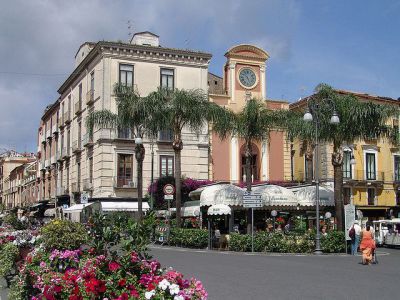
14) Sedile di Porta (Gate Door Seat)
The Sedile di Porta, also known as the Gate Door Seat, in Sorrento, represents the rich history of the town, blending centuries of tradition, governance, and architecture. Situated at the center of Tasso Square (Piazza Tasso) and San Cesario Street, it symbolizes Sorrento's seamless integration of past and present.
Originally, during medieval times, the Gate Door Seat served as an important meeting point for the town's noble citizens, being close to Sorrento's main gate, the "Porta." It hosted noble assemblies and played a significant role in local governance. Its emblem, showing a door with three keys on a gold background, represents its historical function as a meeting place for the nobility.
In the 16th century, the Gate Door Seat was a focal point of Sorrento's political life, as evidenced by a plaque in the Tasso Square, highlighting the gatherings of noble families and their influence on town affairs. However, over time, its function changed. After violent disputes in 1319, some families left to establish a new assembly seat, leading to the creation of Dominova along San Cesario Street.
Despite undergoing restorations in the 17th and 18th centuries funded by nobles, the Gate Door Seat saw significant transformations. With the cessation of noble seats in 1800, it became a prison, then a guard post, and later a private club, the Circolo Sorrentino, adding to its historical significance.
Today, the original appearance of the Gate Door Seat has changed, with only a round arch supported by piperno columns along Via San Cesareo remaining recognizable. However, architectural details such as a clock from 1882 on the facade facing Tasso Square and a preserved painting in the church of the Servi di Maria offer glimpses into its past, allowing visitors to connect with Sorrento's heritage.
Originally, during medieval times, the Gate Door Seat served as an important meeting point for the town's noble citizens, being close to Sorrento's main gate, the "Porta." It hosted noble assemblies and played a significant role in local governance. Its emblem, showing a door with three keys on a gold background, represents its historical function as a meeting place for the nobility.
In the 16th century, the Gate Door Seat was a focal point of Sorrento's political life, as evidenced by a plaque in the Tasso Square, highlighting the gatherings of noble families and their influence on town affairs. However, over time, its function changed. After violent disputes in 1319, some families left to establish a new assembly seat, leading to the creation of Dominova along San Cesario Street.
Despite undergoing restorations in the 17th and 18th centuries funded by nobles, the Gate Door Seat saw significant transformations. With the cessation of noble seats in 1800, it became a prison, then a guard post, and later a private club, the Circolo Sorrentino, adding to its historical significance.
Today, the original appearance of the Gate Door Seat has changed, with only a round arch supported by piperno columns along Via San Cesareo remaining recognizable. However, architectural details such as a clock from 1882 on the facade facing Tasso Square and a preserved painting in the church of the Servi di Maria offer glimpses into its past, allowing visitors to connect with Sorrento's heritage.
