Custom Walk in Cape Town, South Africa by drewettmarn_94a575 created on 2026-07-15
Guide Location: South Africa » Cape Town
Guide Type: Custom Walk
# of Sights: 9
Tour Duration: 2 Hour(s)
Travel Distance: 2.4 Km or 1.5 Miles
Share Key: VY22P
Guide Type: Custom Walk
# of Sights: 9
Tour Duration: 2 Hour(s)
Travel Distance: 2.4 Km or 1.5 Miles
Share Key: VY22P
How It Works
Please retrieve this walk in the GPSmyCity app. Once done, the app will guide you from one tour stop to the next as if you had a personal tour guide. If you created the walk on this website or come to the page via a link, please follow the instructions below to retrieve the walk in the app.
Retrieve This Walk in App
Step 1. Download the app "GPSmyCity: Walks in 1K+ Cities" on Apple App Store or Google Play Store.



Step 2. In the GPSmyCity app, download(or launch) the guide "Cape Town Map and Walking Tours".
Step 3. Tap the menu button located at upper right corner of the "Walks" screen and select "Retrieve custom walk". Enter the share key: VY22P
1) Wale Street
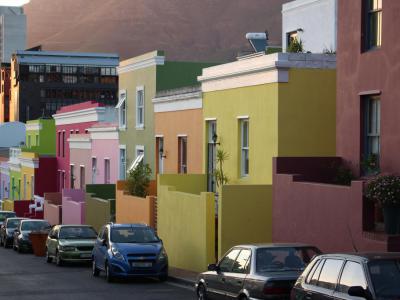
Wale Street transverses the heart of the Bo-Kaap District. Here, you will find colorful houses and traditional cobbled streets. Some of the houses date back to 1763-1768. In the 18th and 19th centuries, the Dutch captured slaves from Indonesia, Zanzibar, Mozambique, and Madagascar. These slaves leased homes in the Bo-Kaap district. According to folklore, when the houses were leased, they had to be painted white. After the slaves were granted freedom and allowed to buy houses, the former slaves painted the homes in vibrant colors.
The Bo-Kaap area is steeped in Malaysian culture. Many descendants live in the Bo-Kaap area and keep the "Cape Malay" traditions alive. Cape Minstrel Carnival is held every January 2nd and is a must-see if you are in the area.
While walking on Wale Street, keep an eye out for Islamic shrines, known as "kramats." You'll also see mosques, food markets, and craft markets in the area.
Visitors will love trying Cape Malay food; it's spicy, aromatic, and delicious!
The Bo-Kaap area is steeped in Malaysian culture. Many descendants live in the Bo-Kaap area and keep the "Cape Malay" traditions alive. Cape Minstrel Carnival is held every January 2nd and is a must-see if you are in the area.
While walking on Wale Street, keep an eye out for Islamic shrines, known as "kramats." You'll also see mosques, food markets, and craft markets in the area.
Visitors will love trying Cape Malay food; it's spicy, aromatic, and delicious!
2) Bo-Kaap Museum
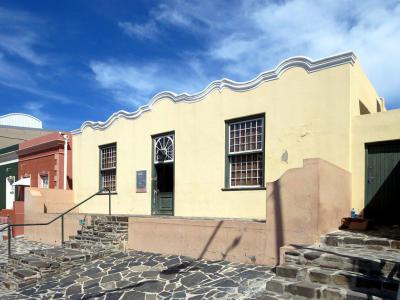
The Bo-Kaap Museum's building dates back to the 1760s. It's the oldest unchanged house in the area. The Bo-Kapp Museum celebrates the Cape Muslims' culture, which prospered in this area after the abolition of slavery in the 1834. The museum was founded in 1978.
The museum is furnished as a typical 19th-century Muslim dwelling and celebrates Islamic culture. The "Cape Malays" were known as skilled artists, carpenters, and scholars. The old Cape Dutch feel is accentuated by yellowwood floors and ceilings. The teak door frames, window frames, and shutters are representative of the traditional local style.
One of the rooms is beautifully decorated as a bridal chamber and features a bridal dress. Visitors will also find examples of Quranic calligraphy, historic photographs, and Islamic art.
Another exhibit is dedicated to the convicts, slaves, and free workers who built Cape Town over three centuries. This exhibit focuses on pre-apartheid racial discrimination.
The museum is furnished as a typical 19th-century Muslim dwelling and celebrates Islamic culture. The "Cape Malays" were known as skilled artists, carpenters, and scholars. The old Cape Dutch feel is accentuated by yellowwood floors and ceilings. The teak door frames, window frames, and shutters are representative of the traditional local style.
One of the rooms is beautifully decorated as a bridal chamber and features a bridal dress. Visitors will also find examples of Quranic calligraphy, historic photographs, and Islamic art.
Another exhibit is dedicated to the convicts, slaves, and free workers who built Cape Town over three centuries. This exhibit focuses on pre-apartheid racial discrimination.
3) Greenmarket Square (must see)
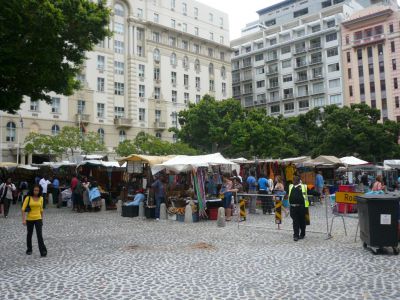
Greenmarket Square, nestled in the heart of Cape Town's Central Business District, is a vibrant and historical marketplace that has evolved through various incarnations over the years. From its early days as a slave market to serving as a fruit and vegetable market, and even functioning as a parking lot, today it stands as a bustling flea market cherished by both locals and tourists alike.
The square offers a unique shopping experience, with its ancient cobblestones adding to the charm and providing a stark contrast to the dynamic, cosmopolitan vibe of Cape Town. The market is renowned for its wide array of informal traders who showcase a diverse range of merchandise that reflects the rich tapestry of African traditions. Shoppers can find an assortment of goods such as batiks, beadwork, sculptures, glassware, jewelry, clothing, footwear, music CDs, sunglasses, and paintings, all offered at reasonable prices.
One of the defining features of Greenmarket Square is the blend of cross-continental merchandise, which includes items from various African cultures like the Masai, Xhosa, Zulu, and the Bade tribe from Senegal. This melting pot of cultures not only offers a glimpse into the continent's diverse heritage but also allows for a shopping experience that is both adventurous and educational.
The square is not just about shopping; it's also a place where visitors can engage with the friendly, vibrant vendors who embody the diverse cultures of Cape Town. The atmosphere is further enlivened by entertainers such as buskers, drummers, jugglers, and mime artists, who add to the lively ambiance and make shopping at Greenmarket Square an unforgettable experience.
Adding to the square's appeal are the surrounding restaurants and cafés, where visitors can savor delicious local dishes and drinks. The location of Greenmarket Square is also a significant draw, as it is situated within walking distance from several key historical and cultural landmarks, including the Company Gardens, Houses of Parliament, South African Museum, Pan African Market, Castle of Good Hope, and the Old Town House, which showcases early Cape Dutch architecture and houses an important collection of Dutch and Flemish Masters' artworks.
The square offers a unique shopping experience, with its ancient cobblestones adding to the charm and providing a stark contrast to the dynamic, cosmopolitan vibe of Cape Town. The market is renowned for its wide array of informal traders who showcase a diverse range of merchandise that reflects the rich tapestry of African traditions. Shoppers can find an assortment of goods such as batiks, beadwork, sculptures, glassware, jewelry, clothing, footwear, music CDs, sunglasses, and paintings, all offered at reasonable prices.
One of the defining features of Greenmarket Square is the blend of cross-continental merchandise, which includes items from various African cultures like the Masai, Xhosa, Zulu, and the Bade tribe from Senegal. This melting pot of cultures not only offers a glimpse into the continent's diverse heritage but also allows for a shopping experience that is both adventurous and educational.
The square is not just about shopping; it's also a place where visitors can engage with the friendly, vibrant vendors who embody the diverse cultures of Cape Town. The atmosphere is further enlivened by entertainers such as buskers, drummers, jugglers, and mime artists, who add to the lively ambiance and make shopping at Greenmarket Square an unforgettable experience.
Adding to the square's appeal are the surrounding restaurants and cafés, where visitors can savor delicious local dishes and drinks. The location of Greenmarket Square is also a significant draw, as it is situated within walking distance from several key historical and cultural landmarks, including the Company Gardens, Houses of Parliament, South African Museum, Pan African Market, Castle of Good Hope, and the Old Town House, which showcases early Cape Dutch architecture and houses an important collection of Dutch and Flemish Masters' artworks.
4) Old Town House
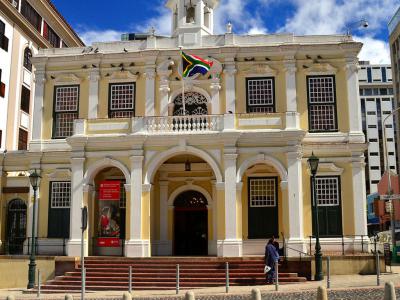
The Old Town House is one of Cape Town’s most elegant and historically significant buildings, situated on the iconic Grand Parade in the city center. Built in 1755, it originally served as the city’s main municipal building, housing the offices of the mayor and the city council. With its distinctive Georgian architecture, whitewashed façade, and large wooden shutters, the Old Town House is a striking example of 18th-century colonial design, standing as a symbol of Cape Town’s rich civic history.
Today, the building is home to the Cape Town Heritage Trust, offering visitors a glimpse into the city’s past through its preservation of artifacts, documents, and exhibits related to Cape Town’s architectural and social history. Tourists are often drawn to the impressive clock tower, which dominates the façade and provides a classic backdrop for photographs of the Grand Parade and nearby City Hall.
Inside, the building hosts rotating exhibitions, cultural events, and guided tours, giving visitors an engaging introduction to Cape Town’s colonial and civic development. The interior reflects the elegance of the period, with high ceilings, wooden floors, and period furnishings that convey the lifestyle and governance of the city’s early European settlers.
Today, the building is home to the Cape Town Heritage Trust, offering visitors a glimpse into the city’s past through its preservation of artifacts, documents, and exhibits related to Cape Town’s architectural and social history. Tourists are often drawn to the impressive clock tower, which dominates the façade and provides a classic backdrop for photographs of the Grand Parade and nearby City Hall.
Inside, the building hosts rotating exhibitions, cultural events, and guided tours, giving visitors an engaging introduction to Cape Town’s colonial and civic development. The interior reflects the elegance of the period, with high ceilings, wooden floors, and period furnishings that convey the lifestyle and governance of the city’s early European settlers.
5) Company's Garden (must see)
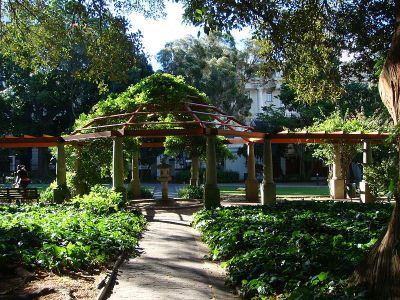
Company’s Garden is one of Cape Town’s oldest and most cherished public spaces, offering a peaceful green retreat in the heart of the city. Established in the 1650s by the Dutch East India Company, the garden was originally created to supply fresh produce to passing ships. Today, it blends centuries of history with landscaped lawns, towering oak trees, and shaded pathways, making it a popular stop for both tourists and locals.
One of the garden’s main attractions is its collection of historic monuments and statues. Visitors will find memorials to key figures in South African history, including statues of Queen Victoria, Jan Smuts, and Cecil John Rhodes. These monuments reflect the country’s layered and often complex past, adding depth to a leisurely stroll through the grounds.
A pear tree planted in 1652 is still growing in the garden and is the oldest cultivated tree in South Africa. The pear tree is located toward the eastern side of the garden, near the South African National Gallery and the Iziko South African Museum. It stands in a small fenced area to protect it due to its age.
Other historical features include the Rutherford Fountain, installed in 1864, and a well pump embedded in an oak tree, dating back to 1842. These charming relics offer visitors a tangible connection to the garden’s early history.
Wildlife adds to the garden’s charm. Friendly squirrels are a familiar sight, and the aviary showcases a selection of birds. Benches, cafés, and open lawns invite visitors to pause, enjoy a picnic, or simply take in views of Table Mountain rising above the city skyline.
One of the garden’s main attractions is its collection of historic monuments and statues. Visitors will find memorials to key figures in South African history, including statues of Queen Victoria, Jan Smuts, and Cecil John Rhodes. These monuments reflect the country’s layered and often complex past, adding depth to a leisurely stroll through the grounds.
A pear tree planted in 1652 is still growing in the garden and is the oldest cultivated tree in South Africa. The pear tree is located toward the eastern side of the garden, near the South African National Gallery and the Iziko South African Museum. It stands in a small fenced area to protect it due to its age.
Other historical features include the Rutherford Fountain, installed in 1864, and a well pump embedded in an oak tree, dating back to 1842. These charming relics offer visitors a tangible connection to the garden’s early history.
Wildlife adds to the garden’s charm. Friendly squirrels are a familiar sight, and the aviary showcases a selection of birds. Benches, cafés, and open lawns invite visitors to pause, enjoy a picnic, or simply take in views of Table Mountain rising above the city skyline.
6) Parliament Building of South Africa
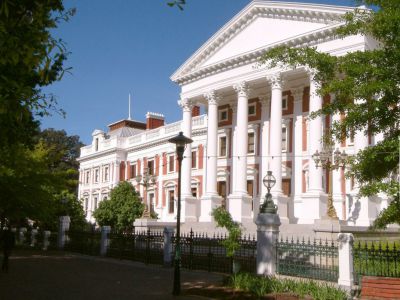
The Parliament Building of South Africa, located in the heart of Cape Town, is one of the country’s most significant political and historical landmarks. Set at the top of Government Avenue, at the edge of the historic Company’s Garden, the complex reflects South Africa’s long and evolving democratic journey. The original section of Parliament was completed in the late 19th century, with later additions blending neoclassical and Cape Dutch architectural influences.
For visitors, one of the main attractions is the opportunity to view a working seat of government. When Parliament is in session, visitors may observe debates from the public galleries, offering a rare glimpse into South Africa’s democratic process. Guided tours, available on selected days, provide insight into the building’s history, architecture, and political significance, including key moments from the apartheid era and the transition to democracy.
The interiors are rich in symbolism and craftsmanship. Highlights include the National Assembly chamber, with its distinctive seating layout and design, and the Old Assembly, which tells the story of earlier parliamentary traditions. Artworks, portraits of past leaders, and ceremonial spaces further reflect the country’s complex political heritage.
Equally appealing is the surrounding setting. Parliament overlooks the leafy Company’s Garden, one of Cape Town’s most pleasant public spaces, home to historic statues, museums, and cafés. With Table Mountain rising in the background, the Parliament Building is not only a center of political power but also a visually striking and educational stop for visitors interested in South Africa’s history, governance, and civic life.
For visitors, one of the main attractions is the opportunity to view a working seat of government. When Parliament is in session, visitors may observe debates from the public galleries, offering a rare glimpse into South Africa’s democratic process. Guided tours, available on selected days, provide insight into the building’s history, architecture, and political significance, including key moments from the apartheid era and the transition to democracy.
The interiors are rich in symbolism and craftsmanship. Highlights include the National Assembly chamber, with its distinctive seating layout and design, and the Old Assembly, which tells the story of earlier parliamentary traditions. Artworks, portraits of past leaders, and ceremonial spaces further reflect the country’s complex political heritage.
Equally appealing is the surrounding setting. Parliament overlooks the leafy Company’s Garden, one of Cape Town’s most pleasant public spaces, home to historic statues, museums, and cafés. With Table Mountain rising in the background, the Parliament Building is not only a center of political power but also a visually striking and educational stop for visitors interested in South Africa’s history, governance, and civic life.
7) Slave Lodge
The Slave Lodge is an interesting museum to visit as it pays tribute to the thousands of slaves brought to Cape Town between the 17th and 19th centuries.
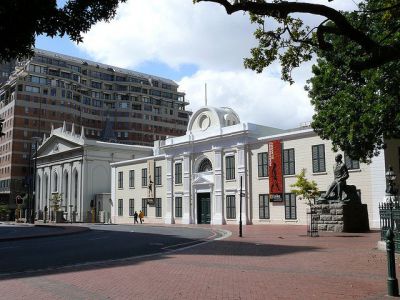
The lodge was built in 1679 and it was here that the Dutch East India Company housed up to a thousand slaves in unsanitary, cramped conditions. The original lodge had no windows and was built of unadorned brick, but today it is a smart, white-washed building that tells the story of the African and Asian slaves who lived and worked in the city.
Through interactive displays, you will learn about slave family roots, their way of life and how some of them settled in the city after winning their freedom.
The museum has a small but excellent collection of Egyptian artifacts that date back to 3050BC, including silver items, textiles, toys, and tools. You can admire a superb collection of Greek vases and ceramics, pottery and cuneiform tablets from the Roman occupation of the Near East.
Between 1811 and 1911 the lodge changed hands several times: it was a post office, a public library, a small prison, and the Supreme Court. In the courtyard, you will see the tombstones (but not the graves) of Cape Town’s founder, Jan Van Riebeeck and his wife Maria.
The lodge was built in 1679 and it was here that the Dutch East India Company housed up to a thousand slaves in unsanitary, cramped conditions. The original lodge had no windows and was built of unadorned brick, but today it is a smart, white-washed building that tells the story of the African and Asian slaves who lived and worked in the city.
Through interactive displays, you will learn about slave family roots, their way of life and how some of them settled in the city after winning their freedom.
The museum has a small but excellent collection of Egyptian artifacts that date back to 3050BC, including silver items, textiles, toys, and tools. You can admire a superb collection of Greek vases and ceramics, pottery and cuneiform tablets from the Roman occupation of the Near East.
Between 1811 and 1911 the lodge changed hands several times: it was a post office, a public library, a small prison, and the Supreme Court. In the courtyard, you will see the tombstones (but not the graves) of Cape Town’s founder, Jan Van Riebeeck and his wife Maria.
8) De Tuynhuys (Garden House)
If you are interested in architecture and history but don’t want to visit museums, then you will be happy just to photograph De Tuynhuys from the outside, as it houses the offices of the State President and is not open to the public.
It is rather hard to imagine, but in 1675 this building was a rather shabby tool-shed, owned by the Dutch East India Company. At the time there were few splendid buildings in the Cape Town area, which was a basic supply station for Dutch ships passing through the Cape of Good Hope on their way to the Far East and India.
In 1679, when Simon van der Stel was appointed as the Commander of this growing outpost, there was a bit of a panic about where to lodge him. As the tool shed was the only unoccupied building, it was hastily enlarged into a two-storey house with a flat roof and a large veranda.
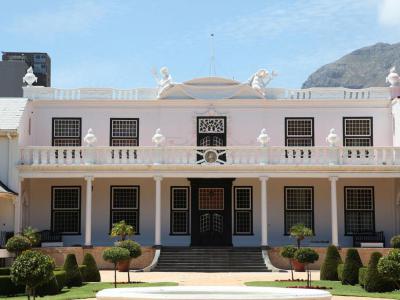
By 1751 it had become the summer residence for succeeding governors and had been refurbished in Neo-classical style with sculptures of Mercury and Poseidon added – the former being the Roman god of trade and the latter the god of the sea – to enhance Dutch prowess at both trade and sailing. The beautiful front door was created by a slave carpenter, Rangton van Bali, whose excellent work later earned him his freedom.
In 1824 a lovely ballroom was added, but the building was damp and no longer habitable except during the driest months of the year. At the beginning of the 20th century the town council considered demolishing it, but as the house was linked to the city’s history, they couldn’t decide whether to knock it down or not.
In 1968 it was decided to restore the house and Gabriel Fagan was commissioned to carry out the necessary repairs. Using drawings that dated back to 1790, he began the work and during restoration, he uncovered the façade’s original stucco garlands, bas reliefs and floral decorations that you can photograph today.
It is rather hard to imagine, but in 1675 this building was a rather shabby tool-shed, owned by the Dutch East India Company. At the time there were few splendid buildings in the Cape Town area, which was a basic supply station for Dutch ships passing through the Cape of Good Hope on their way to the Far East and India.
In 1679, when Simon van der Stel was appointed as the Commander of this growing outpost, there was a bit of a panic about where to lodge him. As the tool shed was the only unoccupied building, it was hastily enlarged into a two-storey house with a flat roof and a large veranda.
By 1751 it had become the summer residence for succeeding governors and had been refurbished in Neo-classical style with sculptures of Mercury and Poseidon added – the former being the Roman god of trade and the latter the god of the sea – to enhance Dutch prowess at both trade and sailing. The beautiful front door was created by a slave carpenter, Rangton van Bali, whose excellent work later earned him his freedom.
In 1824 a lovely ballroom was added, but the building was damp and no longer habitable except during the driest months of the year. At the beginning of the 20th century the town council considered demolishing it, but as the house was linked to the city’s history, they couldn’t decide whether to knock it down or not.
In 1968 it was decided to restore the house and Gabriel Fagan was commissioned to carry out the necessary repairs. Using drawings that dated back to 1790, he began the work and during restoration, he uncovered the façade’s original stucco garlands, bas reliefs and floral decorations that you can photograph today.
9) City Hall (must see)
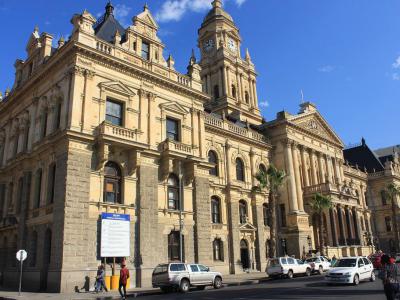
City Hall is a sizeable Edwardian-style building that was built in 1905. It is constructed from light-colored limestone imported from Bath, England.
The turret clock, or tower clock, dominates the center of the building. It's half the size of London's famous Big Ben clock and strikes the hour and chimes the quarters.
The carillon, a set of tower bells, was installed as a World War I memorial. An additional 22 bells were installed to celebrate the Prince of Wales's visit in 1925. The carillon has a total of 39 bells and is the only active carillon in South Africa. It is played by a complicated set of wooden levers and pedals.
Inside, the Grand Hall is a major attraction. It features polished marble, stained-glass windows, and one of the largest pipe organs in the Southern Hemisphere, built by the renowned British firm Harrison & Harrison. The hall is still used for concerts and civic events, making it a wonderful place to experience Cape Town’s cultural life.
On February 11, 1990, Nelson Mandela was released from prison. He gave his first public address from the balcony of City Hall.
The City Hall’s location also adds to its appeal. It sits directly across from the Grand Parade, South Africa’s oldest public square, and offers lovely views toward Table Mountain. Its central position makes it an easy stop for visitors exploring nearby markets, museums, and historic streets, blending architectural beauty, cultural depth, and powerful history in one visit.
The turret clock, or tower clock, dominates the center of the building. It's half the size of London's famous Big Ben clock and strikes the hour and chimes the quarters.
The carillon, a set of tower bells, was installed as a World War I memorial. An additional 22 bells were installed to celebrate the Prince of Wales's visit in 1925. The carillon has a total of 39 bells and is the only active carillon in South Africa. It is played by a complicated set of wooden levers and pedals.
Inside, the Grand Hall is a major attraction. It features polished marble, stained-glass windows, and one of the largest pipe organs in the Southern Hemisphere, built by the renowned British firm Harrison & Harrison. The hall is still used for concerts and civic events, making it a wonderful place to experience Cape Town’s cultural life.
On February 11, 1990, Nelson Mandela was released from prison. He gave his first public address from the balcony of City Hall.
The City Hall’s location also adds to its appeal. It sits directly across from the Grand Parade, South Africa’s oldest public square, and offers lovely views toward Table Mountain. Its central position makes it an easy stop for visitors exploring nearby markets, museums, and historic streets, blending architectural beauty, cultural depth, and powerful history in one visit.
