Custom Walk in Barcelona, Spain by vikistaneva_9a47c3 created on 2026-07-20
Guide Location: Spain » Barcelona
Guide Type: Custom Walk
# of Sights: 11
Tour Duration: 2 Hour(s)
Travel Distance: 4.3 Km or 2.7 Miles
Share Key: PQ7KW
Guide Type: Custom Walk
# of Sights: 11
Tour Duration: 2 Hour(s)
Travel Distance: 4.3 Km or 2.7 Miles
Share Key: PQ7KW
How It Works
Please retrieve this walk in the GPSmyCity app. Once done, the app will guide you from one tour stop to the next as if you had a personal tour guide. If you created the walk on this website or come to the page via a link, please follow the instructions below to retrieve the walk in the app.
Retrieve This Walk in App
Step 1. Download the app "GPSmyCity: Walks in 1K+ Cities" on Apple App Store or Google Play Store.



Step 2. In the GPSmyCity app, download(or launch) the guide "Barcelona Map and Walking Tours".
Step 3. Tap the menu button located at upper right corner of the "Walks" screen and select "Retrieve custom walk". Enter the share key: PQ7KW
1) Arc de Triomf (Triumphal Arch)
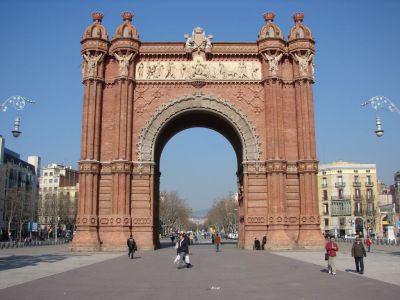
Standing proudly as the entrance to the Citadel Park ("Parc de la Ciutadella"), this imposing brick structure serves as a gateway to the architectural wonders awaiting visitors within the verdant space. Originally built as the main gate for the Universal Exposition of 1888, the Triumphal Arch continues to impress visitors with its grandeur, even from afar.
Its decoration comprises four monumental friezes that depict significant themes. The front frieze portrays Barcelona as a welcoming woman, inviting nations from around the world to the Exposition. The back frieze depicts the same woman presenting awards. The side friezes symbolize the main sections of the Exposition: Agriculture, Industry, Trade, and Art.
With its distinctive Mudejar architectural style, influenced by Moorish design, this Arc de Triomf stands out from other triumphal arches worldwide. Adding to its charm is the picturesque alley lined with palm trees – the most attractive palm-tree species found in Barcelona.
The arch is a popular spot for tourists to capture memorable photos, and it is equally beloved by locals, considering the number of joggers, rollers, or picnickers regularly flocking nearby.
Tip:
The nearby El Born neighborhood offers a plethora of cafes and pastry shops that cater to the cravings of cake and dessert enthusiasts. If you have a sweet tooth, be sure to give your taste buds a good treat!
Its decoration comprises four monumental friezes that depict significant themes. The front frieze portrays Barcelona as a welcoming woman, inviting nations from around the world to the Exposition. The back frieze depicts the same woman presenting awards. The side friezes symbolize the main sections of the Exposition: Agriculture, Industry, Trade, and Art.
With its distinctive Mudejar architectural style, influenced by Moorish design, this Arc de Triomf stands out from other triumphal arches worldwide. Adding to its charm is the picturesque alley lined with palm trees – the most attractive palm-tree species found in Barcelona.
The arch is a popular spot for tourists to capture memorable photos, and it is equally beloved by locals, considering the number of joggers, rollers, or picnickers regularly flocking nearby.
Tip:
The nearby El Born neighborhood offers a plethora of cafes and pastry shops that cater to the cravings of cake and dessert enthusiasts. If you have a sweet tooth, be sure to give your taste buds a good treat!
2) Homenatge a Picasso (Tribute to Picasso)
The street they named for Picasso – though not particularly fashionable or glamourous – is in the area the painter knew best, close to his family's apartments, the art school where his father taught drawing (and where he studied for a short while), the studios he had as an emerging painter, and the bars he frequented.
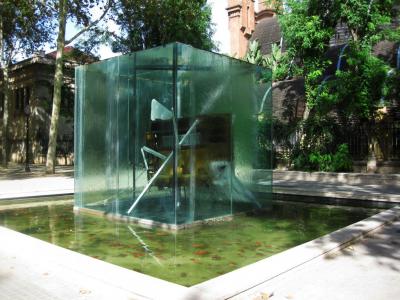
Here also, on the outskirts of Parc de la Ciutadella, stands the monument dedicated to Picasso. Commissioned by Barcelona's city council in 1981 and created by Catalan artist Antoni Tapies, the monument holds an air of mystery. It consists of a glass box submerged in a pool of water, showcasing an uncompromising assemblage of modernist furniture reminiscent of Picasso's era. Resisting meaning, or easy interpretation, the sculpture captivates as an exciting piece of public art, symbolizing the profound bond between the artist and the city.
Within the glass cube, white sheets bear Picasso's quotes in Catalan, notably including the following: "A painting is not intended to decorate a drawing room but is instead a weapon of attack and defense against the enemy."
Here also, on the outskirts of Parc de la Ciutadella, stands the monument dedicated to Picasso. Commissioned by Barcelona's city council in 1981 and created by Catalan artist Antoni Tapies, the monument holds an air of mystery. It consists of a glass box submerged in a pool of water, showcasing an uncompromising assemblage of modernist furniture reminiscent of Picasso's era. Resisting meaning, or easy interpretation, the sculpture captivates as an exciting piece of public art, symbolizing the profound bond between the artist and the city.
Within the glass cube, white sheets bear Picasso's quotes in Catalan, notably including the following: "A painting is not intended to decorate a drawing room but is instead a weapon of attack and defense against the enemy."
3) Parc de la Ciutadella (Citadel Park) (must see)
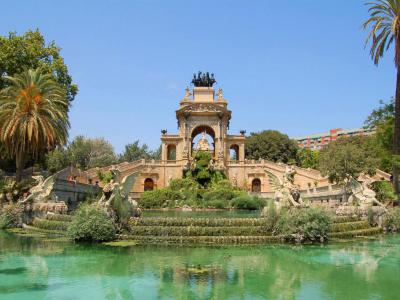
Originally built as a fortress to assert Madrid's military control over Barcelona, the Ciutadella is now the city's primary downtown park. It was established shortly after the War of the Spanish Succession in the early 18th century when Felipe V demolished around 1,000 houses to construct a fortress, barracks, and an open space known as the "glacis" between rebellious Barcelona and his artillery positions. The fortress walls were later dismantled in 1868, and the area was transformed into gardens designed by Josep Fontseré. In 1888, the park gained significance as the venue for the Universal Exposition, which propelled Barcelona into the spotlight as a truly European city. Today, the Ciutadella houses notable landmarks such as the Castle of the Three Dragons ("Castell dels Tres Dragons"), originally built as a café and restaurant for the exposition (now a botanical research center), the Catalan parliament, and the city zoo.
Both locals and tourists appreciate spending time in the Ciutadella. The park is well-equipped for picnics and public holidays, and offers various recreational activities such as jogging, cycling, and boating. Boats and bicycles are available for rent at a reasonable price. Entry to the park is free, making it a worthwhile destination to explore regardless of the duration of your stay in Barcelona.
Why You Should Visit:
To escape and relax without leaving the city centre!
Tip:
One of the prominent features within the park is the Cascada, a monumental fountain located in the northeast corner. It was designed by Josep Fontseré, the architect responsible for the park's conversion, with assistance from a young Antoni Gaudí, who was still a student at the time. The extravagant Baroque style of the Cascada foreshadows Gaudí's later flamboyant architectural designs. The ideal spot to admire the fountain is from the nearby open-air café-kiosk. In close proximity, there is also a small lake where visitors can rent rowing boats and enjoy a leisurely paddle amidst the ducks.
Both locals and tourists appreciate spending time in the Ciutadella. The park is well-equipped for picnics and public holidays, and offers various recreational activities such as jogging, cycling, and boating. Boats and bicycles are available for rent at a reasonable price. Entry to the park is free, making it a worthwhile destination to explore regardless of the duration of your stay in Barcelona.
Why You Should Visit:
To escape and relax without leaving the city centre!
Tip:
One of the prominent features within the park is the Cascada, a monumental fountain located in the northeast corner. It was designed by Josep Fontseré, the architect responsible for the park's conversion, with assistance from a young Antoni Gaudí, who was still a student at the time. The extravagant Baroque style of the Cascada foreshadows Gaudí's later flamboyant architectural designs. The ideal spot to admire the fountain is from the nearby open-air café-kiosk. In close proximity, there is also a small lake where visitors can rent rowing boats and enjoy a leisurely paddle amidst the ducks.
4) Basilica de Santa Maria del Mar (Basilica of St. Mary of the Sea) (must see)
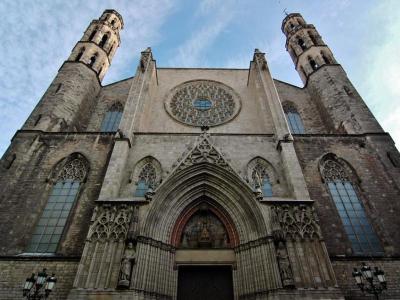
The Basilica of Saint Mary of the Sea is an outstanding example of early Catalan Gothic architecture, known for its uninterrupted lines and grace. Situated at the former water's edge, the edifice was constructed by skilled stonemasons who meticulously selected, fitted, and carved each stone sourced from the Montjuïc quarry, which had also supplied the sandstone for the 4th-century Roman walls. The number eight, symbolizing the Virgin Mary in medieval numerology, permeates every aspect of the basilica's design: the 16 octagonal pillars have a diameter of 2 meters and extend into rib vaulting arches at a height of 16 meters; the painted keystones at the apex of the arches are 32 meters above the floor; and the central nave is twice as wide as the lateral naves, measuring 8 meters each.
Despite enduring the destructive fires set by anarchists in 1936 during the rebellion, when numerous churches in Barcelona were targeted, Saint Mary of the Sea withstood the onslaught. Adorned with ornate side chapels and choir stalls at the time, the basilica burned for eleven days, nearly collapsing. It was later restored by a group of architects trained in the Bauhaus style following the Civil War, transforming it into an architectural marvel.
Why You Should Visit:
Remarkably grand and impeccably preserved; offers a lift to the roof, a small "art gallery", an intriguing crypt, beautiful stone carvings, a choir gallery, and the most astoundingly peaceful courtyard with a large pond. In addition, the surrounding area is dotted with charming local cafes offering outdoor seating, making it a delightful place to explore and wander.
Tips:
You have the option to participate in a guided tour that takes you up to the roof, providing a fascinating experience along with breathtaking views of Barcelona. Additionally, guided tours are available to explore areas that are usually restricted to the public, including the crypt. It's important to note that proper attire is required to enter these areas, as the guards at the entrance may refuse entry if the dress code is not followed.
Despite enduring the destructive fires set by anarchists in 1936 during the rebellion, when numerous churches in Barcelona were targeted, Saint Mary of the Sea withstood the onslaught. Adorned with ornate side chapels and choir stalls at the time, the basilica burned for eleven days, nearly collapsing. It was later restored by a group of architects trained in the Bauhaus style following the Civil War, transforming it into an architectural marvel.
Why You Should Visit:
Remarkably grand and impeccably preserved; offers a lift to the roof, a small "art gallery", an intriguing crypt, beautiful stone carvings, a choir gallery, and the most astoundingly peaceful courtyard with a large pond. In addition, the surrounding area is dotted with charming local cafes offering outdoor seating, making it a delightful place to explore and wander.
Tips:
You have the option to participate in a guided tour that takes you up to the roof, providing a fascinating experience along with breathtaking views of Barcelona. Additionally, guided tours are available to explore areas that are usually restricted to the public, including the crypt. It's important to note that proper attire is required to enter these areas, as the guards at the entrance may refuse entry if the dress code is not followed.
5) Placa del Rei (King's Square)
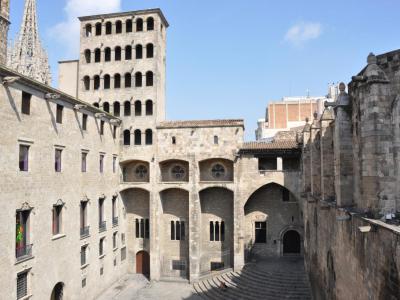
King's Square epitomizes Barcelona's historical essence as the center of county and royal authority. Originating from an urbanization initiative by King Martí I of Aragon, otherwise known as Martí the Human, in the late 14th century, the square was designed to host tournaments, displacing the traditional market. It retains a rectangular shape and is encased by Gothic and Renaissance buildings, creating a closed circuit except for its southwest end.
The square's name comes from the Grand Royal Palace of the Counts of Barcelona whose Gothic facade dominates its north side. The palace complex also encompasses the exquisite 13th-century Royal Chapel of Santa Agata and the romantic Renaissance Tower of King Martí, which offers views over the medieval city. The eastern edge is marked by the 14th-century Tinell Hall, the palace's central hall, accessible via a staircase.
According to historians, it was on these very steps, which spread out from the corner of the square, that in 1493 King Ferdinand and Queen Isabella welcomed Christopher Columbus and his crew upon their return from the first successful voyage to the New World. Once used as a meeting place for the Spanish Inquisition, the hall capitalized on the popular belief that its walls would reveal any lies spoken within. Nowadays, the building hosts temporary exhibitions and occasional concerts.
This square's main royal edifices can be accessed through the Barcelona History Museum, housed in the impressive Gothic Padellàs building. Together with the 16th-century Renaissance Lieutenant’s Palace, they complete the square's layout.
Additionally, King's Square's underground shelters extensive Roman ruins, uncovered in 1935. Ten years later, during renovations on the neighboring Counts Street, another archaeological discovery was made – an early Christian basilica, initially thought to be a primitive cathedral. In 1954, they also unearthed a 1st-century Roman pavement and nymphaeum (a shrine to the nymphs), providing insights into the area's historical development.
Due to its tremendous acoustic and almost enclosed structure, the square often serves as a venue for musical concerts and public events.
Tip:
The Barcelona History Museum, open Tuesday through Saturday from 10 am–7 pm and on Sunday from 10 am–8 pm, offers a fascinating glimpse into Roman and early Christian Barcelona. Visitors can explore ancient Roman ruins on a tour beginning underground and concluding in a lively square, perfect for relaxing with a drink.
The square's name comes from the Grand Royal Palace of the Counts of Barcelona whose Gothic facade dominates its north side. The palace complex also encompasses the exquisite 13th-century Royal Chapel of Santa Agata and the romantic Renaissance Tower of King Martí, which offers views over the medieval city. The eastern edge is marked by the 14th-century Tinell Hall, the palace's central hall, accessible via a staircase.
According to historians, it was on these very steps, which spread out from the corner of the square, that in 1493 King Ferdinand and Queen Isabella welcomed Christopher Columbus and his crew upon their return from the first successful voyage to the New World. Once used as a meeting place for the Spanish Inquisition, the hall capitalized on the popular belief that its walls would reveal any lies spoken within. Nowadays, the building hosts temporary exhibitions and occasional concerts.
This square's main royal edifices can be accessed through the Barcelona History Museum, housed in the impressive Gothic Padellàs building. Together with the 16th-century Renaissance Lieutenant’s Palace, they complete the square's layout.
Additionally, King's Square's underground shelters extensive Roman ruins, uncovered in 1935. Ten years later, during renovations on the neighboring Counts Street, another archaeological discovery was made – an early Christian basilica, initially thought to be a primitive cathedral. In 1954, they also unearthed a 1st-century Roman pavement and nymphaeum (a shrine to the nymphs), providing insights into the area's historical development.
Due to its tremendous acoustic and almost enclosed structure, the square often serves as a venue for musical concerts and public events.
Tip:
The Barcelona History Museum, open Tuesday through Saturday from 10 am–7 pm and on Sunday from 10 am–8 pm, offers a fascinating glimpse into Roman and early Christian Barcelona. Visitors can explore ancient Roman ruins on a tour beginning underground and concluding in a lively square, perfect for relaxing with a drink.
6) Palau del Lloctinent (Lieutenant’s Palace)
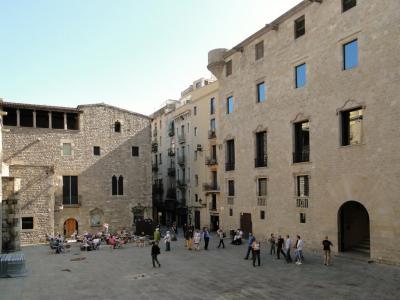
Just past the Frederic Marès Museum, a handsome doorway beckons you into the refined courtyard of the Lieutenant’s Palace, adorned with its three facades. As part of the former royal palace, the Lieutenant’s Palace boasts a typical mix of late Gothic and early Renaissance Catalan design. One of the most elegant buildings in the Gothic Quarter, it was constructed between 1549 and 1557 by master builder Antoni Carbonell, commissioned by the Government of Catalonia (known as the Generalitat).
During the 16th and 17th centuries, the Palace served as the residence of the king's official emissary (or viceroy) in Barcelona. From 1836 until 1994, the graceful structure served as the headquarters for the General Archive of the Crown of Aragon and today offers an excellent exhibition on the life and era of James I the Conqueror, King of Aragon, one of Catalonia's prominent historic figures from the 13th century.
The building features a rectangular plan with four floors and basements, centering around a large courtyard. The ground floor includes four large carpanel arches on pillars, supporting a Tuscan-type gallery with semicircular arches, and an Italian palace-style staircase leading to the upper floors. The weighty stone arches adorning the entrance, the central patio, and the intricately adorned wooden roof above the staircase all exemplify the noble architecture of the 16th century. The door on the stairway, dating to 1975, showcases scenes from the life of Saint George and the history of Catalonia.
The courtyard also occasionally hosts concerts featuring early music. Additionally, during the Corpus Christi celebration, it becomes one of the main venues for the "dancing egg" spectacle, featuring an egg "dancing" on the fountain jet amidst an elaborate floral arrangement.
During the 16th and 17th centuries, the Palace served as the residence of the king's official emissary (or viceroy) in Barcelona. From 1836 until 1994, the graceful structure served as the headquarters for the General Archive of the Crown of Aragon and today offers an excellent exhibition on the life and era of James I the Conqueror, King of Aragon, one of Catalonia's prominent historic figures from the 13th century.
The building features a rectangular plan with four floors and basements, centering around a large courtyard. The ground floor includes four large carpanel arches on pillars, supporting a Tuscan-type gallery with semicircular arches, and an Italian palace-style staircase leading to the upper floors. The weighty stone arches adorning the entrance, the central patio, and the intricately adorned wooden roof above the staircase all exemplify the noble architecture of the 16th century. The door on the stairway, dating to 1975, showcases scenes from the life of Saint George and the history of Catalonia.
The courtyard also occasionally hosts concerts featuring early music. Additionally, during the Corpus Christi celebration, it becomes one of the main venues for the "dancing egg" spectacle, featuring an egg "dancing" on the fountain jet amidst an elaborate floral arrangement.
7) Temple d'August - MUHBA (Temple of Augustus)
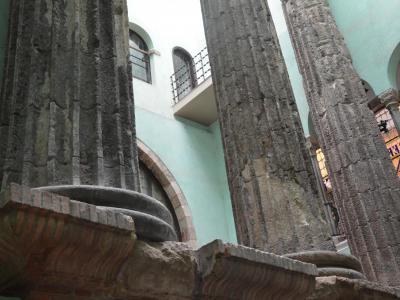
The Temple of Augustus, formerly a central piece of the Roman colony of Bàrcino, is a significant historical site preserved within the headquarters of the Excursionist Center of Catalonia. Embedded within a Gothic-period building, it features four Corinthian columns, remnants of the only known temple in Roman Barcino. Believed to have been dedicated to Emperor Augustus, the temple occupied the highest position of the ancient city, near the current Saint James's Square.
At some point, it was demolished, and its remains were hidden until the late 19th century when three of its columns emerged at the construction site of Catalonia's Hiking Club. Subsequently, a fourth column was revealed at King's Square and later incorporated into the structure, as it stands today.
According to research, the temple was originally surrounded by 11 columns on each side, including corner columns, with six columns at the front and another six at the rear. The entire building would have measured 17.5 by 44 meters, elevated on a podium approximately one-third the height of the columns. Noted for their fluted design and Corinthian capitals, the columns have been documented since the 14th century, although their origin is subject to various interpretations. Historical figures, from mythical kings to suggestions of aqueduct parts, have been proposed as explanations for their presence.
Although initially misattributed to the Carthaginians, later studies by Modernist architect Josep Puig reaffirmed the temple’s dedication to Emperor Augustus, placing its construction in the early Roman Empire, which indeed correlates with Barcino’s founding during Augustus's rule.
When visiting this site, keep an eye out for helpful photographs and recreations of this ancient landmark.
At some point, it was demolished, and its remains were hidden until the late 19th century when three of its columns emerged at the construction site of Catalonia's Hiking Club. Subsequently, a fourth column was revealed at King's Square and later incorporated into the structure, as it stands today.
According to research, the temple was originally surrounded by 11 columns on each side, including corner columns, with six columns at the front and another six at the rear. The entire building would have measured 17.5 by 44 meters, elevated on a podium approximately one-third the height of the columns. Noted for their fluted design and Corinthian capitals, the columns have been documented since the 14th century, although their origin is subject to various interpretations. Historical figures, from mythical kings to suggestions of aqueduct parts, have been proposed as explanations for their presence.
Although initially misattributed to the Carthaginians, later studies by Modernist architect Josep Puig reaffirmed the temple’s dedication to Emperor Augustus, placing its construction in the early Roman Empire, which indeed correlates with Barcino’s founding during Augustus's rule.
When visiting this site, keep an eye out for helpful photographs and recreations of this ancient landmark.
8) Palau de la Generalitat (Palace of the Generalitat)
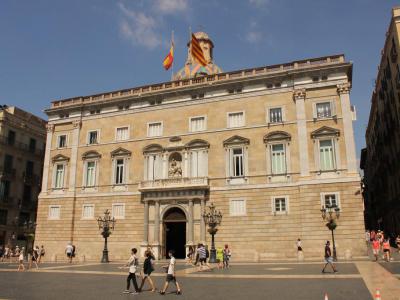
The Palace of the Generalitat is a historic architectural marvel and the administrative heart of the autonomous region of Catalonia. Standing majestically on Saint James's Square in Barcelona, it shares Gothic roots with the neighboring City Hall on the opposite side of the square. This palace is distinctive as one of Europe's few medieval buildings still functioning as a government seat for the institution it was originally built for.
Initially established as a tax collection commission by the Catalan Parliament in 1289, it had evolved into the General Council by 1359, gaining administrative authority. The original building, formerly part of the Jewish Quarter, was purchased in 1400.
Over the years, it has expanded through additional acquisitions and integration of neighboring properties, resulting in a blend of architectural styles. The first significant addition included the Gothic Chapel of Saint George, built in 1434. Another addition, a Renaissance-style façade facing Saint James's Square, designed by Pere Blai in 1596, is noted as the first grand façade of this style in Catalonia. One of the most picturesque parts of the palace and a favorite backdrop for official photographs is the so-called Orange Trees Courtyard, richly adorned with ornate pillars and gargoyles.
Restoration efforts in the 20th century, particularly after the Spanish Civil War, were led by Josep Puig, one of Barcelona's top architects. He sought to restore the palace's original features while incorporating neo-Gothic elements. These restorations highlighted the building's historical significance, especially after the re-establishment of the Generalitat in 1977, following Spain's transition to democracy from the Franco regime.
The Generalitat offers guided public tours on the 2nd and 4th weekends of each month, which require prior booking. Special openings occur on significant days such as Saint George's Day, the Feast of Mercy, and the National Day of Catalonia, providing further opportunities for the public to explore this historic site. The palace also hosts Sunday noon carillon concerts, adding a musical element to its cultural offerings.
Initially established as a tax collection commission by the Catalan Parliament in 1289, it had evolved into the General Council by 1359, gaining administrative authority. The original building, formerly part of the Jewish Quarter, was purchased in 1400.
Over the years, it has expanded through additional acquisitions and integration of neighboring properties, resulting in a blend of architectural styles. The first significant addition included the Gothic Chapel of Saint George, built in 1434. Another addition, a Renaissance-style façade facing Saint James's Square, designed by Pere Blai in 1596, is noted as the first grand façade of this style in Catalonia. One of the most picturesque parts of the palace and a favorite backdrop for official photographs is the so-called Orange Trees Courtyard, richly adorned with ornate pillars and gargoyles.
Restoration efforts in the 20th century, particularly after the Spanish Civil War, were led by Josep Puig, one of Barcelona's top architects. He sought to restore the palace's original features while incorporating neo-Gothic elements. These restorations highlighted the building's historical significance, especially after the re-establishment of the Generalitat in 1977, following Spain's transition to democracy from the Franco regime.
The Generalitat offers guided public tours on the 2nd and 4th weekends of each month, which require prior booking. Special openings occur on significant days such as Saint George's Day, the Feast of Mercy, and the National Day of Catalonia, providing further opportunities for the public to explore this historic site. The palace also hosts Sunday noon carillon concerts, adding a musical element to its cultural offerings.
9) Placa de Sant Jaume (St. James's Square)
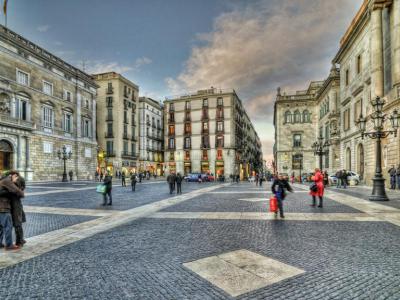
Saint James's Square is the administrative heart of Barcelona, housing both the Government of Catalonia and the Barcelona City Council. It also serves as an excellent landmark for navigating the intricate streets of the Gothic Quarter.
The area's historic roots trace back to the Roman colony of Bàrcino as a crossroads of the main Roman thoroughfares, where the Forum and the Temple of Augustus once stood. Four columns from the Temple have been preserved and can still be seen atop the hill known as Mont Taber.
The square itself has been in existence since at least 1261. A porch where city councilors convened for meetings, the precursor of the future headquarters of the municipal government, was added in the 14th century. In 1598, the Generalitat Palace was enlarged, subsequently extending the square too. Further major transformations occurred in the 19th century when the City Council decided to demolish adjacent buildings to create a larger square, which was inaugurated in 1840 as Constitution Square-a name it held until 2013.
Throughout the 19th century, the square became a vibrant spot with a flea market operating three times a week. It also emerged as a crucial cultural hub for the Castellers of Barcelona, a group of acrobatic performers who climb on top of each other, creating human towers – or “castles” – reaching up to several storeys high.
In 2004, an archaeological dig in the area unearthed remains of ancient walls, providing a glimpse into the square’s layered past.
Today, the square's architecture remains a prominent feature, with two striking buildings vying for attention. The City Council presides on the one side, while the Catalonian government building, known as the Generalitat, commands attention on the other. The square also continues to be a traditional gathering place for demonstrations and festivals.
Tip:
With many restaurants open until midnight and a constant buzz of activity, Saint James's Square is one of the liveliest parts of Barcelona during late hours. However, it is important to exercise caution here as pedestrians share the space with cars and bicycles.
The area's historic roots trace back to the Roman colony of Bàrcino as a crossroads of the main Roman thoroughfares, where the Forum and the Temple of Augustus once stood. Four columns from the Temple have been preserved and can still be seen atop the hill known as Mont Taber.
The square itself has been in existence since at least 1261. A porch where city councilors convened for meetings, the precursor of the future headquarters of the municipal government, was added in the 14th century. In 1598, the Generalitat Palace was enlarged, subsequently extending the square too. Further major transformations occurred in the 19th century when the City Council decided to demolish adjacent buildings to create a larger square, which was inaugurated in 1840 as Constitution Square-a name it held until 2013.
Throughout the 19th century, the square became a vibrant spot with a flea market operating three times a week. It also emerged as a crucial cultural hub for the Castellers of Barcelona, a group of acrobatic performers who climb on top of each other, creating human towers – or “castles” – reaching up to several storeys high.
In 2004, an archaeological dig in the area unearthed remains of ancient walls, providing a glimpse into the square’s layered past.
Today, the square's architecture remains a prominent feature, with two striking buildings vying for attention. The City Council presides on the one side, while the Catalonian government building, known as the Generalitat, commands attention on the other. The square also continues to be a traditional gathering place for demonstrations and festivals.
Tip:
With many restaurants open until midnight and a constant buzz of activity, Saint James's Square is one of the liveliest parts of Barcelona during late hours. However, it is important to exercise caution here as pedestrians share the space with cars and bicycles.
10) Pont del Bisbe (Bishop's Bridge)
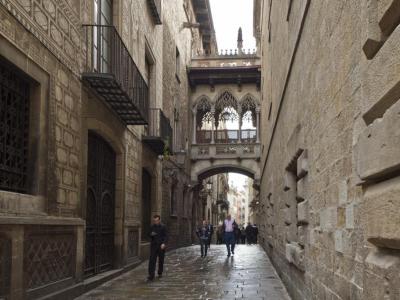
Despite its medieval, centuries-old appearance, Bishop's Bridge is a modern addition to the Gothic Quarter. Constructed in 1928 on the narrow street bearing the same name, the bridge seamlessly blends with the prevalent architectural style of the Gothic Quarter. It was designed by Catalan architect Joan Rubió during his tenure as the official architect of Barcelona in the 1920s.
The neo-Gothic marvel showcases striking architectural elements, such as arched windows, columns, gargoyles, and elaborate stone tracery, making it one of the most photogenic spots in the city. The idea of the bridge connecting the Palace of the Generalitat to the Canons House on the opposite side of the street was inspired by the Bridge of Sighs in Venice.
Joan Rubió, a keen disciple of Antoni Gaudí, had previously worked with the master until 1905. He took part in several iconic projects such as the Sagrada Família, the Batlló House, and Park Güell. Rubió's broader vision to remodel the Gothic Quarter in a neo-Gothic style for the 1929 International Exposition was ultimately rejected by the Barcelona City Council, limiting his influence to this single structure.
A notable feature of the bridge is an eerie skull with a dagger pierced through it, positioned at the bottom of the structure. This grim decoration, added by Rubió in defiance of the council's rejections, has birthed various urban legends. One such myth suggests that Barcelona will fall if the dagger is removed, whereas the other claims that walking backward while looking at the skull grants the viewer a wish. These legends add an element of mystique and allure to the bridge, enhancing its appeal as a curiosity worth visiting in Barcelona.
Tip:
For the best photo opportunities, visit the bridge in the morning or late afternoon when the lighting conditions are favorable.
The neo-Gothic marvel showcases striking architectural elements, such as arched windows, columns, gargoyles, and elaborate stone tracery, making it one of the most photogenic spots in the city. The idea of the bridge connecting the Palace of the Generalitat to the Canons House on the opposite side of the street was inspired by the Bridge of Sighs in Venice.
Joan Rubió, a keen disciple of Antoni Gaudí, had previously worked with the master until 1905. He took part in several iconic projects such as the Sagrada Família, the Batlló House, and Park Güell. Rubió's broader vision to remodel the Gothic Quarter in a neo-Gothic style for the 1929 International Exposition was ultimately rejected by the Barcelona City Council, limiting his influence to this single structure.
A notable feature of the bridge is an eerie skull with a dagger pierced through it, positioned at the bottom of the structure. This grim decoration, added by Rubió in defiance of the council's rejections, has birthed various urban legends. One such myth suggests that Barcelona will fall if the dagger is removed, whereas the other claims that walking backward while looking at the skull grants the viewer a wish. These legends add an element of mystique and allure to the bridge, enhancing its appeal as a curiosity worth visiting in Barcelona.
Tip:
For the best photo opportunities, visit the bridge in the morning or late afternoon when the lighting conditions are favorable.
11) Palau del Baro de Quadras (Palace of the Baron of Quadras)
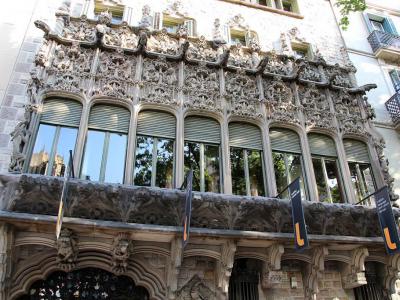
Curious as it may be, the architectural style of the exquisitely detailed Palau del Baró de Quadras varies depending on the angle from which you view it. When approached from Avinguda Diagonal, the building showcases a Gothic influence, reminiscent of Northern European palaces, with its noble character and intricately carved details. The facade features a long, ornate balcony adorned with busts of prominent Medieval and Renaissance figures, as well as gargoyles, fish motifs, and a sword-wielding knight, all in line with the medieval theme. The upper floor showcases elegant mansard roofs.
On the other hand, when viewed from the side facing Carrer del Rosselló, the decoration of the building takes on a more subdued yet equally beautiful Modernist style. Floral motifs extend horizontally and vertically across the three balconies and four floors. The visionary behind this design is Josep Puig i Cadafalch, who originally intended it to be a mansion. However, the rear of the building reveals its purpose as providing apartments for family use.
The interior is just as surprising and eclectic, showcasing a mix of Middle Eastern and East Asian influences, particularly evident in the abundance of mosaics and polychrome woodwork. Bold Ionic columns adorned with floral and plant motifs reflect the English Arts and Crafts style, while the hardwood flooring abounds in a variety of geometric designs.
The house museum offers guided tours every Wednesday from 11am to 1pm, allowing visitors to explore the multiple rooms and learn about the building's history. English tours begin at 11am, while Catalan and Spanish tours start at noon and 1pm, respectively.
On the other hand, when viewed from the side facing Carrer del Rosselló, the decoration of the building takes on a more subdued yet equally beautiful Modernist style. Floral motifs extend horizontally and vertically across the three balconies and four floors. The visionary behind this design is Josep Puig i Cadafalch, who originally intended it to be a mansion. However, the rear of the building reveals its purpose as providing apartments for family use.
The interior is just as surprising and eclectic, showcasing a mix of Middle Eastern and East Asian influences, particularly evident in the abundance of mosaics and polychrome woodwork. Bold Ionic columns adorned with floral and plant motifs reflect the English Arts and Crafts style, while the hardwood flooring abounds in a variety of geometric designs.
The house museum offers guided tours every Wednesday from 11am to 1pm, allowing visitors to explore the multiple rooms and learn about the building's history. English tours begin at 11am, while Catalan and Spanish tours start at noon and 1pm, respectively.
