Custom Walk in New York, New York by hetzel02_652422 created on 2026-07-20
Guide Location: USA » New York
Guide Type: Custom Walk
# of Sights: 10
Tour Duration: 4 Hour(s)
Travel Distance: 8 Km or 5 Miles
Share Key: UK4HY
Guide Type: Custom Walk
# of Sights: 10
Tour Duration: 4 Hour(s)
Travel Distance: 8 Km or 5 Miles
Share Key: UK4HY
How It Works
Please retrieve this walk in the GPSmyCity app. Once done, the app will guide you from one tour stop to the next as if you had a personal tour guide. If you created the walk on this website or come to the page via a link, please follow the instructions below to retrieve the walk in the app.
Retrieve This Walk in App
Step 1. Download the app "GPSmyCity: Walks in 1K+ Cities" on Apple App Store or Google Play Store.



Step 2. In the GPSmyCity app, download(or launch) the guide "New York Map and Walking Tours".
Step 3. Tap the menu button located at upper right corner of the "Walks" screen and select "Retrieve custom walk". Enter the share key: UK4HY
1) Bayard Street
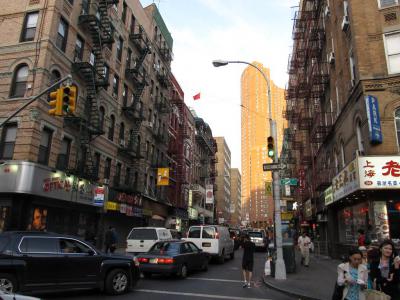
Sliding into Bayard Street, you’ll notice right away-it doesn’t try to hide its identity but leans boldly into its Chinese roots. With steam, aromas, and neon drifting through the air, the whole place feels like someone picked up a Hong Kong side street and gently placed it in Lower Manhattan. Down at street level, fish markets, bakeries, and tiny restaurants compete for your attention; above them, walk-up apartments house multi-generation families whose stories stretch back to southern China and Hong Kong.
Keep moving, and you’ll eventually spot a small crowd doing the universal sign for “this is the place”-eating ice cream directly on the sidewalk. That’s your cue: you’ve reached the Chinatown Ice Cream Factory. This family-run shop has been scooping happiness for more than three decades, offering flavors that are creamy, silky, and just adventurous enough to make you wonder why you ever settled for vanilla. Arrive before the big rush, and you might snag samples of Ginger, Durian, Green Tea, Egg Custard, Black Sesame, or the ever-beloved Lychee. Choose wisely-or do what most people do and pretend you’ll only try one...
Once you escape the gravitational pull of the ice cream line, glance across the street at Mei Li Wah, the kingdom of steamed buns. They churn out warm, fluffy pockets filled with pork, chicken, pineapple, egg yolk-you name it. Most customers grab a bag and eat as they wander, but you can also sit down and point at the gigantic wall photos if decision-making isn’t your strong suit. Be patient if the trays are empty; locals sometimes buy buns in bulk, and the staff works at a pace that means business.
Before you leave the area behind, pause at the corner of Bayard and Mott. Here, Sun’s Organic Garden offers shelves of fragrant teas, with shopkeepers happy to steer you toward something soothing, energizing, or simply intriguing. Whether you’re after a gentle jasmine or a bold oolong, they’ll help you find your perfect cup before you continue your Chinatown adventure.
Keep moving, and you’ll eventually spot a small crowd doing the universal sign for “this is the place”-eating ice cream directly on the sidewalk. That’s your cue: you’ve reached the Chinatown Ice Cream Factory. This family-run shop has been scooping happiness for more than three decades, offering flavors that are creamy, silky, and just adventurous enough to make you wonder why you ever settled for vanilla. Arrive before the big rush, and you might snag samples of Ginger, Durian, Green Tea, Egg Custard, Black Sesame, or the ever-beloved Lychee. Choose wisely-or do what most people do and pretend you’ll only try one...
Once you escape the gravitational pull of the ice cream line, glance across the street at Mei Li Wah, the kingdom of steamed buns. They churn out warm, fluffy pockets filled with pork, chicken, pineapple, egg yolk-you name it. Most customers grab a bag and eat as they wander, but you can also sit down and point at the gigantic wall photos if decision-making isn’t your strong suit. Be patient if the trays are empty; locals sometimes buy buns in bulk, and the staff works at a pace that means business.
Before you leave the area behind, pause at the corner of Bayard and Mott. Here, Sun’s Organic Garden offers shelves of fragrant teas, with shopkeepers happy to steer you toward something soothing, energizing, or simply intriguing. Whether you’re after a gentle jasmine or a bold oolong, they’ll help you find your perfect cup before you continue your Chinatown adventure.
2) Mott Street
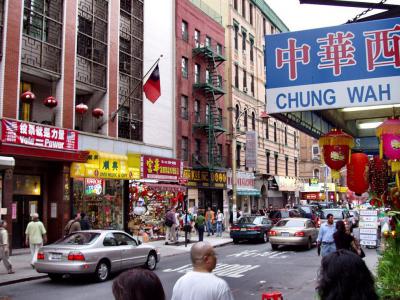
In a way, Mott Street can be regarded as Chinatown’s greatest hits album: all the flavors, colors, and characters packed into one compact stretch. For visitors, it’s a buffet of everything you came for-steaming dumplings, crowded fish markets, bargain-packed gift shops, tea houses that smell like comfort, and jewelry stores that sparkle suspiciously close to payday. And tucked between all that, you still find a few stubborn Italian holdouts from the neighborhood's earlier era, adding their own charm to the mix.
For locals, though, Mott Street isn’t a sightseeing list-it’s the front porch. More than a century after the first Chinese families arrived, this street still functions as a genuine community, not just a themed backdrop. Kids grow up here, grandparents trade news on the sidewalk, and generations layer their stories into the brickwork.
Now, about the food-because let’s be honest, this is why most people end up here. Make your way to WO HOP on the south end of Mott. The place is practically a rite of passage: open until 4:30 a.m., blissfully unfussy, and split into two worlds-the “new” upstairs with booths and the “classic” downstairs with plain tables that look like they’ve heard some serious late-night confessions. The menu reads like a greatest-hits playlist of Chinese comfort dishes. Go for the house special fried rice or the shrimp in lobster sauce. Portions are big enough to feed your future self.
Keep moving north to Grand Street, and suddenly you’re in vegetable paradise-row after row of fresh produce priced so attractively you’ll consider picking up ingredients you can’t even identify. Then there’s DI PALO’S FINE FOODS, an Italian family institution representing all 20 regions of Italy with cheeses, meats, olive oils, and vinegars that could start an argument on their own. The staff offers generous guidance and samples, and yes, they’ll even ship your discoveries to friends in other states.
As you wander these streets, look up from time to time. Many buildings still wear delicate Eastern design touches-sunbursts, swirls, shells, even expressive faces-all quiet reminders of the cultures that have shaped this neighborhood, one generation after another...
For locals, though, Mott Street isn’t a sightseeing list-it’s the front porch. More than a century after the first Chinese families arrived, this street still functions as a genuine community, not just a themed backdrop. Kids grow up here, grandparents trade news on the sidewalk, and generations layer their stories into the brickwork.
Now, about the food-because let’s be honest, this is why most people end up here. Make your way to WO HOP on the south end of Mott. The place is practically a rite of passage: open until 4:30 a.m., blissfully unfussy, and split into two worlds-the “new” upstairs with booths and the “classic” downstairs with plain tables that look like they’ve heard some serious late-night confessions. The menu reads like a greatest-hits playlist of Chinese comfort dishes. Go for the house special fried rice or the shrimp in lobster sauce. Portions are big enough to feed your future self.
Keep moving north to Grand Street, and suddenly you’re in vegetable paradise-row after row of fresh produce priced so attractively you’ll consider picking up ingredients you can’t even identify. Then there’s DI PALO’S FINE FOODS, an Italian family institution representing all 20 regions of Italy with cheeses, meats, olive oils, and vinegars that could start an argument on their own. The staff offers generous guidance and samples, and yes, they’ll even ship your discoveries to friends in other states.
As you wander these streets, look up from time to time. Many buildings still wear delicate Eastern design touches-sunbursts, swirls, shells, even expressive faces-all quiet reminders of the cultures that have shaped this neighborhood, one generation after another...
3) Kimlau Square
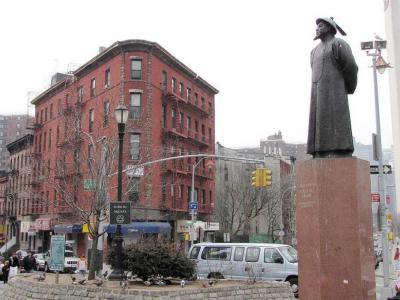
As you drift into what many New Yorkers casually call “Little China,” you’ll notice something: this neighborhood doesn’t grow in sudden leaps-it expands like a slow but determined tide, inching toward the Manhattan Bridge and pushing eastward to a crossroads that could give a GPS a nervous breakdown. That chaotic starburst of streets is Kimlau Square, and right in the middle of it stands the Kim Lau Arch. It’s named after a New York–raised Chinese-American airman who died heroically in World War II. But the memorial honors all Chinese who served the nation-stretching back to the laborers who laid the tracks of America’s coast-to-coast railroads.
A few steps away, the mood shifts from military valor to imperial resolve. Here, you’ll find the statue of Lin Zexu, the Qing Dynasty official, who famously tried to save China from the swelling opium trade and British interference. He pushed so hard for reform that he managed to kick off the First Opium War-proof that even good intentions can light historical fireworks. When the statue arrived in the 1990s, The New York Times noted it carried more than just an anti-drug message. It also reflected a shifting balance of power within Chinatown, as newcomers from mainland China-especially the Fujianese-were gaining influence over the older Cantonese community.
Continue east along Division Street, and you’ll reach Confucius Plaza, a 1970s residential complex that still counts as prime real estate by neighborhood standards. Its bronze statue of Confucius, installed in 1976, watches over the square with the calm patience of someone who has seen centuries of human chaos. For locals, it’s not just decoration; it’s a gathering place, a landmark, and a reminder that wisdom is always welcome-especially in a neighborhood where the streets meet at angles no philosopher ever planned for...
A few steps away, the mood shifts from military valor to imperial resolve. Here, you’ll find the statue of Lin Zexu, the Qing Dynasty official, who famously tried to save China from the swelling opium trade and British interference. He pushed so hard for reform that he managed to kick off the First Opium War-proof that even good intentions can light historical fireworks. When the statue arrived in the 1990s, The New York Times noted it carried more than just an anti-drug message. It also reflected a shifting balance of power within Chinatown, as newcomers from mainland China-especially the Fujianese-were gaining influence over the older Cantonese community.
Continue east along Division Street, and you’ll reach Confucius Plaza, a 1970s residential complex that still counts as prime real estate by neighborhood standards. Its bronze statue of Confucius, installed in 1976, watches over the square with the calm patience of someone who has seen centuries of human chaos. For locals, it’s not just decoration; it’s a gathering place, a landmark, and a reminder that wisdom is always welcome-especially in a neighborhood where the streets meet at angles no philosopher ever planned for...
4) Columbus Park
If you ever wanted to stand on a piece of ground that’s seen the full sweep of New York drama-from notorious slum to tai-chi paradise-Columbus Park is the place. Sitting at the southern edge of Chinatown, this patch of green once formed the beating, chaotic heart of the legendary Five Points district, the 19th-century neighborhood infamous for its overcrowded tenements, poverty, crime, and unsanitary conditions. Its reputation traveled far and wide, helped along by reformers, scandal-hungry journalists, and, much later, Martin Scorsese’s “Gangs of New York” movie.
Back in the mid-1800s, Five Points was the city’s favorite cautionary tale. Moral crusaders declared it a breeding ground for everything that could go wrong in a booming metropolis, and their complaints eventually pushed officials into action. What followed was a slow, stubborn battle to clear out the worst of the tenements and replace them with fresh air, sunlight, and something resembling order. In the 1890s, the city brought in Calvert Vaux-the same mind who co-designed Central Park-to re-imagine the space. His plan introduced greenery, light, and open areas as antidotes to the district’s former density and chaos. When Mulberry Bend Park opened in 1897, New York finally closed the chapter on Five Points’ notorious past.
By 1911, the park gained a new name-Columbus Park-thanks to a wave of early-20th-century enthusiasm for national heroes. But the surrounding streets were already rewriting themselves. Chinese immigrants were steadily reshaping Lower Manhattan, and before long, the park slipped naturally into its new role as the neighborhood's outdoor living room.
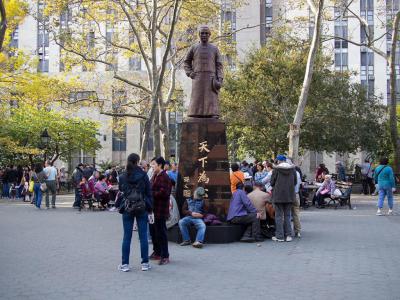
Today, Columbus Park feels like Chinatown in miniature. Early mornings bring calm tai-chi routines and the sound of traditional instruments warming up the day. Later, the atmosphere shifts to animated card games, spirited mahjong, and conversations that roll on for hours. Kids take over the playgrounds, athletes claim the courts, and everyone eventually passes by the statue of Sun Yat-sen standing dignified at the center of it all.
It may not be the largest park in the city, but few spots capture New York’s ability to reinvent itself quite so gracefully-from the grit of Five Points to the vibrant community rhythms of present-day Chinatown. If you want a quick dose of local life, this little green square delivers.
Back in the mid-1800s, Five Points was the city’s favorite cautionary tale. Moral crusaders declared it a breeding ground for everything that could go wrong in a booming metropolis, and their complaints eventually pushed officials into action. What followed was a slow, stubborn battle to clear out the worst of the tenements and replace them with fresh air, sunlight, and something resembling order. In the 1890s, the city brought in Calvert Vaux-the same mind who co-designed Central Park-to re-imagine the space. His plan introduced greenery, light, and open areas as antidotes to the district’s former density and chaos. When Mulberry Bend Park opened in 1897, New York finally closed the chapter on Five Points’ notorious past.
By 1911, the park gained a new name-Columbus Park-thanks to a wave of early-20th-century enthusiasm for national heroes. But the surrounding streets were already rewriting themselves. Chinese immigrants were steadily reshaping Lower Manhattan, and before long, the park slipped naturally into its new role as the neighborhood's outdoor living room.
Today, Columbus Park feels like Chinatown in miniature. Early mornings bring calm tai-chi routines and the sound of traditional instruments warming up the day. Later, the atmosphere shifts to animated card games, spirited mahjong, and conversations that roll on for hours. Kids take over the playgrounds, athletes claim the courts, and everyone eventually passes by the statue of Sun Yat-sen standing dignified at the center of it all.
It may not be the largest park in the city, but few spots capture New York’s ability to reinvent itself quite so gracefully-from the grit of Five Points to the vibrant community rhythms of present-day Chinatown. If you want a quick dose of local life, this little green square delivers.
5) Canal Street
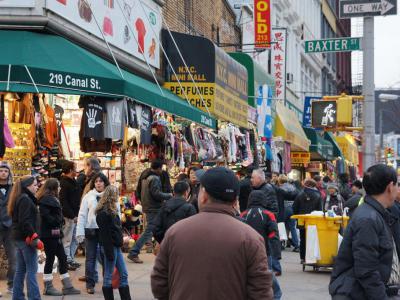
Roll the tape back to the 1980s, when Canal Street was every tinkerer’s paradise. Popular Electronics dropped its latest DIY project each month, and hobbyists would march straight here, list in hand, knowing they could find every resistor, capacitor, and mystery widget tucked into the cluttered counters of its electronics shops. Fast-forward a few decades, and the silicon dreamscape has given way to racks of industrial plastics and an impressive economy of knockoff handbags, fragrances, jewelry, watches, and designer fashions-almost all made in China and arriving by the container load.
Even with the tech era long gone, Canal Street still knows how to put on a show. Vendors line the sidewalks with coconut drinks, durian, vegetables, homemade noodles, and all kinds of Chinese snacks that perfume the air from one end to the Manhattan Bridge. Nearly every doorway is hiding something-sometimes a shop filled with handcrafted Asian ceramics, sometimes a tiny cash-only souvenir store where prices are a fraction of what you’d pay in Times Square. And since no merchant enjoys seeing a customer leave empty-handed, haggling isn’t just welcomed-it’s practically a local sport.
A few steps away, at 200 Canal Street, the NEW KAM MAN Supermarket (working from 9:30 a.m. to 7 p.m.) spreads out across three floors of temptation. Groceries, pottery, cast-iron teapots, chopsticks, Japanese lunch boxes, cosmetics, teas, herbs-you name it. And up on the renovated upper level, Hello Kitty has staged a full takeover: stationery, trinkets, sake sets, skincare, blankets… essentially every cute object known to humankind.
Food lovers won’t go hungry, either. Canal Street and its side streets hold a dense constellation of eateries-mostly Cantonese, with plenty of regional outliers-some of them incredibly good, almost all of them reasonably priced.
And one more note: those whispered offers for “special” watches and handbags are totally normal here. If you’re hunting for a knockoff of a $1,200 bag-sometimes impressively close to the real thing, sometimes not so much-you’ll find options from $20 to $150. Deals happen in doorways, alleys, and side corners. It’s not dangerous; it’s just Canal Street doing what Canal Street does best: running an underground market in broad daylight...
Even with the tech era long gone, Canal Street still knows how to put on a show. Vendors line the sidewalks with coconut drinks, durian, vegetables, homemade noodles, and all kinds of Chinese snacks that perfume the air from one end to the Manhattan Bridge. Nearly every doorway is hiding something-sometimes a shop filled with handcrafted Asian ceramics, sometimes a tiny cash-only souvenir store where prices are a fraction of what you’d pay in Times Square. And since no merchant enjoys seeing a customer leave empty-handed, haggling isn’t just welcomed-it’s practically a local sport.
A few steps away, at 200 Canal Street, the NEW KAM MAN Supermarket (working from 9:30 a.m. to 7 p.m.) spreads out across three floors of temptation. Groceries, pottery, cast-iron teapots, chopsticks, Japanese lunch boxes, cosmetics, teas, herbs-you name it. And up on the renovated upper level, Hello Kitty has staged a full takeover: stationery, trinkets, sake sets, skincare, blankets… essentially every cute object known to humankind.
Food lovers won’t go hungry, either. Canal Street and its side streets hold a dense constellation of eateries-mostly Cantonese, with plenty of regional outliers-some of them incredibly good, almost all of them reasonably priced.
And one more note: those whispered offers for “special” watches and handbags are totally normal here. If you’re hunting for a knockoff of a $1,200 bag-sometimes impressively close to the real thing, sometimes not so much-you’ll find options from $20 to $150. Deals happen in doorways, alleys, and side corners. It’s not dangerous; it’s just Canal Street doing what Canal Street does best: running an underground market in broad daylight...
6) Mahayana Buddhist Temple
If you ever wondered where serenity manages to survive in the middle of Canal Street traffic, the Mahayana Buddhist Temple has the answer-quietly, patiently, and with a giant golden Buddha watching over the whole scene. This temple traces its story back to 1962, when the Lin family and a group of dedicated lay practitioners set up a small shrine for new arrivals from Hong Kong, Taiwan, and mainland China. At a time when Buddhist spaces in New York were scarce, their little temple became a lifeline of ritual, language, and community support.
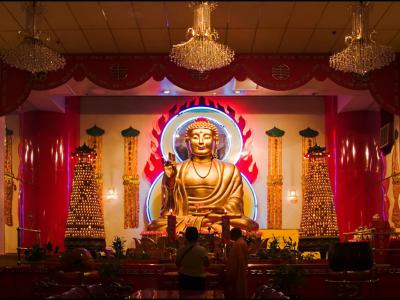
As Chinatown expanded, so did the temple’s ambitions. The modest early building gave way to the larger, more traditional-looking temple at 133 Canal Street, completed in 1997. From the outside, two golden lions stand guard-looking equally prepared to protect sacred teachings and judge your bubble tea choices... Once inside, the noise of the city drops away, replaced by a spacious hall glowing with color and dominated by a grand, golden seated Buddha (New York's largest) surrounded by bright murals.
Visitors will notice 32 plaques along the walls, each one illustrating a moment from the Buddha’s life, as if the temple decided to curate a spiritual storyboard. Signs encourage quiet respect, though you’ll also find gentle invitations to participate: lighting incense, observing rituals, or trying your luck with a fortune slip-available for a small donation ($1 is all they request) and a great sense of curiosity.
On Sundays, the temple hosts a public service from 10 a.m. to 2 p.m., which ends with a vegetarian lunch in the basement. Think of it as spiritual reflection followed by comforting home-style cooking. And if you feel inspired on your way out, the upstairs gift shop offers everything from devotional to non-religious items, both mass-produced and handmade crafts.
The Mahayana Buddhist Temple remains one of Chinatown’s most enduring cultural landmarks-a place where faith, art, and community meet under one gilded roof. It’s a gentle reminder that even in a neighborhood famous for its energy and noise, there’s always room for a moment of calm...
As Chinatown expanded, so did the temple’s ambitions. The modest early building gave way to the larger, more traditional-looking temple at 133 Canal Street, completed in 1997. From the outside, two golden lions stand guard-looking equally prepared to protect sacred teachings and judge your bubble tea choices... Once inside, the noise of the city drops away, replaced by a spacious hall glowing with color and dominated by a grand, golden seated Buddha (New York's largest) surrounded by bright murals.
Visitors will notice 32 plaques along the walls, each one illustrating a moment from the Buddha’s life, as if the temple decided to curate a spiritual storyboard. Signs encourage quiet respect, though you’ll also find gentle invitations to participate: lighting incense, observing rituals, or trying your luck with a fortune slip-available for a small donation ($1 is all they request) and a great sense of curiosity.
On Sundays, the temple hosts a public service from 10 a.m. to 2 p.m., which ends with a vegetarian lunch in the basement. Think of it as spiritual reflection followed by comforting home-style cooking. And if you feel inspired on your way out, the upstairs gift shop offers everything from devotional to non-religious items, both mass-produced and handmade crafts.
The Mahayana Buddhist Temple remains one of Chinatown’s most enduring cultural landmarks-a place where faith, art, and community meet under one gilded roof. It’s a gentle reminder that even in a neighborhood famous for its energy and noise, there’s always room for a moment of calm...
7) Mulberry Street
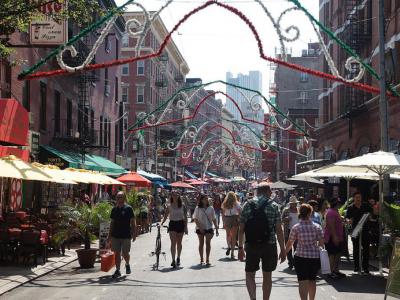
Mulberry Street, Little Italy’s main artery since the early 1900s, still feels like the neighborhood’s most relaxed stretch-a place where Italians from every corner of the city drift in for espresso, conversation, and a little people-watching. By day, it’s all cafés, social clubs, and street vendors slinging quick bites. By night, the lights flicker on, menus appear in the hands of very persuasive hosts, and suddenly the whole street acts like it’s auditioning for a movie set.
Speaking of movies, step onto the edge of the strip, and you’ll find Mulberry Street Bar, a place that’s been pouring drinks (and collecting stories) since 1908. Actors, mob bosses, and actors pretending to be mob bosses have all warmed its barstools. The wood is dark, the ceiling is tin, and the jukebox insists on Sinatra, The Four Tops, and Elvis-as it should. It’s been a backdrop for Donnie Brasco, Godfather III, The Sopranos, and other hit productions. Order a Peroni, settle in, and enjoy the atmosphere. Despite its résumé, you’re perfectly safe here-promise...
And if you prefer your dinner with a dash of mafia lore, Umberto’s Clam House is waiting. Slide into the last table in the back-the very spot where Italian-American mobster “Crazy Joe” Gallo met his fate in 1972. These days, the loudest thing in the room is the conversation, and the baked clams and linguine with white clam sauce are famous for far better reasons.
For something sweet, wander over to Caffé Roma, a cash-only institution dating back to 1891. The décor is charmingly old-school, the pastries are worth every calorie, and no one rushes you out the door. If you spot a free seat by the window, consider it an invitation from the dessert gods.
Then there’s Ferrara Bakery & Café, another Little Italy classic. Whether you’re craving a cappuccino, a cannoli, or something to smuggle home for later, you'll find it all here in abundance.
But when hunger returns, Sapori d’Italia offers cozy pasta and pizza indoors or breezy outdoor tables. And for a quick detour into Chinatown flavor, Tasty Dumpling serves some of the city’s best budget-friendly dumplings and a hot-and-sour soup that could convert anyone. Also note that, if you happen to arrive in mid-September, the 11-day Feast of San Gennaro turns Mulberry Street into a joyful festival of parades, music, rides, and food-lots of food...
Speaking of movies, step onto the edge of the strip, and you’ll find Mulberry Street Bar, a place that’s been pouring drinks (and collecting stories) since 1908. Actors, mob bosses, and actors pretending to be mob bosses have all warmed its barstools. The wood is dark, the ceiling is tin, and the jukebox insists on Sinatra, The Four Tops, and Elvis-as it should. It’s been a backdrop for Donnie Brasco, Godfather III, The Sopranos, and other hit productions. Order a Peroni, settle in, and enjoy the atmosphere. Despite its résumé, you’re perfectly safe here-promise...
And if you prefer your dinner with a dash of mafia lore, Umberto’s Clam House is waiting. Slide into the last table in the back-the very spot where Italian-American mobster “Crazy Joe” Gallo met his fate in 1972. These days, the loudest thing in the room is the conversation, and the baked clams and linguine with white clam sauce are famous for far better reasons.
For something sweet, wander over to Caffé Roma, a cash-only institution dating back to 1891. The décor is charmingly old-school, the pastries are worth every calorie, and no one rushes you out the door. If you spot a free seat by the window, consider it an invitation from the dessert gods.
Then there’s Ferrara Bakery & Café, another Little Italy classic. Whether you’re craving a cappuccino, a cannoli, or something to smuggle home for later, you'll find it all here in abundance.
But when hunger returns, Sapori d’Italia offers cozy pasta and pizza indoors or breezy outdoor tables. And for a quick detour into Chinatown flavor, Tasty Dumpling serves some of the city’s best budget-friendly dumplings and a hot-and-sour soup that could convert anyone. Also note that, if you happen to arrive in mid-September, the 11-day Feast of San Gennaro turns Mulberry Street into a joyful festival of parades, music, rides, and food-lots of food...
8) Lombardi's
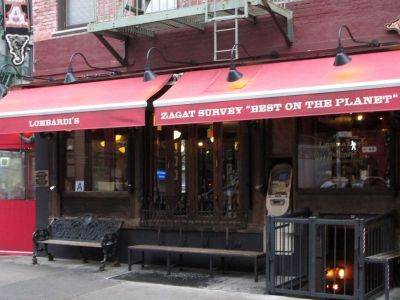
Established in 1905, Lombardi's is widely celebrated as one of the most influential names in American pizza history. Often recognized by the Pizza Hall of Fame as the first pizzeria in the United States, Lombardi’s helped introduce Neapolitan-style pizza to New York at a time when Italian immigrants were shaping the culinary identity of the city. Its early reputation grew around simple “tomato pies,” sold to factory workers and neighborhood residents, wrapped in paper and tied with string for easy takeaway lunches.
The restaurant’s origins are closely tied to Italian immigration in Lower Manhattan. For decades, the story credited Italian immigrant Gennaro Lombardi as founder, beginning with a grocery store on Spring Street that evolved into a licensed pizzeria. More recent research, however, suggests that another Italian immigrant, Filippo Milone, may have been the original owner, while Lombardi himself likely joined the business shortly after arriving in America. Regardless of who first operated the oven, the restaurant became a landmark of early Italian-American dining culture and drew notable patrons, including famed tenor Enrico Caruso.
After closing in 1984, Lombardi’s returned a decade later just a block away, reopening at its current location under the guidance of Gennaro Lombardi III and longtime associate John Brescio. The move was partly inspired by the presence of a coal-fired oven, a defining feature that helped preserve the crisp, charred style associated with classic New York pizza. Though the business faced challenges during the COVID-19 pandemic and lost one of its historic ovens after lease changes, Lombardi’s remains an enduring symbol of New York’s pizza heritage. Over the years, the restaurant has embraced its historic identity through anniversary celebrations, including offering whole pizzas at the original 1905 price of five cents during milestone years.
The restaurant’s origins are closely tied to Italian immigration in Lower Manhattan. For decades, the story credited Italian immigrant Gennaro Lombardi as founder, beginning with a grocery store on Spring Street that evolved into a licensed pizzeria. More recent research, however, suggests that another Italian immigrant, Filippo Milone, may have been the original owner, while Lombardi himself likely joined the business shortly after arriving in America. Regardless of who first operated the oven, the restaurant became a landmark of early Italian-American dining culture and drew notable patrons, including famed tenor Enrico Caruso.
After closing in 1984, Lombardi’s returned a decade later just a block away, reopening at its current location under the guidance of Gennaro Lombardi III and longtime associate John Brescio. The move was partly inspired by the presence of a coal-fired oven, a defining feature that helped preserve the crisp, charred style associated with classic New York pizza. Though the business faced challenges during the COVID-19 pandemic and lost one of its historic ovens after lease changes, Lombardi’s remains an enduring symbol of New York’s pizza heritage. Over the years, the restaurant has embraced its historic identity through anniversary celebrations, including offering whole pizzas at the original 1905 price of five cents during milestone years.
9) Museum of Ice Cream
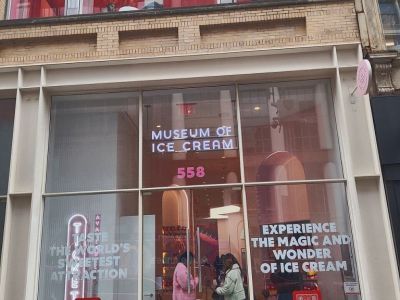
Museum of Ice Cream transforms a simple dessert into a full-scale immersive adventure. Spread across 25,000 square feet and three floors in downtown Manhattan, this playful attraction blends art installations, interactive exhibits, and unlimited sweet treats into an experience designed for both children and adults. Rather than a traditional museum filled with quiet galleries, visitors are encouraged to climb, slide, touch, and explore spaces built around imagination and nostalgia.
Inside, each room introduces a different themed world, from hidden passageways in the Hall of Freezers to the hands-on creativity of the Sundae Kitchen and the oversized tropical setting of Banana Jungle. Larger-than-life installations invite guests to step into colorful dreamscapes inspired by ice cream culture, including a magical subway ride and one of the longest indoor slides in New York City. The museum’s famous Sprinkle Pool remains one of its most recognizable highlights, offering a playful centerpiece that has become closely associated with the brand.
The museum offers a self-guided experience that typically lasts around 90 minutes, though many visitors stay longer to enjoy the exhibits and unlimited ice cream stations throughout the space. Designed as a shared experience for families, couples, and groups of friends, it combines entertainment, creativity, and sensory fun into one of New York’s most distinctive attractions.
Inside, each room introduces a different themed world, from hidden passageways in the Hall of Freezers to the hands-on creativity of the Sundae Kitchen and the oversized tropical setting of Banana Jungle. Larger-than-life installations invite guests to step into colorful dreamscapes inspired by ice cream culture, including a magical subway ride and one of the longest indoor slides in New York City. The museum’s famous Sprinkle Pool remains one of its most recognizable highlights, offering a playful centerpiece that has become closely associated with the brand.
The museum offers a self-guided experience that typically lasts around 90 minutes, though many visitors stay longer to enjoy the exhibits and unlimited ice cream stations throughout the space. Designed as a shared experience for families, couples, and groups of friends, it combines entertainment, creativity, and sensory fun into one of New York’s most distinctive attractions.
10) Central Park Zoo
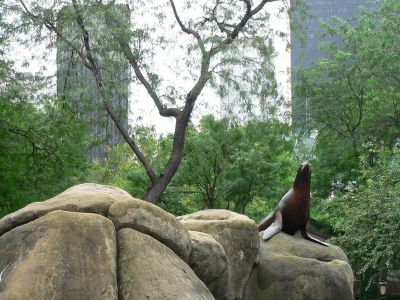
One of the first experiments in creating natural habitats for diverse animals in an urban setting, the Central Park Zoo is, expectedly, small-scale and very compact, but hosts a surprisingly good variety of animals from tropical, temperate, and polar parts of the world in well laid out exhibits. The main attractions are the sea lions, snow leopards, penguins, and bears, though some would rather pick the rainforest-inspired "Tropic Zone" as their favorite – it is a house filled with rare tropical birds, reptiles, and small mammals. One can spend more than a couple of hours here to enjoy every part.
The zoo is certainly the perfect size for children, as it has just the right number of attractions and exhibits to keep up their curiosity, including a separate petting zoo with animals such as goats, sheep or llamas (bring quarters buy food to feed them). There is also a 4D cinema experience – only 15mins long but worth a watch and pretty entertaining.
To get the most out of a visit, it's best to try to get to see all the scheduled 'highlight' events such as the feeding of penguins and sea lions, because the animals are a joy to watch working with their trainers.
Tip:
Online tickets are only available for the "Total Experience", which includes admission to the main zoo, the children's zoo, and the one entry to the 4D theatre. If that doesn't suit your needs, step right up to the ticket window to purchase a general admission ticket.
The zoo is certainly the perfect size for children, as it has just the right number of attractions and exhibits to keep up their curiosity, including a separate petting zoo with animals such as goats, sheep or llamas (bring quarters buy food to feed them). There is also a 4D cinema experience – only 15mins long but worth a watch and pretty entertaining.
To get the most out of a visit, it's best to try to get to see all the scheduled 'highlight' events such as the feeding of penguins and sea lions, because the animals are a joy to watch working with their trainers.
Tip:
Online tickets are only available for the "Total Experience", which includes admission to the main zoo, the children's zoo, and the one entry to the 4D theatre. If that doesn't suit your needs, step right up to the ticket window to purchase a general admission ticket.
