

Audio Guide: A Walk Through Heidelberg's Charming Old Town (Self Guided), Heidelberg
During his European travels, American writer Mark Twain compared Heidelberg after dark to a Milky Way that had fallen to earth.
Heidelberg occupies a narrow site on the Neckar River, where the wooded Odenwald hills meet the Rhine Plain. Now Baden-Württemberg’s fifth-largest city, it has approximately 160,000 residents, around one-quarter of whom are students.
Human settlement in the region reaches far into prehistory. In 1907, the jawbone associated with Homo heidelbergensis was discovered at nearby Mauer; it is one of Europe’s earliest known human fossils. A Celtic fortified settlement existed in the area by the 5th century BC, while the Romans occupied the region from about AD 40 to AD 260 and constructed a wooden bridge across the Neckar. The village of Bergheim was recorded in AD 769, and further settlement developed around Schönau Abbey, founded in the 12th century.
Heidelberg first appeared in written records as “Heidelberch” in 1196. The precise origin of the name remains uncertain. The second element, berg, means “hill” or “mountain” and probably refers to the nearby King’s Seat hill. The first may derive from Heide, meaning heath or uncultivated land.
During the Middle Ages, Heidelberg became the residence of the counts palatine of the Rhine. The Golden Bull of 1356 confirmed their status as electors of the Holy Roman Empire. Elector Rupert I founded Heidelberg University in 1386, making it Germany’s oldest university and one of Europe’s most prestigious academic institutions.
The city later became an important centre of the Reformation. Martin Luther defended his ideas here during the Heidelberg Disputation of 1518, Protestantism was officially introduced in 1556, and the Heidelberg Catechism appeared in 1563. Meanwhile, the medieval castle was transformed into an elaborate Renaissance residence.
Heidelberg suffered heavily during the Thirty Years’ War, particularly when Catholic League forces captured it in 1622. French troops devastated the city and castle again in 1689 and 1693 during the Nine Years’ War.
Rebuilt largely in the Baroque style, Heidelberg later attracted Romantic poets, artists, and travellers. Having escaped major destruction during the Second World War, it retains its historic Old Town.
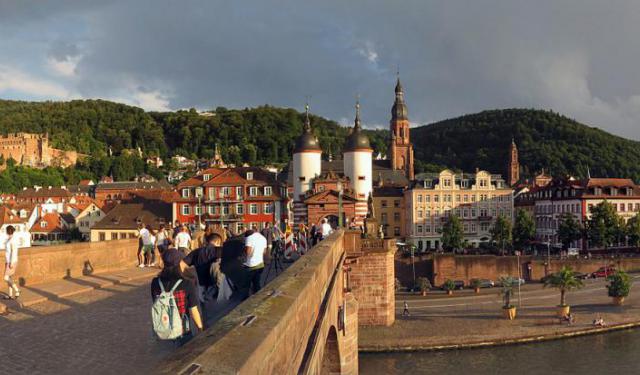
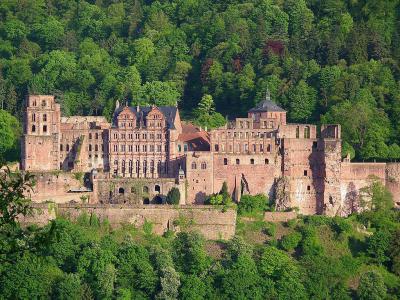
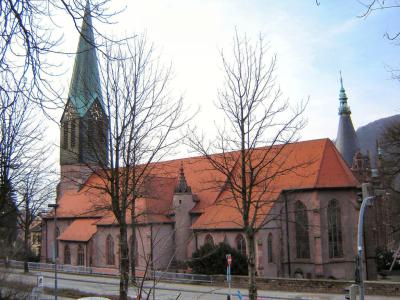
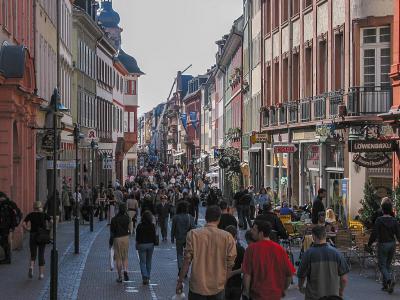
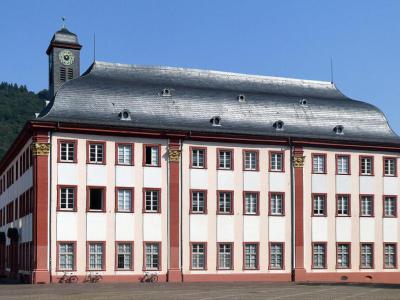
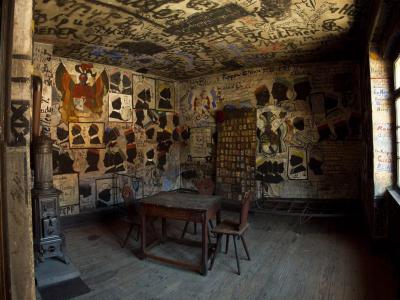
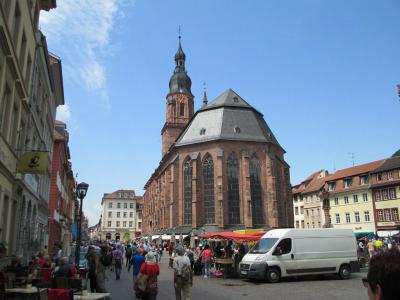
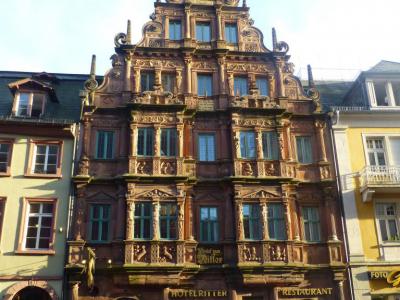
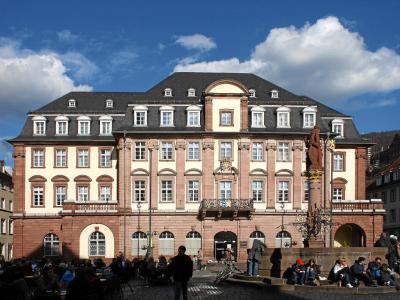
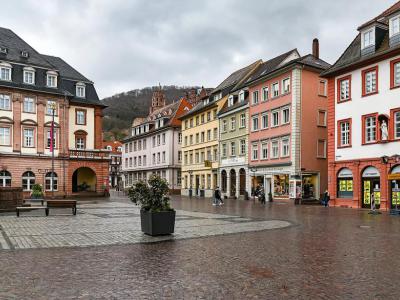
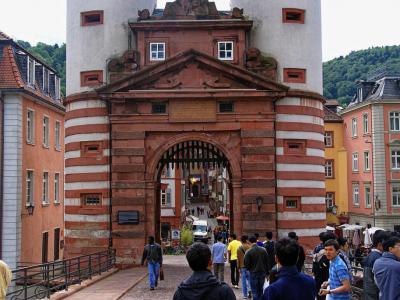
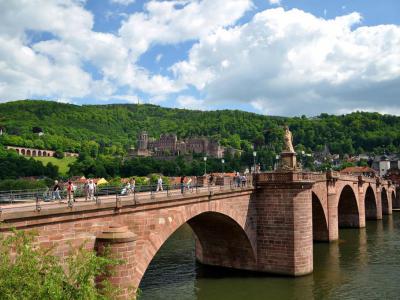
Walking along Heidelberg’s pedestrianised Main Street, visitors pass the Old University and its graffiti-covered Student Prison before reaching Market Square. Here, the Gothic Church of the Holy Spirit rises above café terraces beside the Baroque Town Hall. Farther east, the twin-towered Old Bridge Gate opens onto the Old Bridge across the Neckar, while Heidelberg Castle looks down from the wooded hillside.
Follow these streets from the university quarter to the river and castle views, and you may understand why Twain saw Heidelberg at night not simply as a city, but as a Milky Way fallen to earth.
Heidelberg occupies a narrow site on the Neckar River, where the wooded Odenwald hills meet the Rhine Plain. Now Baden-Württemberg’s fifth-largest city, it has approximately 160,000 residents, around one-quarter of whom are students.
Human settlement in the region reaches far into prehistory. In 1907, the jawbone associated with Homo heidelbergensis was discovered at nearby Mauer; it is one of Europe’s earliest known human fossils. A Celtic fortified settlement existed in the area by the 5th century BC, while the Romans occupied the region from about AD 40 to AD 260 and constructed a wooden bridge across the Neckar. The village of Bergheim was recorded in AD 769, and further settlement developed around Schönau Abbey, founded in the 12th century.
Heidelberg first appeared in written records as “Heidelberch” in 1196. The precise origin of the name remains uncertain. The second element, berg, means “hill” or “mountain” and probably refers to the nearby King’s Seat hill. The first may derive from Heide, meaning heath or uncultivated land.
During the Middle Ages, Heidelberg became the residence of the counts palatine of the Rhine. The Golden Bull of 1356 confirmed their status as electors of the Holy Roman Empire. Elector Rupert I founded Heidelberg University in 1386, making it Germany’s oldest university and one of Europe’s most prestigious academic institutions.
The city later became an important centre of the Reformation. Martin Luther defended his ideas here during the Heidelberg Disputation of 1518, Protestantism was officially introduced in 1556, and the Heidelberg Catechism appeared in 1563. Meanwhile, the medieval castle was transformed into an elaborate Renaissance residence.
Heidelberg suffered heavily during the Thirty Years’ War, particularly when Catholic League forces captured it in 1622. French troops devastated the city and castle again in 1689 and 1693 during the Nine Years’ War.
Rebuilt largely in the Baroque style, Heidelberg later attracted Romantic poets, artists, and travellers. Having escaped major destruction during the Second World War, it retains its historic Old Town.
Walking along Heidelberg’s pedestrianised Main Street, visitors pass the Old University and its graffiti-covered Student Prison before reaching Market Square. Here, the Gothic Church of the Holy Spirit rises above café terraces beside the Baroque Town Hall. Farther east, the twin-towered Old Bridge Gate opens onto the Old Bridge across the Neckar, while Heidelberg Castle looks down from the wooded hillside.
Follow these streets from the university quarter to the river and castle views, and you may understand why Twain saw Heidelberg at night not simply as a city, but as a Milky Way fallen to earth.
How it works: Download the app "GPSmyCity: Walks in 1K+ Cities" from Apple App Store or Google Play Store to your mobile phone or tablet. The app turns your mobile device into a personal tour guide and its built-in GPS navigation functions guide you from one tour stop to next. The app works offline, so no data plan is needed when traveling abroad.
Download The GPSmyCity App



A Walk Through Heidelberg's Charming Old Town Map
Guide Name: A Walk Through Heidelberg's Charming Old Town
Guide Location: Germany » Heidelberg (See other walking tours in Heidelberg)
Guide Type: Self-guided Walking Tour (Sightseeing)
Tour Duration: 2 Hours
Travel Distance: 2 Km or 1.2 Miles
Tour Best Suited For: First-time visit
Guide Location: Germany » Heidelberg (See other walking tours in Heidelberg)
Guide Type: Self-guided Walking Tour (Sightseeing)
Tour Duration: 2 Hours
Travel Distance: 2 Km or 1.2 Miles
Tour Best Suited For: First-time visit
Sights Featured in This Walk
Walking Tours in Heidelberg, Germany

Create Your Own Walk in Heidelberg
Creating your own self-guided walk in Heidelberg is easy and fun. Choose the city attractions that you want to see and a walk route map will be created just for you. You can even set your hotel as the start point of the walk.
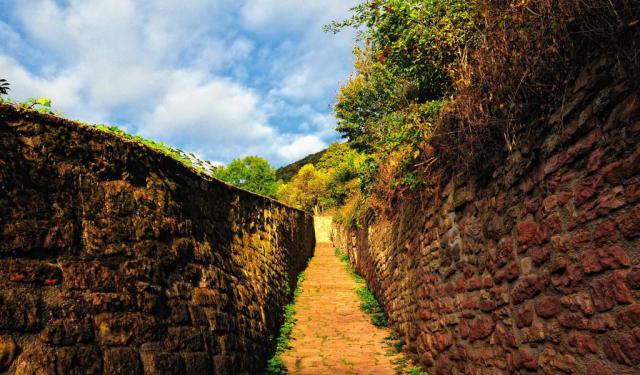
Philosophers’ Path
For generations, Heidelberg’s poets, professors, and philosophers came to this hillside to walk, talk, think, and admire the city below. Their footsteps eventually gave one of Heidelberg’s most scenic routes its name: the Philosophers’ Path.
Heidelberg may be best known for its Castle, Old Town, and historic University, but one of the city’s most rewarding experiences lies across the... view more
Tour Duration: 1 Hour
Travel Distance: 1.6 Km or 1 Miles
Heidelberg may be best known for its Castle, Old Town, and historic University, but one of the city’s most rewarding experiences lies across the... view more
Tour Duration: 1 Hour
Travel Distance: 1.6 Km or 1 Miles
The Most Popular Cities
/ view all