

Assut de l'Or (Dam of the Gold) Bridge, Valencia
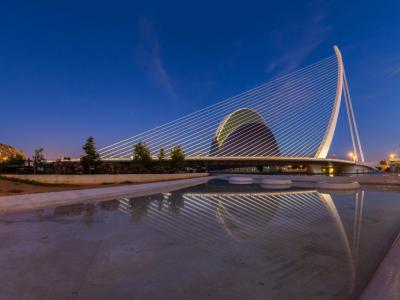
The Assut de l’Or Bridge is Valencia’s elegant way of saying that even a road-crossing can be dramatic. Designed by Santiago Calatrava and completed in December 2008, this cable-stayed bridge forms part of the City of Arts and Sciences, where ordinary infrastructure apparently had to look like it was auditioning for a futuristic blockbuster.
Its official name, translated to “Dam of the Gold,” refers to a nearby dam. Locals, however, have added their own nicknames. Some call it El Jamonero, because its tall leaning pylon looks a bit like a ham holder. Others call it the Harp Bridge, thanks to the 29 parallel cables stretched across its frame. Both names are fair. One is poetic; the other is hungry...
The bridge spans the Túria Gardens near the eastern edge of the City of Arts and Sciences. Its curved pylon leans backward, balanced by concrete counterweights hidden within the roadway. The result is pure Calatrava: graceful, slightly theatrical, and clearly uninterested in being just a bridge.
By day, the pylon and cables create a crisp white silhouette against the Valencian sky. By night, spotlights turn the whole structure into a glowing architectural instrument, as if the city has left a giant harp out for the moon to play...
The deck carries vehicle lanes, space for a tramway, and a central path for pedestrians and cyclists. So, whether you cross it by car, bike, tram, or on foot, the Dam of the Gold makes one thing clear: in Valencia, even getting from one side to the other can come with a little architectural swagger.
Its official name, translated to “Dam of the Gold,” refers to a nearby dam. Locals, however, have added their own nicknames. Some call it El Jamonero, because its tall leaning pylon looks a bit like a ham holder. Others call it the Harp Bridge, thanks to the 29 parallel cables stretched across its frame. Both names are fair. One is poetic; the other is hungry...
The bridge spans the Túria Gardens near the eastern edge of the City of Arts and Sciences. Its curved pylon leans backward, balanced by concrete counterweights hidden within the roadway. The result is pure Calatrava: graceful, slightly theatrical, and clearly uninterested in being just a bridge.
By day, the pylon and cables create a crisp white silhouette against the Valencian sky. By night, spotlights turn the whole structure into a glowing architectural instrument, as if the city has left a giant harp out for the moon to play...
The deck carries vehicle lanes, space for a tramway, and a central path for pedestrians and cyclists. So, whether you cross it by car, bike, tram, or on foot, the Dam of the Gold makes one thing clear: in Valencia, even getting from one side to the other can come with a little architectural swagger.
Want to visit this sight? Check out these Self-Guided Walking Tours in Valencia. Alternatively, you can download the mobile app "GPSmyCity: Walks in 1K+ Cities" from Apple App Store or Google Play Store. The app turns your mobile device to a personal tour guide and it works offline, so no data plan is needed when traveling abroad.
Download The GPSmyCity App



Assut de l'Or (Dam of the Gold) Bridge on Map
Sight Name: Assut de l'Or (Dam of the Gold) Bridge
Sight Location: Valencia, Spain (See walking tours in Valencia)
Sight Type: Attraction/Landmark
Guide(s) Containing This Sight:
Sight Location: Valencia, Spain (See walking tours in Valencia)
Sight Type: Attraction/Landmark
Guide(s) Containing This Sight:
Nearby Sights
Walking Tours in Valencia, Spain

Create Your Own Walk in Valencia
Creating your own self-guided walk in Valencia is easy and fun. Choose the city attractions that you want to see and a walk route map will be created just for you. You can even set your hotel as the start point of the walk.
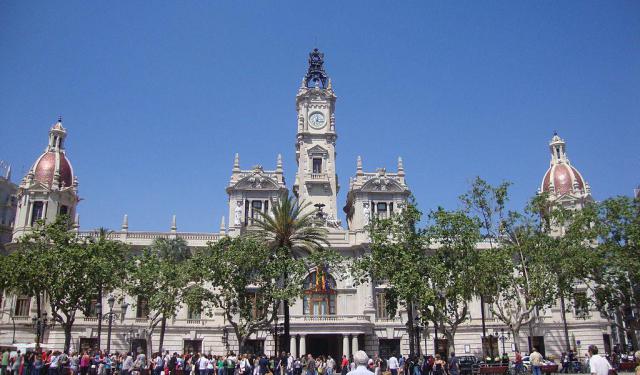
Valencia's Classical Architecture Tour
In Valencia, the architecture tells you right away-this city has layers. Indeed, this is not just a coastal getaway with sunshine, beaches, and a well-earned reputation for paella. Beneath the bright skies, “Spain’s Third Capital” reveals a rich and sometimes surprising blend of styles, bold in contrast yet delicate in detail. Nowhere is this more visible than in the Old Town, where nearly... view more
Tour Duration: 2 Hour(s)
Travel Distance: 3.3 Km or 2.1 Miles
Tour Duration: 2 Hour(s)
Travel Distance: 3.3 Km or 2.1 Miles
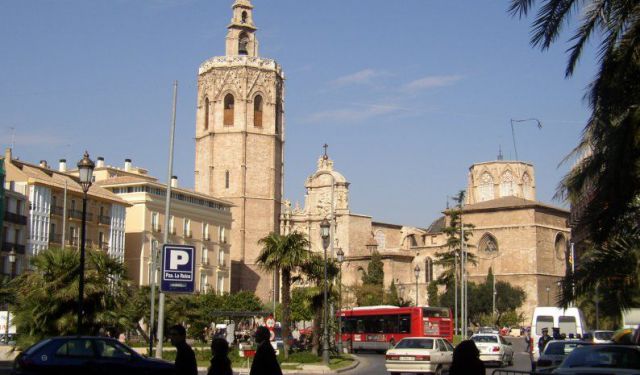
Valencia Old Town Walking Tour
Valencia’s Old Town is the sort of place where the Romans, Moors, medieval merchants, Gothic builders, Baroque decorators, and modern shoppers all seem to have comfortably found their place (albeit at different times). Beneath today’s squares, Roman streets and forum remains sit quietly underground, while above them, the city’s Islamic-era street plan still winds and twists, refusing to... view more
Tour Duration: 2 Hour(s)
Travel Distance: 3.0 Km or 1.9 Miles
Tour Duration: 2 Hour(s)
Travel Distance: 3.0 Km or 1.9 Miles
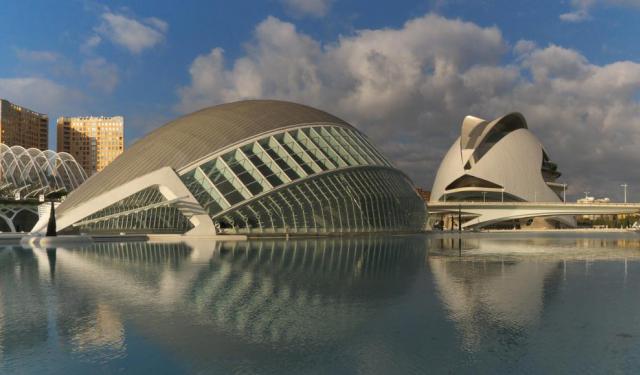
Contemporary Architecture Walk
With one foot in the past and the other planted firmly in the future, Valencia manages a balancing act few European cities can pull off. Gothic bell towers, Baroque façades, bustling markets, and centuries-old plazas all share the stage with structures that look as though they were delivered directly from the year 2150. Among the city’s many architectural personalities, contemporary design... view more
Tour Duration: 1 Hour(s)
Travel Distance: 1.4 Km or 0.9 Miles
Tour Duration: 1 Hour(s)
Travel Distance: 1.4 Km or 0.9 Miles
Valencia Top Attractions Walking Tour
Valencia, Spain’s third-largest city, has been around since 138 BC, when it was founded by the Romans as a colony for battle-tested veterans. Known then as Valentia, which means “valor,” it honored the courage of its first inhabitants. The city was destroyed in 75 BC by Pompey the Great, but was rebuilt within a century, later becoming home to Visigoths and then the Moors, who transformed... view more
Tour Duration: 2 Hour(s)
Travel Distance: 3.0 Km or 1.9 Miles
Tour Duration: 2 Hour(s)
Travel Distance: 3.0 Km or 1.9 Miles