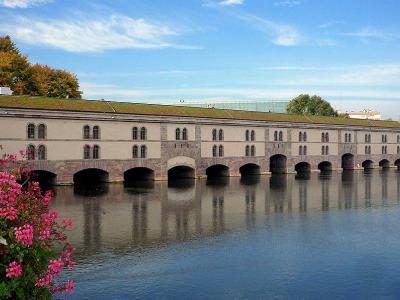


Barrage Vauban (Vauban Dam), Strasbourg (must see)
The Vauban Dam was built between 1681 and 1688, shortly after Strasbourg was annexed by France under Louis XIV. The dam was designed by the city’s military engineers following the principles of Sébastien de Vauban, France’s most influential fortress architect. Its primary purpose was strategic: in the event of an attack, the dam could be used to flood the southern approaches to the city by controlling the flow of the Ill River, creating a water barrier that made invasion far more difficult.
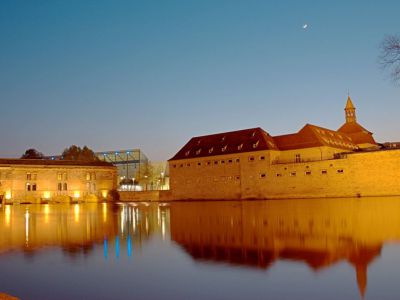
Architecturally, the Vauban Dam is a long, covered stone structure spanning the river just behind the medieval Covered Bridges. Inside, a vaulted gallery runs the length of the dam, pierced by large arches that allow water to pass through. These openings once held wooden gates that could be raised or lowered to regulate water levels.
Today, the Vauban Dam is valued less as a military installation and more as a viewpoint and cultural landmark. The interior gallery is open to visitors and often hosts temporary art installations and exhibitions. The gallery is easily accessible via an arched gateway on the side of the dam.
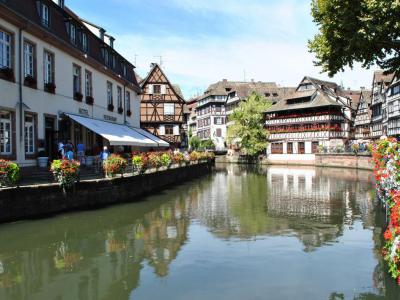
Two staircases and an elevator inside the dam lead to a rooftop terrace that offers one of the best panoramic views in Strasbourg. The staircases can be identified by signs reading “terrasse panoramique,” meaning “panoramic terrace.” From here, you can look out over the canals and half-timbered houses of the Little France district on one side, and toward the towers of Strasbourg Cathedral and the historic city center on the other. The contrast between medieval neighborhoods, waterways, and later fortifications is especially striking from this elevated position.
Architecturally, the Vauban Dam is a long, covered stone structure spanning the river just behind the medieval Covered Bridges. Inside, a vaulted gallery runs the length of the dam, pierced by large arches that allow water to pass through. These openings once held wooden gates that could be raised or lowered to regulate water levels.
Today, the Vauban Dam is valued less as a military installation and more as a viewpoint and cultural landmark. The interior gallery is open to visitors and often hosts temporary art installations and exhibitions. The gallery is easily accessible via an arched gateway on the side of the dam.
Two staircases and an elevator inside the dam lead to a rooftop terrace that offers one of the best panoramic views in Strasbourg. The staircases can be identified by signs reading “terrasse panoramique,” meaning “panoramic terrace.” From here, you can look out over the canals and half-timbered houses of the Little France district on one side, and toward the towers of Strasbourg Cathedral and the historic city center on the other. The contrast between medieval neighborhoods, waterways, and later fortifications is especially striking from this elevated position.
Want to visit this sight? Check out these Self-Guided Walking Tours in Strasbourg. Alternatively, you can download the mobile app "GPSmyCity: Walks in 1K+ Cities" from Apple App Store or Google Play Store. The app turns your mobile device to a personal tour guide and it works offline, so no data plan is needed when traveling abroad.
Download The GPSmyCity App



Barrage Vauban (Vauban Dam) on Map
Sight Name: Barrage Vauban (Vauban Dam)
Sight Location: Strasbourg, France (See walking tours in Strasbourg)
Sight Type: Attraction/Landmark
Guide(s) Containing This Sight:
Sight Location: Strasbourg, France (See walking tours in Strasbourg)
Sight Type: Attraction/Landmark
Guide(s) Containing This Sight:
Nearby Sights


Walking Tours in Strasbourg, France

Create Your Own Walk in Strasbourg
Creating your own self-guided walk in Strasbourg is easy and fun. Choose the city attractions that you want to see and a walk route map will be created just for you. You can even set your hotel as the start point of the walk.
Famous Squares Walking Tour
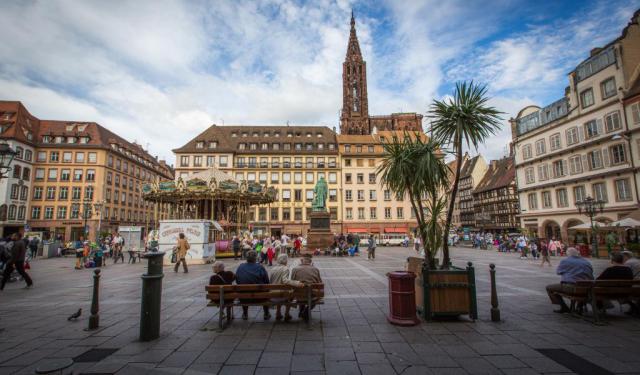
Justly reputed as one of the most beautiful cities in all of France, Strasbourg greets visitors with an array of picturesque squares. Among the most famous of them are:
Place Kléber - the biggest square in the heart of the city’s commercial district; a central meeting place since the 14th century.
Place Gutenberg - a definite “must-see” in the heart of medieval Strasbourg, not far... view more
Tour Duration: 2 Hour(s)
Travel Distance: 2.7 Km or 1.7 Miles
Place Kléber - the biggest square in the heart of the city’s commercial district; a central meeting place since the 14th century.
Place Gutenberg - a definite “must-see” in the heart of medieval Strasbourg, not far... view more
Tour Duration: 2 Hour(s)
Travel Distance: 2.7 Km or 1.7 Miles
Strasbourg Old Town Walking Tour
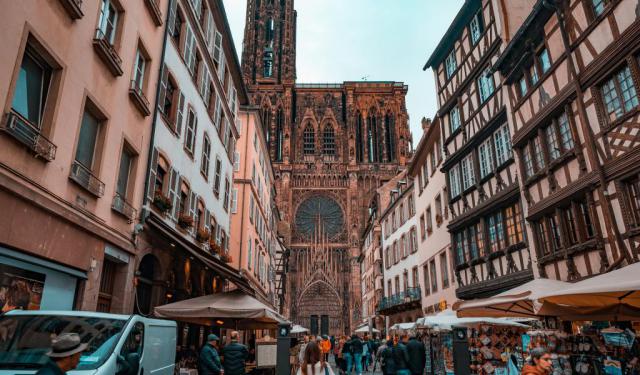
German writer Johann Wolfgang von Goethe studied in Strasbourg between 1770 and 1771, a period he later described as highly formative. He gave back to the city by including his fascination for Strasbourg Cathedral's spire in his own autobiography.
Strasbourg’s old town, known as the "Large Island”, is the historic core of the city and one of the best-preserved medieval urban... view more
Tour Duration: 2 Hour(s)
Travel Distance: 2.5 Km or 1.6 Miles
Strasbourg’s old town, known as the "Large Island”, is the historic core of the city and one of the best-preserved medieval urban... view more
Tour Duration: 2 Hour(s)
Travel Distance: 2.5 Km or 1.6 Miles
Historical Churches Walking Tour
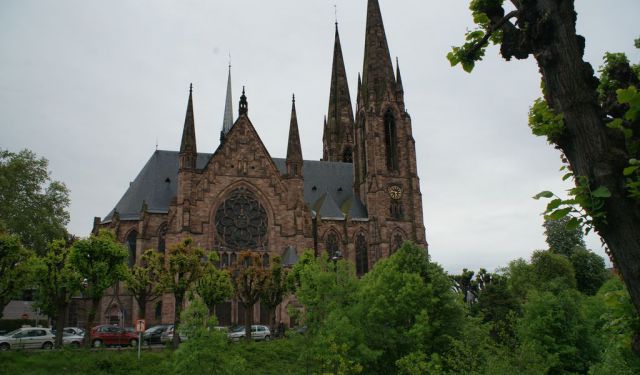
Strasbourg, which celebrated its bimillennial anniversary in 1988, is a city with a very rich heritage. Among other historical monuments found here is a wealth of ancient churches and cathedrals, representing a variety of architectural styles. Exploring Strasbourg on foot, one is inevitably drawn to visit some of these locations. Here are some of the best known places of worship in the city.
... view more
Tour Duration: 2 Hour(s)
Travel Distance: 3.0 Km or 1.9 Miles
... view more
Tour Duration: 2 Hour(s)
Travel Distance: 3.0 Km or 1.9 Miles