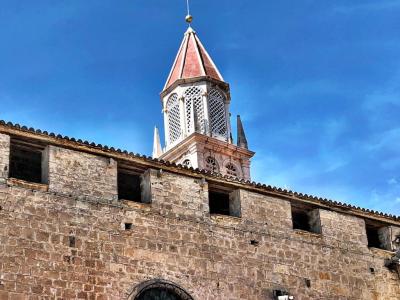


Benedictine Monastery of St. Nicholas, Trogir
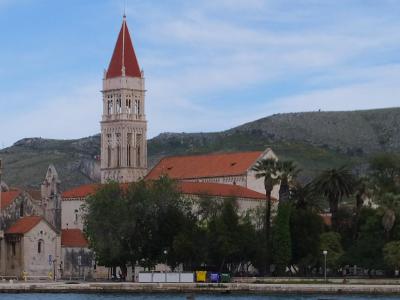
The Benedictine Monastery of St. Nicholas was originally built in 1066, with a bell tower added in the 16th century. The building's most striking feature is its interior, which was completely redesigned in the Baroque style during the 1700s.
The church is home to several fine inscriptions honoring prominent figures from the city, as well as numerous valuable artworks, including the Kairos, a beautifully detailed relief depicting scenes from Greek mythology. Among the church's many paintings, notable works include those by Antonio Zanchi, Paolo Veneziano, and Nicollo Grassi, along with a 13th-century Madonna and Child.
The church is home to several fine inscriptions honoring prominent figures from the city, as well as numerous valuable artworks, including the Kairos, a beautifully detailed relief depicting scenes from Greek mythology. Among the church's many paintings, notable works include those by Antonio Zanchi, Paolo Veneziano, and Nicollo Grassi, along with a 13th-century Madonna and Child.
Want to visit this sight? Check out these Self-Guided Walking Tours in Trogir. Alternatively, you can download the mobile app "GPSmyCity: Walks in 1K+ Cities" from Apple App Store or Google Play Store. The app turns your mobile device to a personal tour guide and it works offline, so no data plan is needed when traveling abroad.
Download The GPSmyCity App



Benedictine Monastery of St. Nicholas on Map
Sight Name: Benedictine Monastery of St. Nicholas
Sight Location: Trogir, Croatia (See walking tours in Trogir)
Sight Type: Religious
Sight Location: Trogir, Croatia (See walking tours in Trogir)
Sight Type: Religious
Nearby Sights
Walking Tours in Trogir, Croatia

Create Your Own Walk in Trogir
Creating your own self-guided walk in Trogir is easy and fun. Choose the city attractions that you want to see and a walk route map will be created just for you. You can even set your hotel as the start point of the walk.
Trogir Introduction Walking Tour
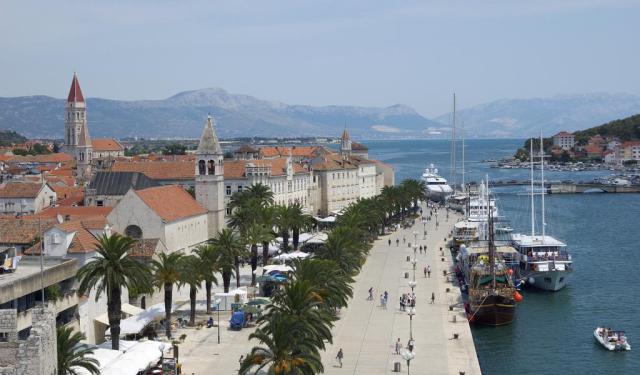
Trogir, a charming small town on the scenic Dalmatian coast of Croatia, boasts 2300 years of continuous urban tradition. Established in the 3rd century BC, throughout its history the town has been influenced by the ancient Greeks, Romans, and Venetians, to mention but a few.
Originally known as Tragurion, its name is derived from the Greek words "tragos" (male goat) and... view more
Tour Duration: 1 Hour
Travel Distance: 0.8 Km or 0.5 Miles
Originally known as Tragurion, its name is derived from the Greek words "tragos" (male goat) and... view more
Tour Duration: 1 Hour
Travel Distance: 0.8 Km or 0.5 Miles
City Walks Overview
