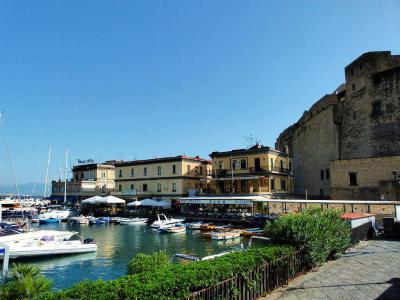


Borgo Santa Lucia, Naples
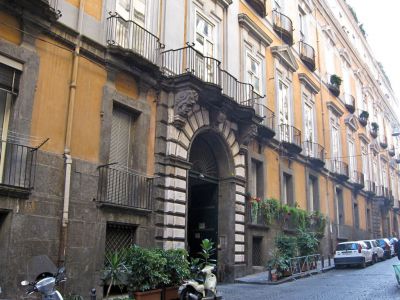
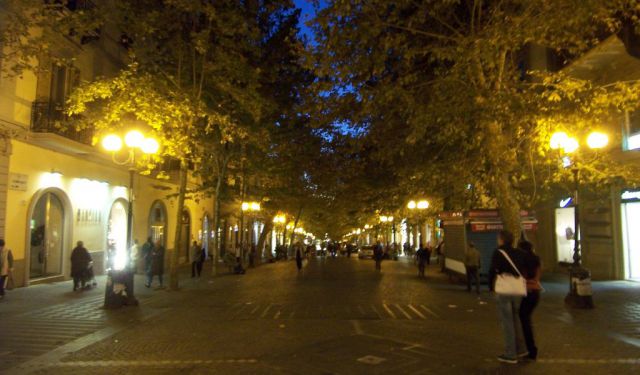
Borgo Santa Lucia, commonly referred to as Santa Lucia (Saint Lucy), is a historic district located in Naples. This neighborhood is centered around a street of the same name and derives its name from the presence of the Santa Lucia a Mare basilica, which has been documented as existing since the 9th century. It is interesting to note that, despite local legend suggesting otherwise, the basilica's founding is not attributed to a granddaughter of Constantine I.
One notable historical figure associated with this area is Admiral Francesco Caracciolo, who served in the Neapolitan navy and was ultimately executed by hanging on the orders of Admiral Nelson due to his involvement with the Parthenopaean Republic. Caracciolo's body was cast into the sea but later recovered and now rests in another renowned church in the vicinity, Santa Maria della Catena. An epitaph, placed in 1881, commemorates this event.
During the 1960 Summer Olympics, the Ports of Santa Lucia served as the Olympic harbors for Dragon sailboats (at the quays of Borgo Marinari), Star, and 5.5 Metre classes (at the quays of Molosiglio). Finn and Flying Dutchman sailboats, on the other hand, were housed in Mergellina. It's worth mentioning that HRH Crown Prince Constantine achieved a Gold medal in the Dragon sailboats event during these Olympics.
Santa Lucia has also been the subject of several traditional Neapolitan songs, with the most famous ones being "Santa Lucia" and "Santa Lucia Luntana." These songs hold a special place in the hearts of Neapolitans as they symbolize the emotional experiences of those leaving their homes to emigrate to America.
One notable historical figure associated with this area is Admiral Francesco Caracciolo, who served in the Neapolitan navy and was ultimately executed by hanging on the orders of Admiral Nelson due to his involvement with the Parthenopaean Republic. Caracciolo's body was cast into the sea but later recovered and now rests in another renowned church in the vicinity, Santa Maria della Catena. An epitaph, placed in 1881, commemorates this event.
During the 1960 Summer Olympics, the Ports of Santa Lucia served as the Olympic harbors for Dragon sailboats (at the quays of Borgo Marinari), Star, and 5.5 Metre classes (at the quays of Molosiglio). Finn and Flying Dutchman sailboats, on the other hand, were housed in Mergellina. It's worth mentioning that HRH Crown Prince Constantine achieved a Gold medal in the Dragon sailboats event during these Olympics.
Santa Lucia has also been the subject of several traditional Neapolitan songs, with the most famous ones being "Santa Lucia" and "Santa Lucia Luntana." These songs hold a special place in the hearts of Neapolitans as they symbolize the emotional experiences of those leaving their homes to emigrate to America.
Want to visit this sight? Check out these Self-Guided Walking Tours in Naples. Alternatively, you can download the mobile app "GPSmyCity: Walks in 1K+ Cities" from Apple App Store or Google Play Store. The app turns your mobile device to a personal tour guide and it works offline, so no data plan is needed when traveling abroad.
Download The GPSmyCity App



Borgo Santa Lucia on Map
Sight Name: Borgo Santa Lucia
Sight Location: Naples, Italy (See walking tours in Naples)
Sight Type: Attraction/Landmark
Sight Location: Naples, Italy (See walking tours in Naples)
Sight Type: Attraction/Landmark
Nearby Sights
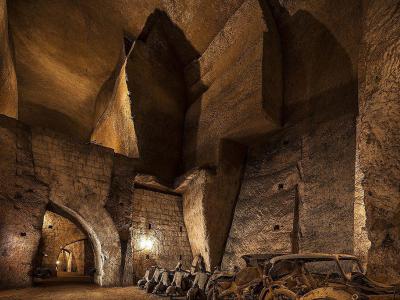
Walking Tours in Naples, Italy

Create Your Own Walk in Naples
Creating your own self-guided walk in Naples is easy and fun. Choose the city attractions that you want to see and a walk route map will be created just for you. You can even set your hotel as the start point of the walk.
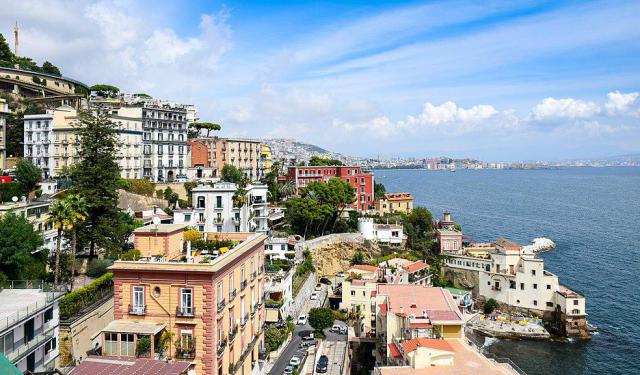
Naples Top Attractions Walking Tour
“See Naples and die.” German poet and scientist Goethe was convinced that Naples represented the epitome of human experience.
The city has been continuously inhabited for nearly three thousand years. Its origins date to the 8th century BC, when Greek settlers from Euboea established a small coastal colony known as Parthenope, near the site of today’s Ovo Castle. As the settlement expanded... view more
Tour Duration: 2 Hours
Travel Distance: 3.7 Km or 2.3 Miles
The city has been continuously inhabited for nearly three thousand years. Its origins date to the 8th century BC, when Greek settlers from Euboea established a small coastal colony known as Parthenope, near the site of today’s Ovo Castle. As the settlement expanded... view more
Tour Duration: 2 Hours
Travel Distance: 3.7 Km or 2.3 Miles
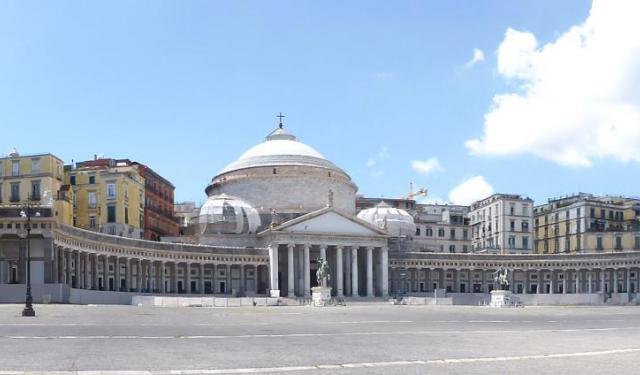
Historical Churches
Christianity in general and the Catholic faith in particular have always played an important role in the social and cultural life of Naples. Not everyone knows that the city boasts the highest number of churches in the world - almost 500 historic “houses of God” (1,000 in total) - accumulated over the course of 17(!) centuries. Hence the nickname - “the city of 500 domes”.
And their... view more
Tour Duration: 2 Hours
Travel Distance: 3.7 Km or 2.3 Miles
And their... view more
Tour Duration: 2 Hours
Travel Distance: 3.7 Km or 2.3 Miles
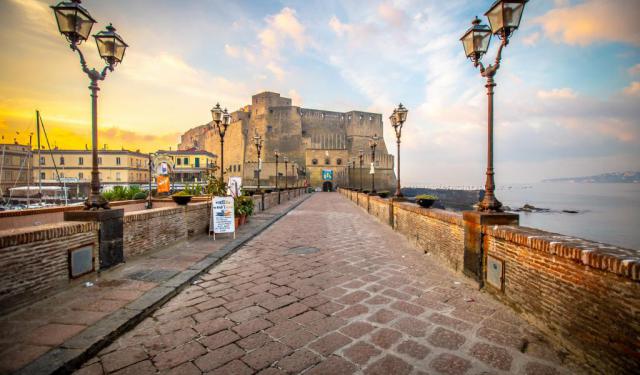
Naples Old Town Walk
After travelling to Naples in 1835 using a false passport, French painter and writer Alexandre Dumas described the Old Town’s streets as true storytellers in his travel writings.
From the Middle Ages onward, the Old Town developed as a dense network of neighbourhoods organised around churches, convents, guilds, and markets. Religious institutions played a decisive role in shaping the urban... view more
Tour Duration: 2 Hours
Travel Distance: 2.7 Km or 1.7 Miles
From the Middle Ages onward, the Old Town developed as a dense network of neighbourhoods organised around churches, convents, guilds, and markets. Religious institutions played a decisive role in shaping the urban... view more
Tour Duration: 2 Hours
Travel Distance: 2.7 Km or 1.7 Miles
Naples Food Tour
A food tour through Naples is less about restaurants alone and more about understanding a city that has always lived through its kitchens, bakeries, markets, and street corners. Naples’ culinary story stretches back more than two thousand years, shaped by Greeks, Romans, Spanish rulers, French influences, and centuries of trade through one of the Mediterranean’s busiest ports. Each period... view more
Tour Duration: 1 Hour
Travel Distance: 1.6 Km or 1 Miles
Tour Duration: 1 Hour
Travel Distance: 1.6 Km or 1 Miles
City Walks Overview
