

Naples Old Town Walk (Self Guided), Naples
After travelling to Naples in 1835 using a false passport, French painter and writer Alexandre Dumas described the Old Town’s streets as true storytellers in his travel writings.
From the Middle Ages onward, the Old Town developed as a dense network of neighbourhoods organised around churches, convents, guilds, and markets. Religious institutions played a decisive role in shaping the urban fabric. Monasteries such as Santa Chiara, San Lorenzo Maggiore, and Gesù Nuovo were not isolated religious enclaves but active urban centres, providing education, charity, storage, and employment.
The Old Town also became Naples’ intellectual heart. The University of Naples, founded in 1224 by Emperor Frederick II, was one of Europe’s first state-run universities. Scholars, clerics, and students lived side by side with artisans and merchants—a mix of social classes that still characterises the historic centre.
Economically, the Old Town functioned through small-scale, specialised activity. Workshops, bakeries, tailors, bookbinders, and food sellers clustered along key streets and side lanes, many occupying the same premises for generations. This continuity explains why ground floors still open directly onto the street, blurring the boundary between private life and public space.
Despite repeated crises—including plagues, earthquakes, and wartime damage—the Old Town was rarely rebuilt wholesale. Instead, buildings were adapted, subdivided, or extended vertically. Ancient walls became foundations, courtyards turned into passageways, and upper floors were added as families grew. This incremental change produced the compressed, layered streetscape that defines the area today.
In the 20th century, the Old Town faced overcrowding and neglect, yet it remained densely inhabited. Unlike the historic centres of Venice or Florence, which were transformed into museum districts, Naples’ Old Town retained a strong residential character.
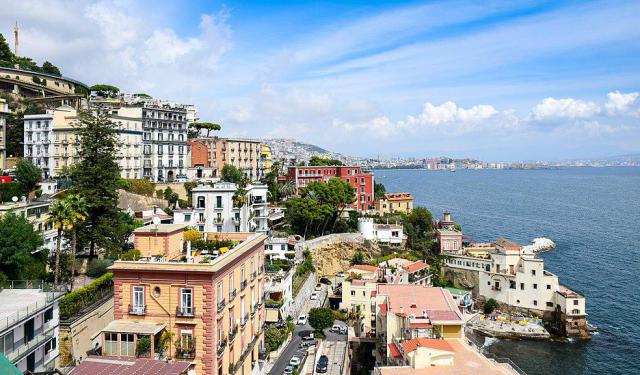
Walking through Naples’ Old Town means navigating narrow streets laid out over ancient Greek foundations, where churches, palaces, and workshops press tightly together. Baroque façades guide the eye outward toward the open air of the Naples Promenade and the silhouette of Ovo Castle. Bakeries, bookshops, shrines, laundry lines, scooters, and street food vendors animate a cityscape that feels dense, layered, and intensely lived-in.
And this is exactly what Dumas sensed nearly two centuries ago: the Old Town remains the city’s most authentic expression of continuity. Hence, it was duly rewarded with the title of an UNESCO World Heritage Site. Once you see Naples' Old Town for yourself you might grant it a place at the top of your rankings.
From the Middle Ages onward, the Old Town developed as a dense network of neighbourhoods organised around churches, convents, guilds, and markets. Religious institutions played a decisive role in shaping the urban fabric. Monasteries such as Santa Chiara, San Lorenzo Maggiore, and Gesù Nuovo were not isolated religious enclaves but active urban centres, providing education, charity, storage, and employment.
The Old Town also became Naples’ intellectual heart. The University of Naples, founded in 1224 by Emperor Frederick II, was one of Europe’s first state-run universities. Scholars, clerics, and students lived side by side with artisans and merchants—a mix of social classes that still characterises the historic centre.
Economically, the Old Town functioned through small-scale, specialised activity. Workshops, bakeries, tailors, bookbinders, and food sellers clustered along key streets and side lanes, many occupying the same premises for generations. This continuity explains why ground floors still open directly onto the street, blurring the boundary between private life and public space.
Despite repeated crises—including plagues, earthquakes, and wartime damage—the Old Town was rarely rebuilt wholesale. Instead, buildings were adapted, subdivided, or extended vertically. Ancient walls became foundations, courtyards turned into passageways, and upper floors were added as families grew. This incremental change produced the compressed, layered streetscape that defines the area today.
In the 20th century, the Old Town faced overcrowding and neglect, yet it remained densely inhabited. Unlike the historic centres of Venice or Florence, which were transformed into museum districts, Naples’ Old Town retained a strong residential character.
Walking through Naples’ Old Town means navigating narrow streets laid out over ancient Greek foundations, where churches, palaces, and workshops press tightly together. Baroque façades guide the eye outward toward the open air of the Naples Promenade and the silhouette of Ovo Castle. Bakeries, bookshops, shrines, laundry lines, scooters, and street food vendors animate a cityscape that feels dense, layered, and intensely lived-in.
And this is exactly what Dumas sensed nearly two centuries ago: the Old Town remains the city’s most authentic expression of continuity. Hence, it was duly rewarded with the title of an UNESCO World Heritage Site. Once you see Naples' Old Town for yourself you might grant it a place at the top of your rankings.
How it works: Download the app "GPSmyCity: Walks in 1K+ Cities" from Apple App Store or Google Play Store to your mobile phone or tablet. The app turns your mobile device into a personal tour guide and its built-in GPS navigation functions guide you from one tour stop to next. The app works offline, so no data plan is needed when traveling abroad.
Naples Old Town Walk Map
Guide Name: Naples Old Town Walk
Guide Location: Italy » Naples (See other walking tours in Naples)
Guide Type: Self-guided Walking Tour (Sightseeing)
# of Attractions: 9
Tour Duration: 2 Hour(s)
Travel Distance: 2.7 Km or 1.7 Miles
Author: vickyc
Sight(s) Featured in This Guide:
Guide Location: Italy » Naples (See other walking tours in Naples)
Guide Type: Self-guided Walking Tour (Sightseeing)
# of Attractions: 9
Tour Duration: 2 Hour(s)
Travel Distance: 2.7 Km or 1.7 Miles
Author: vickyc
Sight(s) Featured in This Guide:
- Piazza del Plebiscito (Plebiscite Square)
- San Francesco di Paola Church
- Royal Palace
- Via Chiaia (Chiaia street)
- Galleria Borbonica (Bourbon Tunnel)
- Palazzo Serra di Cassano (Serra di Cassano Palace)
- Fountain of the Giant
- Castel dell'Ovo (Castle of the Egg)
- Napoli Lungomare (Naples Promenade)
1) Piazza del Plebiscito (Plebiscite Square) (must see)
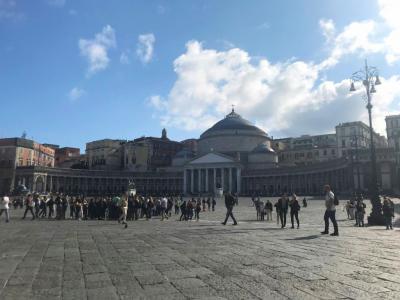
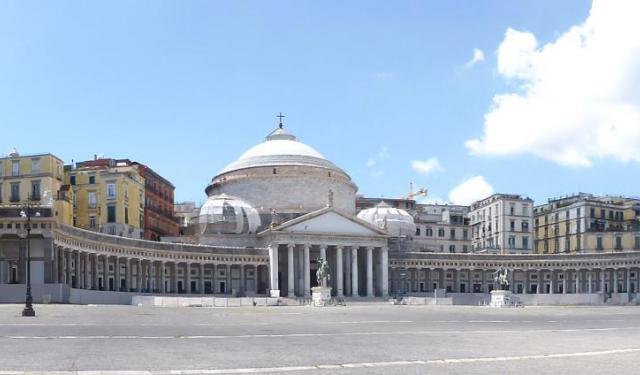
Plebiscite Square is the largest and most ceremonial public square in Naples, opening directly onto the waterfront at the edge of the historic centre. Its name refers to the plebiscite of 1860, when the Kingdom of the Two Sicilies voted to join the newly unified Kingdom of Italy—a political moment that marked the end of centuries of Bourbon rule. Long before that vote, however, the square functioned as a stage for royal power, military parades, and civic spectacle.
The square took its present form in the early 19th century under Joachim Murat, Napoleon’s brother-in-law and King of Naples, who envisioned a grand neoclassical space inspired by imperial ideals. Dominating its eastern side is the Royal Palace of Naples, begun in the early 1600s and long the residence of Spanish viceroys and later Bourbon kings.
After World War II, the square fell into neglect and was used as a large parking area until 1997, when it was restored ahead of the G7 summit held in Naples. This restoration returned the piazza to its original role as a monumental civic space.
Today, Plebiscite Square offers both scale and pause. It is one of the few places in Naples where the sky feels expansive, making it a popular meeting point and a natural threshold between the old city, the royal quarter, and the sea. Largely free of traffic, the square invites visitors to slow down, observe details, watch daily life unfold, or simply take in the symmetry and openness that set it apart from the surrounding streets.
The square took its present form in the early 19th century under Joachim Murat, Napoleon’s brother-in-law and King of Naples, who envisioned a grand neoclassical space inspired by imperial ideals. Dominating its eastern side is the Royal Palace of Naples, begun in the early 1600s and long the residence of Spanish viceroys and later Bourbon kings.
After World War II, the square fell into neglect and was used as a large parking area until 1997, when it was restored ahead of the G7 summit held in Naples. This restoration returned the piazza to its original role as a monumental civic space.
Today, Plebiscite Square offers both scale and pause. It is one of the few places in Naples where the sky feels expansive, making it a popular meeting point and a natural threshold between the old city, the royal quarter, and the sea. Largely free of traffic, the square invites visitors to slow down, observe details, watch daily life unfold, or simply take in the symmetry and openness that set it apart from the surrounding streets.
2) San Francesco di Paola Church
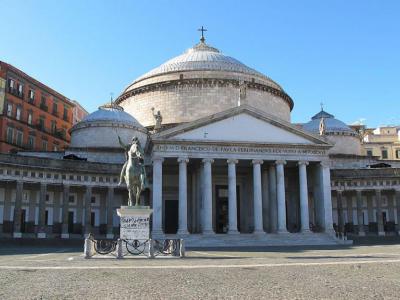
San Francesco di Paola Church is one of the city’s most visually commanding religious buildings, closely tied to Naples’ 19th-century political history. Construction began in 1816 under King Ferdinand I of Bourbon, who commissioned the church as both a votive offering and a symbol of restored monarchy after the Napoleonic period. Completed in 1824, the church deliberately echoes the Pantheon in Rome, with a vast circular plan, a portico supported by Corinthian columns, and a large central dome that dominates the square. Its restrained Neoclassical style marked a clear departure from the exuberant Baroque churches that define much of Naples’ earlier sacred architecture.
Immediately after passing through the grand external portico, you enter a rectangular atrium before reaching the main circular body. The atrium contains entrances to two side chapels. The Chapel of the Souls in Purgatory is on the left, and houses a painting of Saint Onofrio—a stark, powerful example of late Baroque art. On the right side of the atrium, you find the Chapel of the Blessed Sacrament, which features a striking 18th-century polychrome marble altar. Above it hangs a painting of Saint Francis of Paola, notable for its intense use of light and shadow.
Inside the main body of the church, the atmosphere is markedly calm and spacious, shaped by the building’s symmetry and uncluttered design. The high dome filters soft light into the interior, creating a strong sense of openness. The church’s most celebrated painting is located directly opposite the entrance, in the semi-circular space behind the altar. Titled Saint Francis of Paola Resuscitates a Dead Man, it was painted by Neoclassical Italian artist Vincenzo Camuccini and depicts the saint’s miraculous powers.
Today, the church remains an active place of worship and a popular venue for weddings.
Immediately after passing through the grand external portico, you enter a rectangular atrium before reaching the main circular body. The atrium contains entrances to two side chapels. The Chapel of the Souls in Purgatory is on the left, and houses a painting of Saint Onofrio—a stark, powerful example of late Baroque art. On the right side of the atrium, you find the Chapel of the Blessed Sacrament, which features a striking 18th-century polychrome marble altar. Above it hangs a painting of Saint Francis of Paola, notable for its intense use of light and shadow.
Inside the main body of the church, the atmosphere is markedly calm and spacious, shaped by the building’s symmetry and uncluttered design. The high dome filters soft light into the interior, creating a strong sense of openness. The church’s most celebrated painting is located directly opposite the entrance, in the semi-circular space behind the altar. Titled Saint Francis of Paola Resuscitates a Dead Man, it was painted by Neoclassical Italian artist Vincenzo Camuccini and depicts the saint’s miraculous powers.
Today, the church remains an active place of worship and a popular venue for weddings.
3) Royal Palace (must see)
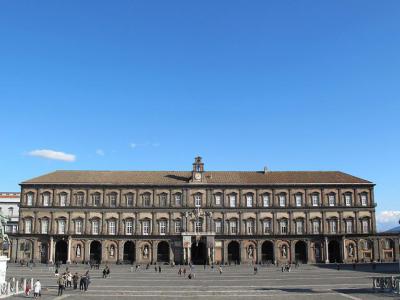
The Royal Palace of Naples stands along the eastern side of Plebiscite Square as a reminder of the centuries when Naples served as a European capital. Construction began in 1600 under Spanish rule, and the building was designed as the residence of the Spanish viceroys. From the outset, the palace was intended to project authority and stability, facing both the city and the sea. Over time, it was expanded and adapted by successive rulers, including the Bourbons, who made it one of their principal royal residences when Naples became the capital of the Kingdom of Naples and later the Kingdom of the Two Sicilies.
Niches along the palace’s orderly façade hold statues of historical rulers connected to Naples. Inside, the atmosphere shifts toward grand staircases, ceremonial halls, and richly decorated apartments. The Royal Apartments preserve original décor, including gilded ceilings, frescoes, tapestries, and period furniture, offering a glimpse into court life from the 17th to the 19th century.
As soon as you enter the palace, you have a choice. If you turn left, you reach the Court Theatre, an intimate performance space that reflects Naples’ long association with music and opera. If instead you continue straight ahead, you arrive at the square-shaped Courtyard of Honour. Continuing northeast, the Palatine Chapel, built for private worship, comes into view. While the palace’s western wing contains the Royal Apartments and the aforementioned spaces, if you turn right after entering the palace, you come to the National Library of Naples housed in the easten wing. It is one of Italy’s most important libraries, containing rare manuscripts and historic collections.
The Royal Palace offers a quieter counterpoint to Naples’ dense streets. Its broad rooms and ordered layout provide a sense of scale and formality rarely found elsewhere in the city.
Niches along the palace’s orderly façade hold statues of historical rulers connected to Naples. Inside, the atmosphere shifts toward grand staircases, ceremonial halls, and richly decorated apartments. The Royal Apartments preserve original décor, including gilded ceilings, frescoes, tapestries, and period furniture, offering a glimpse into court life from the 17th to the 19th century.
As soon as you enter the palace, you have a choice. If you turn left, you reach the Court Theatre, an intimate performance space that reflects Naples’ long association with music and opera. If instead you continue straight ahead, you arrive at the square-shaped Courtyard of Honour. Continuing northeast, the Palatine Chapel, built for private worship, comes into view. While the palace’s western wing contains the Royal Apartments and the aforementioned spaces, if you turn right after entering the palace, you come to the National Library of Naples housed in the easten wing. It is one of Italy’s most important libraries, containing rare manuscripts and historic collections.
The Royal Palace offers a quieter counterpoint to Naples’ dense streets. Its broad rooms and ordered layout provide a sense of scale and formality rarely found elsewhere in the city.
4) Via Chiaia (Chiaia street)
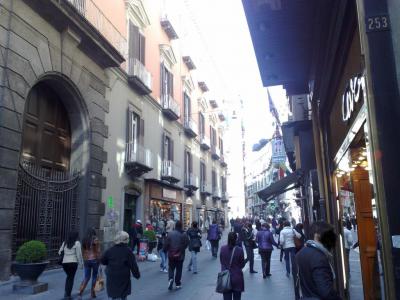
Chiaia Street is one of Naples’ oldest and most characterful streets, linking the historic centre to the waterfront districts. Its name derives from the Latin plaga, meaning slope or shore, a reminder that this area once lay close to the sea before land reclamation reshaped the coastline. By the early modern period, Chiaia Street had become a key route connecting the Spanish Quarter and Plebiscite Square with the aristocratic neighbourhoods developing toward the west. During the Bourbon era, especially in the 18th and 19th centuries, the street gained prominence as noble residences, churches, and elegant palaces lined its length, turning it into a fashionable corridor of the city.
Today, the street is a major shopping destination, with a blend of long-established local boutiques, Italian fashion brands, cafes, and pastry shops occupying historic buildings. Architectural details often reveal older layers, from Baroque façades and decorative portals to occasional courtyards glimpsed through open gateways. A short walk away, visitors can stop at the Monument to the Martyrs in the Martyrs' Square, a 19th-century monument marked by four lions commemorating anti-Bourbon uprisings in 1799, 1820, 1848, and 1860. Nearby stands the 16th-century Cellamare Palace, built for Giovan Francesco Carafa. The distinctive pink-and-white palace later hosted Bourbon royal guests and notable figures such as writers Casanova and Goethe, adding a literary and political layer to the area’s history.
At the western end of Chiaia Street, you will find the Chiaia Bridge, built in 1636 to connect the areas of Pizzofalcone and Mortella. The bridge was designed in a Neo-Renaissance style and decorated with marble elements.
Today, the street is a major shopping destination, with a blend of long-established local boutiques, Italian fashion brands, cafes, and pastry shops occupying historic buildings. Architectural details often reveal older layers, from Baroque façades and decorative portals to occasional courtyards glimpsed through open gateways. A short walk away, visitors can stop at the Monument to the Martyrs in the Martyrs' Square, a 19th-century monument marked by four lions commemorating anti-Bourbon uprisings in 1799, 1820, 1848, and 1860. Nearby stands the 16th-century Cellamare Palace, built for Giovan Francesco Carafa. The distinctive pink-and-white palace later hosted Bourbon royal guests and notable figures such as writers Casanova and Goethe, adding a literary and political layer to the area’s history.
At the western end of Chiaia Street, you will find the Chiaia Bridge, built in 1636 to connect the areas of Pizzofalcone and Mortella. The bridge was designed in a Neo-Renaissance style and decorated with marble elements.
5) Galleria Borbonica (Bourbon Tunnel) (must see)
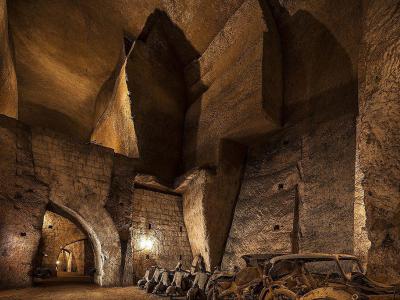
The Bourbon Tunnel was conceived in 1853 during the reign of King Ferdinand II of Bourbon, and was originally intended as a secret military and escape route linking the Royal Palace with strategic points farther inland, such as military barracks on Morelli Street. The Bourbon monarchy of the time was wary of uprisings, and this underground corridor was meant to offer a rapid and discreet way for troops — and potentially the royal family — to move unseen or flee if the city erupted in revolt. Unfortunately, King Ferdinand II died and the tunnel was left unfinished. Despite the sudden interruption of construction works, the tunnel had already been connected to the 17th-century aqueduct system.
After the king's death, the underground space went unused until World War II. During World War II, it became a vital bomb shelter and refuge for thousands of residents, seeking safety from aerial bombardments, with makeshift facilities added to accommodate them. After the war, it was used for storage — at times housing impounded vehicles.
After being rediscovered and cleared in the early 21st century, the Bourbon Tunnel emerged as a popular attraction. Nowadays, guided tours take you through sections of the tunnel where you can see remnants of its varied uses: ancient water systems and aqueduct connections, wartime artefacts such as vintage cars and motorcycles left behind, and the tunnel’s narrow corridors. Some tours delve deeper into adjoining cisterns or offer more adventurous explorations of less visited branches.
After the king's death, the underground space went unused until World War II. During World War II, it became a vital bomb shelter and refuge for thousands of residents, seeking safety from aerial bombardments, with makeshift facilities added to accommodate them. After the war, it was used for storage — at times housing impounded vehicles.
After being rediscovered and cleared in the early 21st century, the Bourbon Tunnel emerged as a popular attraction. Nowadays, guided tours take you through sections of the tunnel where you can see remnants of its varied uses: ancient water systems and aqueduct connections, wartime artefacts such as vintage cars and motorcycles left behind, and the tunnel’s narrow corridors. Some tours delve deeper into adjoining cisterns or offer more adventurous explorations of less visited branches.
6) Palazzo Serra di Cassano (Serra di Cassano Palace)
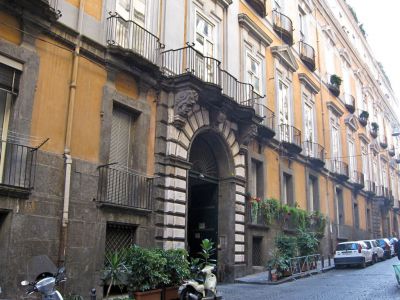
Serra di Cassano Palace was erected in the early 18th century for the noble Serra di Cassano family.
The family had economic interests in banking, insurance and law. The history of the palace is closely linked to the political upheavals of the late 18th century, particularly the events of 1799, when the short-lived Neapolitan Republic challenged Bourbon rule. Gennaro Serra di Cassano, a member of the family, was executed for his involvement in the republican movement.
The highlight of the palace is the Monumental Staircase, designed by the architect Ferdinando Sanfelice, which you pass on your way to the courtyard. The staircase is made up of two ramps and immediately draws the eye thanks to the strong colour contrast between the dark grey piperno stone and the brilliant white marble of the balustrades. It is designed to appear as though it is floating, with “bridge” landings that allow light to flood the space from the windows above. It is widely considered one of the most beautiful staircases in Naples.
By climbing the staircase, you reach the first floor, which now serves as the headquarters of the Italian Institute for Philosophical Studies. The ducal apartments of the palace were acquired by the Italian state in 1983 with the aim of preserving them and opening them to a wider public. Inside, the numerous halls, decorated with frescoes and artworks, reflect the tastes of Neapolitan nobility.
The mansion once housed one of the finest libraries in Naples. The contents of the library were sold to Viscount Spencer in the 19th century, and a portion of the collection is now held at Althorp, the country home of the family of the late Diana, Princess of Wales.
The family had economic interests in banking, insurance and law. The history of the palace is closely linked to the political upheavals of the late 18th century, particularly the events of 1799, when the short-lived Neapolitan Republic challenged Bourbon rule. Gennaro Serra di Cassano, a member of the family, was executed for his involvement in the republican movement.
The highlight of the palace is the Monumental Staircase, designed by the architect Ferdinando Sanfelice, which you pass on your way to the courtyard. The staircase is made up of two ramps and immediately draws the eye thanks to the strong colour contrast between the dark grey piperno stone and the brilliant white marble of the balustrades. It is designed to appear as though it is floating, with “bridge” landings that allow light to flood the space from the windows above. It is widely considered one of the most beautiful staircases in Naples.
By climbing the staircase, you reach the first floor, which now serves as the headquarters of the Italian Institute for Philosophical Studies. The ducal apartments of the palace were acquired by the Italian state in 1983 with the aim of preserving them and opening them to a wider public. Inside, the numerous halls, decorated with frescoes and artworks, reflect the tastes of Neapolitan nobility.
The mansion once housed one of the finest libraries in Naples. The contents of the library were sold to Viscount Spencer in the 19th century, and a portion of the collection is now held at Althorp, the country home of the family of the late Diana, Princess of Wales.
7) Fountain of the Giant
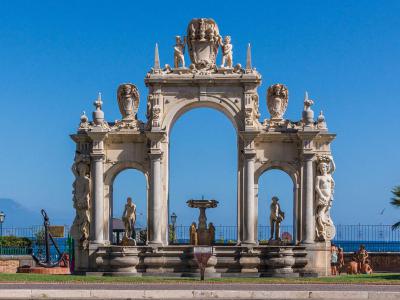
The Fountain of the Giant is a monumental Renaissance fountain located along the Naples waterfront, near the Castle of the Egg. It was commissioned by the Spanish viceroy Antonio de Toledo and crafted in the 17th century. The fountain was originally erected beside the Royal Palace of Naples in what is now Plebiscite Square. It took its name from a colossal ancient statue nearby — called “the Giant” — which was assembled around a Roman bust of Jupiter and stood near the fountain in the square, a pairing that appears in historic paintings of the city.
Over the centuries, the fountain led a peripatetic life, being dismantled, stored, and relocated multiple times. After its original site was reshaped in the early 19th century and the statue removed, the fountain was moved in the late 19th century to the Immacolatella Palace, and later to a park and other temporary settings, before finding its current picturesque home along the seafront, near Castle of the Egg, in the early 20th century.
Visually, the fountain’s three elegant arches are richly decorated with heraldic symbols, marine creatures, and river deities, and flanked by caryatid figures holding cornucopias — details that showcase the Mannerist style and the Baroque artistic tradition of early modern Naples.
Set against the backdrop of the Bay of Naples and Mount Vesuvius, it offers not only a moment of architectural beauty but also a strong photographic focal point and a peaceful pause during a stroll along the sea.
Over the centuries, the fountain led a peripatetic life, being dismantled, stored, and relocated multiple times. After its original site was reshaped in the early 19th century and the statue removed, the fountain was moved in the late 19th century to the Immacolatella Palace, and later to a park and other temporary settings, before finding its current picturesque home along the seafront, near Castle of the Egg, in the early 20th century.
Visually, the fountain’s three elegant arches are richly decorated with heraldic symbols, marine creatures, and river deities, and flanked by caryatid figures holding cornucopias — details that showcase the Mannerist style and the Baroque artistic tradition of early modern Naples.
Set against the backdrop of the Bay of Naples and Mount Vesuvius, it offers not only a moment of architectural beauty but also a strong photographic focal point and a peaceful pause during a stroll along the sea.
8) Castel dell'Ovo (Castle of the Egg) (must see)
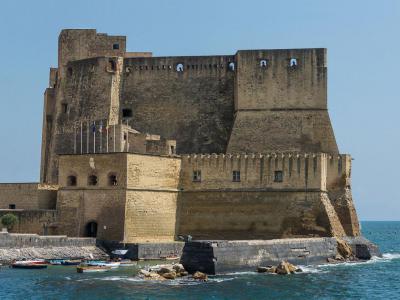
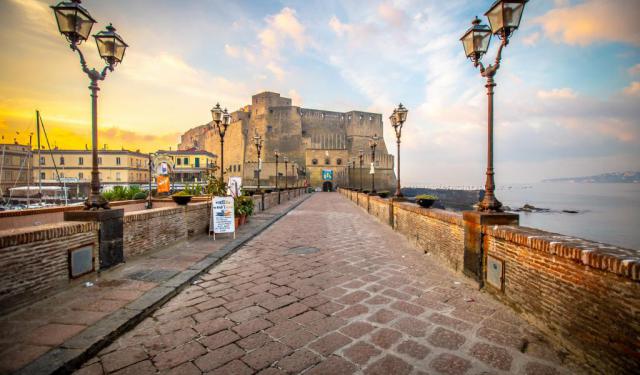
The Castle of the Egg is the oldest surviving fortification in Naples. It stands on the small island of Megaride, linked to the mainland by a narrow causeway. In Roman times, this rocky outcrop was home to an elite seaside villa, traditionally associated with the general Lucullus. The medieval fortress that dominates the island today took shape mainly between the 12th and 15th centuries, serving as a royal residence, defensive stronghold, and later a prison under successive rulers, including the Normans, Angevins, and Aragonese.
The castle’s unusual name is tied to a medieval legend involving the poet Virgil, who was believed to be a magician in the Middle Ages. According to the story, Virgil placed a magical egg within the foundations of the fortress; as long as the egg remained intact, the castle and the city of Naples would be protected.
Today, its thick walls, ramparts, and internal courtyards give a clear sense of medieval military architecture. However, the castle’s main highlights are its panoramic viewpoints. To reach them, visitors walk along the long inclined stone ramp after passing through the entrance. The first vantage point appears on the right at roughly the midpoint of the stone ramp. The viewpoint is preceded by an arcade that you pass through. From here, you can look out across the Bay of Naples toward Mount Vesuvius—a stunning image well worth adding to your camera roll. To reach the panoramic terraces at the top of the castle, continue along the main path. Unlike the first lookout point, the upper terraces offer views of the western side of the Naples coastline, along with the Naples Promenade.
Inside, the spaces are largely austere, though they occasionally host temporary exhibitions. A small fishing village developed at the base of the Castle of the Egg in the 19th century and is well known today for its marina and seafood restaurants.
Editor’s note: The Castle of the Egg is currently closed for renovation works until further notice.
The castle’s unusual name is tied to a medieval legend involving the poet Virgil, who was believed to be a magician in the Middle Ages. According to the story, Virgil placed a magical egg within the foundations of the fortress; as long as the egg remained intact, the castle and the city of Naples would be protected.
Today, its thick walls, ramparts, and internal courtyards give a clear sense of medieval military architecture. However, the castle’s main highlights are its panoramic viewpoints. To reach them, visitors walk along the long inclined stone ramp after passing through the entrance. The first vantage point appears on the right at roughly the midpoint of the stone ramp. The viewpoint is preceded by an arcade that you pass through. From here, you can look out across the Bay of Naples toward Mount Vesuvius—a stunning image well worth adding to your camera roll. To reach the panoramic terraces at the top of the castle, continue along the main path. Unlike the first lookout point, the upper terraces offer views of the western side of the Naples coastline, along with the Naples Promenade.
Inside, the spaces are largely austere, though they occasionally host temporary exhibitions. A small fishing village developed at the base of the Castle of the Egg in the 19th century and is well known today for its marina and seafood restaurants.
Editor’s note: The Castle of the Egg is currently closed for renovation works until further notice.
9) Napoli Lungomare (Naples Promenade) (must see)
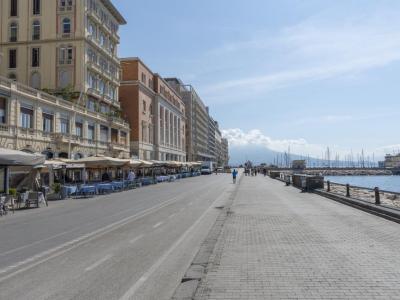
The Naples Promenade, formally known as the Caracciolo Promenade, runs along the Bay of Naples with open views across the water toward Mount Vesuvius and the islands beyond. It took shape between the late 19th and early 20th centuries as part of a major coastal redevelopment, during which large sections of shoreline were reclaimed between 1869 and 1880 to create a broad, modern road flanking the Villa Comunale Park and the Chiaia Riviera Street. This transformation shifted the city’s edge away from purely maritime functions and established a new public space designed for walking, leisure, and scenic appreciation, quickly earning it a reputation as one of Europe’s most attractive urban seafronts.
The name Caracciolo Promenade commemorates Francesco Caracciolo, an admiral and hero of the short-lived Neapolitan Republic, who was executed in 1799 on the orders of Admiral Nelson and cast into the Gulf of Naples, his body later washing ashore near Santa Lucia. This historical association adds a sober layer to what is otherwise experienced today as a calm, expansive stretch of green, blue, and open air. The promenade unfolds northward toward Mergellina, with long sightlines not only across the bay but also back toward the hills of Vomero and Posillipo that rise behind the city.
Along the route stands Castle of the Egg, the city’s oldest surviving fortification, positioned on a small peninsula and wrapped in legends linking it to Virgil and a mythical egg believed to safeguard Naples. Nearby, the promenade softens into an informal seaside landscape, with small free beaches, white rocks where people stretch out in the sun, and spots offering boat rentals for short trips along the coast. Kiosks selling cold drinks and snacks line the way, while cafes and restaurants open onto the seafront with outdoor tables serving seafood and traditional Neapolitan pizza.
The Promenade offers a pause from the dense, energetic streets inland, inviting slow walks, cycling, or simply sitting by the water as the light shifts across the bay.
The name Caracciolo Promenade commemorates Francesco Caracciolo, an admiral and hero of the short-lived Neapolitan Republic, who was executed in 1799 on the orders of Admiral Nelson and cast into the Gulf of Naples, his body later washing ashore near Santa Lucia. This historical association adds a sober layer to what is otherwise experienced today as a calm, expansive stretch of green, blue, and open air. The promenade unfolds northward toward Mergellina, with long sightlines not only across the bay but also back toward the hills of Vomero and Posillipo that rise behind the city.
Along the route stands Castle of the Egg, the city’s oldest surviving fortification, positioned on a small peninsula and wrapped in legends linking it to Virgil and a mythical egg believed to safeguard Naples. Nearby, the promenade softens into an informal seaside landscape, with small free beaches, white rocks where people stretch out in the sun, and spots offering boat rentals for short trips along the coast. Kiosks selling cold drinks and snacks line the way, while cafes and restaurants open onto the seafront with outdoor tables serving seafood and traditional Neapolitan pizza.
The Promenade offers a pause from the dense, energetic streets inland, inviting slow walks, cycling, or simply sitting by the water as the light shifts across the bay.
Walking Tours in Naples, Italy

Create Your Own Walk in Naples
Creating your own self-guided walk in Naples is easy and fun. Choose the city attractions that you want to see and a walk route map will be created just for you. You can even set your hotel as the start point of the walk.
Historical Churches
Christianity in general and the Catholic faith in particular have always played an important role in the social and cultural life of Naples. Not everyone knows that the city boasts the highest number of churches in the world – almost 500 historic “houses of God” (1,000 in total) – accumulated over the course of 17(!) centuries. Hence the nickname – “the city of 500 domes”.
And... view more
Tour Duration: 2 Hour(s)
Travel Distance: 3.7 Km or 2.3 Miles
And... view more
Tour Duration: 2 Hour(s)
Travel Distance: 3.7 Km or 2.3 Miles
Naples Introduction Walking Tour
“See Naples and die.” German poet and scientist Goethe was convinced that Naples represented the epitome of human experience.
The city has been continuously inhabited for nearly three thousand years. Its origins date to the 8th century BC, when Greek settlers from Euboea established a small coastal colony known as Parthenope, near the site of today’s Ovo Castle. As the settlement expanded... view more
Tour Duration: 2 Hour(s)
Travel Distance: 3.7 Km or 2.3 Miles
The city has been continuously inhabited for nearly three thousand years. Its origins date to the 8th century BC, when Greek settlers from Euboea established a small coastal colony known as Parthenope, near the site of today’s Ovo Castle. As the settlement expanded... view more
Tour Duration: 2 Hour(s)
Travel Distance: 3.7 Km or 2.3 Miles
The Most Popular Cities
/ view all