

Carthage Amphitheater, Tunis
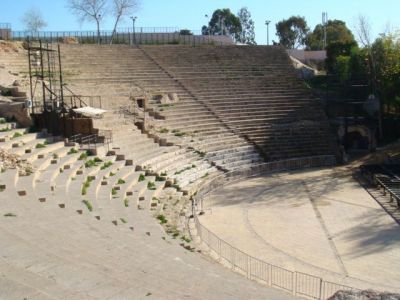
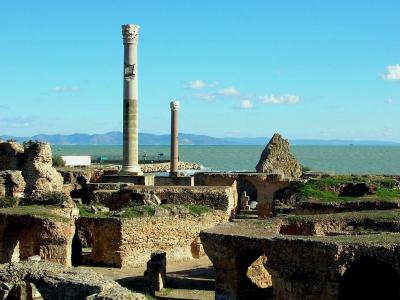
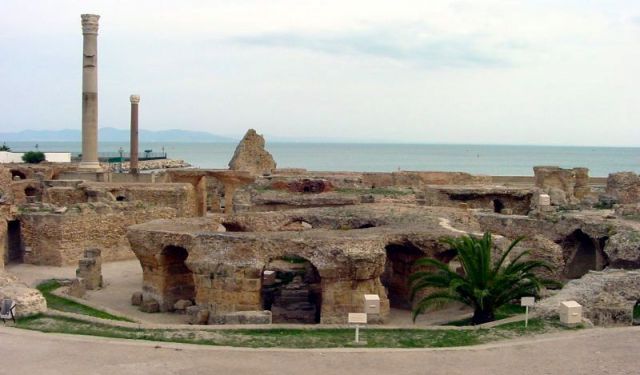
The Carthage Amphitheater is one of the most imposing remains of Roman Carthage, revealing the city’s scale and ambition after its rebirth under Roman rule. Built in the late 1st or early 2nd century AD, the amphitheater ranked among the largest in North Africa and could accommodate around 30,000 spectators. Constructed on flat ground, it demonstrates Carthage’s status as the capital of Roman Africa and a major Mediterranean center.
An inscription dating from 133 to 139 AD confirms that the amphitheater was already in use by the mid-2nd century and was later expanded during the 3rd century. In its prime, it hosted gladiatorial combats, animal hunts, and large public spectacles. Much of the stone was later reused, but the surviving arena, underground passages, and seating outlines still convey the monument’s vast elliptical form and the intensity of events once staged here.
The amphitheater also carries a strong layer of religious memory. According to tradition, Christian martyrs were executed on this site during periods of persecution, most notably Perpetua and Felicity, two early Christian saints commemorated by a cross placed at the center of the arena in 1887. The modern venue used for festivals has been restored to seat only about 7,500 people for safety and preservation reasons. Today, the remains continue to host summer festivals, like the Festival of Carthages.
An inscription dating from 133 to 139 AD confirms that the amphitheater was already in use by the mid-2nd century and was later expanded during the 3rd century. In its prime, it hosted gladiatorial combats, animal hunts, and large public spectacles. Much of the stone was later reused, but the surviving arena, underground passages, and seating outlines still convey the monument’s vast elliptical form and the intensity of events once staged here.
The amphitheater also carries a strong layer of religious memory. According to tradition, Christian martyrs were executed on this site during periods of persecution, most notably Perpetua and Felicity, two early Christian saints commemorated by a cross placed at the center of the arena in 1887. The modern venue used for festivals has been restored to seat only about 7,500 people for safety and preservation reasons. Today, the remains continue to host summer festivals, like the Festival of Carthages.
Want to visit this sight? Check out these Self-Guided Walking Tours in Tunis. Alternatively, you can download the mobile app "GPSmyCity: Walks in 1K+ Cities" from Apple App Store or Google Play Store. The app turns your mobile device to a personal tour guide and it works offline, so no data plan is needed when traveling abroad.
Download The GPSmyCity App



Carthage Amphitheater on Map
Sight Name: Carthage Amphitheater
Sight Location: Tunis, Tunisia (See walking tours in Tunis)
Sight Type: Attraction/Landmark
Guide(s) Containing This Sight:
Sight Location: Tunis, Tunisia (See walking tours in Tunis)
Sight Type: Attraction/Landmark
Guide(s) Containing This Sight:
Nearby Sights
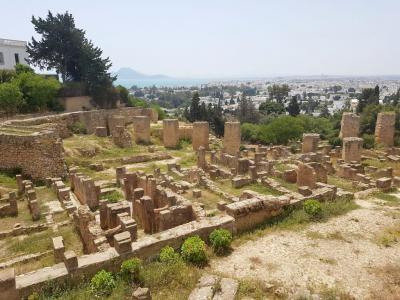
Walking Tours in Tunis, Tunisia

Create Your Own Walk in Tunis
Creating your own self-guided walk in Tunis is easy and fun. Choose the city attractions that you want to see and a walk route map will be created just for you. You can even set your hotel as the start point of the walk.
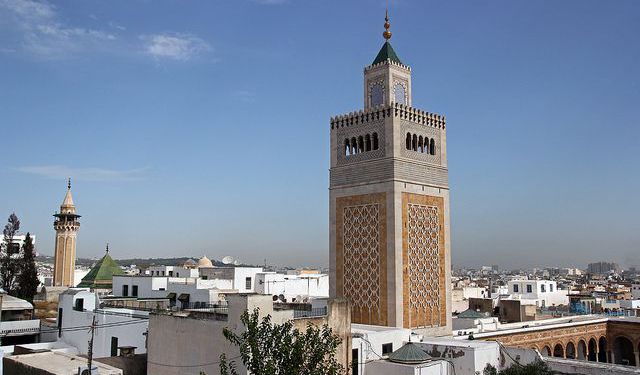
Tunis Introduction Walking Tour
Born in Tunis in 1332, Arab scholar and historian Ibn Khaldun later looked back at his home city when writing the book “Introduction”, describing Tunis itself as a living urban organism shaped by power, trade and learning.
Tunis, the capital of modern Tunisia, stands at a historical crossroads of the Mediterranean, shaped by more than three millennia. The name Tunis is generally believed to... view more
Tour Duration: 1 Hour(s)
Travel Distance: 1.8 Km or 1.1 Miles
Tunis, the capital of modern Tunisia, stands at a historical crossroads of the Mediterranean, shaped by more than three millennia. The name Tunis is generally believed to... view more
Tour Duration: 1 Hour(s)
Travel Distance: 1.8 Km or 1.1 Miles
Carthage Walking Tour
The Roman statesman Cato the Elder ended every speech the same way, no matter the subject: “Carthage must be destroyed”. Not because the city was weak, but because it was powerful enough to worry Rome even in silence.
Carthage’s ruins sit on the northeastern edge of modern Tunis, looking out over the Gulf of Tunis. The name Carthage ultimately comes from the Punic word meaning “new... view more
Tour Duration: 2 Hour(s)
Travel Distance: 4.0 Km or 2.5 Miles
Carthage’s ruins sit on the northeastern edge of modern Tunis, looking out over the Gulf of Tunis. The name Carthage ultimately comes from the Punic word meaning “new... view more
Tour Duration: 2 Hour(s)
Travel Distance: 4.0 Km or 2.5 Miles
Useful Travel Guides for Planning Your Trip

Tunisian Sweets and Pastries
No Tunisian meal is complete without a lavish dessert at the end. And Tunisians do take their sweets seriously, be it fresh seasonal fruits, cakes, fried almond pastries, ice cream, doughnuts or whatever else. Some of these delights have come from Turkey, brought by soldiers of the Ottoman army;...
Tunis Souvenirs: 15 Authentic Tunisian Products for Avid Traveler
A historic crossroads of many civilizations and influences, - Berber, Spanish, French, - Tunisia is a treasure trove of mementos waiting for a knowledgeable traveler to be picked up. The Medina market of Tunis (the capital city) is one of the best places to shop for local handcrafts. To help...