

Dornach House, Lucerne
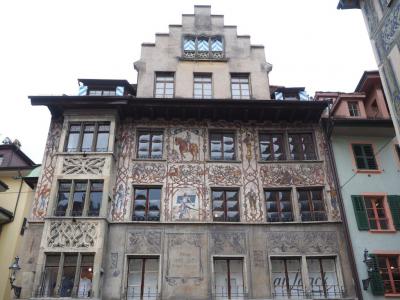
As you stand in Hirschenplatz, you can't help noticing the richly decorated Neo-Gothic building known as Dornach House. Indeed, its façade is hard to miss, with elaborate architectural details and large Mannerist-style paintings covering the upper floors. The decorative scheme was created around 1900, with the façade paintings based on designs by Lucerne artist Seraphin Weingartner.
Take a moment to look up at the main façade. The paintings you'll see are not simply decorative - they tell the story of the Battle of Dornach. Among the figures, you can make out armed soldiers and scenes recalling the fighting that took place on July 22, 1499. There is also a painted commemorative panel between the windows, another reminder of the event that gave the house its name.
The Battle of Dornach was fought near the Swiss village of Dornach, where troops of the Old Swiss Confederacy decisively defeated the forces of Emperor Maximilian I. It was the final major clash of the Swabian War and the last armed conflict between the Swiss Confederacy and the Holy Roman Empire.
The victory effectively secured the Confederacy’s independence from imperial control. Just two months later, on September 22, 1499, the Treaty of Basel brought the war to an end and acknowledged the new political reality. Switzerland’s independence from the Holy Roman Empire, however, would not receive formal recognition until the Peace of Westphalia in 1648.
So, before moving on, give the façade another look. What appears at first to be an unusually colorful historic house is actually a large painted memorial to one of the defining military victories in Swiss history.
Take a moment to look up at the main façade. The paintings you'll see are not simply decorative - they tell the story of the Battle of Dornach. Among the figures, you can make out armed soldiers and scenes recalling the fighting that took place on July 22, 1499. There is also a painted commemorative panel between the windows, another reminder of the event that gave the house its name.
The Battle of Dornach was fought near the Swiss village of Dornach, where troops of the Old Swiss Confederacy decisively defeated the forces of Emperor Maximilian I. It was the final major clash of the Swabian War and the last armed conflict between the Swiss Confederacy and the Holy Roman Empire.
The victory effectively secured the Confederacy’s independence from imperial control. Just two months later, on September 22, 1499, the Treaty of Basel brought the war to an end and acknowledged the new political reality. Switzerland’s independence from the Holy Roman Empire, however, would not receive formal recognition until the Peace of Westphalia in 1648.
So, before moving on, give the façade another look. What appears at first to be an unusually colorful historic house is actually a large painted memorial to one of the defining military victories in Swiss history.
Want to visit this sight? Check out these Self-Guided Walking Tours in Lucerne. Alternatively, you can download the mobile app "GPSmyCity: Walks in 1K+ Cities" from Apple App Store or Google Play Store. The app turns your mobile device to a personal tour guide and it works offline, so no data plan is needed when traveling abroad.
Download The GPSmyCity App



Dornach House on Map
Sight Name: Dornach House
Sight Location: Lucerne, Switzerland (See walking tours in Lucerne)
Sight Type: Attraction/Landmark
Guide(s) Containing This Sight:
Sight Location: Lucerne, Switzerland (See walking tours in Lucerne)
Sight Type: Attraction/Landmark
Guide(s) Containing This Sight:
Nearby Sights

Walking Tours in Lucerne, Switzerland

Create Your Own Walk in Lucerne
Creating your own self-guided walk in Lucerne is easy and fun. Choose the city attractions that you want to see and a walk route map will be created just for you. You can even set your hotel as the start point of the walk.
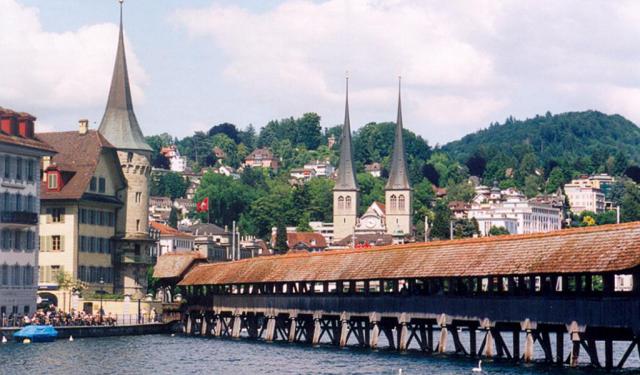
Lucerne's Architectural Jewels Walking Tour
Lucerne’s long religious and cultural history is thoroughly reflected in its architecture, making the city one of Switzerland’s most popular destinations. As you walk through the city center, impressive buildings-from grand civic landmarks to old guild houses, churches, and historic bridges-appear almost naturally along the route.
One of the top local architectural attractions is... view more
Tour Duration: 2 Hour(s)
Travel Distance: 2.3 Km or 1.4 Miles
One of the top local architectural attractions is... view more
Tour Duration: 2 Hour(s)
Travel Distance: 2.3 Km or 1.4 Miles
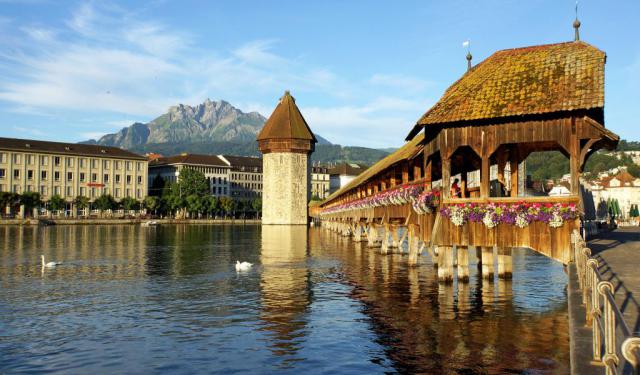
Lucerne Old Town Walking Tour
Lucerne has drawn travelers, writers, and musicians for centuries, often for simple reasons: the lake, the mountains, and a city center that’s easy to walk. Figures like the German composer Richard Wagner lived and worked here, and many 19th-century visitors wrote about Lucerne as a comfortable base for exploring central Switzerland. Their impressions still ring true today-Lucerne is... view more
Tour Duration: 2 Hour(s)
Travel Distance: 4.2 Km or 2.6 Miles
Tour Duration: 2 Hour(s)
Travel Distance: 4.2 Km or 2.6 Miles
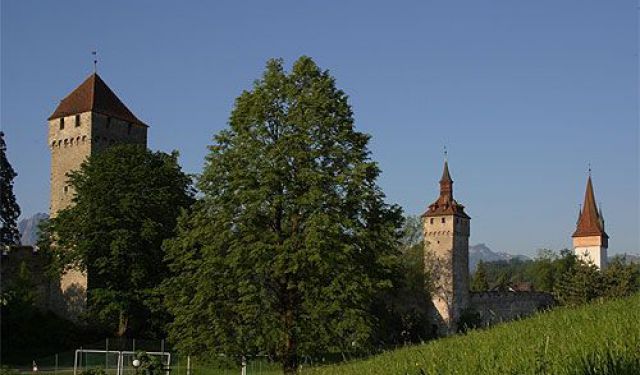
Lucerne's Towers Walking Tour
Rising high above Lucerne’s Old Town, the Musegg Wall is one of the city’s most distinctive landmarks. Its line of nine medieval towers forms a kind of stone crown above the rooftops, and from several points along the fortifications you can look out across the city, Lake Lucerne, the Reuss River, and the mountains beyond.
Built mainly during the 13th and 14th centuries, the wall stretches... view more
Tour Duration: 1 Hour(s)
Travel Distance: 1.0 Km or 0.6 Miles
Built mainly during the 13th and 14th centuries, the wall stretches... view more
Tour Duration: 1 Hour(s)
Travel Distance: 1.0 Km or 0.6 Miles