

Lucerne's Architectural Jewels Walking Tour, Lucerne

Lucerne's Architectural Jewels Walking Tour (Self Guided), Lucerne

Lucerne's long religious and cultural history is duly reflected in its architecture, making it one of the most popular tourist destinations in Switzerland. There are quite a few places in the city that need not strive for attention and can easily catch the eye of any passer-by. Such like are:

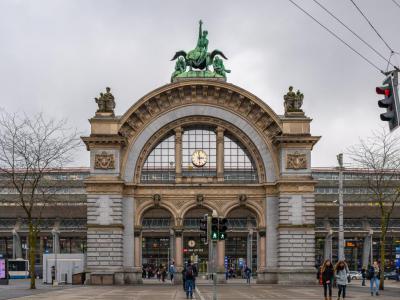
The Lucerne Railway Station – an architectural jewel and main hub of the Swiss railway network, built in 1896; renowned for its entrance hall with a distinctive cupola and elegant curved roof.

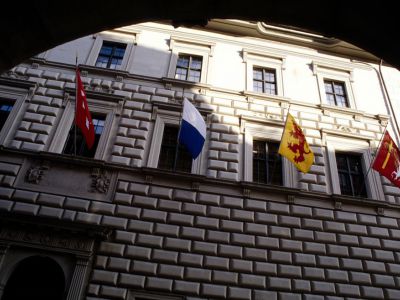
Ritter Palace – early Renaissance, Florentine-style piece of architecture; seat of the cantonal government.

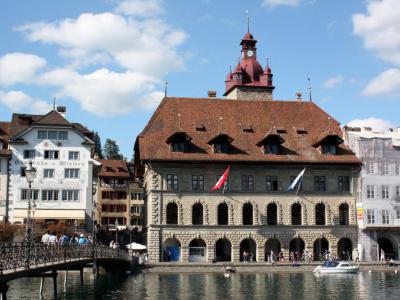
Rathaus (the Town Hall) – one of the most beautiful historical buildings in Lucerne; completed in 1606.

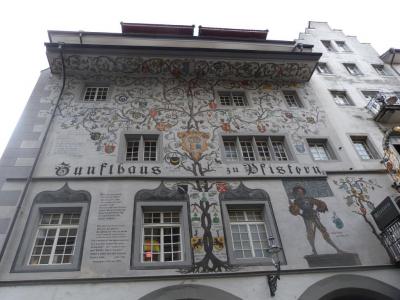
Zunfthaus zu Pfistern (Pfistern Guild Hall) – formerly Guild Hall, now a restaurant serving Swiss cuisine.

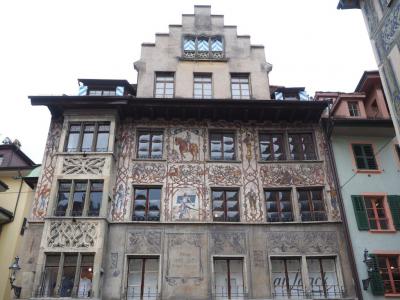
Dornach House – a charming neo-Gothic edifice with Mannerist fresco paintings. Built around 1900, dedicated to the Swiss victory in the Battle of Dornach.

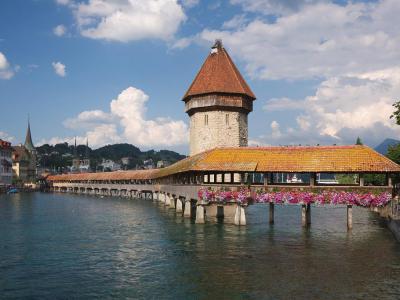
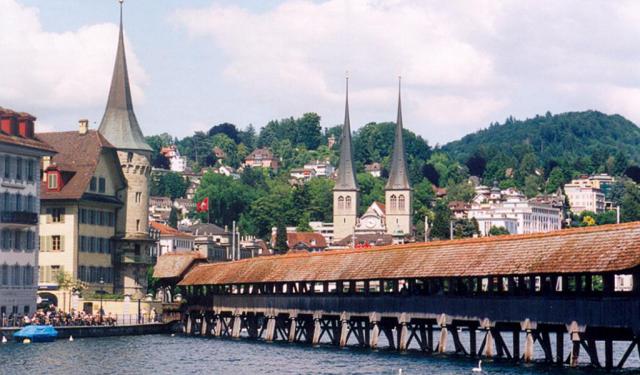
Straddling the river Reuss, Lucerne boasts several remarkable bridges, such as the Chapel Bridge – the oldest covered bridge in Europe, dated 1333 – symbol of the city and one of Switzerland's best known landmarks.

Your attention will also be struck by the number of magnificent churches, including:

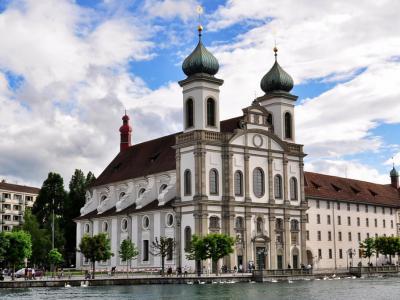
Jesuit Church (Jesuitenkirche) – the first large Baroque temple in Switzerland; consecrated in 1677.

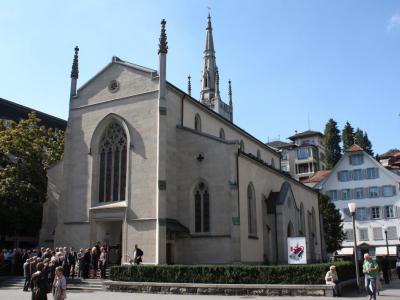
St. Matthew Church (Matthäuskirche) – a fascinating piece of Gothic Renaissance architecture; German composer Richard Wagner married here for the second time in 1870.

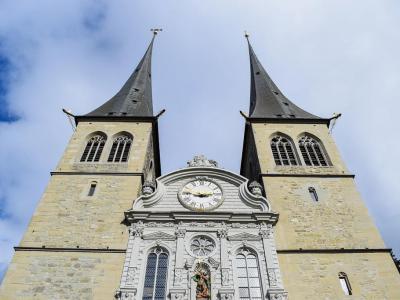
Church of St. Leodegar – named after the city's patron saint; sitting atop a small hill above the lake front. Originally built in 735, redesigned in Renaissance style in 1639.

If you wish to acquaint yourself more closely with the architectural jewels of Lucerne, consider taking our self-guided walking tour.
How it works: Download the app "GPSmyCity: Walks in 1K+ Cities" from Apple App Store or Google Play Store to your mobile phone or tablet. The app turns your mobile device into a personal tour guide and its built-in GPS navigation functions guide you from one tour stop to next. The app works offline, so no data plan is needed when traveling abroad.

Download The GPSmyCity App

Lucerne's Architectural Jewels Walking Tour Map

Guide Name: Lucerne's Architectural Jewels Walking Tour
Guide Location: Switzerland » Lucerne (See other walking tours in Lucerne)
Guide Type: Self-guided Walking Tour (Sightseeing)
# of Attractions: 9
Tour Duration: 2 Hour(s)
Travel Distance: 2.3 Km or 1.4 Miles
Author: doris
Sight(s) Featured in This Guide:
  • Lucerne Railway Station
  • Ritter Palace
  • Jesuit Church (Jesuitenkirche)
  • Chapel Bridge
  • Rathaus (Town Hall)
  • Zunfthaus zu Pfistern (Pfistern Guild Hall)
  • Dornach House
  • St. Matthew Church (Matthäuskirche)
  • Church of St. Leodegar
1
Lucerne Railway Station

1) Lucerne Railway Station (must see)

Lucerne Railway Station is not only the city’s main transport hub but also an architectural landmark that blends contemporary design with elements of Lucerne’s past. Rebuilt after the 1971 fire, it features a bright, airy hall shaped by glass, steel, and open space. Just outside on the Train Station Square, you’ll find the monumental stone arch from the original 19th-century station—one of the city’s most photographed historic structures.

As you enter the main concourse, look up to take in the sweeping glass roof designed by the renowned Spanish-Swiss architect Santiago Calatrava. The curved structure creates a sense of openness, almost like stepping into a modern pavilion rather than a traditional station. Sunlight filters through the skylights, casting soft reflections across the hall. Before you move farther, glance toward the right-hand side, where small bakeries and cafés display Swiss pastries and snacks. The ticket hall sits to your left, though most visitors find their attention pulled to the large digital board in the center. As destinations switch across the screen, it offers a glimpse of the day trips, scenic rail rides, and mountain excursions that depart from here.

Before leaving, step outside to the old stone arch on Train Station Square. Look closely at the sculpted figure holding the city’s coat of arms—one of the few surviving details from the historic station.
2
Ritter Palace

2) Ritter Palace

Perhaps the most impressive Renaissance palace in Lucerne's Old Town, the Ritterscher Palace began as a private residence, commissioned in 1556 by Mayor Lux (Lucius) Ritter. The former mercenary and rich landowner, Ritter sought to emphasize his social status by building a Renaissance palazzo in the Florentine style, featuring heavy blocks and nice masonry, which had already been practiced in Florence for 100 years, but still new in Lucerne.

Hired for the job was a widely famous Italian stonemason Giovanni Lynzo, aka Hans of Trient. Initially reluctant, he was engaged but eventually, during the work, was found guilty of heresy and beheaded. Legend has it that on the day of his execution the architect accursed Lux Ritter who, coincidence or not, died a few days later.

The construction of the three-storey palace with an open courtyard was completed by that time only by about two-thirds. Since the heirs of Lux Ritter were not able to continue, the project was taken over by the city council of Lucerne, who finished the building and in 1578 handed it over to the newly arrived Jesuits.

Today, alongside history devotees, art lovers take particular interest in Jakob von Will’s Danse Macabre ("Dance of Death") painted series adorning the top floor corridor – made up of seven pictures with 23 scenes depicting various social classes being confronted with death.

The striking edifice is also the seat of the Cantonal Administration, whose offices are located in the spectacular inner courtyard featuring a three-story loggia with Tuscan columns. So please be quiet!

NOTE: generally open to the public during office hours, Monday to Friday, the building can be closed anytime for governmental events or state receptions. The admission is free.
3
Jesuit Church (Jesuitenkirche)

3) Jesuit Church (Jesuitenkirche) (must see)

The Jesuit Church stands beside the river as one of the earliest Baroque churches in the region. Its twin onion-shaped towers, curved façade, and pale stucco surfaces mark a shift from earlier, simpler building styles. Inside, the space is shaped by soft light, restrained ornament, and careful use of color. Stucco reliefs frame the nave, and the ceiling frescoes guide the eye along the central axis toward the altar. The church was built by the Jesuit order in the seventeenth century, during a period of renewed emphasis on teaching and religious outreach.

As you enter the nave, look straight ahead toward the high altar. Its gilded details and polished columns form a bright focal point against the otherwise light interior. Now look up at the ceiling: the frescoes show scenes framed by decorative plasterwork, creating the illusion of depth. Take a moment to look right and left at the repeating arched bays. Each one contains a side altar set into its niche, arranged in mirrored positions to maintain the symmetry of the Baroque interior.

Continue walking toward the altar and pause at the midpoint of the nave. Look back toward the entrance to see how the organ gallery sits above the doors. The organ’s case reflects the same stone-like finish as the main altar, allowing it to stand out clearly against the church's white walls. Now face the altar again and look closely at the sculpted figures that flank it. Their poses direct attention upward, linking the altarpiece to the architectural lines of the apse. If you step a little to the right side of the nave, you can also see how the light enters through tall, narrow windows and highlights details of the plasterwork.

Before leaving, spend a moment outside to look up at the towers. Their curved shapes soften the vertical lines of the façade and set the building apart from neighboring structures. The dome-like tops reflect southern architectural influences brought north by Jesuit builders. This mixture of local and imported features gives the church its distinctive profile along the river.
4
Chapel Bridge

4) Chapel Bridge (must see)

Chapel Bridge crosses the river on a diagonal line, its long wooden structure resting on stone and timber supports. Built in the fourteenth century as part of the city’s fortifications, the bridge originally linked defensive zones on both banks. Its angled route reflects these strategic needs rather than any concern for symmetry. The covered walkway shields travelers from wind and rain, and the sound of the boards underfoot hints at the many cycles of repair that have kept the bridge in use for centuries. The fire of 1993 destroyed a large central portion, but the reconstruction followed surviving plans and incorporated intact elements wherever possible.

As you enter the walkway, look upward at the roof beams. Hanging from them is a sequence of triangular painted panels created in the seventeenth century. These images depict episodes from local history, civic legends, and religious narratives. The panels were meant to be read quickly, offering brief lessons to those crossing the river. Some originals survived the fire and display a darker, weathered tone; others are later replacements painted to match the original style. Their arrangement forms a loose timeline, though many sections were reordered during restoration.

At the midpoint of the bridge stands the Water Tower, a stout octagonal structure older than the bridge itself. Its thick stone walls reveal its former defensive role. Over the centuries it served as an archive, a prison, and a treasury. Although the interior is not part of the regular visitor route, the tower remains central to the bridge’s identity. Its mass anchors the wooden walkway and creates a sharp contrast with the lighter timbers surrounding it.

As you continue across, look to the open side of the walkway for views of rooftops, river reflections, and the movement of boats and swans below. The rhythm of repeating roof supports creates a steady visual pattern, framing each view like a series of windows. The bridge’s mixture of medieval defense, later civic storytelling, and modern conservation shows how the city has adapted a working structure into a landmark.
5
Rathaus (Town Hall)

5) Rathaus (Town Hall)

Lucerne’s Town Hall is a solid Renaissance building completed in the early seventeenth century, shaped by Italian design ideas adapted to local materials. Its broad stone base, arcaded ground floor, and steep roof show how practical needs and civic display were combined. The structure was used for council meetings, grain storage, and public gatherings, making it both an administrative and economic center.

If you stand in front of the building, look closely at the arcades along the lower level. Their wide arches once sheltered market activity and still create a clear passageway. Above them, the smooth stone façade rises toward the timber-framed upper section. The transition between stone and wood reflects changing building methods of the period. The projecting roof, with its deep overhang, protects the walls from weather and gives the upper part a heavier presence.

Walk to the side facing the river and look at how the building meets the water’s edge. The position was chosen for easy access to transport routes and to place the hall within sight of trading activity. The tall tower with its clock and small openings served both practical and symbolic purposes, marking time for the town and signaling the presence of local authority. Its shape contrasts with the long roofline, adding vertical emphasis to an otherwise horizontal structure.

Inside, the ceremonial rooms show wooden ceilings, painted coats of arms, and sturdy furnishings. These features reflect the role of the hall as a place for public decisions and guild activities.
6
Zunfthaus zu Pfistern (Pfistern Guild Hall)

6) Zunfthaus zu Pfistern (Pfistern Guild Hall)

This is one of Lucerne’s most eye-catching buildings, boasting extensive exterior fresco decoration – a mural of the Pfistern family tree hung with coats of arms. Indeed, this is one of the last standing guild halls in the city. The name Pfister comes from the Latin “pistor”, which was what the Romans called bakers. The Germanization of the word turned it into “Pfister”.

The Pfister Guild initially united artisans, bakers and millers, and was founded in 1408. Later, it was joined by boat crews and pie bakers – in 1598 and 1697, respectively. The guild house was the noble gentlemen's meeting place to discuss politics and business, not forgetting some great food and drinks during the process.

Shortly before the guild was dissolved in 1875, the house was auctioned for 80,000 Francs. A century later – in 1977 – after numerous ownership changes, the property was acquired by the Lucerne Association of Pastry Bakers, thus reverting to its original purpose. Now fully reinstated, the house accommodates Pfistern restaurant serving Swiss specialties.
7
Dornach House

7) Dornach House

A charming Neo-Gothic-style building with Mannerist fresco paintings, the Dornach House at Hirschenplatz was built around 1900 to a design by Seraphin Weingartner.

Both frescoes and the building itself are dedicated to the Swiss victory in the Battle of Dornach. During this battle on 22 July 1499, the Old Swiss Confederacy decisively beat the troops of Emperor Maximilian I near the Swiss village of Dornach.

This was the last armed conflict between the Swiss and the Holy Roman Empire, and it concluded the Swabian War between the Swiss and the Swabian League, amounting to the de-facto independence of Switzerland from the Holy Roman Empire. This was acknowledged by Maximilian in the Treaty of Basel on 22 September (though the independence was not formally recognized until the Peace of Westphalia of 1648).
8
St. Matthew Church (Matthäuskirche)

8) St. Matthew Church (Matthäuskirche)

The Matthäuskirche (Saint Matthew's Church) is a fascinating piece of Gothic Renaissance architecture and the first Protestant church in Lucerne. Preceding its appearance was active campaigning by German and English holidaymakers, and even the Prussian King Friedrich Wilhelm III himself who donated a precious communion chalice to the planting of the reformed congregation in 1827.

The three-aisled basilica was designed by the well-known Zurich architect Ferdinand Stadler circa 1860, based on an English model. Ultimately, the construction was made possible thanks to the generous financial aid from all over Switzerland, attesting to which are the 22 cantons' coats of arms seen in the side windows.

Owner of the nearby Schweizerhof Hotel presented a suitable plot of land for the project. The foundation stone was laid on January 30, 1860, and the inauguration took place on September 29, 1861.

At the entrance you can see a relief carved in sandstone, commemorating the local reformer and humanist, Oswald Geisshüsler, also known as Myconius (1488-1552). The large glass window in the choir shows the four evangelists with their symbols, namely (left to right): Luke with a bull, Mark with a lion, Matthew with an angel, and John with an eagle. The organ at the back was built in 1971 by the organ manufacturing company J. Neidhart and G. Lhôte.

German composer Richard Wagner, who lived in Lucerne from 1866 to 1872, married his second wife Cosima von Bülow in the Matthäuskirche on August 25, 1870.

The church is open on weekdays from 9 am to 5 pm.
9
Church of St. Leodegar

9) Church of St. Leodegar (must see)

The Church of Saint Leodegar is one of Lucerne’s key landmarks, set on a slight rise above the lakeshore. The current building dates from the 17th century and was constructed after a major fire, but its two slender towers preserve the outline of the earlier medieval church. From the outside, the twin spires, simple front façade, and elevated position make it easy to recognize from across the city and the lake.

Inside, the church is striking for its simplicity. The walls and ceiling are completely white, creating a bright interior that leaves the architectural lines clearly visible. As you look toward the far end of the interior, the high altar made of black marble anchors the space with its darker tone and sculptural detailing. On the left and right sides of the nave, two additional altars sit in recessed areas, each framed by statues, gilded elements, and decorative surrounds that add visual interest without overwhelming the calm interior.

Turn around and look back toward the entrance to see the dark organ above the main doors. Its rich tone and carved case contrast with the white walls, marking the west end of the church and framing the view as you look back down the nave. As you glance along the side walls again, notice how the altars, windows, and simple architectural lines work together without heavy ornament, giving the interior a calm, orderly character.

Outside, the churchyard and surrounding terraces emphasize the building’s slightly elevated position above the lakeside road. The two towers, visible from many points in Lucerne, help orient you as you move around the city and underline the church’s long-standing role as both a spiritual and visual landmark.

Walking Tours in Lucerne, Switzerland

Create Your Own Walk in Lucerne

Create Your Own Walk in Lucerne

Creating your own self-guided walk in Lucerne is easy and fun. Choose the city attractions that you want to see and a walk route map will be created just for you. You can even set your hotel as the start point of the walk.
Lucerne Introduction Walking Tour

Lucerne Introduction Walking Tour

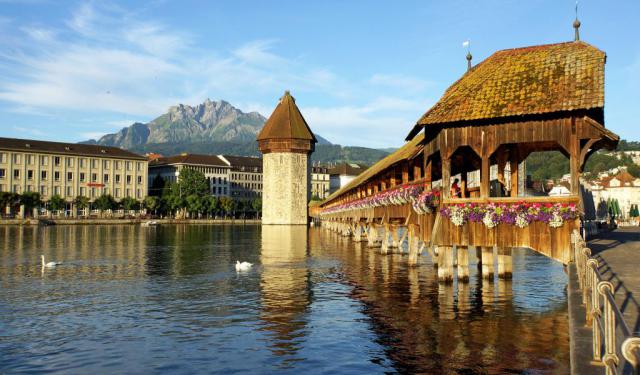
Lucerne has drawn travelers, writers, and musicians for centuries, often for simple reasons: the lake, the mountains, and a city center that’s easy to walk. Figures like the German composer Richard Wagner lived and worked here, and many 19th-century visitors wrote about Lucerne as a comfortable base for exploring central Switzerland. Their impressions still ring true today—Lucerne is...  view more

Tour Duration: 2 Hour(s)
Travel Distance: 4.2 Km or 2.6 Miles
Lucerne's Towers Walking Tour

Lucerne's Towers Walking Tour

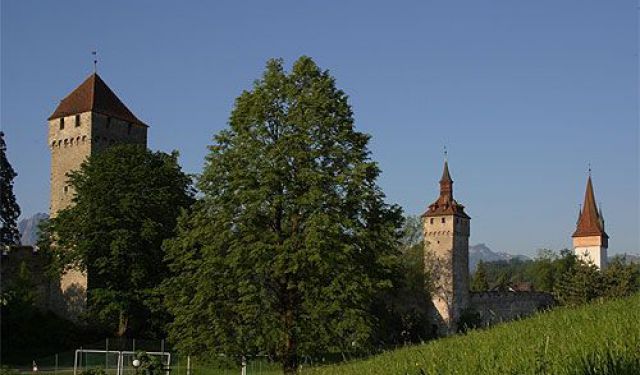
Lucerne boasts a wealth of spectacular medieval towers, located in the Musegg Wall area. This former symbol of power forms an impressive city crown, shaping up its skyline, and affording great panoramic views of Lucerne and the eponymous lake, the Reuss river, and the surrounding mountain scenery.

Built in the 13th-14th centuries, the 870-meter wall, complete with its nine towers, is one of...  view more

Tour Duration: 1 Hour(s)
Travel Distance: 1.0 Km or 0.6 Miles