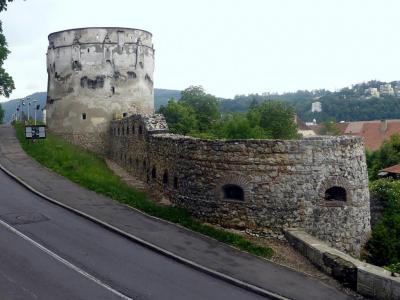


Furriers’ Bastion (Bastionul Cojocarilor), Brasov
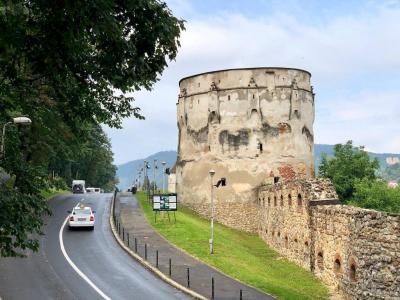
The Furriers' Bastion, nestled next to the Drapers' Bastion in the historic city of Brasov, presents a striking example of medieval military architecture. Constructed around 1452, this bastion is distinctively heptagonal and semi-circular, showcasing a blend of stone and brickwork. Originally, the structure featured alternating layers of these materials, equipped with shooting holes and specialized openings for pouring molten pitch during sieges-elements aimed at enhancing its defensive capabilities.
In its early years, the Furriers’ Bastion was specifically entrusted to the "red tanners" guild, reflecting the common practice of assigning guild responsibilities for the defense of the city. This alignment with the guilds underlined the bastion’s critical role in the broader fortification system of the Brasov citadel. Over the centuries, it underwent several modifications, including the addition of brick arches that are still visible today, adding to its historical aura.
The bastion's strategic position allowed it to serve as a crucial communication point within the city’s defenses. A gallery constructed along the outer wall facilitated access between the Furriers' Bastion and the Drapers' Bastion, illustrating the interconnected nature of Brasov's defensive structures.
Significantly, the bastion played the role of a city gate in 1525, marking a pivotal point in controlling access to and from the city. After being closed off in the late 18th century, it was reopened and has since undergone various renovations, the most recent being in 2005. These restorations have preserved its historical integrity while adapting the interior space for modern use, including the addition of a children's playground-a feature that blends historical preservation with community enrichment.
Today, the Furriers' Bastion stands not only as a testament to the defensive history of Brasov but also as a cultural landmark. Visitors wandering near the Tampa Mountain area can admire this bastion, appreciating both its architectural significance and its enduring role in the historical narrative of the city.
In its early years, the Furriers’ Bastion was specifically entrusted to the "red tanners" guild, reflecting the common practice of assigning guild responsibilities for the defense of the city. This alignment with the guilds underlined the bastion’s critical role in the broader fortification system of the Brasov citadel. Over the centuries, it underwent several modifications, including the addition of brick arches that are still visible today, adding to its historical aura.
The bastion's strategic position allowed it to serve as a crucial communication point within the city’s defenses. A gallery constructed along the outer wall facilitated access between the Furriers' Bastion and the Drapers' Bastion, illustrating the interconnected nature of Brasov's defensive structures.
Significantly, the bastion played the role of a city gate in 1525, marking a pivotal point in controlling access to and from the city. After being closed off in the late 18th century, it was reopened and has since undergone various renovations, the most recent being in 2005. These restorations have preserved its historical integrity while adapting the interior space for modern use, including the addition of a children's playground-a feature that blends historical preservation with community enrichment.
Today, the Furriers' Bastion stands not only as a testament to the defensive history of Brasov but also as a cultural landmark. Visitors wandering near the Tampa Mountain area can admire this bastion, appreciating both its architectural significance and its enduring role in the historical narrative of the city.
Want to visit this sight? Check out these Self-Guided Walking Tours in Brasov. Alternatively, you can download the mobile app "GPSmyCity: Walks in 1K+ Cities" from Apple App Store or Google Play Store. The app turns your mobile device to a personal tour guide and it works offline, so no data plan is needed when traveling abroad.
Download The GPSmyCity App



Furriers’ Bastion (Bastionul Cojocarilor) on Map
Sight Name: Furriers’ Bastion (Bastionul Cojocarilor)
Sight Location: Brasov, Romania (See walking tours in Brasov)
Sight Type: Attraction/Landmark
Sight Location: Brasov, Romania (See walking tours in Brasov)
Sight Type: Attraction/Landmark
Nearby Sights
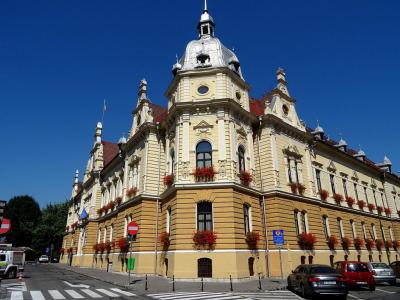
Walking Tours in Brasov, Romania

Create Your Own Walk in Brasov
Creating your own self-guided walk in Brasov is easy and fun. Choose the city attractions that you want to see and a walk route map will be created just for you. You can even set your hotel as the start point of the walk.
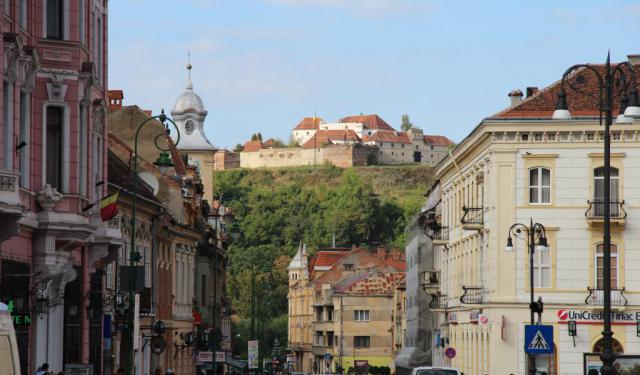
Walking Through Brasov's Medieval Old Town
Brasov is a city in the historical Romanian region of Transylvania. It is surrounded by the Southern Carpathians including Mount Tampa, which overlooks Brasov.
The city was first called Corona from the Latin word for "Crown." This name was first mentioned in 1235 AD. It is thought to have been named Corona for the reference St. Catherine's Monastery. It was then renamed to... view more
Tour Duration: 2 Hour(s)
Travel Distance: 3.0 Km or 1.9 Miles
The city was first called Corona from the Latin word for "Crown." This name was first mentioned in 1235 AD. It is thought to have been named Corona for the reference St. Catherine's Monastery. It was then renamed to... view more
Tour Duration: 2 Hour(s)
Travel Distance: 3.0 Km or 1.9 Miles
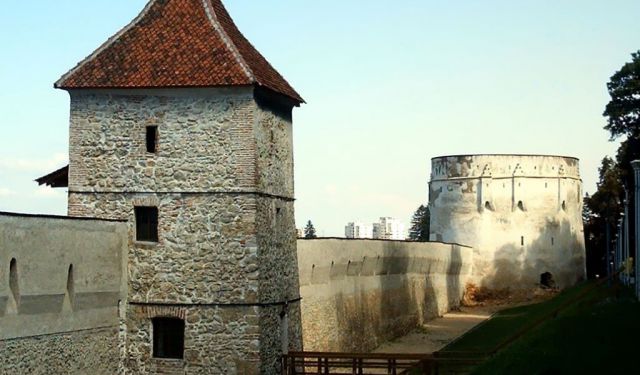
Brasov Fortifications Tour
Frequent invasions by Turkish Tatars throughout the 13th-15th centuries prompted Brasov residents to build fortifications around the town. At some point, Brasov came to be known as the “stronghold of seven bastions.” Remarkably, six of them are still in place. As for the other defensive structures placed between those bastions, most of them eventually succumbed to ruin, with only a few... view more
Tour Duration: 2 Hour(s)
Travel Distance: 2.8 Km or 1.7 Miles
Tour Duration: 2 Hour(s)
Travel Distance: 2.8 Km or 1.7 Miles
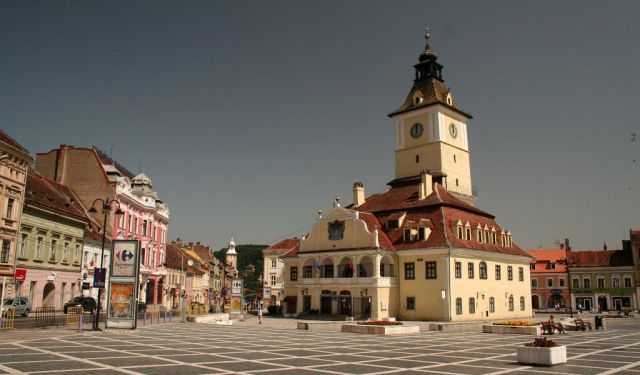
Brasov's Architectural Jewels Tour
Some may be pleasantly surprised to discover in Brasov, Romania, a treasure trove of architectural marvels. Indeed, spanning medieval through modern periods, the local architecture is quite impressive in terms of style variety.
Most of Brasov's architectural monuments are headquarters of local administration, museums, or other cultural venues. Among these jewels, there are several notable... view more
Tour Duration: 2 Hour(s)
Travel Distance: 2.5 Km or 1.6 Miles
Most of Brasov's architectural monuments are headquarters of local administration, museums, or other cultural venues. Among these jewels, there are several notable... view more
Tour Duration: 2 Hour(s)
Travel Distance: 2.5 Km or 1.6 Miles