

Iglesia de Santiago Apóstol (Church of Santiago Apostol), Malaga
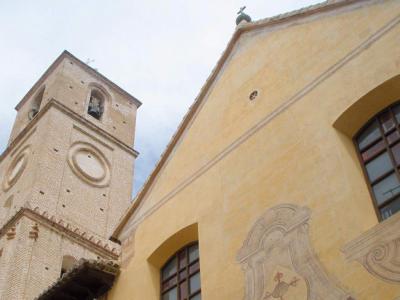
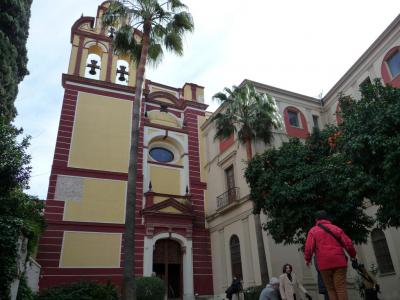
The Church of Santiago Apóstol is one of Málaga’s oldest Christian churches and a key landmark in the historic centre. Founded shortly after the conquest of Málaga in 1487, traditionally under the patronage of the Catholic Monarchs, Ferdinand and Isabella, it was built on the site of a former mosque and dedicated to Saint James the Apostle, a central symbol of the Reconquest.
Architecturally, the church reflects multiple historical layers. Its square brick tower was originally constructed as a minaret and later incorporated into the church in the 16th century. The tower still displays Almohad sebka decorative motifs, a clear reminder of its Islamic origins. Over time, the original Gothic and Mudéjar foundations were enriched with Renaissance and Baroque additions.
Inside, the church opens into three naves, adorned with significant works by Baroque painters such as Alonso Cano and Niño de Guevara. Among its treasures is a finely crafted 16th-century Plateresque chalice, distinguished by its star-shaped foot and hexagonal body. At the front of the central nave stands a monumental 18th-century Baroque gilded altarpiece. Look for the central figure of Saint James, the church’s patron saint, depicted holding a scroll and a staff.
The church also plays an important role in Málaga’s Holy Week traditions. As you face the altar, the left nave, known as the Gospel Nave, houses two venerated processional images: the Virgin of Love and Jesus the Rich, associated with the annual Holy Week tradition of releasing a prisoner. These mannequin-like figures are located in the second niche of the left nave. Another focal point of devotion is the Christ of Medinaceli, a 17th-century image honoured each year on the first Friday of March. On that day, the figure is removed from its niche, redressed, and placed on a gilded platform. Devotees kiss his feet, leave three coins, and make three wishes-of which, tradition says, only one will be granted. The Christ of Medinaceli is found in the second niche of the right nave, directly opposite the figures in the left nave.
The Church of Santiago is also closely linked to Pablo Picasso, who was baptised here on November 10, 1881. The church’s façade on Granada Street features three wide doors. The door farthest from the tower is accompanied, to its right, by a commemorative stone plaque marking the baptism. Picasso’s baptismal certificate is preserved inside, directly connecting the church to one of Málaga’s most famous sons.
Architecturally, the church reflects multiple historical layers. Its square brick tower was originally constructed as a minaret and later incorporated into the church in the 16th century. The tower still displays Almohad sebka decorative motifs, a clear reminder of its Islamic origins. Over time, the original Gothic and Mudéjar foundations were enriched with Renaissance and Baroque additions.
Inside, the church opens into three naves, adorned with significant works by Baroque painters such as Alonso Cano and Niño de Guevara. Among its treasures is a finely crafted 16th-century Plateresque chalice, distinguished by its star-shaped foot and hexagonal body. At the front of the central nave stands a monumental 18th-century Baroque gilded altarpiece. Look for the central figure of Saint James, the church’s patron saint, depicted holding a scroll and a staff.
The church also plays an important role in Málaga’s Holy Week traditions. As you face the altar, the left nave, known as the Gospel Nave, houses two venerated processional images: the Virgin of Love and Jesus the Rich, associated with the annual Holy Week tradition of releasing a prisoner. These mannequin-like figures are located in the second niche of the left nave. Another focal point of devotion is the Christ of Medinaceli, a 17th-century image honoured each year on the first Friday of March. On that day, the figure is removed from its niche, redressed, and placed on a gilded platform. Devotees kiss his feet, leave three coins, and make three wishes-of which, tradition says, only one will be granted. The Christ of Medinaceli is found in the second niche of the right nave, directly opposite the figures in the left nave.
The Church of Santiago is also closely linked to Pablo Picasso, who was baptised here on November 10, 1881. The church’s façade on Granada Street features three wide doors. The door farthest from the tower is accompanied, to its right, by a commemorative stone plaque marking the baptism. Picasso’s baptismal certificate is preserved inside, directly connecting the church to one of Málaga’s most famous sons.
Want to visit this sight? Check out these Self-Guided Walking Tours in Malaga. Alternatively, you can download the mobile app "GPSmyCity: Walks in 1K+ Cities" from Apple App Store or Google Play Store. The app turns your mobile device to a personal tour guide and it works offline, so no data plan is needed when traveling abroad.
Download The GPSmyCity App



Iglesia de Santiago Apóstol (Church of Santiago Apostol) on Map
Sight Name: Iglesia de Santiago Apóstol (Church of Santiago Apostol)
Sight Location: Malaga, Spain (See walking tours in Malaga)
Sight Type: Religious
Guide(s) Containing This Sight:
Sight Location: Malaga, Spain (See walking tours in Malaga)
Sight Type: Religious
Guide(s) Containing This Sight:
Nearby Sights

Walking Tours in Malaga, Spain

Create Your Own Walk in Malaga
Creating your own self-guided walk in Malaga is easy and fun. Choose the city attractions that you want to see and a walk route map will be created just for you. You can even set your hotel as the start point of the walk.
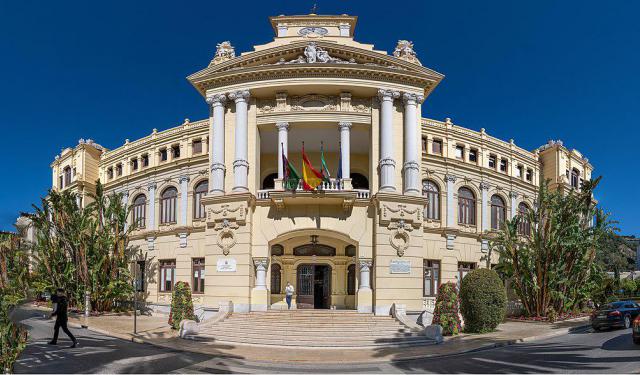
Discover Malaga's Architectural Jewels on Foot
The blooming port city of Málaga has a wealth of architecture with no shortage of ancient and otherwise impressive buildings fit to vow any visitor. Having witnessed the fall and rise of many civilizations, Malaga's uniqueness is marked by the variety of architectural styles, upon which the times past had a great deal of impact. From its stunning Moorish fortress - the best-preserved of its... view more
Tour Duration: 2 Hours
Travel Distance: 3.7 Km or 2.3 Miles
Tour Duration: 2 Hours
Travel Distance: 3.7 Km or 2.3 Miles
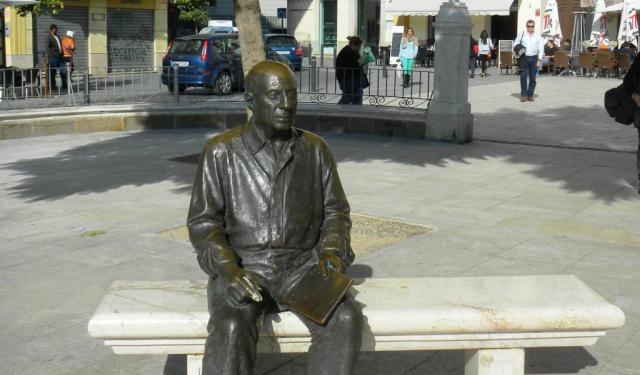
A Walking Guide To Pablo Picasso's Malaga
According to a well-known story, Picasso’s first word was “piz,” a child’s attempt at “lápiz,” meaning “pencil.”
Málaga at the end of the 19th century was a busy Mediterranean port. When Pablo Ruiz Picasso was born here in 1881, the city was neither a bohemian art capital nor a provincial backwater, but a working, outward-looking place where commerce, craftsmanship, and... view more
Tour Duration: 1 Hour
Travel Distance: 1.3 Km or 0.8 Miles
Málaga at the end of the 19th century was a busy Mediterranean port. When Pablo Ruiz Picasso was born here in 1881, the city was neither a bohemian art capital nor a provincial backwater, but a working, outward-looking place where commerce, craftsmanship, and... view more
Tour Duration: 1 Hour
Travel Distance: 1.3 Km or 0.8 Miles
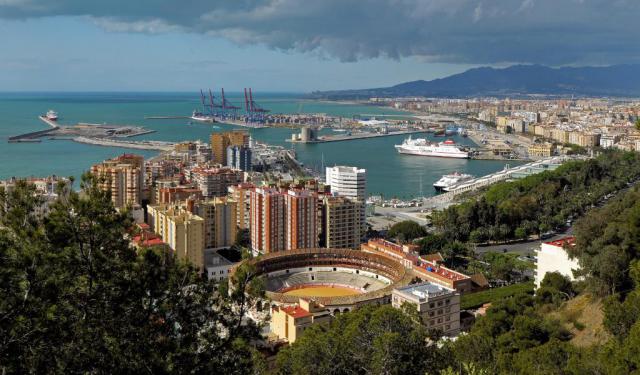
A Walk Through Malaga's Historic City Center
In 1325, the famed Muslim traveller Ibn Battuta reflected on his visit to Málaga, writing: "It is one of the largest and most beautiful towns of Andalusia, combining the conveniences of both sea and land.''
Málaga is one of the oldest continuously inhabited cities in Europe, with a history spanning nearly three millennia. It was founded around the 8th century BC by Phoenician... view more
Tour Duration: 2 Hours
Travel Distance: 3.4 Km or 2.1 Miles
Málaga is one of the oldest continuously inhabited cities in Europe, with a history spanning nearly three millennia. It was founded around the 8th century BC by Phoenician... view more
Tour Duration: 2 Hours
Travel Distance: 3.4 Km or 2.1 Miles
Useful Travel Guides for Planning Your Trip
5 Best Shopping Streets in Malaga, Spain
As well as one of the best cultural destinations in southern Spain, Malaga turns out to be something of a shopping mecca. Along with the ubiquitous shopping malls on the outskirts, the capital of Costa del Sol has managed to preserve its network of specialist shops, difficult to find in most big...