


Iglesia de Santo Domingo (Church of Saint Dominic), Oviedo
Founded by the Dominican order in 1518, the Church of Saint Dominic showcases a blend of Asturian Renaissance and Baroque architectural styles. It was designed by Juan de Cerecedo, the Elder, and completed in the mid-16th century. Although the original convent was burned during the 1934 uprising and later rebuilt as a school, the church itself survives intact-together with fragments of its cloister-retaining its status as a designated Asset of Cultural Interest since 1944.
Approach the building and you’ll immediately notice its grand neoclassical portico, added in the late 18th century by Manuel Reguera. This entrance, styled like a triumphal arch, frames a richly ornamented Plateresque façade with double pilasters, angel-like capitals, and a central coat of arms flanked by elegant niches. Inside, the single longitudinal nave is divided into five vaulted bays borne by slender pilasters, with side chapels cut into the walls and a choir loft at the rear.
Stepping beneath the soaring vaults, the interior reveals a wealth of Baroque craftsmanship. The main altar is a masterful example of Asturian Baroque, organized in bold vertical lines and elaborate carvings. In the chapel of Our Lady of the Rosary, you’ll find a richly adorned retablo by Manuel Pedredo Vigil featuring twenty-six gilt-framed tableaux depicting the Mysteries of the Rosary. Nearby, other early-18th-century altarpieces honor the Nazareno and Saint Joseph-one of which houses an 18th-century painting from 1798 by Francisco Reyter portraying the Marriage of the Virgin.
Since 1969, the church functions as a parish and remains the spiritual home of Oviedo’s oldest brotherhood-the Brotherhood of the Nazarene-particularly active during Holy Week celebrations, including the Nazarene procession winding through Oviedo’s old town from Santo Domingo church.
Approach the building and you’ll immediately notice its grand neoclassical portico, added in the late 18th century by Manuel Reguera. This entrance, styled like a triumphal arch, frames a richly ornamented Plateresque façade with double pilasters, angel-like capitals, and a central coat of arms flanked by elegant niches. Inside, the single longitudinal nave is divided into five vaulted bays borne by slender pilasters, with side chapels cut into the walls and a choir loft at the rear.
Stepping beneath the soaring vaults, the interior reveals a wealth of Baroque craftsmanship. The main altar is a masterful example of Asturian Baroque, organized in bold vertical lines and elaborate carvings. In the chapel of Our Lady of the Rosary, you’ll find a richly adorned retablo by Manuel Pedredo Vigil featuring twenty-six gilt-framed tableaux depicting the Mysteries of the Rosary. Nearby, other early-18th-century altarpieces honor the Nazareno and Saint Joseph-one of which houses an 18th-century painting from 1798 by Francisco Reyter portraying the Marriage of the Virgin.
Since 1969, the church functions as a parish and remains the spiritual home of Oviedo’s oldest brotherhood-the Brotherhood of the Nazarene-particularly active during Holy Week celebrations, including the Nazarene procession winding through Oviedo’s old town from Santo Domingo church.
Want to visit this sight? Check out these Self-Guided Walking Tours in Oviedo. Alternatively, you can download the mobile app "GPSmyCity: Walks in 1K+ Cities" from Apple App Store or Google Play Store. The app turns your mobile device to a personal tour guide and it works offline, so no data plan is needed when traveling abroad.
Download The GPSmyCity App



Iglesia de Santo Domingo (Church of Saint Dominic) on Map
Sight Name: Iglesia de Santo Domingo (Church of Saint Dominic)
Sight Location: Oviedo, Spain (See walking tours in Oviedo)
Sight Type: Religious
Sight Location: Oviedo, Spain (See walking tours in Oviedo)
Sight Type: Religious
Nearby Sights
Walking Tours in Oviedo, Spain

Create Your Own Walk in Oviedo
Creating your own self-guided walk in Oviedo is easy and fun. Choose the city attractions that you want to see and a walk route map will be created just for you. You can even set your hotel as the start point of the walk.
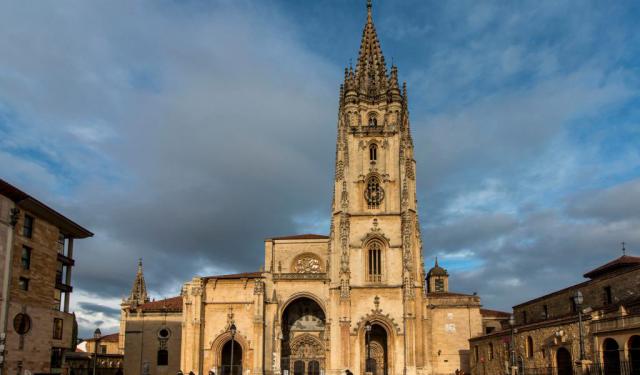
Oviedo Introduction Walking Tour
The Kingdom of Asturias began in 720, with the Visigothic revolt against Muslim rule led by the nobleman Pelagius. At that time, the city of Oviedo did not exist. Two monks, Maximo and Fromestano, founded the city in 761. They built a small church for Saint Vincent on a bare hillside, and from this seed, Oviedo grew.
After Pelagius died in 737, King Alfonso I founded a dynasty in Oviedo that... view more
Tour Duration: 1 Hour(s)
Travel Distance: 1.8 Km or 1.1 Miles
After Pelagius died in 737, King Alfonso I founded a dynasty in Oviedo that... view more
Tour Duration: 1 Hour(s)
Travel Distance: 1.8 Km or 1.1 Miles
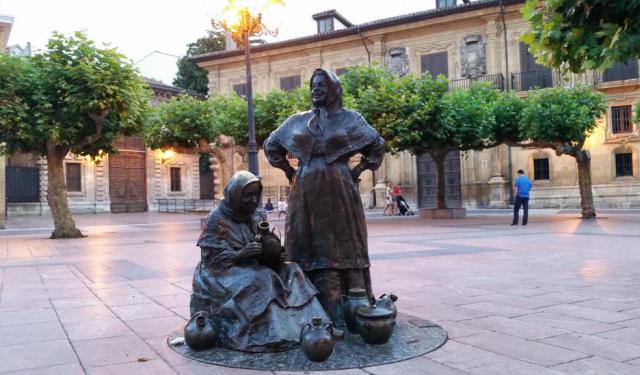
Oviedo Public Art Walking Tour
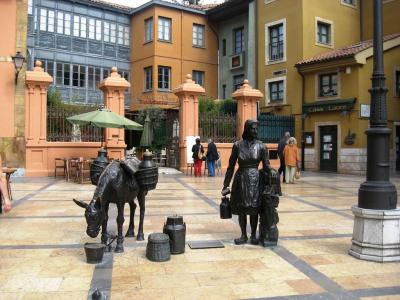
Public art adds a great deal of vibrancy and character to the cityscape of Oviedo, Spain, reflecting, among other things, its contemporary spirit. From the bustling Plaza Trascorrales to the serene Plaza Porlier De Oviedo, numerous sculptures have long become an integral part of the neighborhood, captivating passers-by in their numbers.
In Plaza Trascorrales, sculptures like The Fishwife and... view more
Tour Duration: 3 Hour(s)
Travel Distance: 3.0 Km or 1.9 Miles
In Plaza Trascorrales, sculptures like The Fishwife and... view more
Tour Duration: 3 Hour(s)
Travel Distance: 3.0 Km or 1.9 Miles
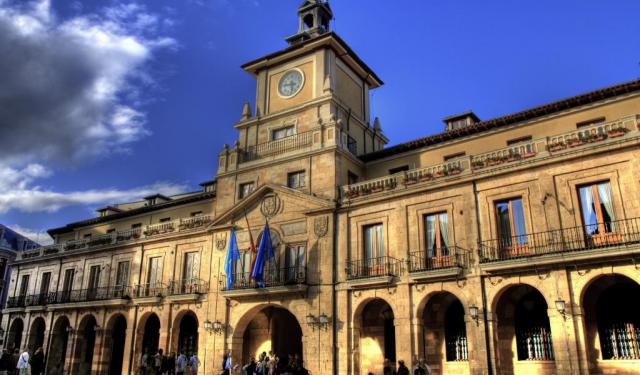
Oviedo Historic Architecture
The north Spanish region of Asturias and particularly its capital city, Oviedo, have long been noted for their unique architecture. The medieval part of town, whose ancient walls are still largely intact, contains some truly priceless relics. Among them is a well called La Foncalada, a fascinating example of an effective hydraulic system, dating back to the first half of the 9th century, based on... view more
Tour Duration: 2 Hour(s)
Travel Distance: 2.7 Km or 1.7 Miles
Tour Duration: 2 Hour(s)
Travel Distance: 2.7 Km or 1.7 Miles