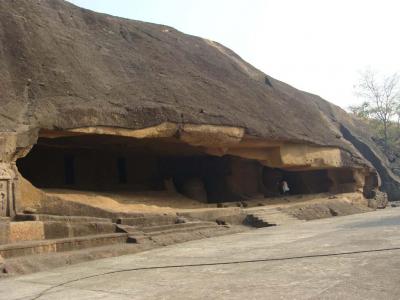


Kanheri Caves, Mumbai (must see)
The Kanheri Caves, also known as Kānherī-guhā, are a collection of caves and rock-cut monuments carved into a massive basalt rock formation located in the woodlands of Sanjay Gandhi National Park, situated on the former Salsette Island in the western outskirts of Mumbai. These caves are adorned with Buddhist sculptures, relief carvings, paintings, and inscriptions, dating back from the 1st century CE to the 10th century CE. The name "Kanheri" is derived from the Sanskrit word "Krishnagiri," which translates to "black mountain."
Perched on a hillside, the site is accessible via rock-cut steps and comprises a total of 109 caves. The older caves are relatively simple and unembellished in comparison to the later ones on the site, as well as the more ornate Elephanta Caves in Mumbai. Each cave features a stone platform that served as a bed, and a congregation hall with imposing stone pillars houses a stupa, which is a Buddhist shrine. Elaborate rock-cut channels above the caves channeled rainwater into cisterns, supplying the complex with water. Over time, as the caves were converted into permanent monastic dwellings, their walls were adorned with intricate reliefs depicting Buddha and the Bodhisattvas. By the 3rd century CE, Kanheri had evolved into a significant Buddhist settlement on the Konkan coast.
The majority of these caves were viharas, designed for the purposes of living, studying, and meditation. The larger caves, which functioned as chaityas or halls for communal worship, feature finely crafted Buddhist sculptures, reliefs, pillars, and rock-cut stupas. Among the distinctive figures found here is Avalokiteshwara. The abundance of viharas indicates the existence of a well-organized community of Buddhist monks. This community also had connections with various trade centers, including the ports of Sopara, Kalyan, Nasik, Paithan, and Ujjain. By the time of the Mauryan and Kushan empires, Kanheri had developed into a center of Buddhist learning, akin to a university. In the late 10th century, the renowned Buddhist teacher Atisha (980-1054) came to Krishnagiri Vihara to study Buddhist meditation under the guidance of Rahulagupta.
Perched on a hillside, the site is accessible via rock-cut steps and comprises a total of 109 caves. The older caves are relatively simple and unembellished in comparison to the later ones on the site, as well as the more ornate Elephanta Caves in Mumbai. Each cave features a stone platform that served as a bed, and a congregation hall with imposing stone pillars houses a stupa, which is a Buddhist shrine. Elaborate rock-cut channels above the caves channeled rainwater into cisterns, supplying the complex with water. Over time, as the caves were converted into permanent monastic dwellings, their walls were adorned with intricate reliefs depicting Buddha and the Bodhisattvas. By the 3rd century CE, Kanheri had evolved into a significant Buddhist settlement on the Konkan coast.
The majority of these caves were viharas, designed for the purposes of living, studying, and meditation. The larger caves, which functioned as chaityas or halls for communal worship, feature finely crafted Buddhist sculptures, reliefs, pillars, and rock-cut stupas. Among the distinctive figures found here is Avalokiteshwara. The abundance of viharas indicates the existence of a well-organized community of Buddhist monks. This community also had connections with various trade centers, including the ports of Sopara, Kalyan, Nasik, Paithan, and Ujjain. By the time of the Mauryan and Kushan empires, Kanheri had developed into a center of Buddhist learning, akin to a university. In the late 10th century, the renowned Buddhist teacher Atisha (980-1054) came to Krishnagiri Vihara to study Buddhist meditation under the guidance of Rahulagupta.
Want to visit this sight? Check out these Self-Guided Walking Tours in Mumbai. Alternatively, you can download the mobile app "GPSmyCity: Walks in 1K+ Cities" from Apple App Store or Google Play Store. The app turns your mobile device to a personal tour guide and it works offline, so no data plan is needed when traveling abroad.
Download The GPSmyCity App



Kanheri Caves on Map
Sight Name: Kanheri Caves
Sight Location: Mumbai, India (See walking tours in Mumbai)
Sight Type: Attraction/Landmark
Sight Location: Mumbai, India (See walking tours in Mumbai)
Sight Type: Attraction/Landmark
Nearby Sights



Walking Tours in Mumbai, India

Create Your Own Walk in Mumbai
Creating your own self-guided walk in Mumbai is easy and fun. Choose the city attractions that you want to see and a walk route map will be created just for you. You can even set your hotel as the start point of the walk.
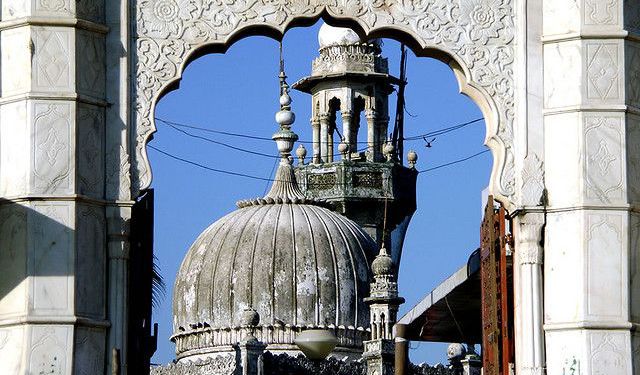
Mumbai's Historical Churches
The seven islands that later formed Mumbai were originally inhabited by Marathi-speaking Koli fishing communities, whose primary religion was Hinduism. Over time, the city’s strategic coastal position attracted traders and settlers from across the Indian Ocean world. Muslim communities became established through maritime trade and later expanded during the period of Mughal influence. Today,... view more
Tour Duration: 2 Hours
Travel Distance: 3.8 Km or 2.4 Miles
Tour Duration: 2 Hours
Travel Distance: 3.8 Km or 2.4 Miles
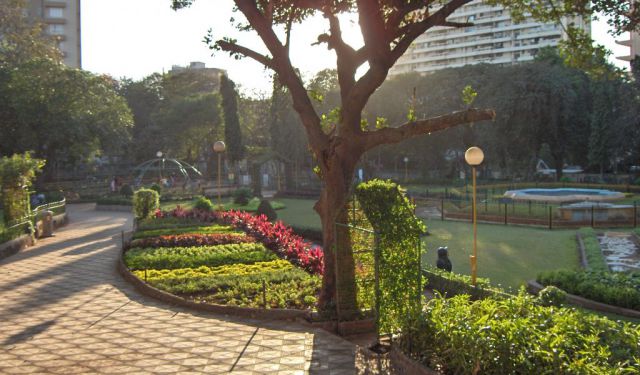
Malabar Hill Walking Tour
When the American writer Mark Twain arrived in Bombay during his world lecture tour, the view from Malabar Hill left a strong impression. In his travel book “Following the Equator”, he admired the city’s coastal setting, describing Mumbai as “by far the handsomest city in India”.
Malabar Hill is one of Mumbai’s most historic and prestigious neighborhoods, rising above the western... view more
Tour Duration: 2 Hours
Travel Distance: 3.4 Km or 2.1 Miles
Malabar Hill is one of Mumbai’s most historic and prestigious neighborhoods, rising above the western... view more
Tour Duration: 2 Hours
Travel Distance: 3.4 Km or 2.1 Miles
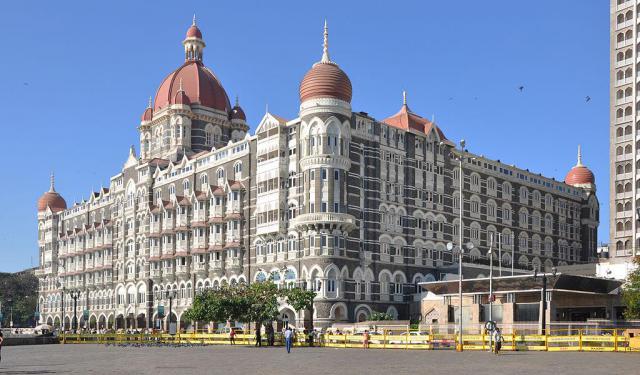
Mumbai Downtown Walking Tour
English writer Rudyard Kipling, who was born in Bombay in 1865, famously called it “the Mother of Cities”, a place that absorbs people from everywhere and keeps giving birth to new lives, ambitions, and contradictions.
Long before it became India’s largest city, the area consisted of seven low-lying islands along the Konkan coast, inhabited by fishing communities known as the Kolis.... view more
Tour Duration: 2 Hours
Travel Distance: 3.9 Km or 2.4 Miles
Long before it became India’s largest city, the area consisted of seven low-lying islands along the Konkan coast, inhabited by fishing communities known as the Kolis.... view more
Tour Duration: 2 Hours
Travel Distance: 3.9 Km or 2.4 Miles
Useful Travel Guides for Planning Your Trip

Mumbai Shopping: 16 Souvenir Ideas for Travelers
In India, a foreigner can't get far without insider knowledge, whether it's for souvenir shopping or something else. Mumbai (formerly known as Bombay) is by far the most popular and the largest of Indian cities, teeming with a plethora of things representative of India's millenia-long...
Places to Eat Local Food in Mumbai
As its said, in a city like Mumbai, anybody wanting a good meal any time of the day, there’s always a rush and a stomach will always be fed. Whether its a quick bite or to indulge yourself, there is a plethora of tastes and flavours, 24/7, vying to satiate your taste buds. Multifaceted,...
City Walks Overview
