

Malabar Hill Walking Tour (Self Guided), Mumbai
When the American writer Mark Twain arrived in Bombay during his world lecture tour, the view from Malabar Hill left a strong impression. In his travel book “Following the Equator”, he admired the city’s coastal setting, describing Mumbai as “by far the handsomest city in India”.
Malabar Hill is one of Mumbai’s most historic and prestigious neighborhoods, rising above the western edge of the city along the Arabian Sea. The hill offers views over Marine Drive promenade, Girgaon Chowpatty beach, and the wider harbor. Today it is known for its quiet streets, parks, temples, and some of the most exclusive residences in India, including the official residence of the Governor of Maharashtra.
The name “Malabar Hill” is generally believed to refer to the Malabars, a term historically used by Europeans for people from the Malabar Coast of southwestern India, present-day Kerala.
Malabar Hill began to develop more substantially during the British colonial era. In the 19th century, as Bombay expanded into a major port city of the British Empire, the hill’s cooler breezes and elevated position made it attractive for European officials and wealthy residents seeking relief from the crowded lowlands. Large bungalows, gardens, and colonial residences gradually appeared along the slopes. Public spaces such as the Hanging Gardens and Kamala Nehru Park were later created on the hill’s crest, offering panoramic views of the city and the sea.
In the 20th century, Malabar Hill evolved into one of Mumbai’s most exclusive residential districts. It became home to prominent industrialists, political leaders, and cultural figures. Despite modern development, the area still preserves traces of its layered past: from ancient temples and sacred reservoir to colonial parks and historic viewpoints.
Visitors exploring Malabar Hill encounter the Babulnath Temple, dedicated to Lord Shiva, and the nearby serene Jain Temple, known for its detailed marble carvings. Another landmark is the Walkeshwar Mandir Temple, one of Mumbai’s oldest Hindu shrines. The hill is also associated with the Tower of Silence, part of the sacred Parsi funerary grounds hidden within wooded surroundings.
Standing here today, it’s easy to understand why Mark Twain was so taken with the scene. From the breezy heights of Malabar Hill, the curve of the bay, the bustle of the city, and the quiet presence of temples and gardens unfold together in a single panorama. More than a century after Twain admired this coastline, the beauty of Malabar Hill itself continues to leave a lasting impression.
Malabar Hill is one of Mumbai’s most historic and prestigious neighborhoods, rising above the western edge of the city along the Arabian Sea. The hill offers views over Marine Drive promenade, Girgaon Chowpatty beach, and the wider harbor. Today it is known for its quiet streets, parks, temples, and some of the most exclusive residences in India, including the official residence of the Governor of Maharashtra.
The name “Malabar Hill” is generally believed to refer to the Malabars, a term historically used by Europeans for people from the Malabar Coast of southwestern India, present-day Kerala.
Malabar Hill began to develop more substantially during the British colonial era. In the 19th century, as Bombay expanded into a major port city of the British Empire, the hill’s cooler breezes and elevated position made it attractive for European officials and wealthy residents seeking relief from the crowded lowlands. Large bungalows, gardens, and colonial residences gradually appeared along the slopes. Public spaces such as the Hanging Gardens and Kamala Nehru Park were later created on the hill’s crest, offering panoramic views of the city and the sea.
In the 20th century, Malabar Hill evolved into one of Mumbai’s most exclusive residential districts. It became home to prominent industrialists, political leaders, and cultural figures. Despite modern development, the area still preserves traces of its layered past: from ancient temples and sacred reservoir to colonial parks and historic viewpoints.
Visitors exploring Malabar Hill encounter the Babulnath Temple, dedicated to Lord Shiva, and the nearby serene Jain Temple, known for its detailed marble carvings. Another landmark is the Walkeshwar Mandir Temple, one of Mumbai’s oldest Hindu shrines. The hill is also associated with the Tower of Silence, part of the sacred Parsi funerary grounds hidden within wooded surroundings.
Standing here today, it’s easy to understand why Mark Twain was so taken with the scene. From the breezy heights of Malabar Hill, the curve of the bay, the bustle of the city, and the quiet presence of temples and gardens unfold together in a single panorama. More than a century after Twain admired this coastline, the beauty of Malabar Hill itself continues to leave a lasting impression.
How it works: Download the app "GPSmyCity: Walks in 1K+ Cities" from Apple App Store or Google Play Store to your mobile phone or tablet. The app turns your mobile device into a personal tour guide and its built-in GPS navigation functions guide you from one tour stop to next. The app works offline, so no data plan is needed when traveling abroad.
Malabar Hill Walking Tour Map
Guide Name: Malabar Hill Walking Tour
Guide Location: India » Mumbai (See other walking tours in Mumbai)
Guide Type: Self-guided Walking Tour (Sightseeing)
# of Attractions: 7
Tour Duration: 2 Hour(s)
Travel Distance: 3.4 Km or 2.1 Miles
Author: DanaOffice
Sight(s) Featured in This Guide:
Guide Location: India » Mumbai (See other walking tours in Mumbai)
Guide Type: Self-guided Walking Tour (Sightseeing)
# of Attractions: 7
Tour Duration: 2 Hour(s)
Travel Distance: 3.4 Km or 2.1 Miles
Author: DanaOffice
Sight(s) Featured in This Guide:
- Mani Bhavan Gandhi Museum
- Babulnath Temple
- Tower of Silence
- Hanging Gardens
- Kamala Nehru Park
- Jain Temple
- Walkeshwar Mandir Temple
1) Mani Bhavan Gandhi Museum (must see)
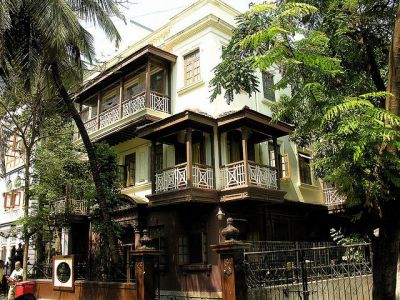
The Mani Bhavan is a modest two-story building which played an important role in India’s struggle for independence. Between 1917 and 1934 it served as the Mumbai headquarters of the father of modern India Mahatma Gandhi whenever he visited the city. The house originally belonged to his supporter Revashankar Jagjeevan Jhaveri, who offered it as a base for Gandhi’s work during a crucial period of political change.
During those seventeen years, the building became a center of strategy, discussion, and activism. Several key campaigns associated with Gandhi began here, including the Non-Cooperation Movement, the Civil Disobedience Movement, the Swadeshi campaign encouraging the boycott of foreign goods, and the broader philosophy of Satyagraha. The house also welcomed many influential visitors and thinkers of the time.
After Gandhi’s death, the property was taken over in 1955 by the Gandhi Smarak Nidhi organization, which transformed it into a museum preserving the memory of his work. Visitors usually begin their exploration on the ground floor, where a research library and picture gallery introduce the life and philosophy of Mahatma Gandhi. The library contains books, documents, and archival material related to Gandhi’s writings and the Indian independence movement, while the gallery displays historic photographs and publications connected to his campaigns and political activities.
Moving up to the first floor, visitors encounter one of the museum’s most distinctive exhibits: a series of 28 miniature dioramas created by artist Sushila Gokhale Patel. These detailed scenes portray key moments in Gandhi’s life, including his early activism in South Africa, the launch of the Non-Cooperation Movement, and major milestones of India’s independence struggle.
Continuing to the second floor, visitors reach the room where Gandhi lived and worked during his stays in Bombay. Preserved close to its original appearance, the space contains personal items such as his spinning wheel, simple bedding, and writing desk. The museum also displays copies of letters Gandhi wrote to world leaders, including Franklin D. Roosevelt and Adolf Hitler, offering insight into his global influence and the ideas that shaped modern India.
During those seventeen years, the building became a center of strategy, discussion, and activism. Several key campaigns associated with Gandhi began here, including the Non-Cooperation Movement, the Civil Disobedience Movement, the Swadeshi campaign encouraging the boycott of foreign goods, and the broader philosophy of Satyagraha. The house also welcomed many influential visitors and thinkers of the time.
After Gandhi’s death, the property was taken over in 1955 by the Gandhi Smarak Nidhi organization, which transformed it into a museum preserving the memory of his work. Visitors usually begin their exploration on the ground floor, where a research library and picture gallery introduce the life and philosophy of Mahatma Gandhi. The library contains books, documents, and archival material related to Gandhi’s writings and the Indian independence movement, while the gallery displays historic photographs and publications connected to his campaigns and political activities.
Moving up to the first floor, visitors encounter one of the museum’s most distinctive exhibits: a series of 28 miniature dioramas created by artist Sushila Gokhale Patel. These detailed scenes portray key moments in Gandhi’s life, including his early activism in South Africa, the launch of the Non-Cooperation Movement, and major milestones of India’s independence struggle.
Continuing to the second floor, visitors reach the room where Gandhi lived and worked during his stays in Bombay. Preserved close to its original appearance, the space contains personal items such as his spinning wheel, simple bedding, and writing desk. The museum also displays copies of letters Gandhi wrote to world leaders, including Franklin D. Roosevelt and Adolf Hitler, offering insight into his global influence and the ideas that shaped modern India.
2) Babulnath Temple (must see)
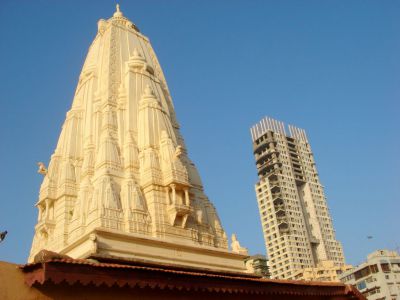
The Babulnath Temple is one of the oldest Hindu shrines in the city and is dedicated to Shiva. Although the present structure dates to the late 18th century and was expanded in the 1890s, the site itself is believed to be much older. Local tradition suggests that the idol worshiped here may date back to the 12th century, during the reign of King Raja Bhimdev.
According to one popular legend, a wealthy goldsmith discovered the sacred image of the deity after noticing that his cow mysteriously stopped at a particular spot each day and released all of her milk there. Curious about this unusual behavior, he followed the animal and eventually had the ground dug up. Beneath a babul tree, a Shiva idol was uncovered, and a shrine was established on the site. The temple’s name, Babulnath, is believed to derive from this tree, meaning “Lord of the Babul”.
Visitors reach the temple by climbing a long staircase that leads up the hillside, though an elevator now offers an easier option. At the top, the complex opens into a courtyard and shrine hall where devotees gather for darshan, the sacred viewing of the Shiva lingam. Inside, carved pillars and traditional decorative details frame the sanctum, creating a quiet space for prayer and reflection.
The temple becomes especially lively during Maha Shivaratri, when thousands of worshippers visit throughout the night to offer prayers and seek blessings. Devotees bring offerings such as milk, flowers, and sacred leaves to place before the shrine. Even outside festival periods, Babulnath Temple remains an active place of worship.
According to one popular legend, a wealthy goldsmith discovered the sacred image of the deity after noticing that his cow mysteriously stopped at a particular spot each day and released all of her milk there. Curious about this unusual behavior, he followed the animal and eventually had the ground dug up. Beneath a babul tree, a Shiva idol was uncovered, and a shrine was established on the site. The temple’s name, Babulnath, is believed to derive from this tree, meaning “Lord of the Babul”.
Visitors reach the temple by climbing a long staircase that leads up the hillside, though an elevator now offers an easier option. At the top, the complex opens into a courtyard and shrine hall where devotees gather for darshan, the sacred viewing of the Shiva lingam. Inside, carved pillars and traditional decorative details frame the sanctum, creating a quiet space for prayer and reflection.
The temple becomes especially lively during Maha Shivaratri, when thousands of worshippers visit throughout the night to offer prayers and seek blessings. Devotees bring offerings such as milk, flowers, and sacred leaves to place before the shrine. Even outside festival periods, Babulnath Temple remains an active place of worship.
3) Tower of Silence
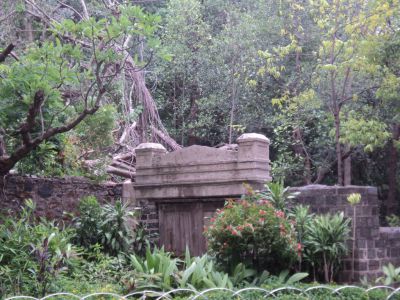
The Tower of Silence is a sacred place strongly connected with Mumbai’s Parsi community. Located within a large wooded estate, the complex contains several circular stone structures known as Towers of Silence, used in the traditional funerary practices of followers of Zoroastrianism religion.
According to this belief, the elements of earth, fire, and water are sacred and must not be polluted by a dead body. Instead of burial or cremation, the deceased are placed atop the circular stone towers where natural processes, traditionally aided by sunlight and birds of prey, allow the body to return to nature without contaminating these elements.
The towers form part of the larger Doongerwadi estate, which served the Parsi community since 1672, when the complex was established. Over time, the grounds developed into an important religious area that includes prayer halls, gardens, and pathways used by members of the community during funeral ceremonies. Because of its sacred role, the towers themselves are strictly closed to visitors, and the rituals performed here remain private. However, the wooded surroundings of Doongerwadi remain an important part of Malabar Hill’s landscape.
According to this belief, the elements of earth, fire, and water are sacred and must not be polluted by a dead body. Instead of burial or cremation, the deceased are placed atop the circular stone towers where natural processes, traditionally aided by sunlight and birds of prey, allow the body to return to nature without contaminating these elements.
The towers form part of the larger Doongerwadi estate, which served the Parsi community since 1672, when the complex was established. Over time, the grounds developed into an important religious area that includes prayer halls, gardens, and pathways used by members of the community during funeral ceremonies. Because of its sacred role, the towers themselves are strictly closed to visitors, and the rituals performed here remain private. However, the wooded surroundings of Doongerwadi remain an important part of Malabar Hill’s landscape.
4) Hanging Gardens
The Hanging Gardens are one of the most pleasant green spaces on Malabar Hill, where visitors can enjoy one of the most scenic viewpoints in Mumbai. The park was laid out in 1881 on terraced slopes above the city and later renovated in 1921.
The gardens were created not only as a public park but also as a protective cover for large water reservoirs located beneath the hill. Built above three reservoirs capable of storing millions of gallons of water, the landscaped grounds were designed to shield the city’s drinking water supply from contamination. This unusual arrangement is what gave the site its popular name.
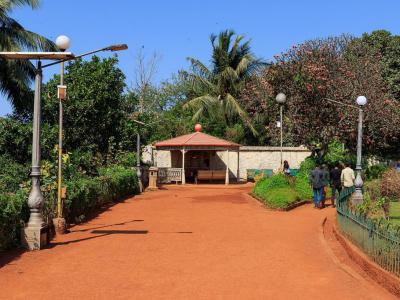
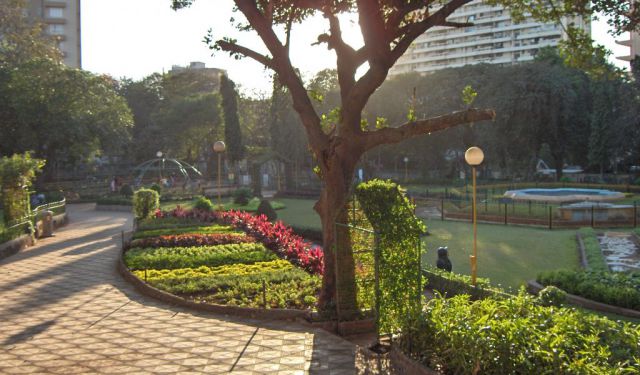
One of the most recognizable features of the gardens is the collection of carefully trimmed hedges shaped into animals and other playful forms. Along the northern side of the park, visitors will find a small pavilion that offers a shaded place to pause and enjoy the surrounding greenery. Near the central paths, a decorative fountain adds a focal point to the garden layout. On the western side of the gardens, a modest clock tower stands among the trees. From this edge of the park, visitors can also glimpse views toward Back Bay and the Arabian Sea.
The gardens were created not only as a public park but also as a protective cover for large water reservoirs located beneath the hill. Built above three reservoirs capable of storing millions of gallons of water, the landscaped grounds were designed to shield the city’s drinking water supply from contamination. This unusual arrangement is what gave the site its popular name.
One of the most recognizable features of the gardens is the collection of carefully trimmed hedges shaped into animals and other playful forms. Along the northern side of the park, visitors will find a small pavilion that offers a shaded place to pause and enjoy the surrounding greenery. Near the central paths, a decorative fountain adds a focal point to the garden layout. On the western side of the gardens, a modest clock tower stands among the trees. From this edge of the park, visitors can also glimpse views toward Back Bay and the Arabian Sea.
5) Kamala Nehru Park
The Kamala Nehru Park is a small public park, opened in 1952 and named after Kamala Nehru, an Indian independence activist and social reformer. It covers roughly 4,000 square meters and serves as a quiet green retreat within the busy city of Mumbai. From its elevated lawns and terraces, visitors can enjoy views over Back Bay, Girgaon Chowpatty beach, and the curve of Marine Drive.
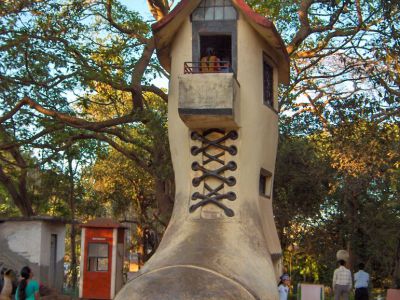
One of the park’s most recognizable features is the playful “Old Woman’s Shoe” structure, a large boot-shaped building inspired by the nursery rhyme “There Was an Old Woman Who Lived in a Shoe”. Children can climb inside the structure and look out from its windows. In 2018, a lily pond and a floral selfie point were added.
Unlike many modern parks filled with rides and amusement facilities, Kamala Nehru Park offers open lawns, shaded paths, and flower beds that encourage visitors to relax or enjoy simple outdoor activities. The park is particularly lively in the early morning and late afternoon, when residents come to walk, exercise, or enjoy the cooler air. As evening approaches, visitors gather along the viewpoints to watch the sun set over the Arabian Sea. Soon after, the lights along Marine Drive begin to glow, forming the famous “Queen’s Necklace”.
One of the park’s most recognizable features is the playful “Old Woman’s Shoe” structure, a large boot-shaped building inspired by the nursery rhyme “There Was an Old Woman Who Lived in a Shoe”. Children can climb inside the structure and look out from its windows. In 2018, a lily pond and a floral selfie point were added.
Unlike many modern parks filled with rides and amusement facilities, Kamala Nehru Park offers open lawns, shaded paths, and flower beds that encourage visitors to relax or enjoy simple outdoor activities. The park is particularly lively in the early morning and late afternoon, when residents come to walk, exercise, or enjoy the cooler air. As evening approaches, visitors gather along the viewpoints to watch the sun set over the Arabian Sea. Soon after, the lights along Marine Drive begin to glow, forming the famous “Queen’s Necklace”.
6) Jain Temple (must see)
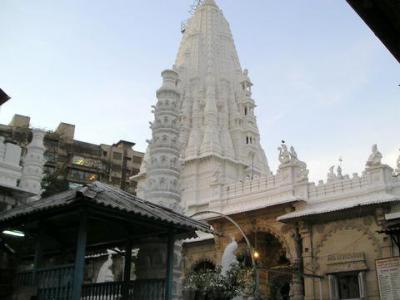
The Jain Temple is a religious landmark best known for its ornate design. Built in 1904, the temple is dedicated to Adinatha, the first spiritual teacher in the Jain tradition. The temple reflects the long presence and devotion of Mumbai’s Jain community and stands out for its impressive marble architecture and richly decorated interiors.
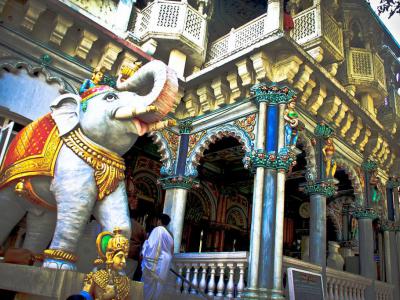
The entrance immediately draws attention with two finely sculpted stone elephants guarding the gateway. Inside, visitors encounter elaborate marble carvings, detailed pillars, and beautifully decorated ceilings. The temple walls feature colorful frescoes illustrating episodes from the lives of the 24 Jain Tirthankaras, spiritual teachers who guide followers toward enlightenment. The main sanctum houses the idol of Adinatha, where devotees gather for prayer and ritual offerings.
The temple complex also contains several other shrines, including those dedicated to Parshvanatha, whose black marble image forms another focal point of worship, as well as shrines honoring Ghantakaran Mahavir and the Hindu deity Ganesha. The presence of multiple shrines allows worshipers to pay respect to several important figures within Jain tradition during a single visit. Above, the dome is decorated with zodiac symbols, adding another layer of artistic detail to the temple’s architecture.
Like many Jain temples, the site emphasizes serenity, cleanliness, and quiet reflection. Visitors are asked to remove their shoes before entering and to respect the peaceful atmosphere of the shrine. Photography inside the temple may sometimes be restricted, depending on the time of visit and temple rules. For travelers, the Jain Temple offers both a glimpse into Jain religious traditions and an opportunity to admire one of Mumbai’s most beautifully crafted sacred buildings.
The entrance immediately draws attention with two finely sculpted stone elephants guarding the gateway. Inside, visitors encounter elaborate marble carvings, detailed pillars, and beautifully decorated ceilings. The temple walls feature colorful frescoes illustrating episodes from the lives of the 24 Jain Tirthankaras, spiritual teachers who guide followers toward enlightenment. The main sanctum houses the idol of Adinatha, where devotees gather for prayer and ritual offerings.
The temple complex also contains several other shrines, including those dedicated to Parshvanatha, whose black marble image forms another focal point of worship, as well as shrines honoring Ghantakaran Mahavir and the Hindu deity Ganesha. The presence of multiple shrines allows worshipers to pay respect to several important figures within Jain tradition during a single visit. Above, the dome is decorated with zodiac symbols, adding another layer of artistic detail to the temple’s architecture.
Like many Jain temples, the site emphasizes serenity, cleanliness, and quiet reflection. Visitors are asked to remove their shoes before entering and to respect the peaceful atmosphere of the shrine. Photography inside the temple may sometimes be restricted, depending on the time of visit and temple rules. For travelers, the Jain Temple offers both a glimpse into Jain religious traditions and an opportunity to admire one of Mumbai’s most beautifully crafted sacred buildings.
7) Walkeshwar Mandir Temple
The Walkeshwar Temple is dedicated to Shiva and holds an important place in the city’s religious traditions. Believed to have been first established during the rule of the Silhara dynasty between the 9th and 13th centuries, the temple is said to have been built under the patronage of Lakshman Prabhu, a minister in the king’s court.
According to legend from the Ramayana, the temple’s origins are connected with the god Rama. While traveling toward Lanka in search of his abducted wife Sita, Rama is believed to have paused at this spot and wished to worship Shiva. Unable to find a proper idol, he fashioned a lingam from sand and offered prayers. Because the lingam was made from sand, the deity became known as Walkeshwar, meaning “Lord of the Sand”, giving the temple its name.
The temple seen today was rebuilt in the 18th century after the original structure was destroyed during earlier conflicts in the region. Around the temple lies a historic complex of smaller shrines, rest houses, and narrow lanes that lead down to Banganga Tank. This rectangular water reservoir is lined with stone steps and temples and has long been used for ritual bathing and religious ceremonies.
Local tradition holds that the water of Banganga Tank appeared when Rama’s brother Lakshmana shot an arrow into the ground to create a spring for the thirsty Rama. Even though the tank lies close to the sea, it is filled with fresh spring water.
According to legend from the Ramayana, the temple’s origins are connected with the god Rama. While traveling toward Lanka in search of his abducted wife Sita, Rama is believed to have paused at this spot and wished to worship Shiva. Unable to find a proper idol, he fashioned a lingam from sand and offered prayers. Because the lingam was made from sand, the deity became known as Walkeshwar, meaning “Lord of the Sand”, giving the temple its name.
The temple seen today was rebuilt in the 18th century after the original structure was destroyed during earlier conflicts in the region. Around the temple lies a historic complex of smaller shrines, rest houses, and narrow lanes that lead down to Banganga Tank. This rectangular water reservoir is lined with stone steps and temples and has long been used for ritual bathing and religious ceremonies.
Local tradition holds that the water of Banganga Tank appeared when Rama’s brother Lakshmana shot an arrow into the ground to create a spring for the thirsty Rama. Even though the tank lies close to the sea, it is filled with fresh spring water.
Walking Tours in Mumbai, India
Create Your Own Walk in Mumbai
Creating your own self-guided walk in Mumbai is easy and fun. Choose the city attractions that you want to see and a walk route map will be created just for you. You can even set your hotel as the start point of the walk.
Mumbai Introduction Walking Tour
English writer Rudyard Kipling, who was born in Bombay in 1865, famously called it “the Mother of Cities”, a place that absorbs people from everywhere and keeps giving birth to new lives, ambitions, and contradictions.
Long before it became India’s largest city, the area consisted of seven low-lying islands along the Konkan coast, inhabited by fishing communities known as the Kolis.... view more
Tour Duration: 2 Hour(s)
Travel Distance: 3.9 Km or 2.4 Miles
Long before it became India’s largest city, the area consisted of seven low-lying islands along the Konkan coast, inhabited by fishing communities known as the Kolis.... view more
Tour Duration: 2 Hour(s)
Travel Distance: 3.9 Km or 2.4 Miles
Mumbai's Historical Churches
The seven islands that later formed Mumbai were originally inhabited by Marathi-speaking Koli fishing communities, whose primary religion was Hinduism. Over time, the city’s strategic coastal position attracted traders and settlers from across the Indian Ocean world. Muslim communities became established through maritime trade and later expanded during the period of Mughal influence. Today,... view more
Tour Duration: 2 Hour(s)
Travel Distance: 3.8 Km or 2.4 Miles
Tour Duration: 2 Hour(s)
Travel Distance: 3.8 Km or 2.4 Miles
Useful Travel Guides for Planning Your Trip
Mumbai Shopping: 16 Souvenir Ideas for Travelers
In India, a foreigner can't get far without insider knowledge, whether it's for souvenir shopping or something else. Mumbai (formerly known as Bombay) is by far the most popular and the largest of Indian cities, teeming with a plethora of things representative of India's millenia-long...
Places to Eat Local Food in Mumbai
As its said, in a city like Mumbai, anybody wanting a good meal any time of the day, there’s always a rush and a stomach will always be fed. Whether its a quick bite or to indulge yourself, there is a plethora of tastes and flavours, 24/7, vying to satiate your taste buds. Multifaceted,...

The Most Popular Cities
/ view all