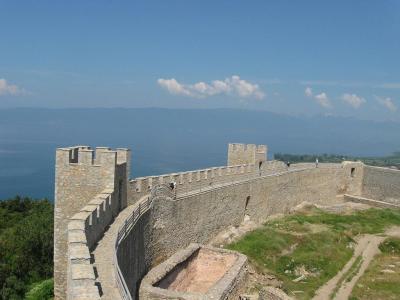


King Samoil Fortress, Ohrid (must see)
Ohrid Fortress, popularly known as Tsar Samuel’s Fortress, is a restored medieval stronghold occupying the top of Ohrid Hill. The hill rises about 328 feet above the waters of Lake Ohrid, giving the fortress commanding views over the lake, the city, and the surrounding countryside. The old defensive walls extended for roughly two miles, varying in height from about ten to 53 feet.
The fortress stands on a site that had been fortified since ancient times. Ancient sources associate King Philip II of Macedonia, father of Alexander the Great, with the construction or strengthening of fortifications on the hill in the 4th century BC. By 209 BC, the ancient city of Lychnidos was certainly fortified. Centuries later, Tsar Samuel greatly rebuilt and strengthened the defenses in the late 10th and early 11th centuries, when Ohrid served as his capital. Much of the surviving citadel and its towers is associated with Samuel and his immediate successors.
Ohrid, known in ancient times as Lychnidos, subsequently passed through Roman, Byzantine, Slavic, and Ottoman rule. The fortress was repeatedly damaged, rebuilt, and enlarged. After Samuel’s state fell to the Byzantines in 1018, the defenses were damaged and later restored again, probably under Byzantine Emperor Alexios I Komnenos. Further rebuilding took place in the 14th century.
The fortress served not only as a defensive stronghold but also as a residence. Its central section, or citadel, was divided by a wall into two areas, one associated with the ruler and the other with the soldiers. Towers strengthened the surrounding walls, while the main entrance to the citadel was protected by two semicircular defensive towers. Beyond the citadel, another fortified area enclosed the residences of courtiers and their families.
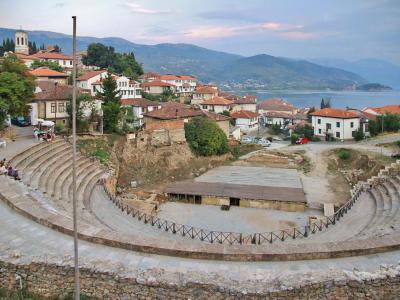
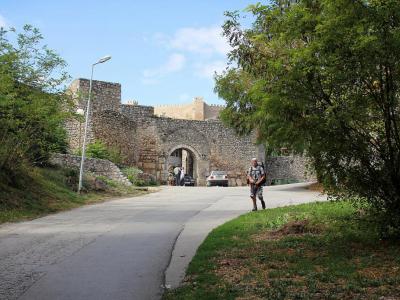
The fortified town had three principal entrances: the Upper Gate, near the Ancient Theatre; the Front Gate; and the Lower Gate, close to the lakeshore. Of these, only the Upper Gate has survived intact. Following the Ottoman conquest of Ohrid around the end of the 14th century, settlement increasingly expanded onto the lower ground outside the old walls. During the Ottoman period, the elevated walled quarter remained largely associated with Ohrid’s Christian population, while Muslim neighborhoods developed farther downhill.
Large-scale archaeological research, conservation, and restoration began in 2000. The citadel was systematically excavated, while its walls and towers were repaired and preserved. From the archaeological complex of Plaosnik, a wooded path leads uphill to the fortress, where visitors can walk along sections of the restored ramparts and enjoy broad views over Ohrid and the lake.
The fortress stands on a site that had been fortified since ancient times. Ancient sources associate King Philip II of Macedonia, father of Alexander the Great, with the construction or strengthening of fortifications on the hill in the 4th century BC. By 209 BC, the ancient city of Lychnidos was certainly fortified. Centuries later, Tsar Samuel greatly rebuilt and strengthened the defenses in the late 10th and early 11th centuries, when Ohrid served as his capital. Much of the surviving citadel and its towers is associated with Samuel and his immediate successors.
Ohrid, known in ancient times as Lychnidos, subsequently passed through Roman, Byzantine, Slavic, and Ottoman rule. The fortress was repeatedly damaged, rebuilt, and enlarged. After Samuel’s state fell to the Byzantines in 1018, the defenses were damaged and later restored again, probably under Byzantine Emperor Alexios I Komnenos. Further rebuilding took place in the 14th century.
The fortress served not only as a defensive stronghold but also as a residence. Its central section, or citadel, was divided by a wall into two areas, one associated with the ruler and the other with the soldiers. Towers strengthened the surrounding walls, while the main entrance to the citadel was protected by two semicircular defensive towers. Beyond the citadel, another fortified area enclosed the residences of courtiers and their families.
The fortified town had three principal entrances: the Upper Gate, near the Ancient Theatre; the Front Gate; and the Lower Gate, close to the lakeshore. Of these, only the Upper Gate has survived intact. Following the Ottoman conquest of Ohrid around the end of the 14th century, settlement increasingly expanded onto the lower ground outside the old walls. During the Ottoman period, the elevated walled quarter remained largely associated with Ohrid’s Christian population, while Muslim neighborhoods developed farther downhill.
Large-scale archaeological research, conservation, and restoration began in 2000. The citadel was systematically excavated, while its walls and towers were repaired and preserved. From the archaeological complex of Plaosnik, a wooded path leads uphill to the fortress, where visitors can walk along sections of the restored ramparts and enjoy broad views over Ohrid and the lake.
Want to visit this sight? Check out these Self-Guided Walking Tours in Ohrid. Alternatively, you can download the mobile app "GPSmyCity: Walks in 1K+ Cities" from Apple App Store or Google Play Store. The app turns your mobile device to a personal tour guide and it works offline, so no data plan is needed when traveling abroad.
Download The GPSmyCity App



King Samoil Fortress on Map
Sight Name: King Samoil Fortress
Sight Location: Ohrid, North Macedonia (See walking tours in Ohrid)
Sight Type: Attraction/Landmark
Guide(s) Containing This Sight:
Sight Location: Ohrid, North Macedonia (See walking tours in Ohrid)
Sight Type: Attraction/Landmark
Guide(s) Containing This Sight:
Nearby Sights
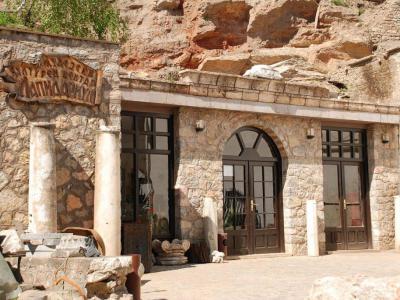
Walking Tours in Ohrid, North Macedonia

Create Your Own Walk in Ohrid
Creating your own self-guided walk in Ohrid is easy and fun. Choose the city attractions that you want to see and a walk route map will be created just for you. You can even set your hotel as the start point of the walk.
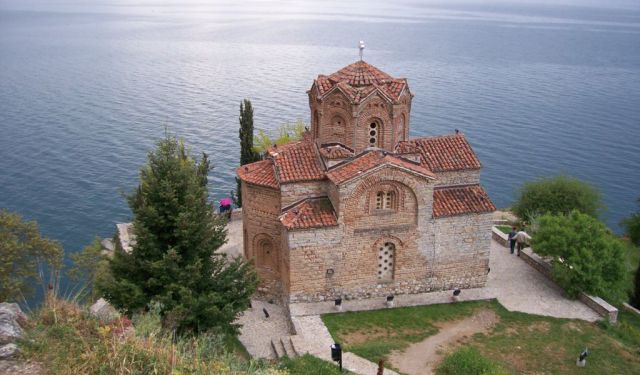
Ohrid's Historical Churches
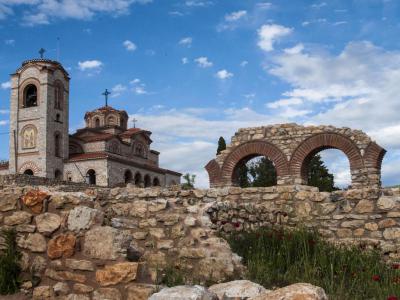
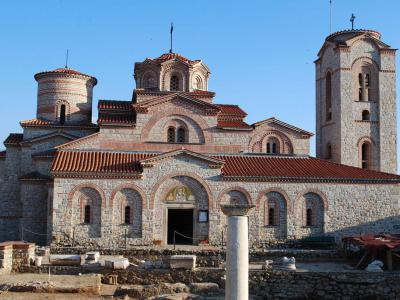
According to the legend based on the observations of 15th-century Ottoman traveler Evlia Celebia, the town of Ohrid used to have within its boundaries 365 chapels – one for every day of the year. At some point during Medieval times, Ohrid was even dubbed Slavic Jerusalem. Today, although the number of churches is considerably smaller, the architectural and historical value of those that remain... view more
Tour Duration: 1 Hour(s)
Travel Distance: 2.7 Km or 1.7 Miles
Tour Duration: 1 Hour(s)
Travel Distance: 2.7 Km or 1.7 Miles
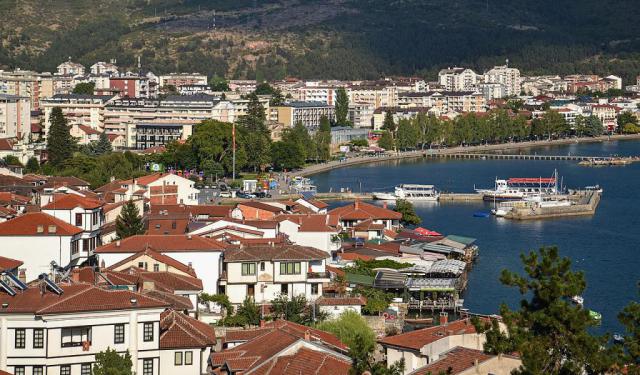
Walking Through Ohrid's Historical Old Town
Ohrid is a city best discovered on foot. Its Old Town rises from the clear blue waters of Lake Ohrid toward the walls of Tsar Samuel’s Fortress, with narrow streets, stone houses, medieval churches, archaeological remains, cafés, and viewpoints appearing along the way.
In antiquity, Ohrid was known as Lychnidos, a name traditionally associated with light. By the late 9th century, the Slavic... view more
Tour Duration: 2 Hour(s)
Travel Distance: 2.3 Km or 1.4 Miles
In antiquity, Ohrid was known as Lychnidos, a name traditionally associated with light. By the late 9th century, the Slavic... view more
Tour Duration: 2 Hour(s)
Travel Distance: 2.3 Km or 1.4 Miles