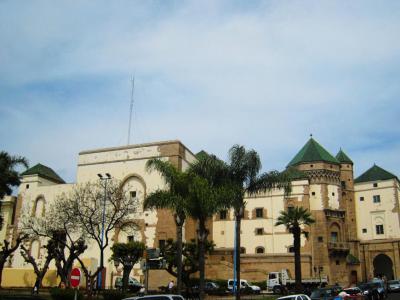


Mahkamat al-Pasha Building (Pasha's Courthouse), Casablanca (must see)
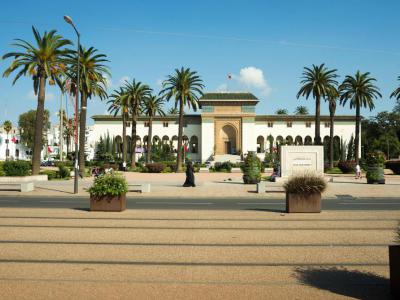
The Pasha’s Courthouse is one of the most grandiose historic buildings in Casablanca, located in the Habous Quarter, an area conceived during the French Protectorate as a “New Medina”. Designed to combine traditional Moroccan urban forms with modern planning principles, Habous was intended as a center for religious, cultural, and civic life, and the courthouse was conceived as one of its key institutional landmarks.
The project was commissioned in January 1930 by At-Tayyib al-Moqri, the Pasha of Casablanca, a high-ranking administrative official and governor, son of the influential Grand Vizier, Mohammed al-Moqri. Plans called for a multifunctional complex that would bring together civil courtrooms, administrative offices, and an official residence for the Pasha. Although the concept dates to the early 1930s, construction took place later, between 1941 and 1943, during World War II.
The building was designed by Auguste Cadet, a prominent French architect active in Casablanca during the Protectorate period. Executed in a Moorish-Andalusian revival style, the courthouse deliberately evokes the appearance of a historic palace rather than a modern government facility. Wartime shortages of industrial materials contributed to this choice, leading to extensive use of traditional Moroccan construction techniques and craftsmanship. Architectural highlights include elaborate zellij tilework, carved cedarwood ceilings and doors, finely chiseled stucco decoration, slender arches, and green-tiled roofs.
Today, the Pasha’s Courthouse remains an active government building, and public access to the interior is restricted to official visits or special arrangements. Even so, its richly decorated exterior and harmonious proportions make it one of the architectural highlights of the Habous Quarter.
The project was commissioned in January 1930 by At-Tayyib al-Moqri, the Pasha of Casablanca, a high-ranking administrative official and governor, son of the influential Grand Vizier, Mohammed al-Moqri. Plans called for a multifunctional complex that would bring together civil courtrooms, administrative offices, and an official residence for the Pasha. Although the concept dates to the early 1930s, construction took place later, between 1941 and 1943, during World War II.
The building was designed by Auguste Cadet, a prominent French architect active in Casablanca during the Protectorate period. Executed in a Moorish-Andalusian revival style, the courthouse deliberately evokes the appearance of a historic palace rather than a modern government facility. Wartime shortages of industrial materials contributed to this choice, leading to extensive use of traditional Moroccan construction techniques and craftsmanship. Architectural highlights include elaborate zellij tilework, carved cedarwood ceilings and doors, finely chiseled stucco decoration, slender arches, and green-tiled roofs.
Today, the Pasha’s Courthouse remains an active government building, and public access to the interior is restricted to official visits or special arrangements. Even so, its richly decorated exterior and harmonious proportions make it one of the architectural highlights of the Habous Quarter.
Want to visit this sight? Check out these Self-Guided Walking Tours in Casablanca. Alternatively, you can download the mobile app "GPSmyCity: Walks in 1K+ Cities" from Apple App Store or Google Play Store. The app turns your mobile device to a personal tour guide and it works offline, so no data plan is needed when traveling abroad.
Download The GPSmyCity App



Mahkamat al-Pasha Building (Pasha's Courthouse) on Map
Sight Name: Mahkamat al-Pasha Building (Pasha's Courthouse)
Sight Location: Casablanca, Morocco (See walking tours in Casablanca)
Sight Type: Attraction/Landmark
Guide(s) Containing This Sight:
Sight Location: Casablanca, Morocco (See walking tours in Casablanca)
Sight Type: Attraction/Landmark
Guide(s) Containing This Sight:
Nearby Sights
Walking Tours in Casablanca, Morocco

Create Your Own Walk in Casablanca
Creating your own self-guided walk in Casablanca is easy and fun. Choose the city attractions that you want to see and a walk route map will be created just for you. You can even set your hotel as the start point of the walk.
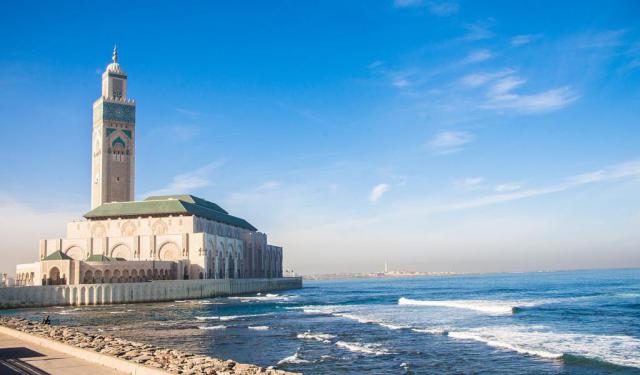
Exploring Casablanca New Town On Foot
General Hubert Lyautey, the first French Resident-General, famously treated Casablanca as a city to be built rather than preserved, reflecting the colonial mindset that turned a modest port into a modern metropolis
Casablanca is Morocco’s largest city and its main Atlantic port, shaped less by dynasties and monuments than by trade, colonial planning, and rapid modern growth. The site was... view more
Tour Duration: 2 Hours
Travel Distance: 3.9 Km or 2.4 Miles
Casablanca is Morocco’s largest city and its main Atlantic port, shaped less by dynasties and monuments than by trade, colonial planning, and rapid modern growth. The site was... view more
Tour Duration: 2 Hours
Travel Distance: 3.9 Km or 2.4 Miles
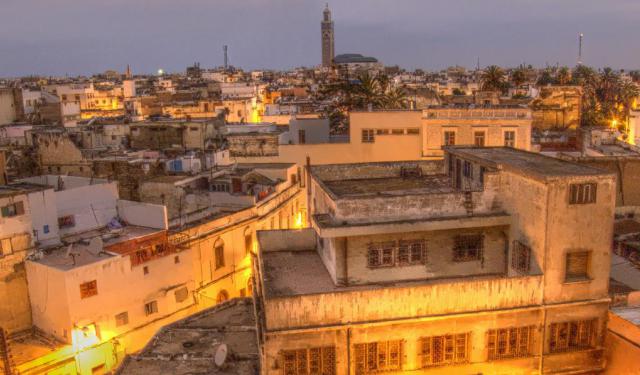
A Walk Through Casablanca Old Town (Medina)
French Army general and colonial administrator Hubert Lyautey viewed the Casablanca old quarter as something to be contained rather than transformed, deliberately building the modern city alongside it. His wise decision left the Old Town intact.
Locally known as the medina, the old town preserves the city’s earliest urban layers, long predating the modern metropolis that surrounds it. The... view more
Tour Duration: 1 Hour
Travel Distance: 1.9 Km or 1.2 Miles
Locally known as the medina, the old town preserves the city’s earliest urban layers, long predating the modern metropolis that surrounds it. The... view more
Tour Duration: 1 Hour
Travel Distance: 1.9 Km or 1.2 Miles
Useful Travel Guides for Planning Your Trip
Casablanca: 15 Shopping Ideas for Travelers
What's more to Casablanca than the famous 1940s movie starring Humphrey Bogart and Ingrid Bergman? Although "much water has flown under the bridge" since, there are things in Morocco still not fading away with time, just as those desert colors. Here are some of the items worth noting...