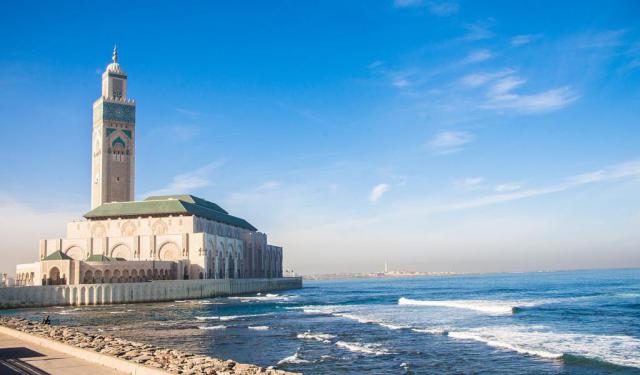


Audio Guide: Casablanca Introduction Walking Tour (Self Guided), Casablanca
General Hubert Lyautey, the first French Resident-General, famously treated Casablanca as a city to be built rather than preserved, reflecting the colonial mindset that turned a modest port into a modern metropolis
Casablanca is Morocco’s largest city and its main Atlantic port, shaped less by dynasties and monuments than by trade, colonial planning, and rapid modern growth. The site was known in antiquity as Anfa, a Berber settlement that later became a small port linked to regional commerce. During the Middle Ages, Anfa gained a reputation as a base for pirates, which brought it into conflict with European powers. In 1468, the Portuguese destroyed the town in retaliation for attacks on their shipping, leaving the site largely abandoned for several centuries.
The modern name Casablanca comes from the Portuguese Casa Branca, meaning “White House”, a reference to a prominent white building visible from the sea when the Portuguese briefly returned in the early 16th century. After abandoning the area again, the site remained sparsely populated until the 18th century, when Sultan Mohammed ben Abdallah encouraged resettlement and reconstruction.
Casablanca’s decisive transformation came in the late 19th and early 20th centuries. Its natural anchorage and strategic Atlantic position attracted European merchants, especially the French. Following the French bombardment of the city in 1907 and the establishment of the French Protectorate in 1912, Casablanca was redesigned on a large scale. French urban planners laid out wide boulevards, industrial zones, and port infrastructure, turning the city into Morocco’s primary economic engine.
After Moroccan independence in 1956, Casablanca retained its central economic role. Today, Casablanca is a city of contrasts: colonial-era architecture stands alongside modern high-rises, and traditional neighborhoods exist next to business districts and port facilities. Its history reflects Morocco’s encounter with Atlantic trade, European colonialism, and post-independence modernization.
Walking through central Casablanca, visitors pass United Nations Square, a lively crossroads linking the old medina and modern boulevards. Nearby, Mohammed V Square opens onto monumental civic buildings from the French Protectorate era. The Casablanca Cathedral recalls the city’s colonial past. A short walk leads to the Habous quarter, where the New Town Market and the elegant Mahkamat al-Pasha building blend traditional Moroccan design with early twentieth-century planning.
Seen through Lyautey’s approach, Casablanca still feels like a city in progress. It doesn’t rely on a single postcard monument. Instead, it reveals itself through planned boulevards, working districts, and the constant push of a port city remaking itself.
Casablanca is Morocco’s largest city and its main Atlantic port, shaped less by dynasties and monuments than by trade, colonial planning, and rapid modern growth. The site was known in antiquity as Anfa, a Berber settlement that later became a small port linked to regional commerce. During the Middle Ages, Anfa gained a reputation as a base for pirates, which brought it into conflict with European powers. In 1468, the Portuguese destroyed the town in retaliation for attacks on their shipping, leaving the site largely abandoned for several centuries.
The modern name Casablanca comes from the Portuguese Casa Branca, meaning “White House”, a reference to a prominent white building visible from the sea when the Portuguese briefly returned in the early 16th century. After abandoning the area again, the site remained sparsely populated until the 18th century, when Sultan Mohammed ben Abdallah encouraged resettlement and reconstruction.
Casablanca’s decisive transformation came in the late 19th and early 20th centuries. Its natural anchorage and strategic Atlantic position attracted European merchants, especially the French. Following the French bombardment of the city in 1907 and the establishment of the French Protectorate in 1912, Casablanca was redesigned on a large scale. French urban planners laid out wide boulevards, industrial zones, and port infrastructure, turning the city into Morocco’s primary economic engine.
After Moroccan independence in 1956, Casablanca retained its central economic role. Today, Casablanca is a city of contrasts: colonial-era architecture stands alongside modern high-rises, and traditional neighborhoods exist next to business districts and port facilities. Its history reflects Morocco’s encounter with Atlantic trade, European colonialism, and post-independence modernization.
Walking through central Casablanca, visitors pass United Nations Square, a lively crossroads linking the old medina and modern boulevards. Nearby, Mohammed V Square opens onto monumental civic buildings from the French Protectorate era. The Casablanca Cathedral recalls the city’s colonial past. A short walk leads to the Habous quarter, where the New Town Market and the elegant Mahkamat al-Pasha building blend traditional Moroccan design with early twentieth-century planning.
Seen through Lyautey’s approach, Casablanca still feels like a city in progress. It doesn’t rely on a single postcard monument. Instead, it reveals itself through planned boulevards, working districts, and the constant push of a port city remaking itself.
How it works: Download the app "GPSmyCity: Walks in 1K+ Cities" from Apple App Store or Google Play Store to your mobile phone or tablet. The app turns your mobile device into a personal tour guide and its built-in GPS navigation functions guide you from one tour stop to next. The app works offline, so no data plan is needed when traveling abroad.
Casablanca Introduction Walking Tour Map
Guide Name: Casablanca Introduction Walking Tour
Guide Location: Morocco » Casablanca (See other walking tours in Casablanca)
Guide Type: Self-guided Walking Tour (Sightseeing)
# of Attractions: 8
Tour Duration: 2 Hour(s)
Travel Distance: 3.9 Km or 2.4 Miles
Author: EmmaS
Sight(s) Featured in This Guide:
Guide Location: Morocco » Casablanca (See other walking tours in Casablanca)
Guide Type: Self-guided Walking Tour (Sightseeing)
# of Attractions: 8
Tour Duration: 2 Hour(s)
Travel Distance: 3.9 Km or 2.4 Miles
Author: EmmaS
Sight(s) Featured in This Guide:
- United Nations Square
- Casablanca Cathedral
- Parc de la Ligue Arabe (Arab League Park)
- Place Mohammed V (Mohammed V Square)
- Notre Dame de Lourdes Cathedral (Our Lady of Lourdes Cathedral)
- Royal Palace
- Mahkamat al-Pasha Building (Pasha's Courthouse)
- Habous Souq (New Town Market)
1) United Nations Square
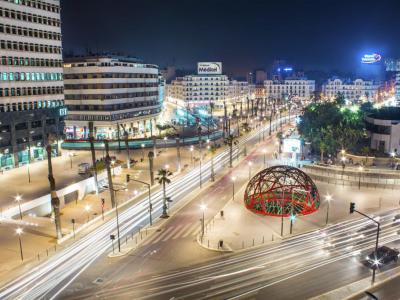
Central to the history of modern Casablanca is United Nations Square. Before French colonization, this area was known as Grand Market. In 1908, after the French bombardment and occupation of Casablanca, the French commander Charles Martial Joseph Dessigny ordered the construction of a clock tower here, marking the start of significant colonial intervention.
The space was soon named “Square of the Clock”. A planning team led by General Hubert Lyautey and architect Henri Prost then reconfigured the square and much of the town according to new urban designs. The original clock tower was demolished in 1948 amid mid-century urban changes, primarily to open the way for the Royal Armed Forces Avenue, laid out under planner Michel Écochard. A new clock tower, modeled after the original, was constructed at the south of the square in 1993.
Another visual marker within the evolving square is the “Globe” sculpture, designed in 1975 by architect Jean-François Zevaco. It is located within the open central area of the square, closer to the tram lines. Along the northern edge, the square opens toward Avenue of the Royal Armed Forces, which runs along the boundary of the old medina.
The space was soon named “Square of the Clock”. A planning team led by General Hubert Lyautey and architect Henri Prost then reconfigured the square and much of the town according to new urban designs. The original clock tower was demolished in 1948 amid mid-century urban changes, primarily to open the way for the Royal Armed Forces Avenue, laid out under planner Michel Écochard. A new clock tower, modeled after the original, was constructed at the south of the square in 1993.
Another visual marker within the evolving square is the “Globe” sculpture, designed in 1975 by architect Jean-François Zevaco. It is located within the open central area of the square, closer to the tram lines. Along the northern edge, the square opens toward Avenue of the Royal Armed Forces, which runs along the boundary of the old medina.
2) Casablanca Cathedral (must see)
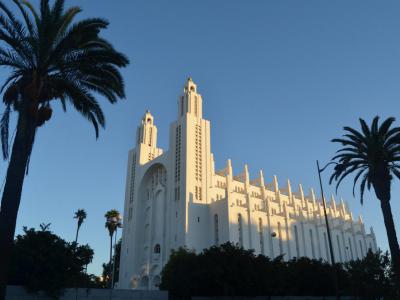
As long as the French ran the show in Morocco, a grand Catholic church in Casablanca was not inconceivable. The building commonly called a cathedral was never technically one, as the city has never been the seat of a bishop. Yet its scale and prominence earned it that popular name. Officially, it was the Church of the Sacred Heart, conceived to serve the city’s sizeable Catholic community during the French Protectorate.
After Morocco gained independence in 1956 and the European Catholic presence rapidly declined, the church ceased to function as a place of worship. In subsequent decades the building was deconsecrated and repurposed, at times housing a school and later becoming a cultural venue and exhibition space. Today it attracts visitors for its beautiful architecture and occasional art and cultural events.
Located beside the green expanse of the Arab League Park, the Church of the Sacred Heart was designed by French architect Paul Tournon and built beginning in 1930, with completion in the early 1950s. Its style combines Art Deco with neo-Gothic influences and subtle Moorish references, especially evident in the facade’s twin towers, which have square silhouettes reminiscent of minarets.
The interior features a long nave lined with stained-glass windows. Visitors are sometimes allowed to climb the towers for panoramic views over Casablanca. Though the Church of the Sacred Heart no longer serves a religious function, its scale, white exterior, and architectural fusion make it one of the city’s most memorable colonial-era landmarks.
After Morocco gained independence in 1956 and the European Catholic presence rapidly declined, the church ceased to function as a place of worship. In subsequent decades the building was deconsecrated and repurposed, at times housing a school and later becoming a cultural venue and exhibition space. Today it attracts visitors for its beautiful architecture and occasional art and cultural events.
Located beside the green expanse of the Arab League Park, the Church of the Sacred Heart was designed by French architect Paul Tournon and built beginning in 1930, with completion in the early 1950s. Its style combines Art Deco with neo-Gothic influences and subtle Moorish references, especially evident in the facade’s twin towers, which have square silhouettes reminiscent of minarets.
The interior features a long nave lined with stained-glass windows. Visitors are sometimes allowed to climb the towers for panoramic views over Casablanca. Though the Church of the Sacred Heart no longer serves a religious function, its scale, white exterior, and architectural fusion make it one of the city’s most memorable colonial-era landmarks.
3) Parc de la Ligue Arabe (Arab League Park)
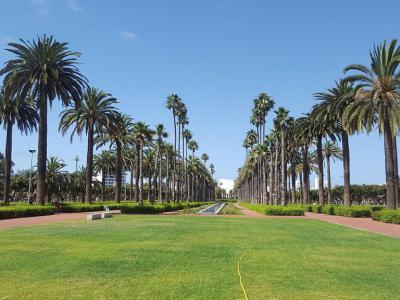
Arab League Park is the city’s largest urban park, forming one of the main green corridors of central Casablanca. The park dates to the early years of the French Protectorate. In 1913, French architect Albert Laprade was commissioned to redesign what was then the central city park. The space was originally named Lyautey Park, in honor of General Hubert Lyautey, the Resident-General of Morocco. At his direction, architectural elements from the demolished Portuguese Prison of Anfa, notably stone arches, were relocated to the park and reused to support pergolas.
Designed as a deliberate contrast to the surrounding boulevards, the park functions as a broad green oasis. The main north–south axis is decorated with a line of palm trees, while shaded paths, lawns, and planting beds structure the interior. A central pond with water lilies and ornamental plantings adds to the sense of calm, alongside a variety of exotic and Mediterranean species.
A 2018 restoration modernized pathways, lighting, and landscaping. Near the intersections of Hassan II Boulevard and Moulay Youssef Avenue, close to Arab League Square, several cafes with outdoor terraces offer convenient places to pause after exploring the park. Today, the park is well maintained and widely used by residents for walking, relaxation, and informal gatherings throughout the day.
Designed as a deliberate contrast to the surrounding boulevards, the park functions as a broad green oasis. The main north–south axis is decorated with a line of palm trees, while shaded paths, lawns, and planting beds structure the interior. A central pond with water lilies and ornamental plantings adds to the sense of calm, alongside a variety of exotic and Mediterranean species.
A 2018 restoration modernized pathways, lighting, and landscaping. Near the intersections of Hassan II Boulevard and Moulay Youssef Avenue, close to Arab League Square, several cafes with outdoor terraces offer convenient places to pause after exploring the park. Today, the park is well maintained and widely used by residents for walking, relaxation, and informal gatherings throughout the day.
4) Place Mohammed V (Mohammed V Square) (must see)
On the grounds once occupied by French colonial military barracks, Mohammed V Square was built and now is Casablanca’s main civic square. Popularly known as “Pigeons’ Square”, it is rarely seen without flocks of pigeons covering the open space, a part of its identity and rhythm. Officially named after Mohammed V, Morocco’s widely revered former king, the square has carried several earlier names: France Square, Administrative Square, and Marshal Lyautey Square, reflecting a different political moment.
The square was planned from 1916 onward under the direction of Resident-General Hubert Lyautey. Lyautey modeled it after Place Stanislas in Nancy, France, his hometown.
Over the following decades, the space was framed by a coherent ensemble of public buildings constructed in a restrained Moorish Revival style, combining modern construction with arcades, arches, and decorative references to traditional Moroccan architecture. On the southern side stands the Central Post Office, completed in 1920. The Law Courts, built in 1923, occupy the eastern edge, their long facade emphasizing the square’s formal axis. Along the northern edge rises Casablanca City Hall, completed in the 1930s, which continues to house municipal offices and reinforces the square’s role as the administrative heart of the city.
At the center of the square sits a large circular fountain. In the early 2020s, the square gained a contemporary counterpart with the opening of the Grand Theater of Casablanca, designed by Christian de Portzamparc, which anchors one western edge of the plaza.
The square was planned from 1916 onward under the direction of Resident-General Hubert Lyautey. Lyautey modeled it after Place Stanislas in Nancy, France, his hometown.
Over the following decades, the space was framed by a coherent ensemble of public buildings constructed in a restrained Moorish Revival style, combining modern construction with arcades, arches, and decorative references to traditional Moroccan architecture. On the southern side stands the Central Post Office, completed in 1920. The Law Courts, built in 1923, occupy the eastern edge, their long facade emphasizing the square’s formal axis. Along the northern edge rises Casablanca City Hall, completed in the 1930s, which continues to house municipal offices and reinforces the square’s role as the administrative heart of the city.
At the center of the square sits a large circular fountain. In the early 2020s, the square gained a contemporary counterpart with the opening of the Grand Theater of Casablanca, designed by Christian de Portzamparc, which anchors one western edge of the plaza.
5) Notre Dame de Lourdes Cathedral (Our Lady of Lourdes Cathedral)
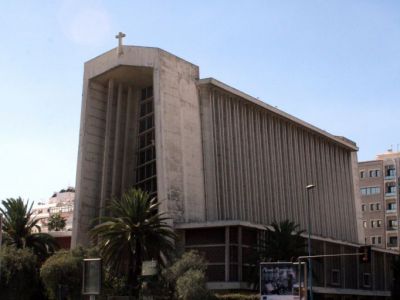
Rising like a massive slab of sculpted concrete, the Church of Our Lady of Lourdes is one of Casablanca’s most unconventional religious buildings. Its stark modernist form, often compared to a monumental industrial radiator, leaves little doubt that this is not a traditional church. A small crucifix perched high above the structure is the only immediate clue to its function. Designed in a style close to modernism with brutalist tendencies, it remains unlike any other church in Morocco.
Step inside, however, and the atmosphere changes completely. The interior is dominated by towering stained-glass walls created by French artist Gabriel Loire, covering more than 8,000 square feet and composed of deep blues and reds arranged with geometric precision. Rather than narrative scenes, the windows present a symbolic visual language inspired by the life of the Virgin Mary, transforming light itself into the building’s primary decorative element.
In the church courtyard, a replica of the Grotto of Lourdes recalls the Marian apparitions experienced by Bernadette Soubirous in France. The church is no longer regularly used for Catholic worship, but remains accessible to visitors. It is valued primarily as a landmark of postwar modern religious architecture.
Step inside, however, and the atmosphere changes completely. The interior is dominated by towering stained-glass walls created by French artist Gabriel Loire, covering more than 8,000 square feet and composed of deep blues and reds arranged with geometric precision. Rather than narrative scenes, the windows present a symbolic visual language inspired by the life of the Virgin Mary, transforming light itself into the building’s primary decorative element.
In the church courtyard, a replica of the Grotto of Lourdes recalls the Marian apparitions experienced by Bernadette Soubirous in France. The church is no longer regularly used for Catholic worship, but remains accessible to visitors. It is valued primarily as a landmark of postwar modern religious architecture.
6) Royal Palace
The Royal Palace of Casablanca is one of Morocco’s official royal residences and forms part of a wider network of palaces used by the Moroccan monarchy across the country. Established during the period of the French Protectorate, the palace reflects the continued importance of Casablanca as Morocco’s economic capital, even though it has never been the primary seat of royal power.
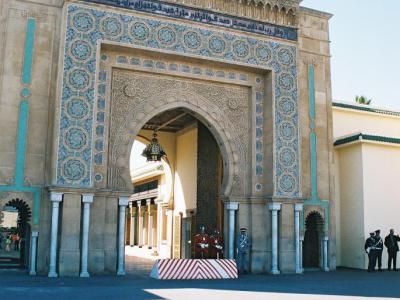
Architecturally, the palace follows traditional Moroccan royal design. High walls enclose a complex organized around courtyards and gardens, with decorative tilework, carved plaster, and water features forming the core of the design. Although comparisons are sometimes made to Andalusian palaces such as the Alhambra, the Casablanca palace is firmly rooted in Moroccan court architecture, where privacy, enclosure, and controlled access are essential elements.
What visitors encounter is the palace exterior and its ceremonial setting. In front of the palace lies a broad open esplanade, often referred to as the Mechouar, lined with palm trees and fountains. This space offers clear views of the monumental entrance gates, decorated with geometric tilework and carved details.
The palace is guarded at all times by uniformed royal guards, and access beyond the gates is restricted. There are no public visits to the interior, as the complex functions as a working royal residence used during official stays in the city. For visitors, the experience lies in observing the architecture, the ceremonial space, and the atmosphere of royal authority from outside.
Architecturally, the palace follows traditional Moroccan royal design. High walls enclose a complex organized around courtyards and gardens, with decorative tilework, carved plaster, and water features forming the core of the design. Although comparisons are sometimes made to Andalusian palaces such as the Alhambra, the Casablanca palace is firmly rooted in Moroccan court architecture, where privacy, enclosure, and controlled access are essential elements.
What visitors encounter is the palace exterior and its ceremonial setting. In front of the palace lies a broad open esplanade, often referred to as the Mechouar, lined with palm trees and fountains. This space offers clear views of the monumental entrance gates, decorated with geometric tilework and carved details.
The palace is guarded at all times by uniformed royal guards, and access beyond the gates is restricted. There are no public visits to the interior, as the complex functions as a working royal residence used during official stays in the city. For visitors, the experience lies in observing the architecture, the ceremonial space, and the atmosphere of royal authority from outside.
7) Mahkamat al-Pasha Building (Pasha's Courthouse) (must see)
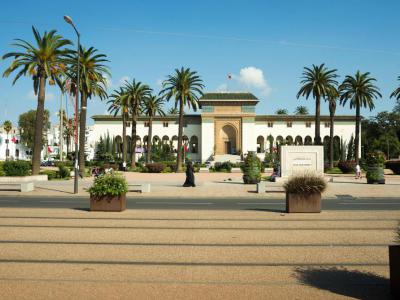
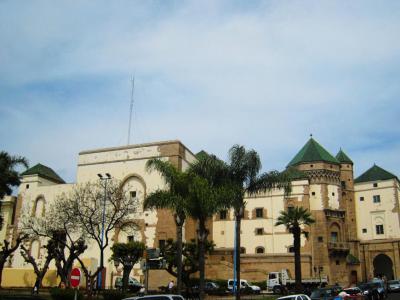
The Pasha’s Courthouse is one of the most grandiose historic buildings in Casablanca, located in the Habous Quarter, an area conceived during the French Protectorate as a “New Medina”. Designed to combine traditional Moroccan urban forms with modern planning principles, Habous was intended as a center for religious, cultural, and civic life, and the courthouse was conceived as one of its key institutional landmarks.
The project was commissioned in January 1930 by At-Tayyib al-Moqri, the Pasha of Casablanca, a high-ranking administrative official and governor, son of the influential Grand Vizier, Mohammed al-Moqri. Plans called for a multifunctional complex that would bring together civil courtrooms, administrative offices, and an official residence for the Pasha. Although the concept dates to the early 1930s, construction took place later, between 1941 and 1943, during World War II.
The building was designed by Auguste Cadet, a prominent French architect active in Casablanca during the Protectorate period. Executed in a Moorish-Andalusian revival style, the courthouse deliberately evokes the appearance of a historic palace rather than a modern government facility. Wartime shortages of industrial materials contributed to this choice, leading to extensive use of traditional Moroccan construction techniques and craftsmanship. Architectural highlights include elaborate zellij tilework, carved cedarwood ceilings and doors, finely chiseled stucco decoration, slender arches, and green-tiled roofs.
Today, the Pasha’s Courthouse remains an active government building, and public access to the interior is restricted to official visits or special arrangements. Even so, its richly decorated exterior and harmonious proportions make it one of the architectural highlights of the Habous Quarter.
The project was commissioned in January 1930 by At-Tayyib al-Moqri, the Pasha of Casablanca, a high-ranking administrative official and governor, son of the influential Grand Vizier, Mohammed al-Moqri. Plans called for a multifunctional complex that would bring together civil courtrooms, administrative offices, and an official residence for the Pasha. Although the concept dates to the early 1930s, construction took place later, between 1941 and 1943, during World War II.
The building was designed by Auguste Cadet, a prominent French architect active in Casablanca during the Protectorate period. Executed in a Moorish-Andalusian revival style, the courthouse deliberately evokes the appearance of a historic palace rather than a modern government facility. Wartime shortages of industrial materials contributed to this choice, leading to extensive use of traditional Moroccan construction techniques and craftsmanship. Architectural highlights include elaborate zellij tilework, carved cedarwood ceilings and doors, finely chiseled stucco decoration, slender arches, and green-tiled roofs.
Today, the Pasha’s Courthouse remains an active government building, and public access to the interior is restricted to official visits or special arrangements. Even so, its richly decorated exterior and harmonious proportions make it one of the architectural highlights of the Habous Quarter.
8) Habous Souq (New Town Market)
The Habous Souk, often referred to as the New Town Market, was designed to resemble a traditional Moroccan medina, combining orderly urban planning with historical architectural forms. It was conceived as a cleaner, more structured alternative to the old medina, without abandoning local building traditions.
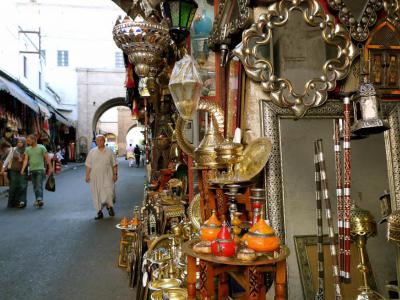
Unlike the dense and sometimes chaotic feel of the old medina, the Habous Souk is laid out along wide, navigable streets and shaded arcades. The market offers a wide range of traditional goods. Visitors will find shops selling carpets, leather slippers, clothing, brassware, ceramics, and handcrafted jewelry, alongside bookshops, including well-known sellers of religious texts and Arabic literature. Small cafes, bakeries, and traditional pastry shops are woven into the fabric of the souk.
The atmosphere here is noticeably more relaxed than in the old medina. Shopkeepers tend to be less insistent, browsing is unhurried, and conversations often drift toward tea rather than transactions. While bargaining still exists, it is generally low-key. The Habous Souk is open daily during normal daytime and evening hours, though individual shop schedules vary, and many close for prayer times or early in the evening.
Unlike the dense and sometimes chaotic feel of the old medina, the Habous Souk is laid out along wide, navigable streets and shaded arcades. The market offers a wide range of traditional goods. Visitors will find shops selling carpets, leather slippers, clothing, brassware, ceramics, and handcrafted jewelry, alongside bookshops, including well-known sellers of religious texts and Arabic literature. Small cafes, bakeries, and traditional pastry shops are woven into the fabric of the souk.
The atmosphere here is noticeably more relaxed than in the old medina. Shopkeepers tend to be less insistent, browsing is unhurried, and conversations often drift toward tea rather than transactions. While bargaining still exists, it is generally low-key. The Habous Souk is open daily during normal daytime and evening hours, though individual shop schedules vary, and many close for prayer times or early in the evening.
Walking Tours in Casablanca, Morocco

Create Your Own Walk in Casablanca
Creating your own self-guided walk in Casablanca is easy and fun. Choose the city attractions that you want to see and a walk route map will be created just for you. You can even set your hotel as the start point of the walk.
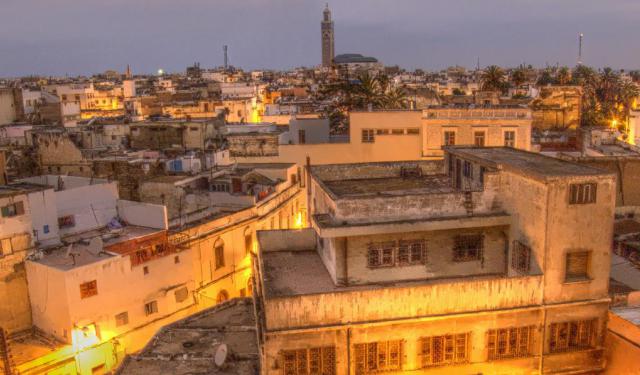
Casablanca Old Town Walking Tour
French Army general and colonial administrator Hubert Lyautey viewed the Casablanca old quarter as something to be contained rather than transformed, deliberately building the modern city alongside it. His wise decision left the Old Town intact.
Locally known as the medina, the old town preserves the city’s earliest urban layers, long predating the modern metropolis that surrounds it. The... view more
Tour Duration: 1 Hour(s)
Travel Distance: 1.9 Km or 1.2 Miles
Locally known as the medina, the old town preserves the city’s earliest urban layers, long predating the modern metropolis that surrounds it. The... view more
Tour Duration: 1 Hour(s)
Travel Distance: 1.9 Km or 1.2 Miles
Useful Travel Guides for Planning Your Trip
Casablanca: 15 Shopping Ideas for Travelers
What's more to Casablanca than the famous 1940s movie starring Humphrey Bogart and Ingrid Bergman? Although "much water has flown under the bridge" since, there are things in Morocco still not fading away with time, just as those desert colors. Here are some of the items worth noting...
The Most Popular Cities
/ view all