

Audio Guide: Casablanca Old Town Walking Tour (Self Guided), Casablanca
French Army general and colonial administrator Hubert Lyautey viewed the Casablanca old quarter as something to be contained rather than transformed, deliberately building the modern city alongside it. His wise decision left the Old Town intact.
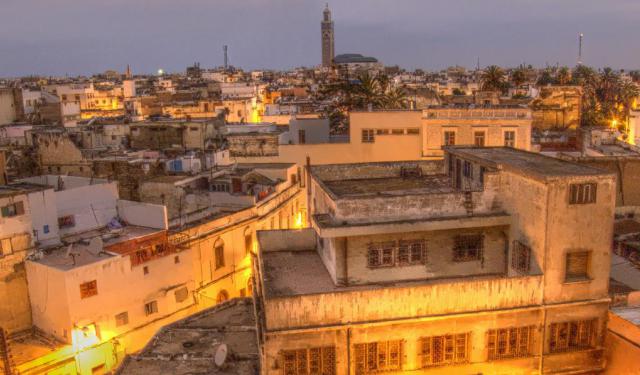
Locally known as the medina, the old town preserves the city’s earliest urban layers, long predating the modern metropolis that surrounds it. The word medina comes from Arabic, meaning simply “city”, but in North African usage it refers specifically to the historic core.
The story of Casablanca’s Old Town begins with Anfa, a Berber settlement established in antiquity on a sheltered Atlantic inlet. By the Middle Ages, Anfa had become a modest port engaged in regional trade, but it also gained a reputation as a base for corsairs. This notoriety drew the attention of Portugal, which destroyed the town in 1468 to protect its shipping routes. For centuries afterward, the site lay largely abandoned.
The old town as it exists today began to take shape in the 18th century, when the town was rebuilt. Defensive walls were erected, gates controlled access, and the street network developed organically. Small workshops, bakeries, and markets were woven directly into residential streets, making the old town a self-contained urban unit.
During the 19th century, the Old Town became increasingly crowded as port activity expanded. European merchants, Jewish traders, and Muslim craftsmen lived and worked in close proximity, often within the same streets. Religious buildings, mosques, zawiyas, and later a church, were inserted into the existing fabric.
Under French rule in the early 20th century, the old town was physically altered but not redesigned. Sections of the walls were demolished or pierced with new gates, including ceremonial entrances meant to frame colonial authority. Infrastructure was minimally upgraded, but large-scale reconstruction was avoided. As new European quarters rose nearby, the Old Town remained a working-class neighborhood tied to fishing, port labor, and informal commerce.
Walking through Casablanca’s Old Town, visitors pass beneath the Medina Gate near the Clock Tower, where colonial planning meets older urban rhythms. Narrow lanes lead past the modest Church of San Buenaventura and toward the Sidi Allal el-Kairouani Tomb, a quiet spiritual landmark. The walk often ends at Rick’s Cafe Casablanca, a cinematic reinterpretation of nostalgia set against the Atlantic.
Stepping through the Medina Gate reveals an immediate transition from the sound of modern Morocco to the ancient silence of the old quarter. Lyautey’s strategy to preserve rather than transform the old town resulted in a city with two distinct elements that coexist. The past remains central to the city's identity, functioning as the vital core around which the metropolis developed.
Locally known as the medina, the old town preserves the city’s earliest urban layers, long predating the modern metropolis that surrounds it. The word medina comes from Arabic, meaning simply “city”, but in North African usage it refers specifically to the historic core.
The story of Casablanca’s Old Town begins with Anfa, a Berber settlement established in antiquity on a sheltered Atlantic inlet. By the Middle Ages, Anfa had become a modest port engaged in regional trade, but it also gained a reputation as a base for corsairs. This notoriety drew the attention of Portugal, which destroyed the town in 1468 to protect its shipping routes. For centuries afterward, the site lay largely abandoned.
The old town as it exists today began to take shape in the 18th century, when the town was rebuilt. Defensive walls were erected, gates controlled access, and the street network developed organically. Small workshops, bakeries, and markets were woven directly into residential streets, making the old town a self-contained urban unit.
During the 19th century, the Old Town became increasingly crowded as port activity expanded. European merchants, Jewish traders, and Muslim craftsmen lived and worked in close proximity, often within the same streets. Religious buildings, mosques, zawiyas, and later a church, were inserted into the existing fabric.
Under French rule in the early 20th century, the old town was physically altered but not redesigned. Sections of the walls were demolished or pierced with new gates, including ceremonial entrances meant to frame colonial authority. Infrastructure was minimally upgraded, but large-scale reconstruction was avoided. As new European quarters rose nearby, the Old Town remained a working-class neighborhood tied to fishing, port labor, and informal commerce.
Walking through Casablanca’s Old Town, visitors pass beneath the Medina Gate near the Clock Tower, where colonial planning meets older urban rhythms. Narrow lanes lead past the modest Church of San Buenaventura and toward the Sidi Allal el-Kairouani Tomb, a quiet spiritual landmark. The walk often ends at Rick’s Cafe Casablanca, a cinematic reinterpretation of nostalgia set against the Atlantic.
Stepping through the Medina Gate reveals an immediate transition from the sound of modern Morocco to the ancient silence of the old quarter. Lyautey’s strategy to preserve rather than transform the old town resulted in a city with two distinct elements that coexist. The past remains central to the city's identity, functioning as the vital core around which the metropolis developed.
How it works: Download the app "GPSmyCity: Walks in 1K+ Cities" from Apple App Store or Google Play Store to your mobile phone or tablet. The app turns your mobile device into a personal tour guide and its built-in GPS navigation functions guide you from one tour stop to next. The app works offline, so no data plan is needed when traveling abroad.
Casablanca Old Town Walking Tour Map
Guide Name: Casablanca Old Town Walking Tour
Guide Location: Morocco » Casablanca (See other walking tours in Casablanca)
Guide Type: Self-guided Walking Tour (Sightseeing)
# of Attractions: 8
Tour Duration: 1 Hour(s)
Travel Distance: 1.9 Km or 1.2 Miles
Author: EmmaS
Sight(s) Featured in This Guide:
Guide Location: Morocco » Casablanca (See other walking tours in Casablanca)
Guide Type: Self-guided Walking Tour (Sightseeing)
# of Attractions: 8
Tour Duration: 1 Hour(s)
Travel Distance: 1.9 Km or 1.2 Miles
Author: EmmaS
Sight(s) Featured in This Guide:
- Clock Tower and Medina Gate
- Rue Dar el Makhzen (Dar el Makhzen Street)
- Jamaa as-Chleuh (Fig Tree Mosque)
- Church of San Buenaventura
- Ettedgui Synagogue
- Sqala Bastion and La Sqala Restaurant
- Sidi Allal el - Kairouani Tomb
- Rick's Café Casablanca
1) Clock Tower and Medina Gate
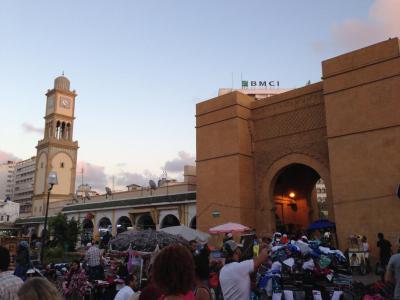
After serving in Algeria, where he supervised the construction of a clock tower, the French officer and engineer Charles Martial Joseph Dessigny was assigned to Casablanca following the French military occupation of the city in 1907. One of his earliest and most symbolic projects in Casablanca was the construction of a clock tower at the edge of the old town. Built quickly and completed in 1909, the tower was intended to mark the entrance to the historic quarter while asserting a new administrative order.
The original Clock Tower deliberately echoed the form of a minaret. Square in plan and vertically emphatic, it rose above its surroundings with four clock faces marked in Roman numerals. This visual resemblance was not accidental. Positioned at the threshold between the European quarters and the medina, the tower signaled the arrival of French authority.
Over time, structural instability became an issue. By the mid-20th century, the tower was considered unsafe and was demolished in 1948. For decades, only photographs and memory preserved its image. In 1993, a replica of Dessigny’s tower was erected nearby, restoring the landmark to the urban landscape, though without its original political charge. Today, the replica Clock Tower stands at the northeastern edge of United Nations Square, beside the Old Medina Gate.
The nearby gate predates the colonial period and historically controlled access to the walled town, regulating the movement of people and goods between the port, the market streets, and the residential quarters inside. During the early French period, the gate was reshaped and visually emphasized. Today, small shops and informal stalls continue this long tradition of exchange.
The original Clock Tower deliberately echoed the form of a minaret. Square in plan and vertically emphatic, it rose above its surroundings with four clock faces marked in Roman numerals. This visual resemblance was not accidental. Positioned at the threshold between the European quarters and the medina, the tower signaled the arrival of French authority.
Over time, structural instability became an issue. By the mid-20th century, the tower was considered unsafe and was demolished in 1948. For decades, only photographs and memory preserved its image. In 1993, a replica of Dessigny’s tower was erected nearby, restoring the landmark to the urban landscape, though without its original political charge. Today, the replica Clock Tower stands at the northeastern edge of United Nations Square, beside the Old Medina Gate.
The nearby gate predates the colonial period and historically controlled access to the walled town, regulating the movement of people and goods between the port, the market streets, and the residential quarters inside. During the early French period, the gate was reshaped and visually emphasized. Today, small shops and informal stalls continue this long tradition of exchange.
2) Rue Dar el Makhzen (Dar el Makhzen Street)
Dar el-Makhzen Street traces a quieter, more restrained side of Casablanca’s historic quarter, defined by high walls, guarded entrances, and long, unbroken facades. Its name comes from the Old Makhzen, an early royal administrative complex at the west end of the street, that predates Casablanca’s large-scale colonial redevelopment. Before the construction of the Royal Palace in the Habous district in the 1920s, this area functioned as the city’s principal seat of power. Today, the Old Makhzen royal complex is strictly closed to the public and continues to operate as a secure royal annex.
Roughly midway along Dar el-Makhzen Street, near its junctions with the surrounding medina lanes, stands a historic mosque commonly referred to as the Dar al-Makhzen Mosque, named for its proximity to the royal complex. Founded in the late 18th century under Sultan Sidi Mohammed ben Abdallah, the mosque served the population living and working around the administrative quarter during the period when the city was being rebuilt. As with most functioning mosques in Morocco, its prayer spaces are closed to non-Muslims, though its exterior forms part of the historic streetscape of the old town.
From Dar el-Makhzen Street, the route continues eastward onto Sidi Bousmara Street, leading toward the shrine of Sidi Bousmara, a local saint deeply embedded in Casablanca’s spiritual geography. According to local tradition, he is associated with the appearance of a freshwater spring, a vital resource for the early survival of the city. The shrine remains a marabout, or holy man’s tomb.
Roughly midway along Dar el-Makhzen Street, near its junctions with the surrounding medina lanes, stands a historic mosque commonly referred to as the Dar al-Makhzen Mosque, named for its proximity to the royal complex. Founded in the late 18th century under Sultan Sidi Mohammed ben Abdallah, the mosque served the population living and working around the administrative quarter during the period when the city was being rebuilt. As with most functioning mosques in Morocco, its prayer spaces are closed to non-Muslims, though its exterior forms part of the historic streetscape of the old town.
From Dar el-Makhzen Street, the route continues eastward onto Sidi Bousmara Street, leading toward the shrine of Sidi Bousmara, a local saint deeply embedded in Casablanca’s spiritual geography. According to local tradition, he is associated with the appearance of a freshwater spring, a vital resource for the early survival of the city. The shrine remains a marabout, or holy man’s tomb.
3) Jamaa as-Chleuh (Fig Tree Mosque)
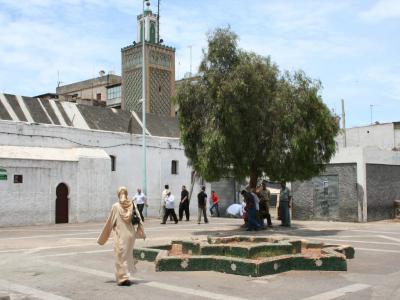
The Fig Tree Mosque is linked to a fig tree that once stood beside a modest prayer space serving a small local community. The mosque's history reflects the city’s late precolonial growth and its diverse population. Although the original fig tree is no longer identifiable, it survives today through tradition and memory.
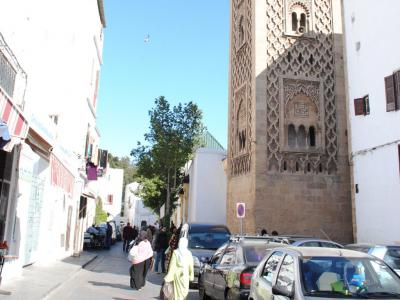
According to local tradition, the mosque was founded in 1899 by Mohammed Senhadji, a native of the Souss region in southern Morocco, from which many Berber migrants moved to Casablanca in the late 19th century. As Casablanca’s port expanded and migration increased, the congregation grew, and the mosque was enlarged to serve the Berber-speaking migrants.
Architecturally, the mosque’s minaret is noted for its carved geometric patterns, which echo decorative traditions later seen on the minaret of the Hassan II Mosque. Square in plan, it follows the traditional Moroccan form. Unlike many smaller neighborhood mosques, the Fig Tree Mosque functions as a Friday mosque.
According to local tradition, the mosque was founded in 1899 by Mohammed Senhadji, a native of the Souss region in southern Morocco, from which many Berber migrants moved to Casablanca in the late 19th century. As Casablanca’s port expanded and migration increased, the congregation grew, and the mosque was enlarged to serve the Berber-speaking migrants.
Architecturally, the mosque’s minaret is noted for its carved geometric patterns, which echo decorative traditions later seen on the minaret of the Hassan II Mosque. Square in plan, it follows the traditional Moroccan form. Unlike many smaller neighborhood mosques, the Fig Tree Mosque functions as a Friday mosque.
4) Church of San Buenaventura
Saint Bonaventure, born as Giovanni di Fidanza in 1217, was one of the great theologians of the Franciscan Order. According to tradition, Saint Francis of Assisi cured him as a child and, witnessing his recovery, exclaimed “O buona ventura!”. The expression, meaning “good fortune”, was later adopted as Giovanni’s name, Bonaventure.
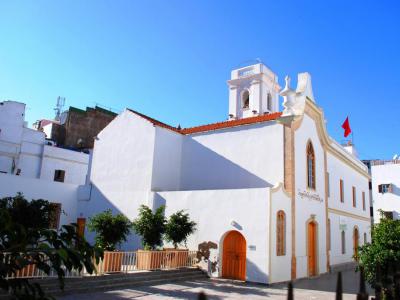
In the late 19th century, as Casablanca’s port expanded and its foreign communities grew, Spanish Franciscan missionaries established a church in the Old Town dedicated to Saint Bonaventure. Founded around 1890, the church became a key place of worship for the Spanish Catholic community. However, following Moroccan independence and the gradual departure of many European residents, the church ceased regular religious services in 1968.
Architecturally modest and functional, Saint Bonaventure reflects late 19th-century missionary church design, with simple forms adapted to the dense fabric of the Old Town rather than overt stylistic display.
Today, the site operates as a youth house and neighborhood resource hub, hosting sports activities, artisanal workshops, and cultural programs aimed at residents of the Old Town. While its religious role has ended, the building remains a significant landmark, illustrating Casablanca’s layered history and the city’s contemporary approach to preserving heritage.
In the late 19th century, as Casablanca’s port expanded and its foreign communities grew, Spanish Franciscan missionaries established a church in the Old Town dedicated to Saint Bonaventure. Founded around 1890, the church became a key place of worship for the Spanish Catholic community. However, following Moroccan independence and the gradual departure of many European residents, the church ceased regular religious services in 1968.
Architecturally modest and functional, Saint Bonaventure reflects late 19th-century missionary church design, with simple forms adapted to the dense fabric of the Old Town rather than overt stylistic display.
Today, the site operates as a youth house and neighborhood resource hub, hosting sports activities, artisanal workshops, and cultural programs aimed at residents of the Old Town. While its religious role has ended, the building remains a significant landmark, illustrating Casablanca’s layered history and the city’s contemporary approach to preserving heritage.
5) Ettedgui Synagogue
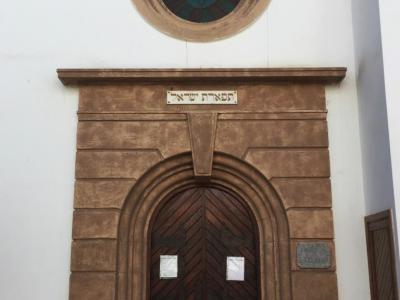
The Ettedgui Synagogue stands as one of the most important witnesses to Casablanca’s Jewish past. It was built in 1920 by the Ettedgui family, a prominent Jewish family active in the city’s commercial life, at a time when Casablanca supported one of the largest Jewish communities in North Africa.
During World War II, the building was damaged in 1942, when Casablanca was affected by Allied bombardments linked to Operation Torch. As the city’s Jewish population declined in the following decades, the synagogue fell into disuse and gradually deteriorated. Restoration efforts began in the late 20th century and gained momentum under King Mohammed VI, as part of a national program dedicated to preserving Morocco’s Jewish heritage.
Architecturally, the synagogue reflects a blend of traditional Moroccan craftsmanship and early 20th-century urban design. The exterior is discreet, in keeping with the dense fabric of the Old Town, while the interior is more expressive, featuring horseshoe arches, carved plasterwork, decorative tile panels, and a central bimah arranged according to Sephardic tradition.
Today, the Ettedgui Synagogue functions both as a place of worship on special occasions and as a heritage and exhibition space. Its displays of photographs, documents, and cultural objects trace the social, religious, and economic history of Casablanca’s Jewish community, allowing the building to serve as both a sacred site and a living archive of the city’s multicultural past.
During World War II, the building was damaged in 1942, when Casablanca was affected by Allied bombardments linked to Operation Torch. As the city’s Jewish population declined in the following decades, the synagogue fell into disuse and gradually deteriorated. Restoration efforts began in the late 20th century and gained momentum under King Mohammed VI, as part of a national program dedicated to preserving Morocco’s Jewish heritage.
Architecturally, the synagogue reflects a blend of traditional Moroccan craftsmanship and early 20th-century urban design. The exterior is discreet, in keeping with the dense fabric of the Old Town, while the interior is more expressive, featuring horseshoe arches, carved plasterwork, decorative tile panels, and a central bimah arranged according to Sephardic tradition.
Today, the Ettedgui Synagogue functions both as a place of worship on special occasions and as a heritage and exhibition space. Its displays of photographs, documents, and cultural objects trace the social, religious, and economic history of Casablanca’s Jewish community, allowing the building to serve as both a sacred site and a living archive of the city’s multicultural past.
6) Sqala Bastion and La Sqala Restaurant
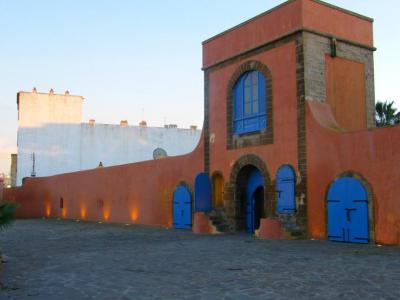
Sqala Bastion is one of the most tangible reminders of Casablanca’s precolonial defenses, dating to the late 18th century, when Sultan Sidi Mohammed ben Abdallah ordered a new line of coastal fortifications to protect the rebuilt city. The structure formed part of the Atlantic-facing wall, designed to control access from the sea at a time when piracy and European naval pressure were constant concerns. Thick stone ramparts, angular gun platforms, and embrasures for artillery reflect a practical military architecture.
Within the restored walls of the bastion operates La Sqala Restaurant, housed discreetly inside the former military compound. The restaurant preserves the original structure while introducing a calm, garden-centered atmosphere. Courtyards filled with citrus trees, tiled paths, and shaded seating soften the severity of the stone walls. From the walls, the view opens across the ocean, offering a rare vantage point where Casablanca’s modern port skyline gives way to open water.
La Sqala is best known for traditional Moroccan cuisine, with menus that highlight classic dishes such as tagines, couscous, and pastilla, alongside a popular Moroccan breakfast served in the mornings. For visitors, Sqala Bastion and La Sqala together offer a layered experience: military history, coastal views, and contemporary Moroccan hospitality.
Within the restored walls of the bastion operates La Sqala Restaurant, housed discreetly inside the former military compound. The restaurant preserves the original structure while introducing a calm, garden-centered atmosphere. Courtyards filled with citrus trees, tiled paths, and shaded seating soften the severity of the stone walls. From the walls, the view opens across the ocean, offering a rare vantage point where Casablanca’s modern port skyline gives way to open water.
La Sqala is best known for traditional Moroccan cuisine, with menus that highlight classic dishes such as tagines, couscous, and pastilla, alongside a popular Moroccan breakfast served in the mornings. For visitors, Sqala Bastion and La Sqala together offer a layered experience: military history, coastal views, and contemporary Moroccan hospitality.
7) Sidi Allal el - Kairouani Tomb
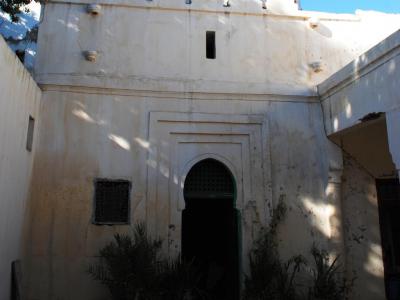
According to local tradition, Sidi Allal el-Kairouani was a Muslim saint who arrived on the Atlantic coast of Morocco in the 14th century. He is said to have set out from Kairouan in present-day Tunisia. His journey ended abruptly when his ship was wrecked off the Moroccan shore. Rescued by local fishermen, he settled among them, gradually gaining a reputation for piety and wisdom, and attracting followers who regarded him as a holy man.
Tradition further holds that Sidi Allal later sent for his daughter, Lalla Baida, who attempted the same sea crossing from Kairouan. Her ship also foundered, and unlike her father, she did not survive. She was buried near the shore, and Sidi Allal is said to have requested that he be laid to rest beside her upon his death. Their graves gradually became a focus of local devotion, and a small shrine developed on the site.
Gaining formal recognition in the 18th century, Sidi Allal el-Kairouani came to be widely regarded as the patron saint of fishermen. People continue to visit the shrine to pray for protection and safe returns. One persistent local legend claims that Casablanca’s former name, “White House”, may have been inspired by the whitewashed walls of the tomb, visible from the sea to approaching sailors.
Tradition further holds that Sidi Allal later sent for his daughter, Lalla Baida, who attempted the same sea crossing from Kairouan. Her ship also foundered, and unlike her father, she did not survive. She was buried near the shore, and Sidi Allal is said to have requested that he be laid to rest beside her upon his death. Their graves gradually became a focus of local devotion, and a small shrine developed on the site.
Gaining formal recognition in the 18th century, Sidi Allal el-Kairouani came to be widely regarded as the patron saint of fishermen. People continue to visit the shrine to pray for protection and safe returns. One persistent local legend claims that Casablanca’s former name, “White House”, may have been inspired by the whitewashed walls of the tomb, visible from the sea to approaching sailors.
8) Rick's Café Casablanca
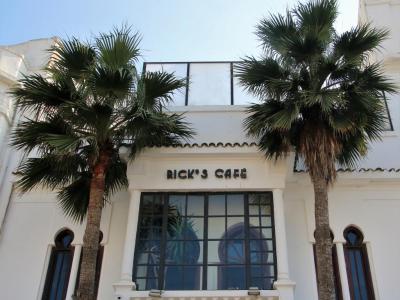
Rick’s Café Casablanca is a carefully staged tribute to the 1942 film Casablanca, created not as a historical site but as a cinematic reconstruction brought to life. The cafe opened in 2004, founded by former U.S. diplomat Kathy Kriger, who set out to imagine what Rick’s might have looked like had it actually existed in Casablanca during the early 1940s. Rather than replicating a single movie set, the design draws inspiration from multiple scenes, translating Hollywood atmosphere into a real, working venue.
The interior is defined by arched doorways, carved woodwork, patterned tiles, and subdued lighting, all contributing to a romanticized vision of colonial-era Morocco. A central bar anchors the space, while a piano placed to one side recalls the film’s most iconic moments. A detail often noted by regular patrons is Table 10, positioned for one of the best views of both the piano and the bar.
Rick’s Cafe operates as a full-service restaurant, bar, and live music venue, with a menu combining Moroccan and international dishes focused on classic preparations rather than experimentation. Evenings often feature live piano music, reinforcing the cinematic mood. The cafe maintains a film-noir dress code: casual attire such as shorts or athletic wear is generally discouraged, preserving the carefully curated atmosphere and sense of occasion that define the Rick’s experience.
The interior is defined by arched doorways, carved woodwork, patterned tiles, and subdued lighting, all contributing to a romanticized vision of colonial-era Morocco. A central bar anchors the space, while a piano placed to one side recalls the film’s most iconic moments. A detail often noted by regular patrons is Table 10, positioned for one of the best views of both the piano and the bar.
Rick’s Cafe operates as a full-service restaurant, bar, and live music venue, with a menu combining Moroccan and international dishes focused on classic preparations rather than experimentation. Evenings often feature live piano music, reinforcing the cinematic mood. The cafe maintains a film-noir dress code: casual attire such as shorts or athletic wear is generally discouraged, preserving the carefully curated atmosphere and sense of occasion that define the Rick’s experience.
Walking Tours in Casablanca, Morocco

Create Your Own Walk in Casablanca
Creating your own self-guided walk in Casablanca is easy and fun. Choose the city attractions that you want to see and a walk route map will be created just for you. You can even set your hotel as the start point of the walk.
Casablanca Introduction Walking Tour
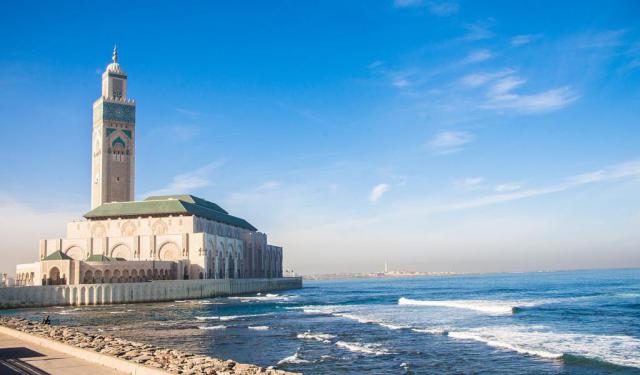
General Hubert Lyautey, the first French Resident-General, famously treated Casablanca as a city to be built rather than preserved, reflecting the colonial mindset that turned a modest port into a modern metropolis
Casablanca is Morocco’s largest city and its main Atlantic port, shaped less by dynasties and monuments than by trade, colonial planning, and rapid modern growth. The site was... view more
Tour Duration: 2 Hour(s)
Travel Distance: 3.9 Km or 2.4 Miles
Casablanca is Morocco’s largest city and its main Atlantic port, shaped less by dynasties and monuments than by trade, colonial planning, and rapid modern growth. The site was... view more
Tour Duration: 2 Hour(s)
Travel Distance: 3.9 Km or 2.4 Miles
Useful Travel Guides for Planning Your Trip
Casablanca: 15 Shopping Ideas for Travelers
What's more to Casablanca than the famous 1940s movie starring Humphrey Bogart and Ingrid Bergman? Although "much water has flown under the bridge" since, there are things in Morocco still not fading away with time, just as those desert colors. Here are some of the items worth noting...
The Most Popular Cities
/ view all