

Maison de Tristan l’Hermite (Tristan l’Hermite House), Tours
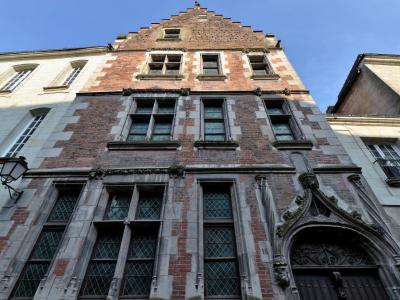
The House of Tristan l’Hermite, also known as the House of the Cordelière or Pierre du Puy Mansion, is a remarkable late-15th-century mansion in the historic centre of Tour. Classified as a historic monument in 1862, the house is traditionally associated with Tristan l’Hermite, an officer who served Kings Charles VII and Louis XI. However, this connection is not proven: French heritage records state that his association with the house was attributed without documentary evidence.
The building is more securely linked to Pierre du Puy, a merchant and prominent citizen of Tours who owned it in 1495. Its brick-and-stone façade is particularly distinctive, with a large stepped gable and decorative details reflecting Flemish architectural influence. The house is arranged around a courtyard, with a brick Saint-Gilles spiral staircase housed in a tower and topped by a belvedere.
The mansion takes its other name, House of the Cordelière, from the carved cord-like decoration on its façade, a motif that became fashionable around the beginning of the 16th century. Its unusual architecture makes it one of the notable examples of late-medieval domestic architecture in Tours, combining local materials with northern European influences.
Today, the house remains privately owned and is best appreciated from the street. Despite the uncertainty surrounding its connection with Tristan l’Hermite, the mansion preserves a fascinating link to the world of late-medieval Tours, when wealthy merchants and officials were transforming the city with increasingly elaborate urban residences.
The building is more securely linked to Pierre du Puy, a merchant and prominent citizen of Tours who owned it in 1495. Its brick-and-stone façade is particularly distinctive, with a large stepped gable and decorative details reflecting Flemish architectural influence. The house is arranged around a courtyard, with a brick Saint-Gilles spiral staircase housed in a tower and topped by a belvedere.
The mansion takes its other name, House of the Cordelière, from the carved cord-like decoration on its façade, a motif that became fashionable around the beginning of the 16th century. Its unusual architecture makes it one of the notable examples of late-medieval domestic architecture in Tours, combining local materials with northern European influences.
Today, the house remains privately owned and is best appreciated from the street. Despite the uncertainty surrounding its connection with Tristan l’Hermite, the mansion preserves a fascinating link to the world of late-medieval Tours, when wealthy merchants and officials were transforming the city with increasingly elaborate urban residences.
Want to visit this sight? Check out these Self-Guided Walking Tours in Tours. Alternatively, you can download the mobile app "GPSmyCity: Walks in 1K+ Cities" from Apple App Store or Google Play Store. The app turns your mobile device to a personal tour guide and it works offline, so no data plan is needed when traveling abroad.
Download The GPSmyCity App



Maison de Tristan l’Hermite (Tristan l’Hermite House) on Map
Sight Name: Maison de Tristan l’Hermite (Tristan l’Hermite House)
Sight Location: Tours, France (See walking tours in Tours)
Sight Type: Attraction/Landmark
Guide(s) Containing This Sight:
Sight Location: Tours, France (See walking tours in Tours)
Sight Type: Attraction/Landmark
Guide(s) Containing This Sight:
Nearby Sights


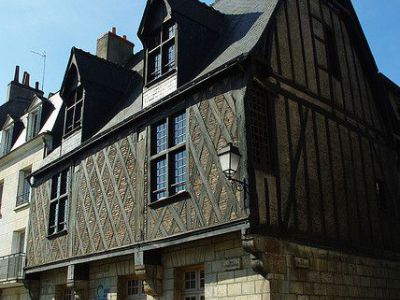
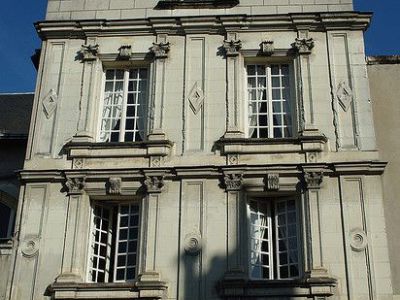
Walking Tours in Tours, France

Create Your Own Walk in Tours
Creating your own self-guided walk in Tours is easy and fun. Choose the city attractions that you want to see and a walk route map will be created just for you. You can even set your hotel as the start point of the walk.
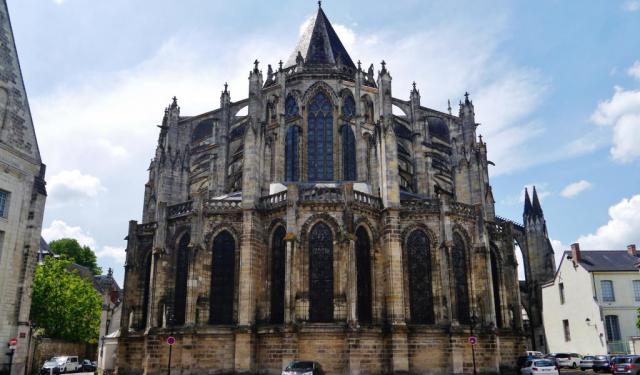
A Walking Map of Tours Historical Churches
The French city of Tours is forever linked to the Battle of Tours, a pivotal event in European history. Taking place in 732 AD, this momentous encounter saw the Frankish leader Charles Martel, a devout Christian, successfully repel a substantial army of Spanish Moors, thus effectively halting the Muslim advance and ensuring the preservation of Christianity throughout Western Europe.
Had it... view more
Tour Duration: 1 Hour
Travel Distance: 2.7 Km or 1.7 Miles
Had it... view more
Tour Duration: 1 Hour
Travel Distance: 2.7 Km or 1.7 Miles
A Stroll Through Tours Historical Old Town
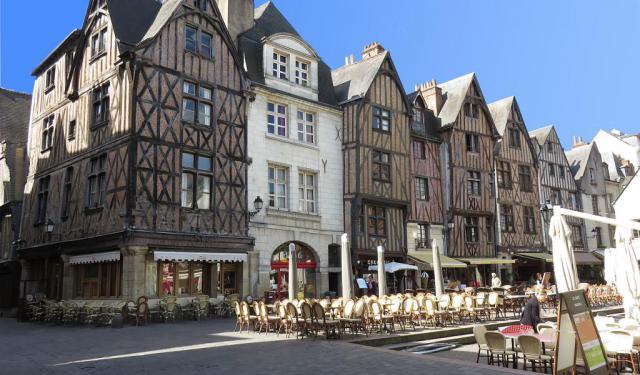
Having successfully preserved much of its historic heritage, Tours is particularly famous for its original medieval district - Vieux Tours. The bulk of it is concentrated around three squares: Place du Grand Marché, Place Plumereau and Place de Chateauneuf.
A stroll through the Old Town, day or night, offers many delights, and is best started at Place Plumereau. Lined with wood-framed,... view more
Tour Duration: 1 Hour
Travel Distance: 1.6 Km or 1 Miles
A stroll through the Old Town, day or night, offers many delights, and is best started at Place Plumereau. Lined with wood-framed,... view more
Tour Duration: 1 Hour
Travel Distance: 1.6 Km or 1 Miles
A Walking Guide to Tours City Center
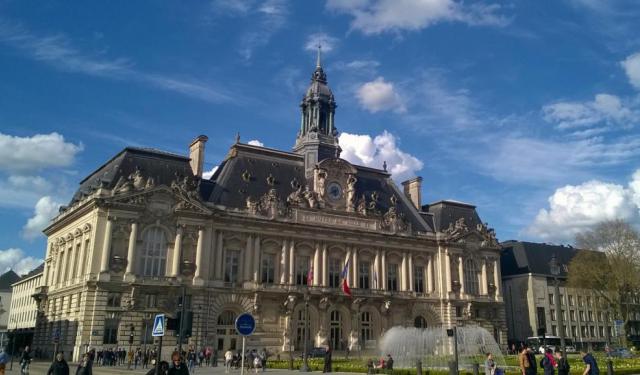
The Roman Emperor Augustus named the city Caesarodunum (Hill of Caesar). But it was always Tours. Caesar left the Tours Ampitheatre, the largest amphitheater of the Empire. It's good to be Caesar.
Tours is located on the River Loire. It stands between Orleans and the Atlantic shore. It is famous for the Battle of Tours in 732 CE when Spanish Moors led by Abdul Rahman Al Ghafiqi was... view more
Tour Duration: 2 Hours
Travel Distance: 3.7 Km or 2.3 Miles
Tours is located on the River Loire. It stands between Orleans and the Atlantic shore. It is famous for the Battle of Tours in 732 CE when Spanish Moors led by Abdul Rahman Al Ghafiqi was... view more
Tour Duration: 2 Hours
Travel Distance: 3.7 Km or 2.3 Miles