

Manga Garden Fountain, Coimbra
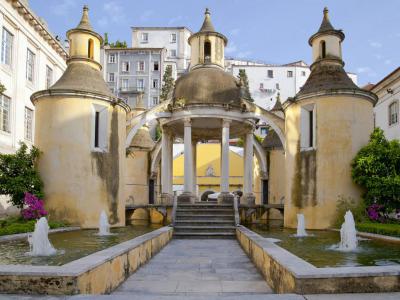
The Manga Garden Fountain (Jardim da Manga) is a remarkable example of Renaissance architecture in Portugal, located behind the Santa Cruz Monastery in Coimbra. Built in 1528 as part of the monastery’s water system, this elegant structure has been classified as a National Monument since 1934. Its name is linked to a local legend that King John III sketched its design on his sleeve (“manga” in Portuguese), instructing its construction on the very spot where it stands today.
At the heart of the garden is a grand domed fountain resting on eight columns, symbolizing the Fountain of Life. This centerpiece is connected to four small chapels, each representing the four Evangelists: Matthew, Mark, Luke, and John. The chapels contain remnants of small altarpieces attributed to the sculptor Joao de Ruao. The entire ensemble is encircled by rectangular pools, with water features inspired by Moorish architectural traditions, blending Renaissance elegance with Islamic design elements.
The fountain, painted in a distinctive lemon-yellow hue, is set within an octagonal pool, a geometric form often associated with eternity and divine creation in Christian symbolism. Designed under the influence of architects Diogo de Castilho and Jean de Rouen, the structure exhibits both Manueline and Renaissance styles, adorned with intricate carvings and biblical motifs that highlight the rich artistic traditions of the period.
Though only a fragment of the once grand cloister of the Santa Cruz Monastery, the Manga Garden remains a testament to Portugal’s architectural heritage, a fusion of Christian and Moorish influences, and a peaceful oasis in Coimbra’s historic center.
At the heart of the garden is a grand domed fountain resting on eight columns, symbolizing the Fountain of Life. This centerpiece is connected to four small chapels, each representing the four Evangelists: Matthew, Mark, Luke, and John. The chapels contain remnants of small altarpieces attributed to the sculptor Joao de Ruao. The entire ensemble is encircled by rectangular pools, with water features inspired by Moorish architectural traditions, blending Renaissance elegance with Islamic design elements.
The fountain, painted in a distinctive lemon-yellow hue, is set within an octagonal pool, a geometric form often associated with eternity and divine creation in Christian symbolism. Designed under the influence of architects Diogo de Castilho and Jean de Rouen, the structure exhibits both Manueline and Renaissance styles, adorned with intricate carvings and biblical motifs that highlight the rich artistic traditions of the period.
Though only a fragment of the once grand cloister of the Santa Cruz Monastery, the Manga Garden remains a testament to Portugal’s architectural heritage, a fusion of Christian and Moorish influences, and a peaceful oasis in Coimbra’s historic center.
Want to visit this sight? Check out these Self-Guided Walking Tours in Coimbra. Alternatively, you can download the mobile app "GPSmyCity: Walks in 1K+ Cities" from Apple App Store or Google Play Store. The app turns your mobile device to a personal tour guide and it works offline, so no data plan is needed when traveling abroad.
Download The GPSmyCity App



Manga Garden Fountain on Map
Sight Name: Manga Garden Fountain
Sight Location: Coimbra, Portugal (See walking tours in Coimbra)
Sight Type: Attraction/Landmark
Sight Location: Coimbra, Portugal (See walking tours in Coimbra)
Sight Type: Attraction/Landmark
Nearby Sights


Walking Tours in Coimbra, Portugal

Create Your Own Walk in Coimbra
Creating your own self-guided walk in Coimbra is easy and fun. Choose the city attractions that you want to see and a walk route map will be created just for you. You can even set your hotel as the start point of the walk.
Coimbra's Historic Buildings Walking Tour
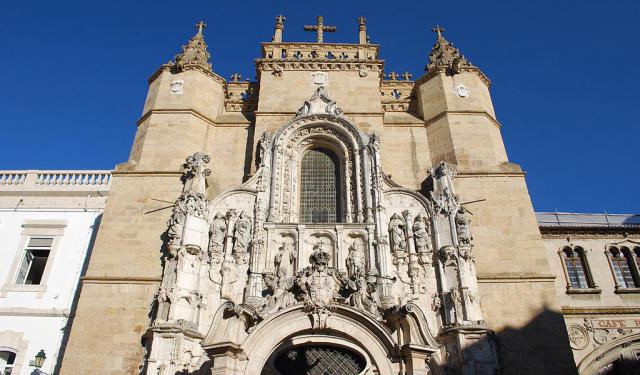
Amid the array of historic buildings narrating the cultural and architectural heritage of Coimbra, Portugal, there are both secular structures and great churches, dating back centuries. Apart from their historical value, these buildings exemplify the resplendent European architecture of the past, featuring Baroque, Renaissance, Rococo, and other styles. Some of them are richly decorated on the... view more
Tour Duration: 1 Hour
Travel Distance: 1.8 Km or 1.1 Miles
Tour Duration: 1 Hour
Travel Distance: 1.8 Km or 1.1 Miles

A Walking Tour of Coimbra's Historic Old Town
The ancient Roman city of Aeminium, by the Mondego River, eventually became the city of Coimbra. The modern Machado de Castro National Museum rests on the remains of a medieval bishop's palace. The palace was supported by an old cryptoporticus and Roman forum. The forum was the seed of the political and religious center of a city always reborn.
For more than 100 years Aeminium was held by... view more
Tour Duration: 2 Hours
Travel Distance: 2.2 Km or 1.4 Miles
For more than 100 years Aeminium was held by... view more
Tour Duration: 2 Hours
Travel Distance: 2.2 Km or 1.4 Miles