


Memphis Rock 'n' Soul Museum, Memphis (must see)
The Memphis Rock ’n’ Soul Museum is one of the best places in the city to understand how Memphis became a world capital of popular music. The museum opened in 2000 and grew out of a Smithsonian Institution research project.
Across seven galleries, the exhibition traces the story from music sung in the fields to gospel, blues, country, rhythm and blues, and rock ’n’ roll. Visitors follow the journey from rural field hollers, sharecropper songs, and porch music of the 1930s to the urban influence of Beale Street, the rise of radio, and the recording studios and labels that helped define the Memphis sound. Videos, recordings, photographs, instruments, stage costumes, film clips, and listening stations bring the displays to life, with figures such as Elvis Presley, B.B. King, Otis Redding, and Isaac Hayes standing out as key protagonists.
Start the exploration of the very root of this musical timeline by continuing straight ahead from the main ticket desk into the opening gallery space to find the centre of the "Rural Music" Exhibit. Here, the museum presents a life-sized recreation of a 1930s sharecropper cabin. The exhibit captures the humble, anonymous origins of Delta musicians who played homemade instruments on porches and sang field hollers, showing the stark, real-life conditions of their families.
The natural progression was for those sounds to reach the wider public. To find a visual link to that transition, exit the rural history rooms and walk around the central partition walls into the mid-century galleries detailing the rise of radio. Set into a prominent viewing alcove is the historic Wurlitzer jukebox. It shows a beautifully preserved, neon-lit 1950s music machine, an artifact that represents the exact moment rhythm and blues crossed over to mainstream youth culture. The jukebox is surrounded by rare vintage record covers and early broadcasting microphones, while the museum's digital audio-guide system lets you play the exact tracks that once spun on its turntables.
Several other sections are also worth noting. The Bravo Gallery, in particular, honors artists who made an impact on world music. Follow the main pathway toward the end of the museum and look to your right to find the Bravo Gallery Costume Display. This high-ceilinged glass vault was designed to honor the larger-than-life icons of the 1960s and ’70s. Here, you can stand face-to-face with spectacular original stage outfits worn by soul legends, including the glittering custom wardrobe of composer Isaac Hayes.
Across seven galleries, the exhibition traces the story from music sung in the fields to gospel, blues, country, rhythm and blues, and rock ’n’ roll. Visitors follow the journey from rural field hollers, sharecropper songs, and porch music of the 1930s to the urban influence of Beale Street, the rise of radio, and the recording studios and labels that helped define the Memphis sound. Videos, recordings, photographs, instruments, stage costumes, film clips, and listening stations bring the displays to life, with figures such as Elvis Presley, B.B. King, Otis Redding, and Isaac Hayes standing out as key protagonists.
Start the exploration of the very root of this musical timeline by continuing straight ahead from the main ticket desk into the opening gallery space to find the centre of the "Rural Music" Exhibit. Here, the museum presents a life-sized recreation of a 1930s sharecropper cabin. The exhibit captures the humble, anonymous origins of Delta musicians who played homemade instruments on porches and sang field hollers, showing the stark, real-life conditions of their families.
The natural progression was for those sounds to reach the wider public. To find a visual link to that transition, exit the rural history rooms and walk around the central partition walls into the mid-century galleries detailing the rise of radio. Set into a prominent viewing alcove is the historic Wurlitzer jukebox. It shows a beautifully preserved, neon-lit 1950s music machine, an artifact that represents the exact moment rhythm and blues crossed over to mainstream youth culture. The jukebox is surrounded by rare vintage record covers and early broadcasting microphones, while the museum's digital audio-guide system lets you play the exact tracks that once spun on its turntables.
Several other sections are also worth noting. The Bravo Gallery, in particular, honors artists who made an impact on world music. Follow the main pathway toward the end of the museum and look to your right to find the Bravo Gallery Costume Display. This high-ceilinged glass vault was designed to honor the larger-than-life icons of the 1960s and ’70s. Here, you can stand face-to-face with spectacular original stage outfits worn by soul legends, including the glittering custom wardrobe of composer Isaac Hayes.
Want to visit this sight? Check out these Self-Guided Walking Tours in Memphis. Alternatively, you can download the mobile app "GPSmyCity: Walks in 1K+ Cities" from Apple App Store or Google Play Store. The app turns your mobile device to a personal tour guide and it works offline, so no data plan is needed when traveling abroad.
Download The GPSmyCity App



Memphis Rock 'n' Soul Museum on Map
Sight Name: Memphis Rock 'n' Soul Museum
Sight Location: Memphis, USA (See walking tours in Memphis)
Sight Type: Museum/Gallery
Guide(s) Containing This Sight:
Sight Location: Memphis, USA (See walking tours in Memphis)
Sight Type: Museum/Gallery
Guide(s) Containing This Sight:
Nearby Sights


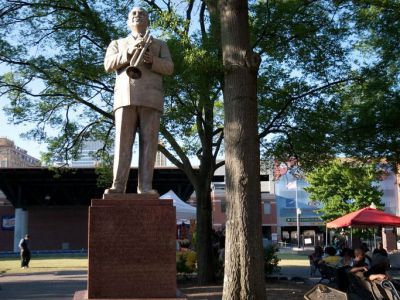
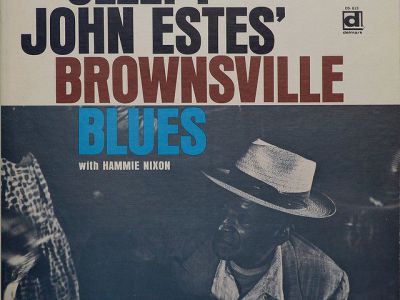
Walking Tours in Memphis, Tennessee

Create Your Own Walk in Memphis
Creating your own self-guided walk in Memphis is easy and fun. Choose the city attractions that you want to see and a walk route map will be created just for you. You can even set your hotel as the start point of the walk.
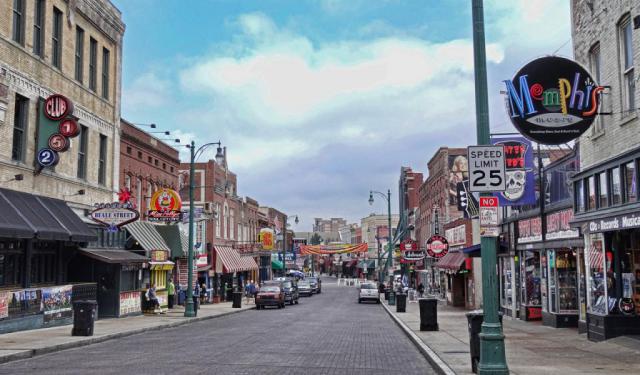
Memphis Beale Street Walking Tour
Memphis stands on the Chickasaw Bluffs above the Mississippi River, a flood-free position that shaped nearly every stage of its history. Long before the modern city was founded, the area was inhabited by Indigenous peoples and formed part of the Chickasaw homeland, valued for its river access, high ground, and links to inland routes. European contact began in the 16th century, when Spanish... view more
Tour Duration: 2 Hours
Travel Distance: 2.4 Km or 1.5 Miles
Tour Duration: 2 Hours
Travel Distance: 2.4 Km or 1.5 Miles
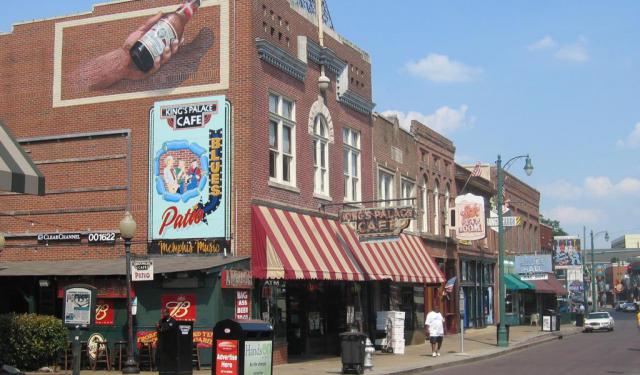
Memphis Downtown Walking Tour
Downtown is the oldest part of Memphis. This vibrant and culturally rich district is home to a variety of historical, artistic, and entertainment destinations that collectively reflect the unique heritage and spirit of the “blues city”.
One of the area's standout attractions is the Fire House Museum, a fascinating spot where visitors can explore the history of the city's fire... view more
Tour Duration: 2 Hours
Travel Distance: 3.1 Km or 1.9 Miles
One of the area's standout attractions is the Fire House Museum, a fascinating spot where visitors can explore the history of the city's fire... view more
Tour Duration: 2 Hours
Travel Distance: 3.1 Km or 1.9 Miles
Elvis Presley Walking Tour
Elvis Presley was born in Tupelo, Mississippi, but Memphis became the city that shaped him. Among all the celebrities associated with Memphis, Elvis remains the one most people think of first. He arrived in the city with his parents in 1948, at the age of 13, when the family was searching for better opportunities.
In the late 1940s and early 1950s, Memphis was one of America’s great musical... view more
Tour Duration: 2 Hours
Travel Distance: 3.5 Km or 2.2 Miles
In the late 1940s and early 1950s, Memphis was one of America’s great musical... view more
Tour Duration: 2 Hours
Travel Distance: 3.5 Km or 2.2 Miles
Memphis Blues Walking Tour
Bandleader W.C. Handy was waiting for a train in Tutwiler, Mississippi, around 1903 when he heard a man playing slide guitar with a knife and singing, “Goin’ where the Southern cross’ the Dog.” That strange, haunting sound stayed with him.
Memphis became one of the great homes of the blues because it stood at a crossroads: geographically, culturally, and musically. In the late 19th and... view more
Tour Duration: 2 Hours
Travel Distance: 1.8 Km or 1.1 Miles
Memphis became one of the great homes of the blues because it stood at a crossroads: geographically, culturally, and musically. In the late 19th and... view more
Tour Duration: 2 Hours
Travel Distance: 1.8 Km or 1.1 Miles

Historical Buildings Walking Tour
A substantial part of Memphis' heritage is manifested in its iconic buildings. By far more than just bricks and mortar, they are a history window through which one can observe the city's growth and development over the years. Here's a brief overview of some of these notable structures.
Harsson-Goyer-Lee House: This charming 19th-century mansion stands as a testament to... view more
Tour Duration: 2 Hours
Travel Distance: 3.1 Km or 1.9 Miles
Harsson-Goyer-Lee House: This charming 19th-century mansion stands as a testament to... view more
Tour Duration: 2 Hours
Travel Distance: 3.1 Km or 1.9 Miles
City Walks Overview
