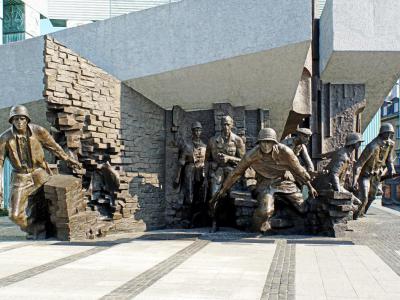


Monument to the Warsaw Uprising Fighters, Warsaw
The Warsaw Uprising was a major armed revolt against Nazi Germany fought from 1 August to 2 October 1944. Organized primarily by the Polish Home Army (Armia Krajowa), together with other resistance groups, it sought to liberate Warsaw before the arrival of the Soviet Red Army. Beyond its military objective, the uprising aimed to re-establish the authority of the Polish government-in-exile in London and prevent the Soviet-backed Polish Committee of National Liberation from taking control of Poland's capital.
The operation was launched in the belief that Soviet forces were about to enter Warsaw. However, the uprising was planned without coordination with the Red Army. During talks with the Polish government-in-exile, Joseph Stalin questioned the Home Army's ability to defeat the Germans, and so he refused to back it. Although expected to last only a few days, the fighting continued for 63 days.
German forces eventually crushed the resistance after receiving reinforcements, while Soviet troops remained on the eastern bank of the Vistula River. Approximately 17,000 resistance fighters and between 100,000 and 200,000 civilians were killed. Following the surrender, German troops systematically destroyed large parts of the city, leaving Warsaw one of the most devastated capitals in Europe.
The debate on why the Soviet offensive halted outside Warsaw remains unresolved. One interpretation argues that Stalin deliberately delayed the Red Army to allow the Germans to eliminate the anti-communist Home Army. Another attributes the pause to military realities, including exhausted Soviet forces, overstretched supply lines, and strong German counterattacks.
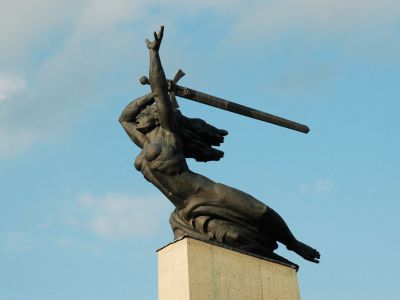
The monument to the tragic events was unveiled in 1989 on the 45th anniversary of the uprising just outside the Palace of Justice, the seat of the Polish Supreme Court.
If you'd like to learn a little more about the 1944 Uprising, don't miss the Warsaw Uprising Museum. Its exhibits depict the fighting and everyday life during the uprising and cover the political issues and the post-war Communist regime.
The operation was launched in the belief that Soviet forces were about to enter Warsaw. However, the uprising was planned without coordination with the Red Army. During talks with the Polish government-in-exile, Joseph Stalin questioned the Home Army's ability to defeat the Germans, and so he refused to back it. Although expected to last only a few days, the fighting continued for 63 days.
German forces eventually crushed the resistance after receiving reinforcements, while Soviet troops remained on the eastern bank of the Vistula River. Approximately 17,000 resistance fighters and between 100,000 and 200,000 civilians were killed. Following the surrender, German troops systematically destroyed large parts of the city, leaving Warsaw one of the most devastated capitals in Europe.
The debate on why the Soviet offensive halted outside Warsaw remains unresolved. One interpretation argues that Stalin deliberately delayed the Red Army to allow the Germans to eliminate the anti-communist Home Army. Another attributes the pause to military realities, including exhausted Soviet forces, overstretched supply lines, and strong German counterattacks.
The monument to the tragic events was unveiled in 1989 on the 45th anniversary of the uprising just outside the Palace of Justice, the seat of the Polish Supreme Court.
If you'd like to learn a little more about the 1944 Uprising, don't miss the Warsaw Uprising Museum. Its exhibits depict the fighting and everyday life during the uprising and cover the political issues and the post-war Communist regime.
Want to visit this sight? Check out these Self-Guided Walking Tours in Warsaw. Alternatively, you can download the mobile app "GPSmyCity: Walks in 1K+ Cities" from Apple App Store or Google Play Store. The app turns your mobile device to a personal tour guide and it works offline, so no data plan is needed when traveling abroad.
Download The GPSmyCity App



Monument to the Warsaw Uprising Fighters on Map
Sight Name: Monument to the Warsaw Uprising Fighters
Sight Location: Warsaw, Poland (See walking tours in Warsaw)
Sight Type: Attraction/Landmark
Guide(s) Containing This Sight:
Sight Location: Warsaw, Poland (See walking tours in Warsaw)
Sight Type: Attraction/Landmark
Guide(s) Containing This Sight:
Nearby Sights

Galeria Aniołowo
Image Courtesy of Eliza Markow.
Walking Tours in Warsaw, Poland

Create Your Own Walk in Warsaw
Creating your own self-guided walk in Warsaw is easy and fun. Choose the city attractions that you want to see and a walk route map will be created just for you. You can even set your hotel as the start point of the walk.
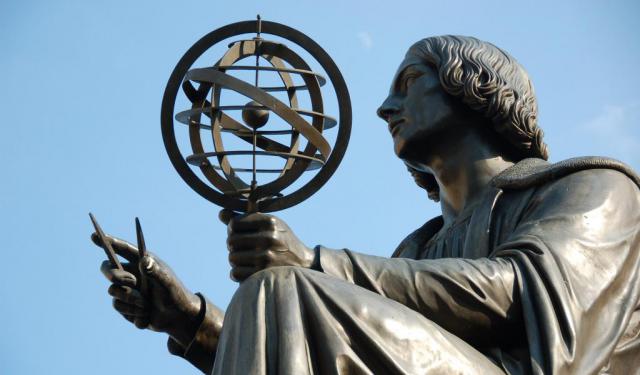
Monuments and Statues
The capital city of a proud nation such as Poland, Warsaw is abundant with monuments of various sorts, dedicated to celebrated personalities and those who made a mark in the history of the country.
Some of these landmarks serve as reminders of the city's resilience and the enduring spirit of its people. Among them are the Jan Kiliński Monument commemorating a hero of the 1794 Kosciuszko... view more
Tour Duration: 2 Hours
Travel Distance: 2.9 Km or 1.8 Miles
Some of these landmarks serve as reminders of the city's resilience and the enduring spirit of its people. Among them are the Jan Kiliński Monument commemorating a hero of the 1794 Kosciuszko... view more
Tour Duration: 2 Hours
Travel Distance: 2.9 Km or 1.8 Miles
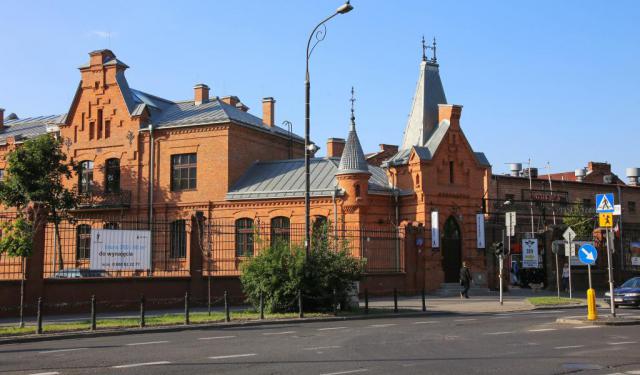
Praga District Walking Tour
Praga-not to be confused with Prague, the capital of the Czech Republic-is one of Warsaw’s oldest districts, stretching along the eastern bank of the Vistula River. For decades, it remained in the shadow of the reconstructed Old Town across the river. Its worn tenements, courtyards, workshops, and traces of pre-war Warsaw gave the district a rough reputation, but also helped preserve a character... view more
Tour Duration: 1 Hour
Travel Distance: 2.1 Km or 1.3 Miles
Tour Duration: 1 Hour
Travel Distance: 2.1 Km or 1.3 Miles
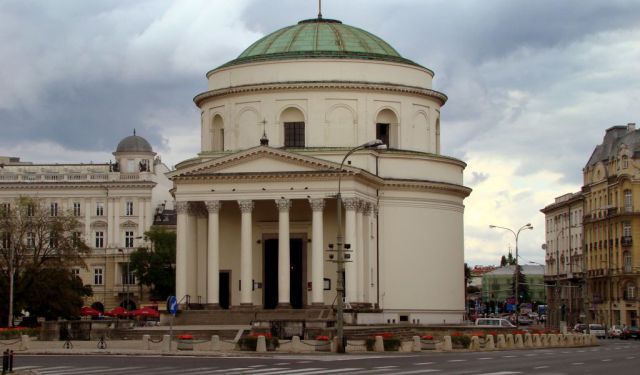
Warsaw's Historical Churches
Given that Poland is one of the most religious countries in Europe - with Roman Catholicism being the dominant faith here since the Baptism of Poland in 966, - it is not at all surprising that Warsaw is home to many centuries-old churches and cathedrals. While reflecting the city's deep-rooted religious and cultural heritage, some of these historical temples are also magnificent architectural... view more
Tour Duration: 1 Hour
Travel Distance: 1.4 Km or 0.9 Miles
Tour Duration: 1 Hour
Travel Distance: 1.4 Km or 0.9 Miles
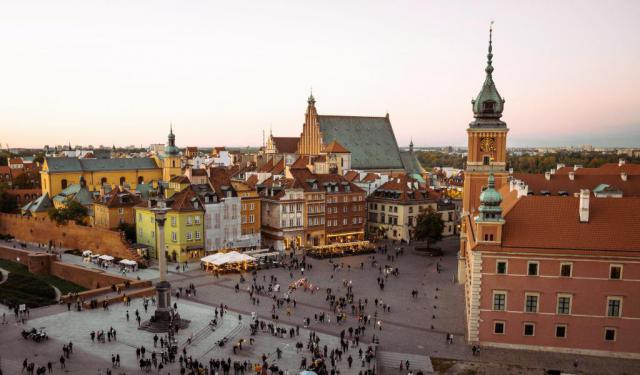
Warsaw Old Town Walking Tour
Warsaw, the dynamic capital of Poland, is a city where centuries of royal heritage stand alongside remarkable stories of resilience and renewal. The city's name is traditionally linked to the legend of Wars and Sawa, a fisherman and a mermaid whose hospitality and kindness inspired the settlement that eventually became Warsaw. The mermaid, known as Syrenka in Polish, remains the city's... view more
Tour Duration: 2 Hours
Travel Distance: 2.7 Km or 1.7 Miles
Tour Duration: 2 Hours
Travel Distance: 2.7 Km or 1.7 Miles
Jewish Warsaw Walking Tour
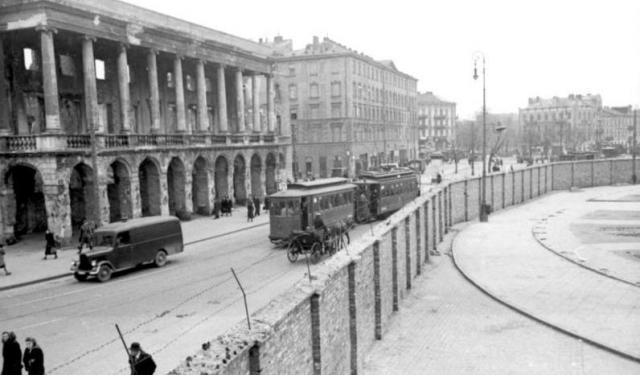
Once abundant, the Jewish population of Warsaw has left a profound mark on the city. Nowadays, walking along the peaceful streets of Poland's capital, it is hard to imagine that during World War II thousands of Jews were herded here and forced into cattle cars to meet their end in the Nazi concentration camps.
At the heart of this tragic chapter of Warsaw's Jewish history lies the... view more
Tour Duration: 2 Hours
Travel Distance: 4.7 Km or 2.9 Miles
At the heart of this tragic chapter of Warsaw's Jewish history lies the... view more
Tour Duration: 2 Hours
Travel Distance: 4.7 Km or 2.9 Miles
Useful Travel Guides for Planning Your Trip

15 Distinctively Polish Things to Buy in Warsaw
A country with a great deal of taste and turbulent history, Poland has a lot to offer those with the eyes to see and mouth to savor. And Warsaw is, perhaps, the best place to find all things Polish brought together. Here's the list of the most distinctive Polish goods, caringly drawn by a...
City Walks Overview
