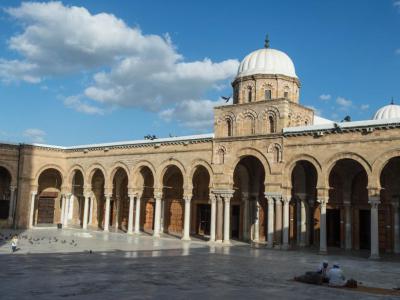


Mosquée Zitouna (Mosque of Olive), Tunis (must see)
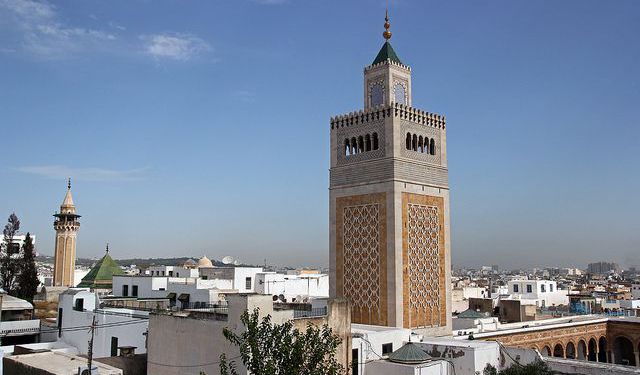
The Mosque of Olive is the oldest mosque in Tunis. Its origins date to the early 8th century, traditionally linked to Hassan ibn al-Nuʿman, an Arab general and governor, though most historians agree the mosque was largely completed around 732 CE under the Umayyad governor Ubayd Allah ibn al-Habhab. The mosque then underwent a decisive transformation in 864 CE, when the Aghlabid dynasty carried out a major reconstruction that gave the complex much of the form seen today.
Architecturally, the mosque follows the principles of early North African Islamic design. Covering approximately 5,000 square meters, it includes a large rectangular courtyard and a hypostyle prayer hall supported by more than 150 columns, many reused from ancient Carthage. The square minaret was rebuilt in 1894 during the French protectorate. Designed in a deliberate Almohad revival style, it echoes earlier Islamic landmarks such as the Great Mosque of Algiers and the Giralda in Seville.
The name “Olive” is tied to strong local tradition. One legend associates it with Saint Olivia of Palermo, whose memory is linked to an earlier Christian presence on or near the site. Historically, however, the name is officially attributed to a single olive tree said to have stood where Ubayd Allah ibn al-Habhab first prayed. Beyond worship, the mosque was also home to the University of Ez-Zitouna, one of the most influential centers of learning in the Islamic world.
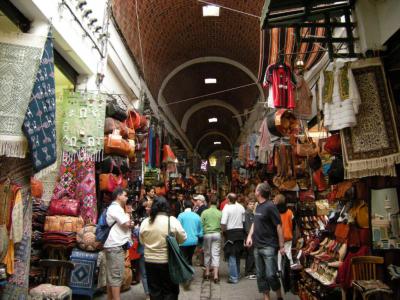
For visitors today, non-Muslims are often not permitted inside the courtyard, depending on current regulations. Instead, the most familiar views of the mosque are from the rooftop terraces of surrounding carpet shops, particularly in nearby souks.
Architecturally, the mosque follows the principles of early North African Islamic design. Covering approximately 5,000 square meters, it includes a large rectangular courtyard and a hypostyle prayer hall supported by more than 150 columns, many reused from ancient Carthage. The square minaret was rebuilt in 1894 during the French protectorate. Designed in a deliberate Almohad revival style, it echoes earlier Islamic landmarks such as the Great Mosque of Algiers and the Giralda in Seville.
The name “Olive” is tied to strong local tradition. One legend associates it with Saint Olivia of Palermo, whose memory is linked to an earlier Christian presence on or near the site. Historically, however, the name is officially attributed to a single olive tree said to have stood where Ubayd Allah ibn al-Habhab first prayed. Beyond worship, the mosque was also home to the University of Ez-Zitouna, one of the most influential centers of learning in the Islamic world.
For visitors today, non-Muslims are often not permitted inside the courtyard, depending on current regulations. Instead, the most familiar views of the mosque are from the rooftop terraces of surrounding carpet shops, particularly in nearby souks.
Want to visit this sight? Check out these Self-Guided Walking Tours in Tunis. Alternatively, you can download the mobile app "GPSmyCity: Walks in 1K+ Cities" from Apple App Store or Google Play Store. The app turns your mobile device to a personal tour guide and it works offline, so no data plan is needed when traveling abroad.
Download The GPSmyCity App



Mosquée Zitouna (Mosque of Olive) on Map
Sight Name: Mosquée Zitouna (Mosque of Olive)
Sight Location: Tunis, Tunisia (See walking tours in Tunis)
Sight Type: Religious
Guide(s) Containing This Sight:
Sight Location: Tunis, Tunisia (See walking tours in Tunis)
Sight Type: Religious
Guide(s) Containing This Sight:
Nearby Sights
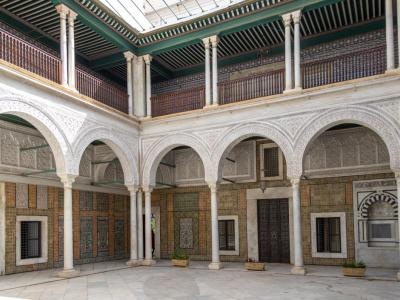
Walking Tours in Tunis, Tunisia

Create Your Own Walk in Tunis
Creating your own self-guided walk in Tunis is easy and fun. Choose the city attractions that you want to see and a walk route map will be created just for you. You can even set your hotel as the start point of the walk.
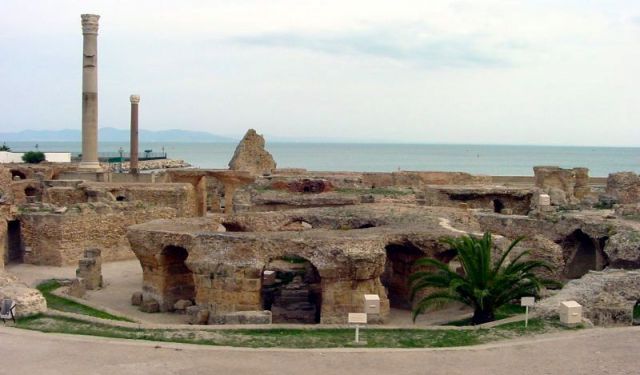
Carthage Walking Tour
The Roman statesman Cato the Elder ended every speech the same way, no matter the subject: “Carthage must be destroyed”. Not because the city was weak, but because it was powerful enough to worry Rome even in silence.
Carthage’s ruins sit on the northeastern edge of modern Tunis, looking out over the Gulf of Tunis. The name Carthage ultimately comes from the Punic word meaning “new... view more
Tour Duration: 2 Hours
Travel Distance: 4 Km or 2.5 Miles
Carthage’s ruins sit on the northeastern edge of modern Tunis, looking out over the Gulf of Tunis. The name Carthage ultimately comes from the Punic word meaning “new... view more
Tour Duration: 2 Hours
Travel Distance: 4 Km or 2.5 Miles
Tunis Introduction Walking Tour
Born in Tunis in 1332, Arab scholar and historian Ibn Khaldun later looked back at his home city when writing the book “Introduction”, describing Tunis itself as a living urban organism shaped by power, trade and learning.
Tunis, the capital of modern Tunisia, stands at a historical crossroads of the Mediterranean, shaped by more than three millennia. The name Tunis is generally believed to... view more
Tour Duration: 1 Hour
Travel Distance: 1.8 Km or 1.1 Miles
Tunis, the capital of modern Tunisia, stands at a historical crossroads of the Mediterranean, shaped by more than three millennia. The name Tunis is generally believed to... view more
Tour Duration: 1 Hour
Travel Distance: 1.8 Km or 1.1 Miles
Useful Travel Guides for Planning Your Trip
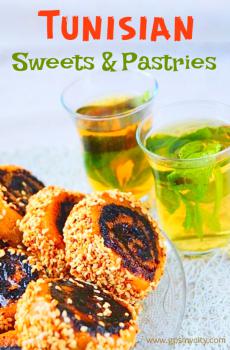
Tunisian Sweets and Pastries
No Tunisian meal is complete without a lavish dessert at the end. And Tunisians do take their sweets seriously, be it fresh seasonal fruits, cakes, fried almond pastries, ice cream, doughnuts or whatever else. Some of these delights have come from Turkey, brought by soldiers of the Ottoman army;...
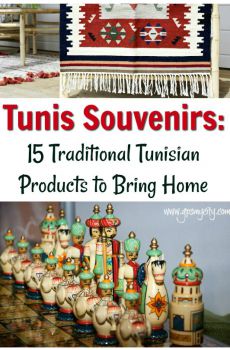
Tunis Souvenirs: 15 Authentic Tunisian Products for Avid Traveler
A historic crossroads of many civilizations and influences, - Berber, Spanish, French, - Tunisia is a treasure trove of mementos waiting for a knowledgeable traveler to be picked up. The Medina market of Tunis (the capital city) is one of the best places to shop for local handcrafts. To help...
City Walks Overview
