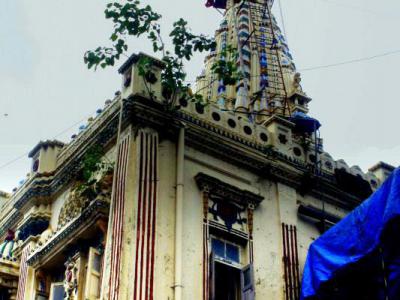


Mumba Devi Temple, Mumbai
According to local tradition, the inhabitants of the area were once troubled by a powerful demon named Mumbaraka who terrorized the settlement. The villagers prayed to Lord Brahma, the creator deity in Hindu mythology, for protection. Their prayers were answered when an eight-armed goddess appeared and defeated the demon. In gratitude, the community built a shrine in her honor, and the goddess came to be known as Mumba Devi.
This legend forms the spiritual foundation of the Mumba Devi Temple, whose present structure is believed to date from around 1737. Inside the temple, the idol of the goddess is typically depicted with four arms and is notably without a mouth, a feature often interpreted as symbolizing her silent strength and quiet protection. Over the centuries, the temple has remained a powerful symbol of Mumbai’s origins and the enduring devotion of the communities who have lived here.
At first glance, the temple may appear modest compared with some of India’s more elaborate shrines. Yet its significance lies in the stories and traditions associated with it. Mumba Devi is believed to have been the guardian deity of the Koli fishing community. The original shrine is thought to have stood near the Bori Bunder area, close to where the Chhatrapati Shivaji Terminus stands today. In the 18th century, the temple was relocated to Bhuleshwar, an area that eventually developed into one of the city’s busiest commercial districts.
This legend forms the spiritual foundation of the Mumba Devi Temple, whose present structure is believed to date from around 1737. Inside the temple, the idol of the goddess is typically depicted with four arms and is notably without a mouth, a feature often interpreted as symbolizing her silent strength and quiet protection. Over the centuries, the temple has remained a powerful symbol of Mumbai’s origins and the enduring devotion of the communities who have lived here.
At first glance, the temple may appear modest compared with some of India’s more elaborate shrines. Yet its significance lies in the stories and traditions associated with it. Mumba Devi is believed to have been the guardian deity of the Koli fishing community. The original shrine is thought to have stood near the Bori Bunder area, close to where the Chhatrapati Shivaji Terminus stands today. In the 18th century, the temple was relocated to Bhuleshwar, an area that eventually developed into one of the city’s busiest commercial districts.
Want to visit this sight? Check out these Self-Guided Walking Tours in Mumbai. Alternatively, you can download the mobile app "GPSmyCity: Walks in 1K+ Cities" from Apple App Store or Google Play Store. The app turns your mobile device to a personal tour guide and it works offline, so no data plan is needed when traveling abroad.
Download The GPSmyCity App



Mumba Devi Temple on Map
Sight Name: Mumba Devi Temple
Sight Location: Mumbai, India (See walking tours in Mumbai)
Sight Type: Religious
Guide(s) Containing This Sight:
Sight Location: Mumbai, India (See walking tours in Mumbai)
Sight Type: Religious
Guide(s) Containing This Sight:
Nearby Sights
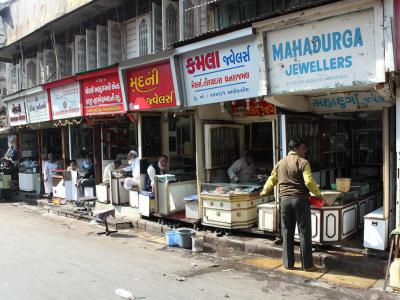
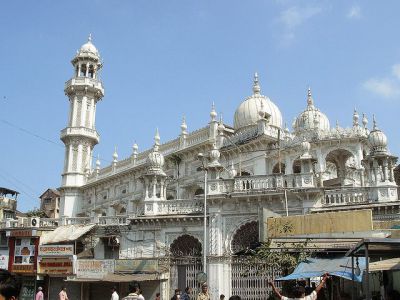
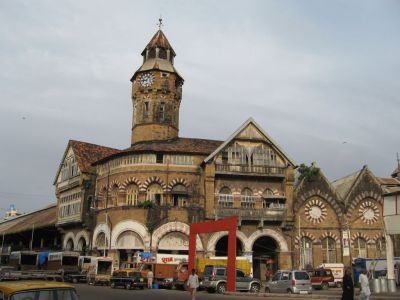
Mangaldas Market
Image Courtesy of Angela Kotlinski.


Walking Tours in Mumbai, India

Create Your Own Walk in Mumbai
Creating your own self-guided walk in Mumbai is easy and fun. Choose the city attractions that you want to see and a walk route map will be created just for you. You can even set your hotel as the start point of the walk.
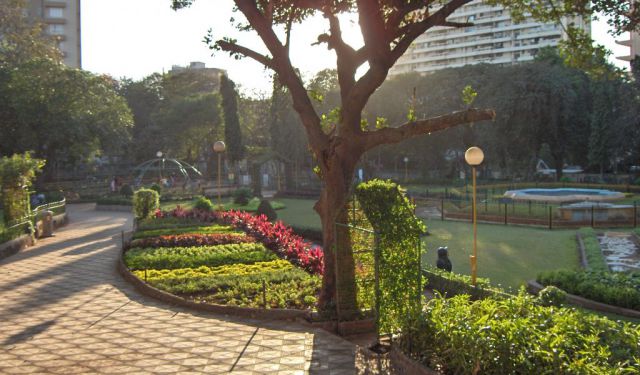
Malabar Hill Walking Tour
When the American writer Mark Twain arrived in Bombay during his world lecture tour, the view from Malabar Hill left a strong impression. In his travel book “Following the Equator”, he admired the city’s coastal setting, describing Mumbai as “by far the handsomest city in India”.
Malabar Hill is one of Mumbai’s most historic and prestigious neighborhoods, rising above the western... view more
Tour Duration: 2 Hour(s)
Travel Distance: 3.4 Km or 2.1 Miles
Malabar Hill is one of Mumbai’s most historic and prestigious neighborhoods, rising above the western... view more
Tour Duration: 2 Hour(s)
Travel Distance: 3.4 Km or 2.1 Miles
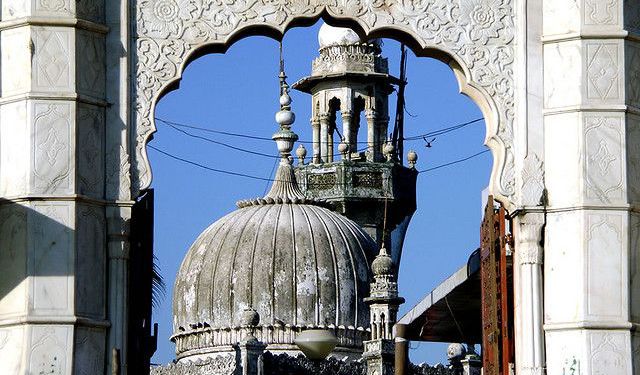
Mumbai's Historical Churches
The seven islands that later formed Mumbai were originally inhabited by Marathi-speaking Koli fishing communities, whose primary religion was Hinduism. Over time, the city’s strategic coastal position attracted traders and settlers from across the Indian Ocean world. Muslim communities became established through maritime trade and later expanded during the period of Mughal influence. Today,... view more
Tour Duration: 2 Hour(s)
Travel Distance: 3.8 Km or 2.4 Miles
Tour Duration: 2 Hour(s)
Travel Distance: 3.8 Km or 2.4 Miles
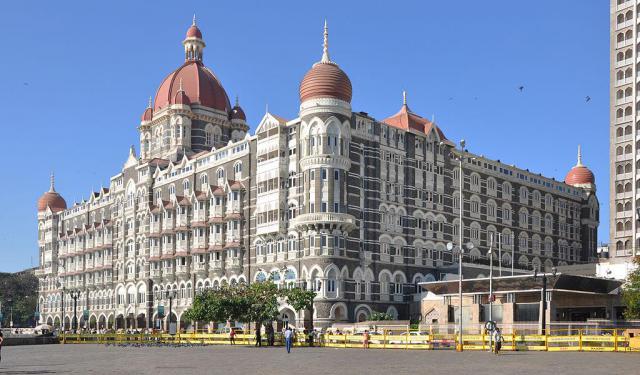
Mumbai Downtown Walking Tour
English writer Rudyard Kipling, who was born in Bombay in 1865, famously called it “the Mother of Cities”, a place that absorbs people from everywhere and keeps giving birth to new lives, ambitions, and contradictions.
Long before it became India’s largest city, the area consisted of seven low-lying islands along the Konkan coast, inhabited by fishing communities known as the Kolis.... view more
Tour Duration: 2 Hour(s)
Travel Distance: 3.9 Km or 2.4 Miles
Long before it became India’s largest city, the area consisted of seven low-lying islands along the Konkan coast, inhabited by fishing communities known as the Kolis.... view more
Tour Duration: 2 Hour(s)
Travel Distance: 3.9 Km or 2.4 Miles
Useful Travel Guides for Planning Your Trip
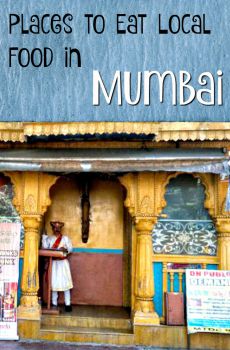
Places to Eat Local Food in Mumbai
As its said, in a city like Mumbai, anybody wanting a good meal any time of the day, there’s always a rush and a stomach will always be fed. Whether its a quick bite or to indulge yourself, there is a plethora of tastes and flavours, 24/7, vying to satiate your taste buds. Multifaceted,...

Mumbai Shopping: 16 Souvenir Ideas for Travelers
In India, a foreigner can't get far without insider knowledge, whether it's for souvenir shopping or something else. Mumbai (formerly known as Bombay) is by far the most popular and the largest of Indian cities, teeming with a plethora of things representative of India's millenia-long...