

Musée Alsacien (Alsatian Museum), Strasbourg (must see)
The Alsatian Museum offers a close and grounded introduction to everyday life in Alsace from the 18th to the early 20th century. It was founded in 1907, at a time when rapid industrialization and political change threatened to erase regional traditions. The aim was not to create a grand national museum, but to preserve the material culture of rural and small-town Alsace-its homes, crafts, customs, and beliefs-before they disappeared.
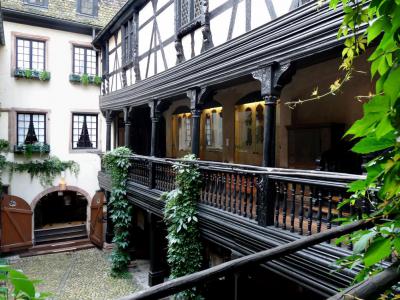
The museum is housed in a group of historic houses along the River Ill. Once you step inside, you'll be met by an interior courtyard framed by traditional Strasbourg half-timbered houses. The houses are arranged in a rectangular, interconnected layout, which helps maintain the intimate atmosphere of the space. The three floors of the houses can be accessed by climbing a black wooden staircase located on the far south eastern side of the courtyard. A special detail is provided by the vines on the balconies to the right of the staircase, which add variation to the color palette of the exterior complex. As you enter the interior courtyard, you'll find a metal statue of a man on the south-western balcony. The statue is placed on the wooden railing of the balcony and the man depicted rings a bell by using a hammer.
The museum’s main appeal lies in its immersive, room-by-room presentation. In other words, its layout differs from traditional museums, as it is not divided on a floor-by-floor basis. Instead, you will have to move up and down stairs and walk through chronologically arranged adjoining rooms.
Interiors are arranged to resemble traditional Alsatian homes, with furnished kitchens, bedrooms, workshops, and ceremonial rooms reconstructed using original objects. Painted furniture, pottery, textiles, carved wooden cupboards, and everyday tools reveal how people lived, worked, cooked, and celebrated across different social settings. Traditional costumes and accessories illustrate regional identity and social distinction, while displays dedicated to religious practices, seasonal festivals, and folk beliefs provide insight into the rhythms that shaped daily life.
What sets the Alsatian Museum apart is its focus on lived experience rather than monumental history. Courtyards, staircases, and uneven floor levels reinforce the sense of moving through historic dwellings rather than a conventional gallery.
Editor's note: the museum is currently closed due to renovation works and is expected to reopen in 2027.
The museum is housed in a group of historic houses along the River Ill. Once you step inside, you'll be met by an interior courtyard framed by traditional Strasbourg half-timbered houses. The houses are arranged in a rectangular, interconnected layout, which helps maintain the intimate atmosphere of the space. The three floors of the houses can be accessed by climbing a black wooden staircase located on the far south eastern side of the courtyard. A special detail is provided by the vines on the balconies to the right of the staircase, which add variation to the color palette of the exterior complex. As you enter the interior courtyard, you'll find a metal statue of a man on the south-western balcony. The statue is placed on the wooden railing of the balcony and the man depicted rings a bell by using a hammer.
The museum’s main appeal lies in its immersive, room-by-room presentation. In other words, its layout differs from traditional museums, as it is not divided on a floor-by-floor basis. Instead, you will have to move up and down stairs and walk through chronologically arranged adjoining rooms.
Interiors are arranged to resemble traditional Alsatian homes, with furnished kitchens, bedrooms, workshops, and ceremonial rooms reconstructed using original objects. Painted furniture, pottery, textiles, carved wooden cupboards, and everyday tools reveal how people lived, worked, cooked, and celebrated across different social settings. Traditional costumes and accessories illustrate regional identity and social distinction, while displays dedicated to religious practices, seasonal festivals, and folk beliefs provide insight into the rhythms that shaped daily life.
What sets the Alsatian Museum apart is its focus on lived experience rather than monumental history. Courtyards, staircases, and uneven floor levels reinforce the sense of moving through historic dwellings rather than a conventional gallery.
Editor's note: the museum is currently closed due to renovation works and is expected to reopen in 2027.
Want to visit this sight? Check out these Self-Guided Walking Tours in Strasbourg. Alternatively, you can download the mobile app "GPSmyCity: Walks in 1K+ Cities" from Apple App Store or Google Play Store. The app turns your mobile device to a personal tour guide and it works offline, so no data plan is needed when traveling abroad.
Download The GPSmyCity App



Musée Alsacien (Alsatian Museum) on Map
Sight Name: Musée Alsacien (Alsatian Museum)
Sight Location: Strasbourg, France (See walking tours in Strasbourg)
Sight Type: Museum/Gallery
Guide(s) Containing This Sight:
Sight Location: Strasbourg, France (See walking tours in Strasbourg)
Sight Type: Museum/Gallery
Guide(s) Containing This Sight:
Nearby Sights


Walking Tours in Strasbourg, France

Create Your Own Walk in Strasbourg
Creating your own self-guided walk in Strasbourg is easy and fun. Choose the city attractions that you want to see and a walk route map will be created just for you. You can even set your hotel as the start point of the walk.
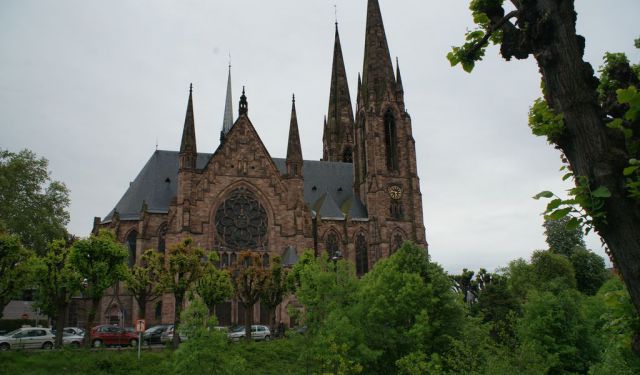
Historical Churches Walking Tour
Strasbourg, which celebrated its bimillennial anniversary in 1988, is a city with a very rich heritage. Among other historical monuments found here is a wealth of ancient churches and cathedrals, representing a variety of architectural styles. Exploring Strasbourg on foot, one is inevitably drawn to visit some of these locations. Here are some of the best known places of worship in the city.
... view more
Tour Duration: 2 Hour(s)
Travel Distance: 3.0 Km or 1.9 Miles
... view more
Tour Duration: 2 Hour(s)
Travel Distance: 3.0 Km or 1.9 Miles
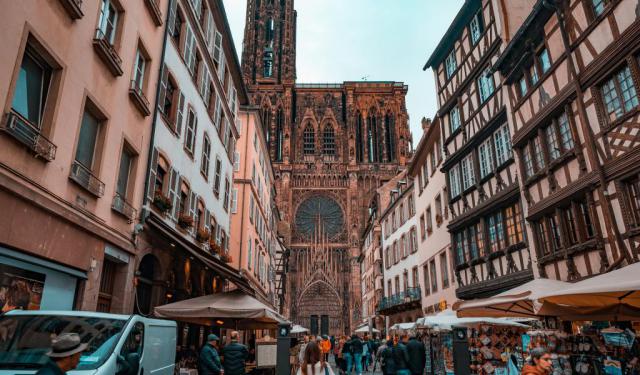
Strasbourg Old Town Walking Tour
German writer Johann Wolfgang von Goethe studied in Strasbourg between 1770 and 1771, a period he later described as highly formative. He gave back to the city by including his fascination for Strasbourg Cathedral's spire in his own autobiography.
Strasbourg’s old town, known as the "Large Island”, is the historic core of the city and one of the best-preserved medieval urban... view more
Tour Duration: 2 Hour(s)
Travel Distance: 2.5 Km or 1.6 Miles
Strasbourg’s old town, known as the "Large Island”, is the historic core of the city and one of the best-preserved medieval urban... view more
Tour Duration: 2 Hour(s)
Travel Distance: 2.5 Km or 1.6 Miles
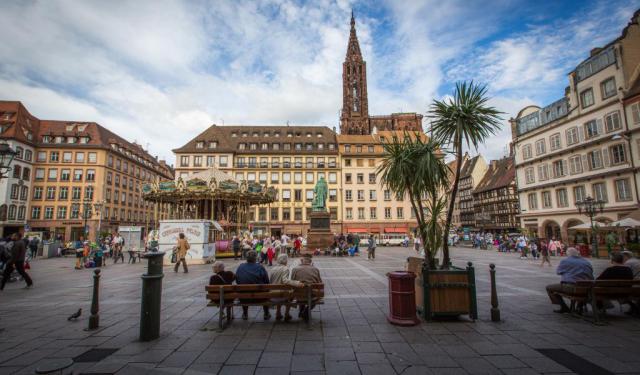
Famous Squares Walking Tour
Justly reputed as one of the most beautiful cities in all of France, Strasbourg greets visitors with an array of picturesque squares. Among the most famous of them are:
Place Kléber – the biggest square in the heart of the city’s commercial district; a central meeting place since the 14th century.
Place Gutenberg – a definite “must-see” in the heart of medieval Strasbourg, not... view more
Tour Duration: 2 Hour(s)
Travel Distance: 2.7 Km or 1.7 Miles
Place Kléber – the biggest square in the heart of the city’s commercial district; a central meeting place since the 14th century.
Place Gutenberg – a definite “must-see” in the heart of medieval Strasbourg, not... view more
Tour Duration: 2 Hour(s)
Travel Distance: 2.7 Km or 1.7 Miles