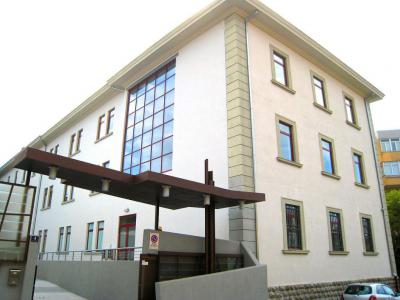


Museo Civico di Storia Naturale (Civic Museum of Natural History), Trieste
The Civic Museum of Natural History in Trieste offers an engaging look into the natural world, combining scientific research with public education. Founded in 1846, it is one of the city’s oldest museums and reflects Trieste’s long tradition of curiosity and cultural exchange. Over the years, the museum has developed extensive collections ranging from zoology and botany to geology and paleontology, making it a key centre for both scholars and visitors interested in understanding the natural environment of the region and beyond.
One of the museum’s most remarkable highlights is Antonio, a nearly complete fossil of a Tethyshadros insularis, a dwarf dinosaur discovered in the nearby Karst plateau. This specimen has gained international recognition for its importance in paleontological studies and offers visitors a unique glimpse into prehistoric life. Alongside it, the museum displays an impressive array of marine fossils, reflecting Trieste’s close connection with the Adriatic Sea, as well as mineralogical and botanical collections that trace the diversity of natural forms in the area.
The zoological section is equally captivating, featuring preserved specimens of mammals, birds, and insects from across the globe. Among its treasures are collections once belonging to local explorers and scientists, underscoring Trieste’s role as a port city where knowledge and discoveries flowed in from distant places. Visitors can also explore exhibits on human evolution, with reconstructions that provide context to the development of our species.
Today, the museum serves as both a cultural landmark and a dynamic learning environment. Its exhibitions are thoughtfully arranged to engage a broad audience, from casual visitors and families to specialists in natural sciences. For tourists, the Civic Museum of Natural History offers not just a journey through millions of years of natural history but also a reflection of Trieste’s position as a crossroads of scientific inquiry and cultural exchange.
One of the museum’s most remarkable highlights is Antonio, a nearly complete fossil of a Tethyshadros insularis, a dwarf dinosaur discovered in the nearby Karst plateau. This specimen has gained international recognition for its importance in paleontological studies and offers visitors a unique glimpse into prehistoric life. Alongside it, the museum displays an impressive array of marine fossils, reflecting Trieste’s close connection with the Adriatic Sea, as well as mineralogical and botanical collections that trace the diversity of natural forms in the area.
The zoological section is equally captivating, featuring preserved specimens of mammals, birds, and insects from across the globe. Among its treasures are collections once belonging to local explorers and scientists, underscoring Trieste’s role as a port city where knowledge and discoveries flowed in from distant places. Visitors can also explore exhibits on human evolution, with reconstructions that provide context to the development of our species.
Today, the museum serves as both a cultural landmark and a dynamic learning environment. Its exhibitions are thoughtfully arranged to engage a broad audience, from casual visitors and families to specialists in natural sciences. For tourists, the Civic Museum of Natural History offers not just a journey through millions of years of natural history but also a reflection of Trieste’s position as a crossroads of scientific inquiry and cultural exchange.
Want to visit this sight? Check out these Self-Guided Walking Tours in Trieste. Alternatively, you can download the mobile app "GPSmyCity: Walks in 1K+ Cities" from Apple App Store or Google Play Store. The app turns your mobile device to a personal tour guide and it works offline, so no data plan is needed when traveling abroad.
Download The GPSmyCity App



Museo Civico di Storia Naturale (Civic Museum of Natural History) on Map
Sight Name: Museo Civico di Storia Naturale (Civic Museum of Natural History)
Sight Location: Trieste, Italy (See walking tours in Trieste)
Sight Type: Museum/Gallery
Sight Location: Trieste, Italy (See walking tours in Trieste)
Sight Type: Museum/Gallery
Nearby Sights
Walking Tours in Trieste, Italy

Create Your Own Walk in Trieste
Creating your own self-guided walk in Trieste is easy and fun. Choose the city attractions that you want to see and a walk route map will be created just for you. You can even set your hotel as the start point of the walk.
Trieste's Ancient Roman Sites Walking Tour
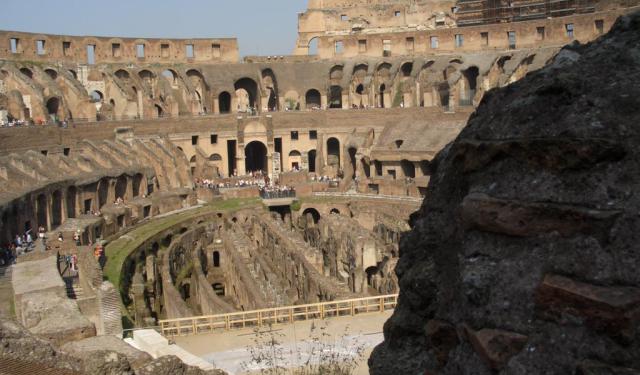
The Roman remains on Trieste extend along the northwestern slope of San Giusto Hill, overlooking the Gulf of Trieste. Wharves of sandstone slabs dating from the 1st century AD were found by the Roman Theatre. The city walls, ordered by Augustus, were converted to use as terraces.
The Propylaeum of the 1st century AD was the gateway to the sacred area of the Capitoline Temple. There are two... view more
Tour Duration: 1 Hour
Travel Distance: 0.9 Km or 0.6 Miles
The Propylaeum of the 1st century AD was the gateway to the sacred area of the Capitoline Temple. There are two... view more
Tour Duration: 1 Hour
Travel Distance: 0.9 Km or 0.6 Miles
Trieste Introduction Walking Tour
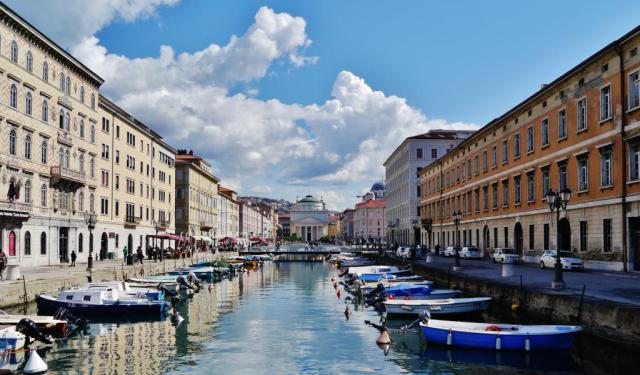
Let’s drop into Trieste, a city that’s always had one foot in Central Europe and the other dipping into the Adriatic. It sits at Italy’s northeastern edge, pressed against Slovenia, where winds tear across the Karst Plateau and caves open like gateways underground. Some call it “Vienna by the Sea,” others swear it’s the “City of Coffee,” but labels never really fit. From the start,... view more
Tour Duration: 2 Hours
Travel Distance: 3.7 Km or 2.3 Miles
Tour Duration: 2 Hours
Travel Distance: 3.7 Km or 2.3 Miles
City Walks Overview
