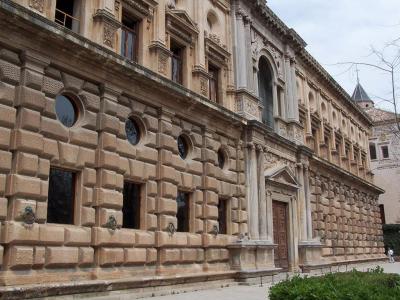


Museum of Alhambra, Granada
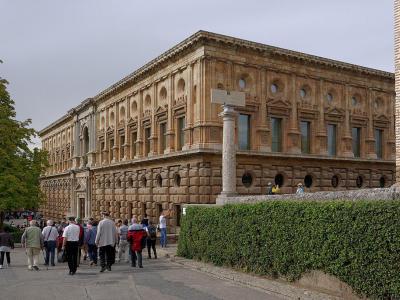
The Museum of the Alhambra, established in 1870 and situated in the historic Palace of Charles V in Granada, serves as a vital repository of Hispano-Muslim art and culture. It was first known as the Archaeological Museum of the Alhambra, renamed in 1962 as the National Museum of Hispano-Muslim Art, and since 1994, it has been operated by the Board of the Alhambra and Generalife under its current name.
Located on the ground floor's south wing of the Palace, the museum is methodically organized into seven thematic and chronological rooms. These rooms showcase a variety of objects, artifacts, and architectural remnants spanning from the mid-8th century through to the end of the Nasrid dynasty. These collections are primarily sourced from excavations within Granada itself and from donations across various locations. The exhibits include a range of items from everyday objects and scientific instruments to religious texts and luxurious decor, illustrating the religion, science, and economy of the Moors.
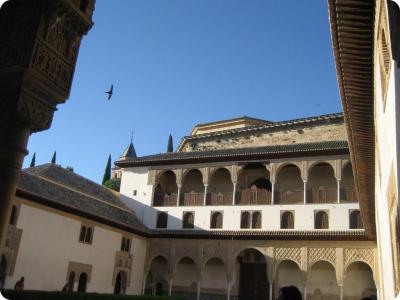
One of the museum’s notable features is its architectural elements, including intricately carved wooden ceilings and plasterwork that decorate the museum walls, alongside a beautiful collection of china. These elements not only contribute to the museum's aesthetic but also reflect the sophisticated craftsmanship and artistic heritage of the Hispano-Muslim era.
The Museum of the Alhambra is more than just a collection of artifacts; it is a cultural bridge to the past, offering insights into the sophisticated civilizations that thrived in the Iberian Peninsula under Islamic rule. It remains an essential destination for both scholars and tourists, keen to explore the rich tapestry of Spain's Moorish history.
Located on the ground floor's south wing of the Palace, the museum is methodically organized into seven thematic and chronological rooms. These rooms showcase a variety of objects, artifacts, and architectural remnants spanning from the mid-8th century through to the end of the Nasrid dynasty. These collections are primarily sourced from excavations within Granada itself and from donations across various locations. The exhibits include a range of items from everyday objects and scientific instruments to religious texts and luxurious decor, illustrating the religion, science, and economy of the Moors.
One of the museum’s notable features is its architectural elements, including intricately carved wooden ceilings and plasterwork that decorate the museum walls, alongside a beautiful collection of china. These elements not only contribute to the museum's aesthetic but also reflect the sophisticated craftsmanship and artistic heritage of the Hispano-Muslim era.
The Museum of the Alhambra is more than just a collection of artifacts; it is a cultural bridge to the past, offering insights into the sophisticated civilizations that thrived in the Iberian Peninsula under Islamic rule. It remains an essential destination for both scholars and tourists, keen to explore the rich tapestry of Spain's Moorish history.
Want to visit this sight? Check out these Self-Guided Walking Tours in Granada. Alternatively, you can download the mobile app "GPSmyCity: Walks in 1K+ Cities" from Apple App Store or Google Play Store. The app turns your mobile device to a personal tour guide and it works offline, so no data plan is needed when traveling abroad.
Download The GPSmyCity App



Museum of Alhambra on Map
Sight Name: Museum of Alhambra
Sight Location: Granada, Spain (See walking tours in Granada)
Sight Type: Museum/Gallery
Sight Location: Granada, Spain (See walking tours in Granada)
Sight Type: Museum/Gallery
Nearby Sights


Walking Tours in Granada, Spain

Create Your Own Walk in Granada
Creating your own self-guided walk in Granada is easy and fun. Choose the city attractions that you want to see and a walk route map will be created just for you. You can even set your hotel as the start point of the walk.
Granada's Architectural Jewels
Over the course of centuries, Granada's architecture has been influenced by four major styles – Moorish, Renaissance, Gothic and Baroque. The city’s most impressive buildings date from the period of Arabic rule and the subsequent Catholic epoch which started after the Moors were displaced in 1492.
From the dazzling majesty of the Alhambra to the awe-inspiring churches and the subtly... view more
Tour Duration: 2 Hour(s)
Travel Distance: 3.5 Km or 2.2 Miles
From the dazzling majesty of the Alhambra to the awe-inspiring churches and the subtly... view more
Tour Duration: 2 Hour(s)
Travel Distance: 3.5 Km or 2.2 Miles
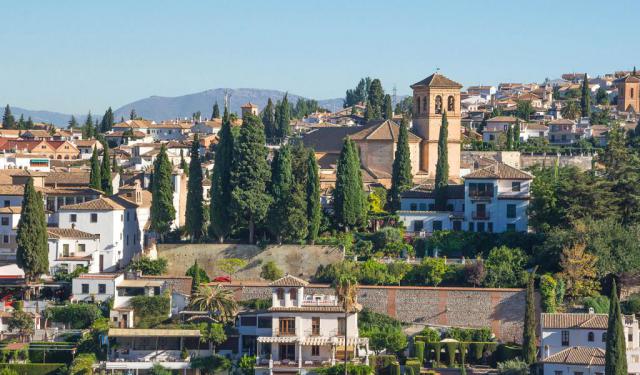
Albayzín Walking Tour
American writer Washington Irving’s book Tales of the Alhambra repeatedly features the Albayzín quarter. He was particularly struck by the district at night, when he heard “the tinkling of innumerable guitars, and the clicking of castanets” rising from its streets and gardens.
The Albayzín occupies the hill opposite the Alhambra, on the northern side of the Darro River. It is one of... view more
Tour Duration: 2 Hour(s)
Travel Distance: 2.3 Km or 1.4 Miles
The Albayzín occupies the hill opposite the Alhambra, on the northern side of the Darro River. It is one of... view more
Tour Duration: 2 Hour(s)
Travel Distance: 2.3 Km or 1.4 Miles
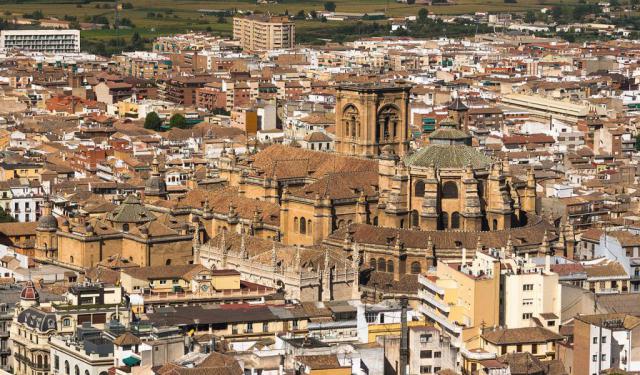
A Walk in Granada's Historical Old Town
American writer Washington Irving arrived at the Alhambra in 1829-and stayed for nearly three months. He became so concerned about visitors scratching their names into the monument that he and Prince Dolgorouki provided a leather-bound visitors’ book as an alternative.
Granada lies at the foot of the Sierra Nevada mountain range, where the Darro and Genil rivers meet. Its history reaches back... view more
Tour Duration: 3 Hour(s)
Travel Distance: 3.5 Km or 2.2 Miles
Granada lies at the foot of the Sierra Nevada mountain range, where the Darro and Genil rivers meet. Its history reaches back... view more
Tour Duration: 3 Hour(s)
Travel Distance: 3.5 Km or 2.2 Miles
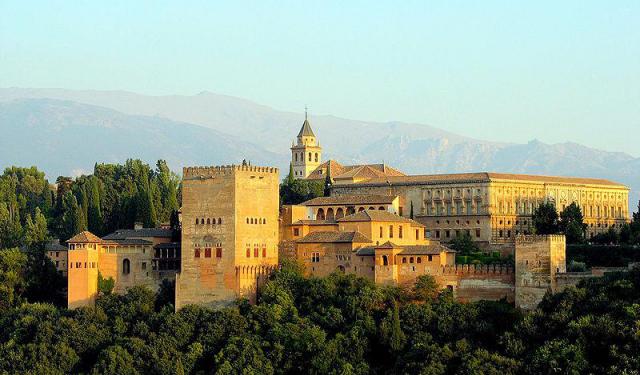
Alhambra Walking Tour
The Alhambra is Granada’s most famous monument and one of the finest surviving examples of medieval Islamic architecture in Europe. Its name comes from Arabic and is generally translated as “The Red One,” probably referring to the reddish walls of the fortress. The complex occupies Sabika Hill, overlooking Granada and the Albaicín.
The hill was fortified as early as the 9th century, but... view more
Tour Duration: 2 Hour(s)
Travel Distance: 2.0 Km or 1.2 Miles
The hill was fortified as early as the 9th century, but... view more
Tour Duration: 2 Hour(s)
Travel Distance: 2.0 Km or 1.2 Miles