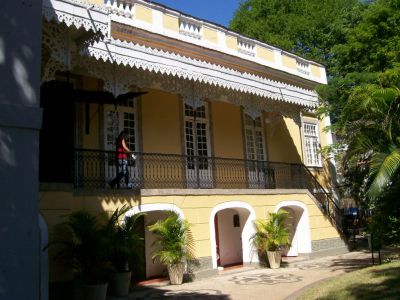


Museum of the Indigenous Populations, Rio de Janeiro
The Museum of the Indigenous Populations (Museu do Índio) operates as a cultural and scientific institution under the National Foundation of Indigenous Populations. It was established in 1953 by Darcy Ribeiro, a prominent Brazilian figure with expertise in anthropology, history, sociology, writing, and politics. This Brazilian museum is the only official institution dedicated to preserving and promoting indigenous cultures. Its mission is to provide an accurate and current portrayal of indigenous communities while dispelling misconceptions and prejudices.
The museum boasts a diverse collection, encompassing artifacts from a wide range of contemporary indigenous groups, amounting to a total of 14,000 ethnographic items. Additionally, the Marechal Rondon Library, affiliated with the museum, houses an extensive collection of 16,000 national and international publications specializing in ethnology and related fields. The library also contains 50,000 images from various contexts, including 3,000 digital photographs stored on CD-ROMs, approximately 200 films, videos, and sound recordings. Moreover, there are 500,000 historically significant documents that provide insight into the political situations faced by various indigenous groups in Brazil, spanning from the late 19th century to the present day.
Inside the main museum building, visitors can explore eleven different exhibition rooms, where the Museu do Índio periodically showcases paintings and photographs from its extensive archives. Furthermore, the museum's gardens offer visitors a unique experience with five distinct environments, such as a Guarani fazenda, a Xingu kitchen, and a ritual house for the Xingu Quarup (also spelled "Kuarup"). These outdoor spaces provide a hands-on opportunity to immerse oneself in the indigenous way of life and culture.
The museum boasts a diverse collection, encompassing artifacts from a wide range of contemporary indigenous groups, amounting to a total of 14,000 ethnographic items. Additionally, the Marechal Rondon Library, affiliated with the museum, houses an extensive collection of 16,000 national and international publications specializing in ethnology and related fields. The library also contains 50,000 images from various contexts, including 3,000 digital photographs stored on CD-ROMs, approximately 200 films, videos, and sound recordings. Moreover, there are 500,000 historically significant documents that provide insight into the political situations faced by various indigenous groups in Brazil, spanning from the late 19th century to the present day.
Inside the main museum building, visitors can explore eleven different exhibition rooms, where the Museu do Índio periodically showcases paintings and photographs from its extensive archives. Furthermore, the museum's gardens offer visitors a unique experience with five distinct environments, such as a Guarani fazenda, a Xingu kitchen, and a ritual house for the Xingu Quarup (also spelled "Kuarup"). These outdoor spaces provide a hands-on opportunity to immerse oneself in the indigenous way of life and culture.
Want to visit this sight? Check out these Self-Guided Walking Tours in Rio de Janeiro. Alternatively, you can download the mobile app "GPSmyCity: Walks in 1K+ Cities" from Apple App Store or Google Play Store. The app turns your mobile device to a personal tour guide and it works offline, so no data plan is needed when traveling abroad.
Download The GPSmyCity App



Museum of the Indigenous Populations on Map
Sight Name: Museum of the Indigenous Populations
Sight Location: Rio de Janeiro, Brazil (See walking tours in Rio de Janeiro)
Sight Type: Museum/Gallery
Sight Location: Rio de Janeiro, Brazil (See walking tours in Rio de Janeiro)
Sight Type: Museum/Gallery
Nearby Sights




Walking Tours in Rio de Janeiro, Brazil

Create Your Own Walk in Rio de Janeiro
Creating your own self-guided walk in Rio de Janeiro is easy and fun. Choose the city attractions that you want to see and a walk route map will be created just for you. You can even set your hotel as the start point of the walk.

Rio de Janeiro Beach Walk
The Copacabana and Ipanema beaches are two of the main reasons Rio is so famous around the world. While Copacabana is a year-round tourist hub, famed for its incredible New Year’s Eve celebrations, the Ipanema and Leblon neighborhoods have the cleanest, safest, most beautiful beaches in the city, and are the favorite playgrounds of Rio de Janeiro’s upper-middle class.
Start your tour with a... view more
Tour Duration: 2 Hours
Travel Distance: 4.9 Km or 3 Miles
Start your tour with a... view more
Tour Duration: 2 Hours
Travel Distance: 4.9 Km or 3 Miles
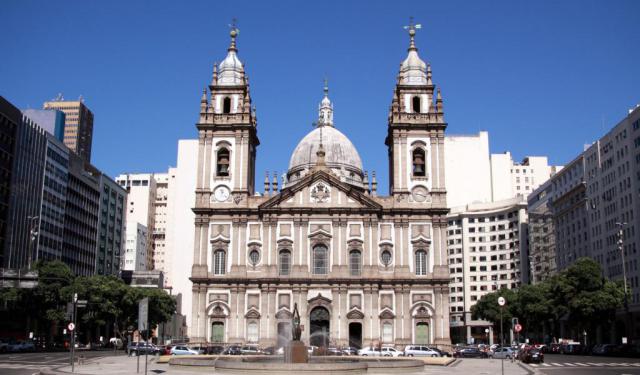
Rio's Top Religious Sites
Due to the legacy of the Portuguese in language, religion, and law, Rio de Janeiro has had a rich and influential Catholic tradition. Until the mid-20th century almost all Brazilians were - at least nominally - Catholic, and today the country’s religious sites, both classic and modern, impress with their skill, creativity and devotion.
Founded in 1590 by Benedictine monks from Bahia, the Sao... view more
Tour Duration: 2 Hours
Travel Distance: 3 Km or 1.9 Miles
Founded in 1590 by Benedictine monks from Bahia, the Sao... view more
Tour Duration: 2 Hours
Travel Distance: 3 Km or 1.9 Miles
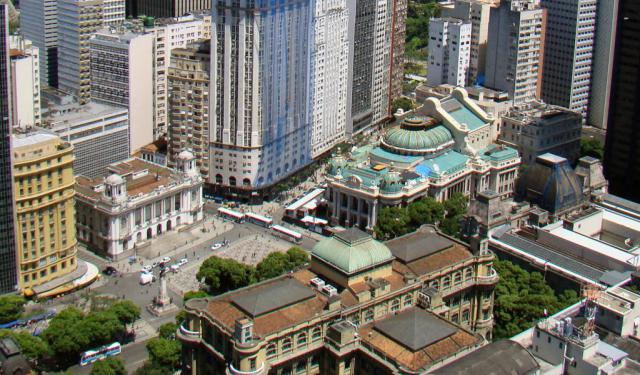
Rio de Janeiro Downtown Walking Tour
Sixteenth-century French traveler Jean de Léry did not see merely a harbor when he visited Rio de Janeiro. In his words, it felt more like an amphitheater.
Rio de Janeiro’s history is inseparable from geography, empire, and spectacle. The city’s name dates to January 1502, when Portuguese explorers under Gaspar de Lemos arrived at Guanabara Bay. Mistaking the vast bay for the mouth of a... view more
Tour Duration: 3 Hours
Travel Distance: 4 Km or 2.5 Miles
Rio de Janeiro’s history is inseparable from geography, empire, and spectacle. The city’s name dates to January 1502, when Portuguese explorers under Gaspar de Lemos arrived at Guanabara Bay. Mistaking the vast bay for the mouth of a... view more
Tour Duration: 3 Hours
Travel Distance: 4 Km or 2.5 Miles
Useful Travel Guides for Planning Your Trip

16 Uniquely Brazilian Souvenirs to Bring Home from Rio de Janeiro
Other than the sun, passion and football, for which Brazil is renowned and which cannot be fitted into one's luggage, picking a memorable gift from Rio is a tough job. And this is not because of the lack of suitable things to choose from, but because of their abundance. Indeed, there're...
City Walks Overview
