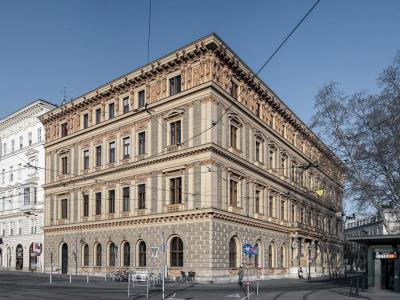


Palais Epstein, Vienna
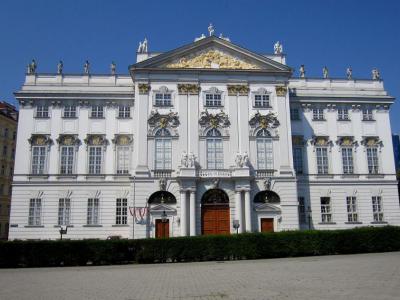
Palais Epstein is a historical building located on the Ringstraße in Vienna. It was constructed for Gustav Ritter von Epstein, an industrialist and banker. The renowned architect responsible for its design was Theophil Freiherr von Hansen, who also created the nearby Austrian Parliament Building. In contrast to the traditional Baroque noble palaces commonly found in Vienna, Palais Epstein was built during the late 19th century and falls into the category of Ringstraßenpalais. It stands as tall as five stories and exhibits the Neo-Renaissance architectural style that was prevalent during that era.
After the Gründerkrach, also known as the "Founders' Crash," which was the financial crisis following the stock market crash of May 9, 1873, Gustav von Epstein was compelled to sell the palace to the Imperial Continental Gas Association, an English gas company, in order to avoid bankruptcy. In 1902, the State took ownership of the building and used it as the residence of the Administrative Court. Subsequently, in 1922, it became the headquarters of the Vienna School Authority.
Between 1945 and 1955, during the Allied occupation of Austria, the palais was used as the headquarters of the Soviet forces. Following this period, it briefly functioned as an extension of the Academy of Music and Performing Arts before once again becoming the headquarters of the School Authority until 2002. After undergoing extensive renovation, it has since served as an annex to the nearby parliament. Additionally, a permanent exhibition chronicling the history of the palais and its owners has been established in the basement, and guided tours of the bel étage (first floor) have been made available, showcasing its meticulously restored original state.
After the Gründerkrach, also known as the "Founders' Crash," which was the financial crisis following the stock market crash of May 9, 1873, Gustav von Epstein was compelled to sell the palace to the Imperial Continental Gas Association, an English gas company, in order to avoid bankruptcy. In 1902, the State took ownership of the building and used it as the residence of the Administrative Court. Subsequently, in 1922, it became the headquarters of the Vienna School Authority.
Between 1945 and 1955, during the Allied occupation of Austria, the palais was used as the headquarters of the Soviet forces. Following this period, it briefly functioned as an extension of the Academy of Music and Performing Arts before once again becoming the headquarters of the School Authority until 2002. After undergoing extensive renovation, it has since served as an annex to the nearby parliament. Additionally, a permanent exhibition chronicling the history of the palais and its owners has been established in the basement, and guided tours of the bel étage (first floor) have been made available, showcasing its meticulously restored original state.
Want to visit this sight? Check out these Self-Guided Walking Tours in Vienna. Alternatively, you can download the mobile app "GPSmyCity: Walks in 1K+ Cities" from Apple App Store or Google Play Store. The app turns your mobile device to a personal tour guide and it works offline, so no data plan is needed when traveling abroad.
Download The GPSmyCity App



Palais Epstein on Map
Sight Name: Palais Epstein
Sight Location: Vienna, Austria (See walking tours in Vienna)
Sight Type: Attraction/Landmark
Sight Location: Vienna, Austria (See walking tours in Vienna)
Sight Type: Attraction/Landmark
Nearby Sights
Walking Tours in Vienna, Austria

Create Your Own Walk in Vienna
Creating your own self-guided walk in Vienna is easy and fun. Choose the city attractions that you want to see and a walk route map will be created just for you. You can even set your hotel as the start point of the walk.
Famous Homes of Vienna
Throughout centuries, the Austrian capital has been home to numerous famous individuals, from creative people of arts to thinkers, scientists, and politicians. Vienna's illustrious history is closely intertwined with the abodes of its celebrated residents, where artistic virtuosos and luminaries of their time found solace and inspiration.
The often modest apartments of Vienna's famous... view more
Tour Duration: 2 Hour(s)
Travel Distance: 3.9 Km or 2.4 Miles
The often modest apartments of Vienna's famous... view more
Tour Duration: 2 Hour(s)
Travel Distance: 3.9 Km or 2.4 Miles
Old Town Churches Walking Tour
"Vienna is the city of miracles and music" – Whoever said that must have emphasized Vienna's close association with the Christian faith. The intertwining of Christian heritage and artistry in the Austrian capital finds expression primarily in its magnificent churches.
Sitting at "the crossroads of Christian traditions", Vienna is home to various Christian... view more
Tour Duration: 2 Hour(s)
Travel Distance: 3.9 Km or 2.4 Miles
Sitting at "the crossroads of Christian traditions", Vienna is home to various Christian... view more
Tour Duration: 2 Hour(s)
Travel Distance: 3.9 Km or 2.4 Miles
Vienna's Historical Music Venues
Austria is synonymous with classical music almost to the point of obsession, and to call Vienna the "Musical Capital of the World" would be hardly an exaggeration. Indeed, over the past centuries, the city served as the home and workplace for many great musicians like Wolfgang Amadeus Mozart, Ludwig van Beethoven, Johann Strauss, Joseph Haydn, Franz Schubert, and others.
Among the... view more
Tour Duration: 2 Hour(s)
Travel Distance: 3.0 Km or 1.9 Miles
Among the... view more
Tour Duration: 2 Hour(s)
Travel Distance: 3.0 Km or 1.9 Miles
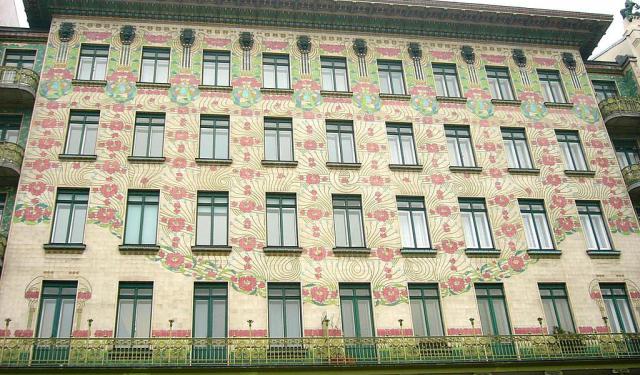
Vienna's Art Nouveau Architecture Tour II
If there are cities that flirt, Vienna is definitely the one. Here, even the buildings know how to do it.
Around the turn of the 20th century, the Austrian capital caught the Art Nouveau fever and decided that straight lines, drab walls, and historical imitation simply wouldn’t do anymore. Instead, it took to ornamental swirls, flowing curves, floral flourishes, and enough decorative detail... view more
Tour Duration: 1 Hour(s)
Travel Distance: 2.0 Km or 1.2 Miles
Around the turn of the 20th century, the Austrian capital caught the Art Nouveau fever and decided that straight lines, drab walls, and historical imitation simply wouldn’t do anymore. Instead, it took to ornamental swirls, flowing curves, floral flourishes, and enough decorative detail... view more
Tour Duration: 1 Hour(s)
Travel Distance: 2.0 Km or 1.2 Miles
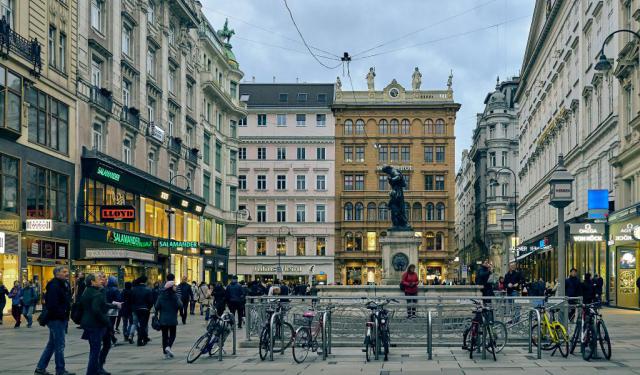
Vienna Old Town Walking Tour
Vienna’s Old Town-the historic core of Austria’s capital and a UNESCO World Heritage Site-is where cobblestones gossip, rooftops sparkle, and emperors still seem to whisper from the walls. Indeed, this is the kind of place where every alley seems to have a PhD in European history.
Once wrapped in medieval walls-before they rolled out the grand Ringstrasse boulevard in the 19th century-this... view more
Tour Duration: 2 Hour(s)
Travel Distance: 2.9 Km or 1.8 Miles
Once wrapped in medieval walls-before they rolled out the grand Ringstrasse boulevard in the 19th century-this... view more
Tour Duration: 2 Hour(s)
Travel Distance: 2.9 Km or 1.8 Miles
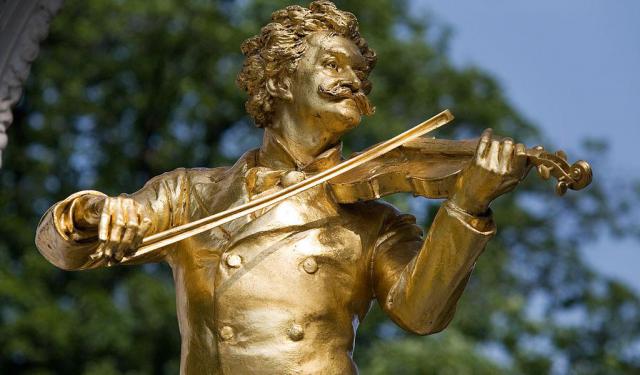
Johann Strauss Walking Tour
Throughout the entire 19th century, Vienna was a hub of cultural and musical activity, particularly in the realm of classical music, to which Johann Strauss and his father, Johann Strauss Sr., contributed greatly.
Strauss, the son had a personal connection with Vienna deeply rooted in its cultural fabric. Not only was he born here and spent most of his life, but also he achieved tremendous... view more
Tour Duration: 2 Hour(s)
Travel Distance: 4.1 Km or 2.5 Miles
Strauss, the son had a personal connection with Vienna deeply rooted in its cultural fabric. Not only was he born here and spent most of his life, but also he achieved tremendous... view more
Tour Duration: 2 Hour(s)
Travel Distance: 4.1 Km or 2.5 Miles
Useful Travel Guides for Planning Your Trip
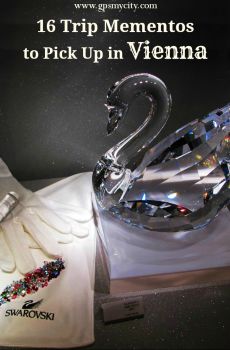
Top 15 Austrian Things to Buy in Vienna
Vienna stool, Viennese schnitzel, Viennese waltz, Vienna sausage, Viennese apple strudel... There's so much Vienna to it, that you might think you've heard it all. Luckily, chances are that you haven't and there's much more in store left to be discovered about this fascinating...
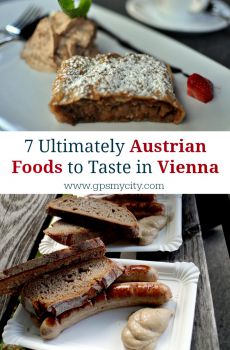
7 Ultimately Austrian Foods to Taste in Vienna
Once the center of the vast Hapsburg Empire, stretched from France in the West to Russia in the East, Austria has embraced many ethnic influences in its cuisine over the course of centuries. Many of the country's distinctive dishes reflect its multinational heritage. Coffee culture, for...