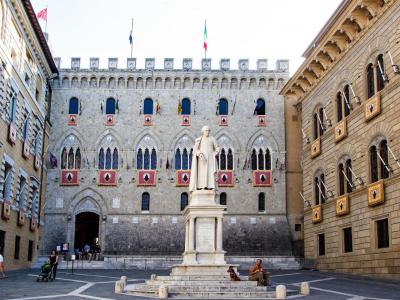


Palazzo Salimbeni (Salimbeni Palace), Siena
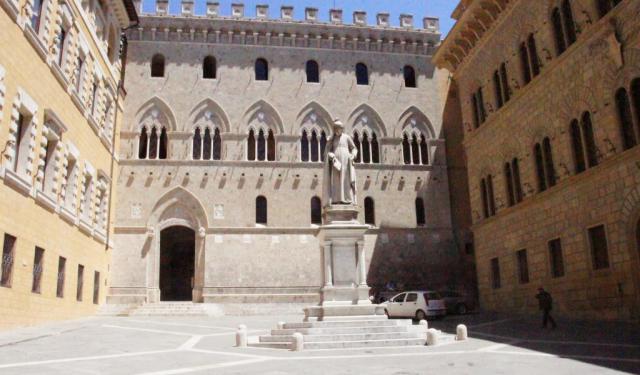
Salimbeni Palace (Palazzo Salimbeni), located in Siena, is a historically significant building that dates back to the 14th century. Originally built as a fortress, the palace flanks a piazza sharing its name and has undergone several transformations over the centuries.
The palace was originally erected on the site of an even older structure from the 12th century and served as the residence of the Salimbeni family until their expulsion from the city in 1419. Following this, the city council acquired the building and eventually sold it in 1866 to Monte dei Paschi di Siena, one of Italy's major banks, which continues to use it as its headquarters.
Architecturally, the Salimbeni Palace initially featured a medieval fort-like appearance, characteristic of the Sienese Gothic style. In 1879, the building underwent a significant remodel overseen by Giuseppe Partini, who infused it with a neo-Gothic aesthetic. This renovation expanded the building's size and preserved certain original elements like the battlements on the roof and the arches below, which were part of the original medieval structure.
The building was modernized once again in 1959 to accommodate the modern needs of the bank's offices. Over the years, Monte dei Paschi di Siena has enriched the palace’s interior with numerous works of art from renowned artists such as Beccafumi, Pietro Lorenzetti, and Sassetta. Additionally, the bank has assembled a significant collection of valuable documents that chronicle the economic history of Siena, housed within its archives.
Today, Salimbeni Palace not only serves as a functional space for its banking operations but also stands as a testament to the rich historical and cultural heritage of Siena.
The palace was originally erected on the site of an even older structure from the 12th century and served as the residence of the Salimbeni family until their expulsion from the city in 1419. Following this, the city council acquired the building and eventually sold it in 1866 to Monte dei Paschi di Siena, one of Italy's major banks, which continues to use it as its headquarters.
Architecturally, the Salimbeni Palace initially featured a medieval fort-like appearance, characteristic of the Sienese Gothic style. In 1879, the building underwent a significant remodel overseen by Giuseppe Partini, who infused it with a neo-Gothic aesthetic. This renovation expanded the building's size and preserved certain original elements like the battlements on the roof and the arches below, which were part of the original medieval structure.
The building was modernized once again in 1959 to accommodate the modern needs of the bank's offices. Over the years, Monte dei Paschi di Siena has enriched the palace’s interior with numerous works of art from renowned artists such as Beccafumi, Pietro Lorenzetti, and Sassetta. Additionally, the bank has assembled a significant collection of valuable documents that chronicle the economic history of Siena, housed within its archives.
Today, Salimbeni Palace not only serves as a functional space for its banking operations but also stands as a testament to the rich historical and cultural heritage of Siena.
Want to visit this sight? Check out these Self-Guided Walking Tours in Siena. Alternatively, you can download the mobile app "GPSmyCity: Walks in 1K+ Cities" from Apple App Store or Google Play Store. The app turns your mobile device to a personal tour guide and it works offline, so no data plan is needed when traveling abroad.
Download The GPSmyCity App



Palazzo Salimbeni (Salimbeni Palace) on Map
Sight Name: Palazzo Salimbeni (Salimbeni Palace)
Sight Location: Siena, Italy (See walking tours in Siena)
Sight Type: Attraction/Landmark
Guide(s) Containing This Sight:
Sight Location: Siena, Italy (See walking tours in Siena)
Sight Type: Attraction/Landmark
Guide(s) Containing This Sight:
Nearby Sights
Walking Tours in Siena, Italy

Create Your Own Walk in Siena
Creating your own self-guided walk in Siena is easy and fun. Choose the city attractions that you want to see and a walk route map will be created just for you. You can even set your hotel as the start point of the walk.
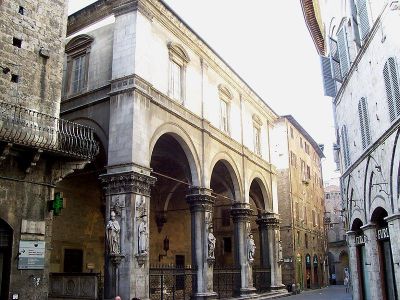
Siena Old Town Walking Tour
Italian poet Dante Alighieri mentions Siena several times in the Divine Comedy, often referring to the city's famous vanity and extravagant lifestyle during its medieval prosperity. Was he right? A walk through Siena's Old Town may offer a clue.
Siena is one of Italy's best-preserved medieval cities, perched on three hills in the heart of Tuscany. The origin of Siena's name... view more
Tour Duration: 1 Hour(s)
Travel Distance: 1.1 Km or 0.7 Miles
Siena is one of Italy's best-preserved medieval cities, perched on three hills in the heart of Tuscany. The origin of Siena's name... view more
Tour Duration: 1 Hour(s)
Travel Distance: 1.1 Km or 0.7 Miles
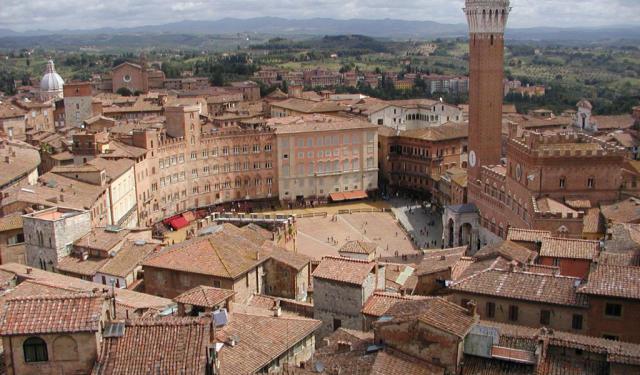
Siena's Palaces Walking Tour
A leisurely stroll through downtown Siena – a designated UNESCO World Heritage Site, full of imperious castles, palaces and other historic buildings – promises an exciting day of discovery and a pleasant experience for architecture buffs.
While most Italian cities have a church on their main square, Siena's famous Piazza Del Campo gathers around the city hall, known as Palazzo Pubblico... view more
Tour Duration: 1 Hour(s)
Travel Distance: 0.7 Km or 0.4 Miles
While most Italian cities have a church on their main square, Siena's famous Piazza Del Campo gathers around the city hall, known as Palazzo Pubblico... view more
Tour Duration: 1 Hour(s)
Travel Distance: 0.7 Km or 0.4 Miles
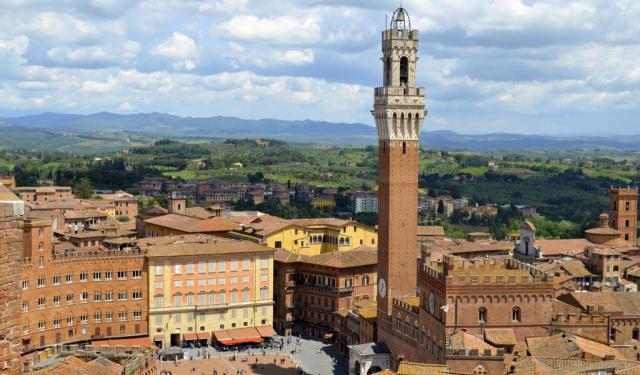
Medieval Siena Walking Tour
In medieval Siena, every street, tower, fountain, and church reflected the ambitions of a fiercely independent city.
During its years as an independent republic, Siena developed a complex civic identity based on loyalty to both the city and the neighborhood. The historic center was divided into contrade which are local districts whose members shared religious traditions, public spaces,... view more
Tour Duration: 2 Hour(s)
Travel Distance: 3.5 Km or 2.2 Miles
During its years as an independent republic, Siena developed a complex civic identity based on loyalty to both the city and the neighborhood. The historic center was divided into contrade which are local districts whose members shared religious traditions, public spaces,... view more
Tour Duration: 2 Hour(s)
Travel Distance: 3.5 Km or 2.2 Miles