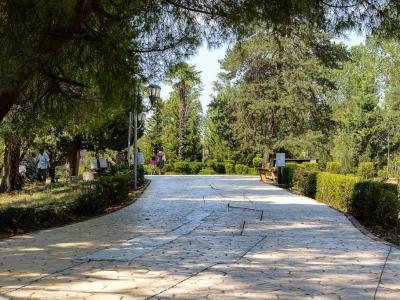


Parku i Madh i Tiranës (Grand Park of Tirana), Tirana
The Grand Park of Tirana (Parku i Madh i Tiranës) is a large green area located in the southern part of Tirana. Covering 289 hectares, it provides a peaceful escape from the city's development and serves as an important recreational spot for its residents.
At its core, there's a 55-hectare artificial lake, surrounded by various landscapes featuring around 120 species of trees, bushes, and flowers. The park's botanical garden, spanning 14.5 hectares, displays a range of native Albanian plants, showcasing the country's natural diversity.
The park was built between 1955 and 1956 following a Bulgarian design. Originally known as the Gogo stable area, it was later named after the Saint Procopius Church, situated within its boundaries, and formerly referred to as the 'Park of Saint Procopius.' Its layout has integrated it into Tirana's green infrastructure, stretching from the southern end of Dëshmorët e Kombit Boulevard near the University of Tirana to the south of the main Skanderbeg Square.
Besides being a leisure and nature spot, the Grand Park also hosts significant landmarks and memorials reflecting Albania's history and culture. These include the Saint Procopius Church, the Presidential Palace, and memorials dedicated to notable Albanian figures, British and Australian soldiers from World War II, and German soldiers from the same period. Noteworthy historical features include the Royal Palace, initiated by Zog of Albania and used by Italian King Victor Emmanuel III during his 1941 visit.
Furthermore, the park serves as the final resting place for the Frashëri brothers, influential figures in Albanian history and culture, and Faik Konitza, a former Albanian Minister to Washington and publisher of the Albania magazine, whose remains were brought back in 1998.
Despite urban development pressures, the Grand Park of Tirana remains a cherished part of the city's landscape. It provides a serene setting for walks, runs, and moments of contemplation, solidifying its position as one of the most beloved spaces in Tirana.
At its core, there's a 55-hectare artificial lake, surrounded by various landscapes featuring around 120 species of trees, bushes, and flowers. The park's botanical garden, spanning 14.5 hectares, displays a range of native Albanian plants, showcasing the country's natural diversity.
The park was built between 1955 and 1956 following a Bulgarian design. Originally known as the Gogo stable area, it was later named after the Saint Procopius Church, situated within its boundaries, and formerly referred to as the 'Park of Saint Procopius.' Its layout has integrated it into Tirana's green infrastructure, stretching from the southern end of Dëshmorët e Kombit Boulevard near the University of Tirana to the south of the main Skanderbeg Square.
Besides being a leisure and nature spot, the Grand Park also hosts significant landmarks and memorials reflecting Albania's history and culture. These include the Saint Procopius Church, the Presidential Palace, and memorials dedicated to notable Albanian figures, British and Australian soldiers from World War II, and German soldiers from the same period. Noteworthy historical features include the Royal Palace, initiated by Zog of Albania and used by Italian King Victor Emmanuel III during his 1941 visit.
Furthermore, the park serves as the final resting place for the Frashëri brothers, influential figures in Albanian history and culture, and Faik Konitza, a former Albanian Minister to Washington and publisher of the Albania magazine, whose remains were brought back in 1998.
Despite urban development pressures, the Grand Park of Tirana remains a cherished part of the city's landscape. It provides a serene setting for walks, runs, and moments of contemplation, solidifying its position as one of the most beloved spaces in Tirana.
Want to visit this sight? Check out these Self-Guided Walking Tours in Tirana. Alternatively, you can download the mobile app "GPSmyCity: Walks in 1K+ Cities" from Apple App Store or Google Play Store. The app turns your mobile device to a personal tour guide and it works offline, so no data plan is needed when traveling abroad.
Download The GPSmyCity App



Parku i Madh i Tiranës (Grand Park of Tirana) on Map
Sight Name: Parku i Madh i Tiranës (Grand Park of Tirana)
Sight Location: Tirana, Albania (See walking tours in Tirana)
Sight Type: Attraction/Landmark
Sight Location: Tirana, Albania (See walking tours in Tirana)
Sight Type: Attraction/Landmark
Nearby Sights

Walking Tours in Tirana, Albania

Create Your Own Walk in Tirana
Creating your own self-guided walk in Tirana is easy and fun. Choose the city attractions that you want to see and a walk route map will be created just for you. You can even set your hotel as the start point of the walk.
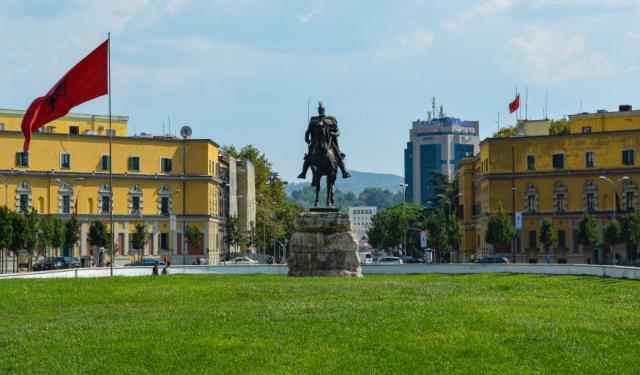
Tirana Downtwon Walking Tour
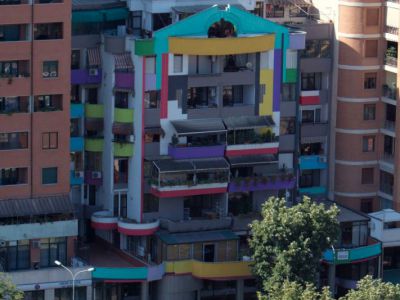
In Tirana, even apartment blocks were once given a public mission. Under artist-turned-mayor Edi Rama, gray façades from the communist years were painted in bold colors, turning ordinary streets into a visible sign of recovery after the long isolation.
Tirana, the capital of Albania, has a history shaped by crossroads, empire, isolation, and rapid reinvention. Although the wider area was... view more
Tour Duration: 1 Hour(s)
Travel Distance: 0.9 Km or 0.6 Miles
Tirana, the capital of Albania, has a history shaped by crossroads, empire, isolation, and rapid reinvention. Although the wider area was... view more
Tour Duration: 1 Hour(s)
Travel Distance: 0.9 Km or 0.6 Miles
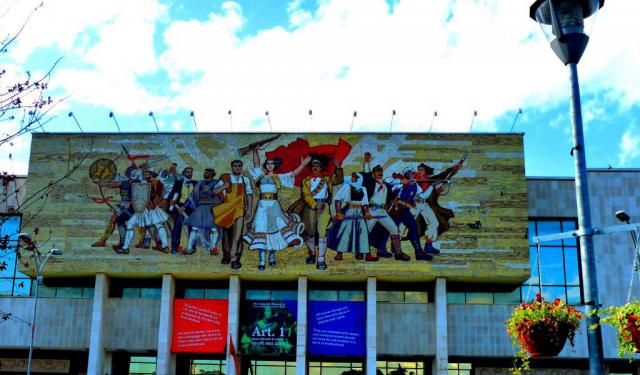
Communist Heritage Sites
Imagine a country so afraid of invasion that it built a bunker for every four citizens. Welcome to Tirana, where fear was cast in concrete.
Tirana’s Communist Heritage Sites are best understood through the strange and severe history of Albania in the second half of the 20th century. After World War II, the country came under the rule of Enver Hoxha, who led Albania from 1944 until his death... view more
Tour Duration: 1 Hour(s)
Travel Distance: 1.8 Km or 1.1 Miles
Tirana’s Communist Heritage Sites are best understood through the strange and severe history of Albania in the second half of the 20th century. After World War II, the country came under the rule of Enver Hoxha, who led Albania from 1944 until his death... view more
Tour Duration: 1 Hour(s)
Travel Distance: 1.8 Km or 1.1 Miles