

Presidio San Agustin del Tucson, Tucson (must see)
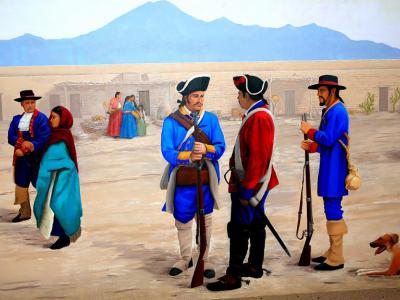
The Presidio San Agustín del Tucson Museum was created to offer visitors a glimpse into life in 1775. The original Presidio is believed to have been constructed in the fall of 1776, though construction and rebuilding continued for decades afterward. Spanish soldiers under the command of Captain Hugh O’Conor, an Irish-born officer in the Spanish army, established the fort as part of Spain’s effort to secure and expand its northern frontier.
The Presidio is considered the earliest structure in Tucson and the foundation of the city itself. Even the name “Tucson” reflects the site’s position at the “black base” of Sentinel Peak. The fort operated until 1856, when it was dismantled for building materials. The last remaining wall was removed in 1918, so the structure visitors see today is a historically informed reconstruction based on archaeological work and surviving sketches.
As you make your way into the exhibit area inside the compound, stop at the glass cases on your right and take a close look at the pottery fragments, stone tools, and household items uncovered during excavations. These artifacts show how Indigenous communities and Spanish settlers prepared food, made tools, and carried out daily tasks inside the original fort. The variety of objects helps explain how military duties and family life overlapped within this small, enclosed community.
From the central courtyard, walk toward the adobe building with the wooden porch roof-you’ll be approaching the Siqueiros–Jácome House, an original 1860s Sonoran row home. When you step into the front room, notice the narrow layout and thick walls, characteristic of Sonoran domestic architecture. This is where Soledad Jácome raised her six daughters after her husband, Juan Siqueiros, disappeared in the early 1870s. The room arrangement still reflects how the family lived and worked in this space.
The museum also highlights the experiences of Native peoples and early territorial settlers. On select days, visitors can watch demonstrations such as cotton and wool carding, spinning, weaving, tortilla making, or musket firing. Seasonal events, including gardening workshops, lectures on territorial Tucson, and evening ghost tours, offer additional ways to explore the site.
The Presidio is considered the earliest structure in Tucson and the foundation of the city itself. Even the name “Tucson” reflects the site’s position at the “black base” of Sentinel Peak. The fort operated until 1856, when it was dismantled for building materials. The last remaining wall was removed in 1918, so the structure visitors see today is a historically informed reconstruction based on archaeological work and surviving sketches.
As you make your way into the exhibit area inside the compound, stop at the glass cases on your right and take a close look at the pottery fragments, stone tools, and household items uncovered during excavations. These artifacts show how Indigenous communities and Spanish settlers prepared food, made tools, and carried out daily tasks inside the original fort. The variety of objects helps explain how military duties and family life overlapped within this small, enclosed community.
From the central courtyard, walk toward the adobe building with the wooden porch roof-you’ll be approaching the Siqueiros–Jácome House, an original 1860s Sonoran row home. When you step into the front room, notice the narrow layout and thick walls, characteristic of Sonoran domestic architecture. This is where Soledad Jácome raised her six daughters after her husband, Juan Siqueiros, disappeared in the early 1870s. The room arrangement still reflects how the family lived and worked in this space.
The museum also highlights the experiences of Native peoples and early territorial settlers. On select days, visitors can watch demonstrations such as cotton and wool carding, spinning, weaving, tortilla making, or musket firing. Seasonal events, including gardening workshops, lectures on territorial Tucson, and evening ghost tours, offer additional ways to explore the site.
Want to visit this sight? Check out these Self-Guided Walking Tours in Tucson. Alternatively, you can download the mobile app "GPSmyCity: Walks in 1K+ Cities" from Apple App Store or Google Play Store. The app turns your mobile device to a personal tour guide and it works offline, so no data plan is needed when traveling abroad.
Download The GPSmyCity App



Presidio San Agustin del Tucson on Map
Sight Name: Presidio San Agustin del Tucson
Sight Location: Tucson, USA (See walking tours in Tucson)
Sight Type: Attraction/Landmark
Guide(s) Containing This Sight:
Sight Location: Tucson, USA (See walking tours in Tucson)
Sight Type: Attraction/Landmark
Guide(s) Containing This Sight:
Nearby Sights



Walking Tours in Tucson, Arizona

Create Your Own Walk in Tucson
Creating your own self-guided walk in Tucson is easy and fun. Choose the city attractions that you want to see and a walk route map will be created just for you. You can even set your hotel as the start point of the walk.
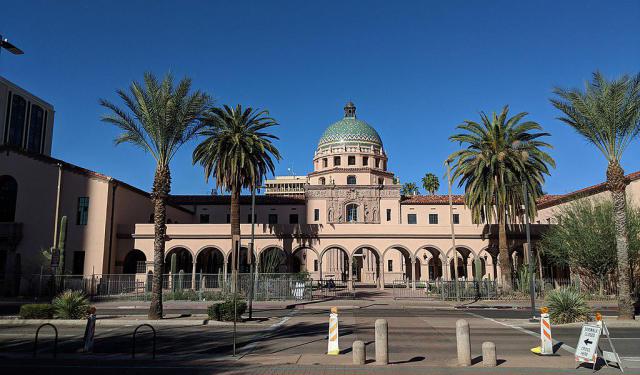
Tucson Architecture Walking Tour
Just as any city is not an accident but the result of coherent visions and aims, Tucson's architectural landscape bears witness to the city's profound historical narrative and cultural melange.
From the majestic belfries of the Saint Augustine Cathedral, adorned with the Spanish Colonial Revival-style opulence, to the resplendent Scottish Rite Cathedral (also known as the Masonic... view more
Tour Duration: 1 Hour(s)
Travel Distance: 2.1 Km or 1.3 Miles
From the majestic belfries of the Saint Augustine Cathedral, adorned with the Spanish Colonial Revival-style opulence, to the resplendent Scottish Rite Cathedral (also known as the Masonic... view more
Tour Duration: 1 Hour(s)
Travel Distance: 2.1 Km or 1.3 Miles
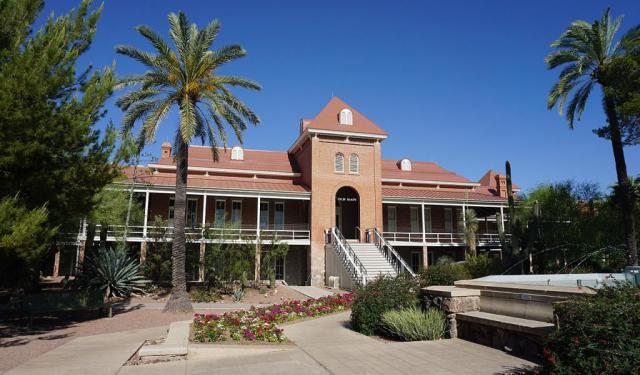
University of Arizona Walking Tour
Founded in 1885, the University of Arizona (U of A) was the first university in the state, and so far has been the only representative from the state of Arizona in the Association of American Universities.
The U of A campus in Tucson proudly showcases a number of landmarks, each with its own story and unique allure. Among these, the Old Main building, an architectural gem, completed in 1891,... view more
Tour Duration: 2 Hour(s)
Travel Distance: 2.8 Km or 1.7 Miles
The U of A campus in Tucson proudly showcases a number of landmarks, each with its own story and unique allure. Among these, the Old Main building, an architectural gem, completed in 1891,... view more
Tour Duration: 2 Hour(s)
Travel Distance: 2.8 Km or 1.7 Miles

Tucson Downtown Walking Tour
Tucson is a city shaped by layered stories and memorable characters. Italian geographer and explorer Eusebio Kino passed through this desert valley in the late 1600s, laying early foundations for future settlements, and centuries later the legendary Earp brothers arrived in town during a turbulent chapter of frontier history. Their time in Tucson was brief, but it reflects something true about the... view more
Tour Duration: 2 Hour(s)
Travel Distance: 3.0 Km or 1.9 Miles
Tour Duration: 2 Hour(s)
Travel Distance: 3.0 Km or 1.9 Miles