

Tucson Downtown Walking Tour (Self Guided), Tucson
Tucson is a city shaped by layered stories and memorable characters. Italian geographer and explorer Eusebio Kino passed through this desert valley in the late 1600s, laying early foundations for future settlements, and centuries later the legendary Earp brothers arrived in town during a turbulent chapter of frontier history. Their time in Tucson was brief, but it reflects something true about the city: important moments often unfolded quietly here, even on dusty streets and under wide desert skies.
The name “Tucson” comes from the O’odham words Cuk Ṣon, roughly meaning “at the base of the black hill,” referring to Sentinel Peak just southwest of the city center. Spanish settlers adapted the pronunciation, and over time it evolved into the English version used today. The name still reflects Tucson’s relationship with its landscape—mountains, desert, and sky all close at hand.
Tucson’s history stretches back thousands of years, with evidence of some of North America’s oldest continually farmed lands found in this region. The Spanish established the Presidio San Agustín del Tucson in 1775, developing a fortified settlement that marked the beginning of modern Tucson. After becoming part of the United States through the Gadsden Purchase in 1854, the town grew as a military post, trade hub, and transportation stop. By the late 19th century, rail connections brought new residents, merchants, and frontier tensions, including the arrival of lawmen and outlaws whose stories became part of Western lore.
Today, Tucson is known for its mix of history, multicultural heritage, and a creative energy shaped by the surrounding desert. The downtown and El Presidio neighborhoods blend restored adobe buildings, small shops, modern restaurants, and public art. Streets are easy to explore on foot, and the city’s relaxed pace gives visitors space to notice details: shaded courtyards, colorful murals, and mountain views appearing at the end of narrow streets.
A few places in the city center highlight this blend especially well. The Presidio San Agustin del Tucson offers a look at the early Spanish-era fort that once anchored the settlement, with reconstructed walls and exhibits that help explain Tucson’s origins. Just a short walk away, the Tucson Museum of Art presents a wide range of Southwestern, Latin American, and contemporary works, reflecting the region’s long cultural crossroads. Nearby, the Cathedral of Saint Augustine brings a different perspective with its striking façade and deep ties to the city’s Catholic community.
As you walk these streets—some older than the United States itself—it becomes clear how Tucson’s stories, from early explorers to frontier legends, continue to shape the city. It’s a place where history feels close, but never heavy, and where each step adds another piece to the picture.
The name “Tucson” comes from the O’odham words Cuk Ṣon, roughly meaning “at the base of the black hill,” referring to Sentinel Peak just southwest of the city center. Spanish settlers adapted the pronunciation, and over time it evolved into the English version used today. The name still reflects Tucson’s relationship with its landscape—mountains, desert, and sky all close at hand.
Tucson’s history stretches back thousands of years, with evidence of some of North America’s oldest continually farmed lands found in this region. The Spanish established the Presidio San Agustín del Tucson in 1775, developing a fortified settlement that marked the beginning of modern Tucson. After becoming part of the United States through the Gadsden Purchase in 1854, the town grew as a military post, trade hub, and transportation stop. By the late 19th century, rail connections brought new residents, merchants, and frontier tensions, including the arrival of lawmen and outlaws whose stories became part of Western lore.
Today, Tucson is known for its mix of history, multicultural heritage, and a creative energy shaped by the surrounding desert. The downtown and El Presidio neighborhoods blend restored adobe buildings, small shops, modern restaurants, and public art. Streets are easy to explore on foot, and the city’s relaxed pace gives visitors space to notice details: shaded courtyards, colorful murals, and mountain views appearing at the end of narrow streets.
A few places in the city center highlight this blend especially well. The Presidio San Agustin del Tucson offers a look at the early Spanish-era fort that once anchored the settlement, with reconstructed walls and exhibits that help explain Tucson’s origins. Just a short walk away, the Tucson Museum of Art presents a wide range of Southwestern, Latin American, and contemporary works, reflecting the region’s long cultural crossroads. Nearby, the Cathedral of Saint Augustine brings a different perspective with its striking façade and deep ties to the city’s Catholic community.
As you walk these streets—some older than the United States itself—it becomes clear how Tucson’s stories, from early explorers to frontier legends, continue to shape the city. It’s a place where history feels close, but never heavy, and where each step adds another piece to the picture.
How it works: Download the app "GPSmyCity: Walks in 1K+ Cities" from Apple App Store or Google Play Store to your mobile phone or tablet. The app turns your mobile device into a personal tour guide and its built-in GPS navigation functions guide you from one tour stop to next. The app works offline, so no data plan is needed when traveling abroad.
Tucson Downtown Walking Tour Map
Guide Name: Tucson Downtown Walking Tour
Guide Location: USA » Tucson (See other walking tours in Tucson)
Guide Type: Self-guided Walking Tour (Sightseeing)
# of Attractions: 9
Tour Duration: 2 Hour(s)
Travel Distance: 3.0 Km or 1.9 Miles
Author: anna
Sight(s) Featured in This Guide:
Guide Location: USA » Tucson (See other walking tours in Tucson)
Guide Type: Self-guided Walking Tour (Sightseeing)
# of Attractions: 9
Tour Duration: 2 Hour(s)
Travel Distance: 3.0 Km or 1.9 Miles
Author: anna
Sight(s) Featured in This Guide:
- Pima County Courthouse
- Presidio San Agustin del Tucson
- El Presidio Park
- Old Town Artisans
- Corbett House
- Tucson Museum of Art and Historic Block
- Sosa-Carrillo-Fremont House Museum
- El Tiradito
- Saint Augustine Cathedral
1) Pima County Courthouse
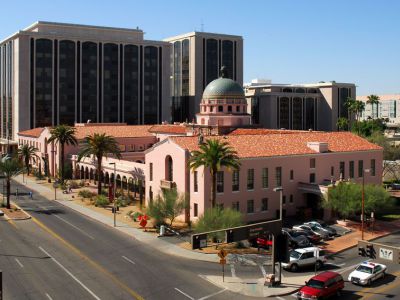
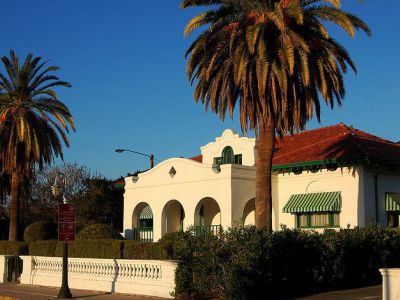
The Pima County Courthouse is a historic building that once served as the main courthouse in the region. From its completion in 1929 through 1978 it was home to the Pima County Superior Court. After that point, and through early 2015, the courthouse was home to the Pima County Consolidated Justice Court.
Today, tourists can visit the Pima County Courthouse to see its Mission Revival and Spanish Colonial architectural details. The building recently underwent renovations that restored its original adobe color. Previously, the building was known for the pink paint, which was applied in the early 1950s.
The courthouse isn’t just notable on the outside. Visitors can enjoy the interior of the building while they visit the offices of the Southern Arizona Heritage and Visitor Center, which are open daily.
The Pima County Courthouse is on the National Register of Historic Places. One of the most well-known outlaws held in this building was gangster John Dillinger. Dillinger and his gang were caught in Tucson in 1934. Visitors can still learn about his capture and arraignment during their visit to the courthouse complex.
Dillinger wasn’t the only recognizable figure associated with the Pima County Courthouse. Stories involving actor Clark Gable and later actor Johnny Depp have become part of local lore, though details of these accounts remain unverified.
The building has also been used for films, including the 1976 version of A Star Is Born and the 1980 comedy Stir Crazy.
Today, tourists can visit the Pima County Courthouse to see its Mission Revival and Spanish Colonial architectural details. The building recently underwent renovations that restored its original adobe color. Previously, the building was known for the pink paint, which was applied in the early 1950s.
The courthouse isn’t just notable on the outside. Visitors can enjoy the interior of the building while they visit the offices of the Southern Arizona Heritage and Visitor Center, which are open daily.
The Pima County Courthouse is on the National Register of Historic Places. One of the most well-known outlaws held in this building was gangster John Dillinger. Dillinger and his gang were caught in Tucson in 1934. Visitors can still learn about his capture and arraignment during their visit to the courthouse complex.
Dillinger wasn’t the only recognizable figure associated with the Pima County Courthouse. Stories involving actor Clark Gable and later actor Johnny Depp have become part of local lore, though details of these accounts remain unverified.
The building has also been used for films, including the 1976 version of A Star Is Born and the 1980 comedy Stir Crazy.
2) Presidio San Agustin del Tucson (must see)
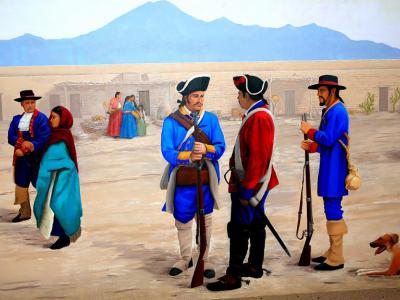
The Presidio San Agustín del Tucson Museum was created to offer visitors a glimpse into life in 1775. The original Presidio is believed to have been constructed in the fall of 1776, though construction and rebuilding continued for decades afterward. Spanish soldiers under the command of Captain Hugh O’Conor, an Irish-born officer in the Spanish army, established the fort as part of Spain’s effort to secure and expand its northern frontier.
The Presidio is considered the earliest structure in Tucson and the foundation of the city itself. Even the name “Tucson” reflects the site’s position at the “black base” of Sentinel Peak. The fort operated until 1856, when it was dismantled for building materials. The last remaining wall was removed in 1918, so the structure visitors see today is a historically informed reconstruction based on archaeological work and surviving sketches.
As you make your way into the exhibit area inside the compound, stop at the glass cases on your right and take a close look at the pottery fragments, stone tools, and household items uncovered during excavations. These artifacts show how Indigenous communities and Spanish settlers prepared food, made tools, and carried out daily tasks inside the original fort. The variety of objects helps explain how military duties and family life overlapped within this small, enclosed community.
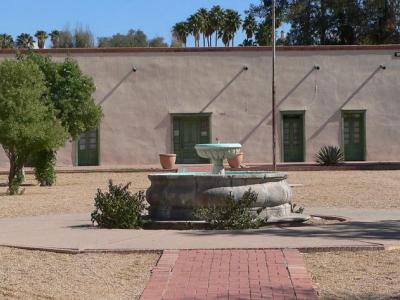
From the central courtyard, walk toward the adobe building with the wooden porch roof—you’ll be approaching the Siqueiros–Jácome House, an original 1860s Sonoran row home. When you step into the front room, notice the narrow layout and thick walls, characteristic of Sonoran domestic architecture. This is where Soledad Jácome raised her six daughters after her husband, Juan Siqueiros, disappeared in the early 1870s. The room arrangement still reflects how the family lived and worked in this space.
The museum also highlights the experiences of Native peoples and early territorial settlers. On select days, visitors can watch demonstrations such as cotton and wool carding, spinning, weaving, tortilla making, or musket firing. Seasonal events, including gardening workshops, lectures on territorial Tucson, and evening ghost tours, offer additional ways to explore the site.
The Presidio is considered the earliest structure in Tucson and the foundation of the city itself. Even the name “Tucson” reflects the site’s position at the “black base” of Sentinel Peak. The fort operated until 1856, when it was dismantled for building materials. The last remaining wall was removed in 1918, so the structure visitors see today is a historically informed reconstruction based on archaeological work and surviving sketches.
As you make your way into the exhibit area inside the compound, stop at the glass cases on your right and take a close look at the pottery fragments, stone tools, and household items uncovered during excavations. These artifacts show how Indigenous communities and Spanish settlers prepared food, made tools, and carried out daily tasks inside the original fort. The variety of objects helps explain how military duties and family life overlapped within this small, enclosed community.
From the central courtyard, walk toward the adobe building with the wooden porch roof—you’ll be approaching the Siqueiros–Jácome House, an original 1860s Sonoran row home. When you step into the front room, notice the narrow layout and thick walls, characteristic of Sonoran domestic architecture. This is where Soledad Jácome raised her six daughters after her husband, Juan Siqueiros, disappeared in the early 1870s. The room arrangement still reflects how the family lived and worked in this space.
The museum also highlights the experiences of Native peoples and early territorial settlers. On select days, visitors can watch demonstrations such as cotton and wool carding, spinning, weaving, tortilla making, or musket firing. Seasonal events, including gardening workshops, lectures on territorial Tucson, and evening ghost tours, offer additional ways to explore the site.
3) El Presidio Park
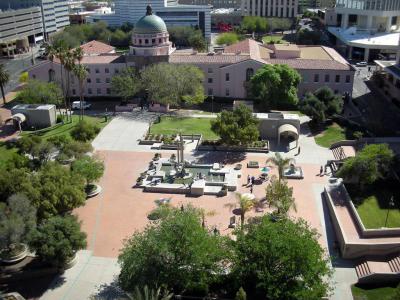
Between the Old County Courthouse and City Hall lies El Presidio Park. What looks like a simple park actually has a very long and storied history.
The land was first used as the military plaza and fort grounds for the Presidio San Agustín del Tucson. It also served as a gathering place for the Spanish and American settlers. In the 1860s, the nearby district became known as a “free zone,” or Barrio Libre, a name tied to its independent character. It wasn’t until the 1970s that the area took on its modern role as a park once more.
Today, El Presidio Park is nearly three acres of green space, a rose garden, veterans memorials and art installations. It is not uncommon to see festivals taking place in the park, including the Tucson Folk Festival and the Tucson Meet Yourself Festival. It is also a popular spot for political rallies, celebrations and weddings.
Tourists should stop at each of the memorial statues to develop an understanding of the changes that took place over the years. They can also see an original marker of the walls of the old Presidio.
The land was first used as the military plaza and fort grounds for the Presidio San Agustín del Tucson. It also served as a gathering place for the Spanish and American settlers. In the 1860s, the nearby district became known as a “free zone,” or Barrio Libre, a name tied to its independent character. It wasn’t until the 1970s that the area took on its modern role as a park once more.
Today, El Presidio Park is nearly three acres of green space, a rose garden, veterans memorials and art installations. It is not uncommon to see festivals taking place in the park, including the Tucson Folk Festival and the Tucson Meet Yourself Festival. It is also a popular spot for political rallies, celebrations and weddings.
Tourists should stop at each of the memorial statues to develop an understanding of the changes that took place over the years. They can also see an original marker of the walls of the old Presidio.
4) Old Town Artisans
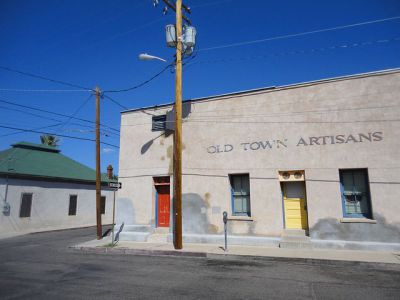
As you walk through downtown Tucson, you will want to set aside some time to explore Old Town Artisans. The name refers to a historic block of shops that highlight local artistry, hands-on creativity, and a mix of unique shopping and dining options.
Also known as the Art Shops District, this area once held the stables and part of the old fort’s north wall. Later, it became home to residents who shaped the town’s early growth—people such as clerks, nurses, grocers and other workers whose efforts supported daily life in the community. Many of the buildings still carry traces of those early foundations, giving visitors a sense of how the neighborhood once looked and functioned.
A visit to Old Town Artisans offers a chance to wander through shaded courtyards and historic rooms now filled with local businesses. You might come across second-hand shops, jewelers, a tattoo parlor, a bakery, a record shop, pubs and several galleries representing regional artists.
Some spaces also host live demonstrations, small events or community gatherings, giving travelers an easy way to experience local culture.
Also known as the Art Shops District, this area once held the stables and part of the old fort’s north wall. Later, it became home to residents who shaped the town’s early growth—people such as clerks, nurses, grocers and other workers whose efforts supported daily life in the community. Many of the buildings still carry traces of those early foundations, giving visitors a sense of how the neighborhood once looked and functioned.
A visit to Old Town Artisans offers a chance to wander through shaded courtyards and historic rooms now filled with local businesses. You might come across second-hand shops, jewelers, a tattoo parlor, a bakery, a record shop, pubs and several galleries representing regional artists.
Some spaces also host live demonstrations, small events or community gatherings, giving travelers an easy way to experience local culture.
5) Corbett House
The Corbett House is a popular stop for visitors interested in local arts and architecture. This Mission Revival–style home was completed in 1907 and served as the residence of the J. Knox Corbett family until 1963.
The Corbetts were a well-known Tucson family, and their home often functioned as a gathering place for community events and social occasions. Inside, the family furnished the rooms with European art and carefully chosen pieces that reflected both taste and status. The house also contained one of the area’s earliest air-conditioning systems, a notable feature at the time. Local stories even suggest that a small gin still operated here during Prohibition, adding another layer of interest to the property’s history.
J. Knox Corbett served as mayor, and his wife, Lizzie Hughes Corbett, was the daughter of Samuel C. Hughes, a Tucson City Council member and an influential figure in the city’s early development. Their home reflects the connections and ambitions of some of Tucson’s most active early residents.
Today, visitors can tour the Corbett House on Sundays through guided visits that highlight the home’s architectural details, original furnishings, and family history. While it is not open for general drop-in visits, those who plan ahead can step inside one of Tucson’s most notable historic homes and get a closer look at the life of a prominent early-20th-century family.
The Corbetts were a well-known Tucson family, and their home often functioned as a gathering place for community events and social occasions. Inside, the family furnished the rooms with European art and carefully chosen pieces that reflected both taste and status. The house also contained one of the area’s earliest air-conditioning systems, a notable feature at the time. Local stories even suggest that a small gin still operated here during Prohibition, adding another layer of interest to the property’s history.
J. Knox Corbett served as mayor, and his wife, Lizzie Hughes Corbett, was the daughter of Samuel C. Hughes, a Tucson City Council member and an influential figure in the city’s early development. Their home reflects the connections and ambitions of some of Tucson’s most active early residents.
Today, visitors can tour the Corbett House on Sundays through guided visits that highlight the home’s architectural details, original furnishings, and family history. While it is not open for general drop-in visits, those who plan ahead can step inside one of Tucson’s most notable historic homes and get a closer look at the life of a prominent early-20th-century family.
6) Tucson Museum of Art and Historic Block (must see)
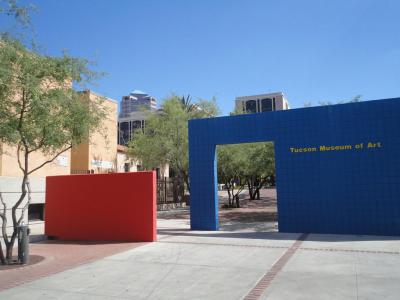
The Tucson Museum of Art is the largest visual arts institution in Southern Arizona, set within a four-acre Historic Block that preserves several of Tucson’s oldest surviving homes. The museum’s galleries and historic structures surround a central courtyard, creating a layout where art, local history, and early architecture are all part of the visitor experience.
The museum’s permanent collection includes more than 12,000 works. Art of the American Southwest is a major focus, but the collection also features notable Latin American, Asian, and Modern and Contemporary holdings. Depending on the installations during your visit, you may encounter paintings, sculpture, ceramics, and mixed-media works by artists such as Max Weber, John Chamberlain, Chuck Close, Bill Schenck, and Jasper Johns.
If you enter the main courtyard and look along the east side of the square, you will see La Casa Cordova, often cited as one of Tucson’s oldest surviving buildings. Its thick adobe walls and low façade reflect early Sonoran construction techniques. Walk toward the corner just north of La Casa Cordova and you will reach the Romero House, identifiable by its deep-set windows and enclosed courtyard. The Romero House frequently serves as a working studio space, so you may hear pottery wheels or see ceramic work in progress depending on the day.
From there, continue north toward the edge of the block and you will arrive at the Stevens/Duffield House, a later territorial-style residence with higher ceilings and more defined room divisions. If exhibitions are installed inside, the front rooms usually display small rotating selections from the museum’s permanent collection. A short walk west from this point brings you to the Fish House, recognizable by its long rectangular footprint and shaded porch area. Together, these buildings illustrate the shifts in Tucson’s residential architecture from the mid-1800s into the early 20th century.
Because access to individual houses varies, visitors are encouraged to check the museum’s website for the most current information on open buildings, exhibitions, and program schedules.
The museum’s permanent collection includes more than 12,000 works. Art of the American Southwest is a major focus, but the collection also features notable Latin American, Asian, and Modern and Contemporary holdings. Depending on the installations during your visit, you may encounter paintings, sculpture, ceramics, and mixed-media works by artists such as Max Weber, John Chamberlain, Chuck Close, Bill Schenck, and Jasper Johns.
If you enter the main courtyard and look along the east side of the square, you will see La Casa Cordova, often cited as one of Tucson’s oldest surviving buildings. Its thick adobe walls and low façade reflect early Sonoran construction techniques. Walk toward the corner just north of La Casa Cordova and you will reach the Romero House, identifiable by its deep-set windows and enclosed courtyard. The Romero House frequently serves as a working studio space, so you may hear pottery wheels or see ceramic work in progress depending on the day.
From there, continue north toward the edge of the block and you will arrive at the Stevens/Duffield House, a later territorial-style residence with higher ceilings and more defined room divisions. If exhibitions are installed inside, the front rooms usually display small rotating selections from the museum’s permanent collection. A short walk west from this point brings you to the Fish House, recognizable by its long rectangular footprint and shaded porch area. Together, these buildings illustrate the shifts in Tucson’s residential architecture from the mid-1800s into the early 20th century.
Because access to individual houses varies, visitors are encouraged to check the museum’s website for the most current information on open buildings, exhibitions, and program schedules.
7) Sosa-Carrillo-Fremont House Museum
The Sosa-Carrillo-Fremont House Museum is a historic adobe home in downtown Tucson. Built in the Sonoran tradition, it showcases the architectural style common in the region during the 19th century and offers a look into the lives of the families who shaped early Tucson. It remains a meaningful stop for visitors interested in the city’s cultural history and its early neighborhood layout.
The main house standing today was built around 1878 by Leopoldo Carrillo, though an earlier adobe structure from the Sosa family—dating to the 1850s or 1860s—once stood on the property. The name reflects the layered history of the two families. The “Fremont” association came later, even though historians are unsure whether John C. Fremont ever lived in the home. In 1881, the Carrillo family leased the property, likely for Fremont’s daughter, and the name remained linked to the site. This eventually led to its current, more historically accurate name: the Sosa-Carrillo-Fremont House.
For many years the home was owned by the Arizona Historical Society. In 2023, it was transferred to the Rio Nuevo District and is now operated by Los Descendientes del Presidio de Tucson. Today it houses the Mexican American Heritage and History Museum.
Visitors can explore the restored rooms and courtyard on guided tours that highlight the stories of the families who lived here. The museum also hosts lectures, workshops and cultural programs throughout the year, offering travelers an engaging way to experience Tucson’s diverse heritage.
The main house standing today was built around 1878 by Leopoldo Carrillo, though an earlier adobe structure from the Sosa family—dating to the 1850s or 1860s—once stood on the property. The name reflects the layered history of the two families. The “Fremont” association came later, even though historians are unsure whether John C. Fremont ever lived in the home. In 1881, the Carrillo family leased the property, likely for Fremont’s daughter, and the name remained linked to the site. This eventually led to its current, more historically accurate name: the Sosa-Carrillo-Fremont House.
For many years the home was owned by the Arizona Historical Society. In 2023, it was transferred to the Rio Nuevo District and is now operated by Los Descendientes del Presidio de Tucson. Today it houses the Mexican American Heritage and History Museum.
Visitors can explore the restored rooms and courtyard on guided tours that highlight the stories of the families who lived here. The museum also hosts lectures, workshops and cultural programs throughout the year, offering travelers an engaging way to experience Tucson’s diverse heritage.
8) El Tiradito
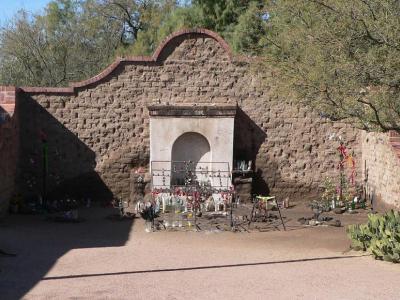
The crumbling bricks of the shrine of El Tiradito is one of the most popular tourist spots in Tucson. This is largely due not to the construction or facade but to the unique history of the shrine.
El Tiradito is dedicated to the memory of a man named Juan Oliveras. The legend is that Oliveras was married but was involved in a torrid love affair with his mother-in-law. He was caught by the woman's husband who killed Oliveras with an axe. The church, unwilling to bury the man in consecrated ground, buried him in the spot where he was murdered.
Visitors can pay their respects to Juan Oliveras by lighting candles at El Tiradito. Also known as the wishing shrine, many write their wishes on small slips of paper and slide them between the cracks of the stones. In addition to the faithful who leave these religious objects, El Tiradito is frequented and favored by many Tucsonans, including writers, poets, and other members of the town's artistic community.
According to the Phoenix New Times publication, El Tiradito is the only Catholic shrine in the United States dedicated to a sinner buried in unconsecrated ground. There is no cost to visit this spot in the area that is now known as Barrio Libre near downtown Tucson.
El Tiradito is dedicated to the memory of a man named Juan Oliveras. The legend is that Oliveras was married but was involved in a torrid love affair with his mother-in-law. He was caught by the woman's husband who killed Oliveras with an axe. The church, unwilling to bury the man in consecrated ground, buried him in the spot where he was murdered.
Visitors can pay their respects to Juan Oliveras by lighting candles at El Tiradito. Also known as the wishing shrine, many write their wishes on small slips of paper and slide them between the cracks of the stones. In addition to the faithful who leave these religious objects, El Tiradito is frequented and favored by many Tucsonans, including writers, poets, and other members of the town's artistic community.
According to the Phoenix New Times publication, El Tiradito is the only Catholic shrine in the United States dedicated to a sinner buried in unconsecrated ground. There is no cost to visit this spot in the area that is now known as Barrio Libre near downtown Tucson.
9) Saint Augustine Cathedral (must see)
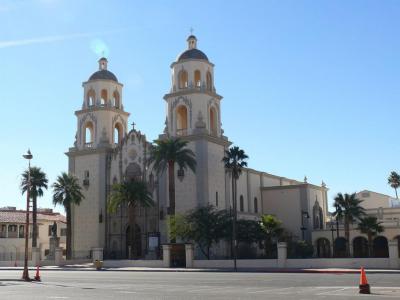
The Cathedral of Saint Augustine is one of Tucson’s oldest active religious sites, with origins that trace back to a small chapel founded here in 1776 during the Spanish colonial period. A larger church, completed in 1868, served the expanding Catholic population that settled in the region throughout the 19th century.
The cathedral you see today blends old and new elements. Its 1897 Mexican Baroque façade was preserved during a major reconstruction completed in 1968, when most of the building behind it was rebuilt to improve stability and usability. The result is a structure that retains its historic front while reflecting mid-20th-century updates to the interior layout.
If you stand directly in front of the main entrance and look up, you will see the coat of arms of Pope Pius XI positioned above the central doorway. From this spot, you can also take in the façade’s twin towers, sculpted niches, and carved ornamentation. These features intentionally echo the architectural style of Mission San Xavier del Bac, linking the cathedral to earlier mission traditions in the region. As you walk slowly along the exterior walls, look for the stained-glass windows and stone trim that show the building’s layered construction history.
When you enter the cathedral and step into the nave, look straight ahead toward the sanctuary to find the Pamplona Crucifix. This carved wooden figure, believed through carbon dating to date from the 12th or 13th century, now hangs on the rear sanctuary wall behind the main altar. As you walk further into the space, you will pass side chapels with devotional statues, painted architectural details, and the custom-built pipe organ crafted by Tucson organ maker David McDowell.
Today, the Cathedral of Saint Augustine serves as the mother church of the Roman Catholic Diocese of Tucson. It hosts regular Masses, community gatherings, and diocesan ceremonies, and visitors are welcome during scheduled services or during posted hours for quiet prayer.
Tip: Interior access is most reliable on weekends, and confessions are typically offered on Wednesdays and Fridays.
The cathedral you see today blends old and new elements. Its 1897 Mexican Baroque façade was preserved during a major reconstruction completed in 1968, when most of the building behind it was rebuilt to improve stability and usability. The result is a structure that retains its historic front while reflecting mid-20th-century updates to the interior layout.
If you stand directly in front of the main entrance and look up, you will see the coat of arms of Pope Pius XI positioned above the central doorway. From this spot, you can also take in the façade’s twin towers, sculpted niches, and carved ornamentation. These features intentionally echo the architectural style of Mission San Xavier del Bac, linking the cathedral to earlier mission traditions in the region. As you walk slowly along the exterior walls, look for the stained-glass windows and stone trim that show the building’s layered construction history.
When you enter the cathedral and step into the nave, look straight ahead toward the sanctuary to find the Pamplona Crucifix. This carved wooden figure, believed through carbon dating to date from the 12th or 13th century, now hangs on the rear sanctuary wall behind the main altar. As you walk further into the space, you will pass side chapels with devotional statues, painted architectural details, and the custom-built pipe organ crafted by Tucson organ maker David McDowell.
Today, the Cathedral of Saint Augustine serves as the mother church of the Roman Catholic Diocese of Tucson. It hosts regular Masses, community gatherings, and diocesan ceremonies, and visitors are welcome during scheduled services or during posted hours for quiet prayer.
Tip: Interior access is most reliable on weekends, and confessions are typically offered on Wednesdays and Fridays.
Walking Tours in Tucson, Arizona

Create Your Own Walk in Tucson
Creating your own self-guided walk in Tucson is easy and fun. Choose the city attractions that you want to see and a walk route map will be created just for you. You can even set your hotel as the start point of the walk.
University of Arizona Walking Tour
Founded in 1885, the University of Arizona (U of A) was the first university in the state, and so far has been the only representative from the state of Arizona in the Association of American Universities.
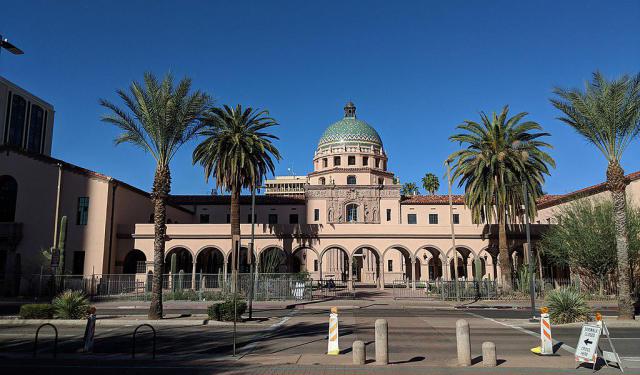
The U of A campus in Tucson proudly showcases a number of landmarks, each with its own story and unique allure. Among these, the Old Main building, an architectural gem, completed in 1891,... view more
Tour Duration: 2 Hour(s)
Travel Distance: 2.8 Km or 1.7 Miles
The U of A campus in Tucson proudly showcases a number of landmarks, each with its own story and unique allure. Among these, the Old Main building, an architectural gem, completed in 1891,... view more
Tour Duration: 2 Hour(s)
Travel Distance: 2.8 Km or 1.7 Miles
Tucson Architecture Walking Tour
Just as any city is not an accident but the result of coherent visions and aims, Tucson's architectural landscape bears witness to the city's profound historical narrative and cultural melange.
From the majestic belfries of the Saint Augustine Cathedral, adorned with the Spanish Colonial Revival-style opulence, to the resplendent Scottish Rite Cathedral (also known as the Masonic... view more
Tour Duration: 1 Hour(s)
Travel Distance: 2.1 Km or 1.3 Miles
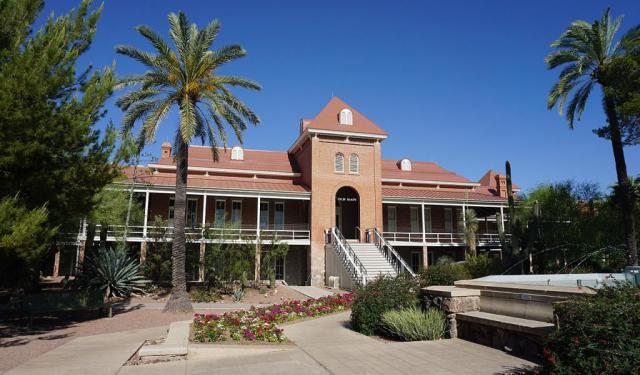
From the majestic belfries of the Saint Augustine Cathedral, adorned with the Spanish Colonial Revival-style opulence, to the resplendent Scottish Rite Cathedral (also known as the Masonic... view more
Tour Duration: 1 Hour(s)
Travel Distance: 2.1 Km or 1.3 Miles
The Most Popular Cities
/ view all