

Ritter Palace, Lucerne
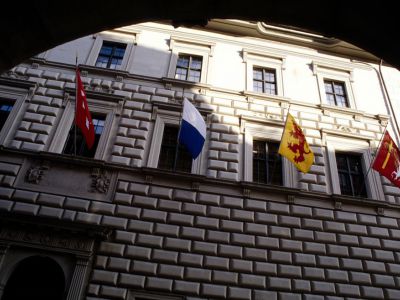
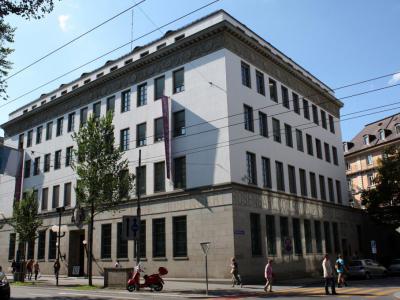
Perhaps the most impressive Renaissance palace in Lucerne’s Old Town, the Ritterscher Palace began as a private residence. It was commissioned in 1556 by Mayor Lux Ritter, a former mercenary and wealthy landowner who wanted a home that reflected his status. His choice was a Renaissance palazzo in the Florentine style, with massive stone blocks and finely crafted masonry-a style that had been used in Florence for around a century but was still something new in Lucerne.
For the project, Ritter hired the well-known Italian stonemason Giovanni Lynzo, also known as Hans of Trient. Lynzo was apparently reluctant to take on the commission, and his story took a dramatic turn during construction. He was found guilty of heresy and beheaded. According to legend, on the day of his execution, he cursed Lux Ritter, who, by coincidence or otherwise, died just a few days later.
At that point, only about two-thirds of the three-story palace and its open courtyard had been completed. Ritter’s heirs were unable to continue the work, so the city council of Lucerne took over the project and finished the building. In 1578, it was handed over to the Jesuits, who had recently arrived in the city.
Today, the palace attracts not only history enthusiasts but also art lovers. On the top-floor corridor, look for the remarkable “Dance of Death” series painted by Jakob von Will. It consists of seven paintings containing 23 scenes, showing people from different social classes being confronted by death.
The building now also serves as the seat of the Cantonal Administration. Its offices surround the impressive inner courtyard, where a three-story loggia supported by Tuscan columns is one of the palace’s finest architectural features. Since this is still a working government building, remember to keep your voice down as you look around.
The palace is generally open to the public during office hours, Monday through Friday, and admission is free. However, access may occasionally be restricted for government events or official receptions.
For the project, Ritter hired the well-known Italian stonemason Giovanni Lynzo, also known as Hans of Trient. Lynzo was apparently reluctant to take on the commission, and his story took a dramatic turn during construction. He was found guilty of heresy and beheaded. According to legend, on the day of his execution, he cursed Lux Ritter, who, by coincidence or otherwise, died just a few days later.
At that point, only about two-thirds of the three-story palace and its open courtyard had been completed. Ritter’s heirs were unable to continue the work, so the city council of Lucerne took over the project and finished the building. In 1578, it was handed over to the Jesuits, who had recently arrived in the city.
Today, the palace attracts not only history enthusiasts but also art lovers. On the top-floor corridor, look for the remarkable “Dance of Death” series painted by Jakob von Will. It consists of seven paintings containing 23 scenes, showing people from different social classes being confronted by death.
The building now also serves as the seat of the Cantonal Administration. Its offices surround the impressive inner courtyard, where a three-story loggia supported by Tuscan columns is one of the palace’s finest architectural features. Since this is still a working government building, remember to keep your voice down as you look around.
The palace is generally open to the public during office hours, Monday through Friday, and admission is free. However, access may occasionally be restricted for government events or official receptions.
Want to visit this sight? Check out these Self-Guided Walking Tours in Lucerne. Alternatively, you can download the mobile app "GPSmyCity: Walks in 1K+ Cities" from Apple App Store or Google Play Store. The app turns your mobile device to a personal tour guide and it works offline, so no data plan is needed when traveling abroad.
Download The GPSmyCity App



Ritter Palace on Map
Sight Name: Ritter Palace
Sight Location: Lucerne, Switzerland (See walking tours in Lucerne)
Sight Type: Attraction/Landmark
Guide(s) Containing This Sight:
Sight Location: Lucerne, Switzerland (See walking tours in Lucerne)
Sight Type: Attraction/Landmark
Guide(s) Containing This Sight:
Nearby Sights


Walking Tours in Lucerne, Switzerland

Create Your Own Walk in Lucerne
Creating your own self-guided walk in Lucerne is easy and fun. Choose the city attractions that you want to see and a walk route map will be created just for you. You can even set your hotel as the start point of the walk.
Lucerne's Architectural Jewels Walking Tour
Lucerne’s long religious and cultural history is thoroughly reflected in its architecture, making the city one of Switzerland’s most popular destinations. As you walk through the city center, impressive buildings-from grand civic landmarks to old guild houses, churches, and historic bridges-appear almost naturally along the route.
One of the top local architectural attractions is... view more
Tour Duration: 2 Hour(s)
Travel Distance: 2.3 Km or 1.4 Miles
One of the top local architectural attractions is... view more
Tour Duration: 2 Hour(s)
Travel Distance: 2.3 Km or 1.4 Miles
Lucerne Old Town Walking Tour
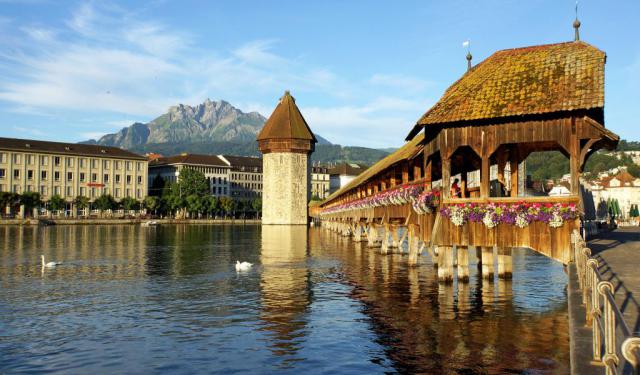
Lucerne has drawn travelers, writers, and musicians for centuries, often for simple reasons: the lake, the mountains, and a city center that’s easy to walk. Figures like the German composer Richard Wagner lived and worked here, and many 19th-century visitors wrote about Lucerne as a comfortable base for exploring central Switzerland. Their impressions still ring true today-Lucerne is... view more
Tour Duration: 2 Hour(s)
Travel Distance: 4.2 Km or 2.6 Miles
Tour Duration: 2 Hour(s)
Travel Distance: 4.2 Km or 2.6 Miles
Lucerne's Towers Walking Tour
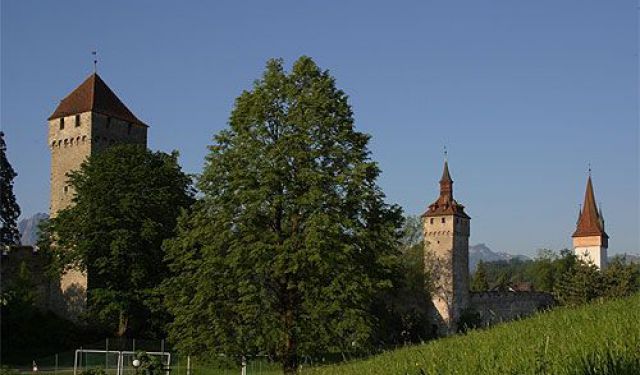
Rising high above Lucerne’s Old Town, the Musegg Wall is one of the city’s most distinctive landmarks. Its line of nine medieval towers forms a kind of stone crown above the rooftops, and from several points along the fortifications you can look out across the city, Lake Lucerne, the Reuss River, and the mountains beyond.
Built mainly during the 13th and 14th centuries, the wall stretches... view more
Tour Duration: 1 Hour(s)
Travel Distance: 1.0 Km or 0.6 Miles
Built mainly during the 13th and 14th centuries, the wall stretches... view more
Tour Duration: 1 Hour(s)
Travel Distance: 1.0 Km or 0.6 Miles