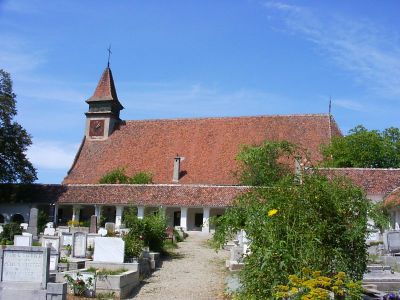


Saint Martin Church (Biserica Sfintul Martin), Brasov
Saint Martin Church, located on the western side of Brasov's Citadel Hill-historically referred to as Martinsberg-stands as one of the city's oldest and most significant monuments. Originally constructed in 1235, the church reflects a rich blend of history, architecture, and cultural evolution.
The church's origins are tied to Roman Catholicism, initially associated with the Premonstratensians and later the Franciscans. It was first mentioned in historical records in 1395 when King Sigismund of Hungary ordered a celebration within its walls. This same year, it served as the venue for the signing of a pivotal alliance between Mircea the Elder and Sigismund of Luxemburg. The building is also believed to have hosted Brasov's first town hall in its monastery structures.
The church endured damage during the Turkish siege of 1421 and underwent Gothic-style restorations in the early 16th century. Among its preserved relics is a bell from 1521, inscribed with the words “Magister Andreas de brash, anno 1521,” and an old door marked with the year 1522.
In 1792, the church underwent major renovations, doubling in size and taking on its current appearance. Its Baroque altarpiece, painted by Martin Schuler in 1730, and other 18th-century interior decorations, such as the painted pulpit canopy and coffered parapet, remain defining features. The sanctuary was demolished and extended during renovations in 1795-96, adding grandeur to its design.
The church's significance extends beyond its walls. Adjacent to it are an 18th-century cemetery and former parsonage. In modern times, Saint Martin Church continues to serve the community, holding monthly Romanian-language services under the Evangelical Church C.A. of Brasov (Honterusgemeinde).
A site of layered history and evolving architectural styles, Saint Martin Church not only reflects the spiritual heritage of Brasov but also bears witness to pivotal moments in Romanian and Hungarian history.
The church's origins are tied to Roman Catholicism, initially associated with the Premonstratensians and later the Franciscans. It was first mentioned in historical records in 1395 when King Sigismund of Hungary ordered a celebration within its walls. This same year, it served as the venue for the signing of a pivotal alliance between Mircea the Elder and Sigismund of Luxemburg. The building is also believed to have hosted Brasov's first town hall in its monastery structures.
The church endured damage during the Turkish siege of 1421 and underwent Gothic-style restorations in the early 16th century. Among its preserved relics is a bell from 1521, inscribed with the words “Magister Andreas de brash, anno 1521,” and an old door marked with the year 1522.
In 1792, the church underwent major renovations, doubling in size and taking on its current appearance. Its Baroque altarpiece, painted by Martin Schuler in 1730, and other 18th-century interior decorations, such as the painted pulpit canopy and coffered parapet, remain defining features. The sanctuary was demolished and extended during renovations in 1795-96, adding grandeur to its design.
The church's significance extends beyond its walls. Adjacent to it are an 18th-century cemetery and former parsonage. In modern times, Saint Martin Church continues to serve the community, holding monthly Romanian-language services under the Evangelical Church C.A. of Brasov (Honterusgemeinde).
A site of layered history and evolving architectural styles, Saint Martin Church not only reflects the spiritual heritage of Brasov but also bears witness to pivotal moments in Romanian and Hungarian history.
Want to visit this sight? Check out these Self-Guided Walking Tours in Brasov. Alternatively, you can download the mobile app "GPSmyCity: Walks in 1K+ Cities" from Apple App Store or Google Play Store. The app turns your mobile device to a personal tour guide and it works offline, so no data plan is needed when traveling abroad.
Download The GPSmyCity App



Saint Martin Church (Biserica Sfintul Martin) on Map
Sight Name: Saint Martin Church (Biserica Sfintul Martin)
Sight Location: Brasov, Romania (See walking tours in Brasov)
Sight Type: Religious
Sight Location: Brasov, Romania (See walking tours in Brasov)
Sight Type: Religious
Nearby Sights
Walking Tours in Brasov, Romania

Create Your Own Walk in Brasov
Creating your own self-guided walk in Brasov is easy and fun. Choose the city attractions that you want to see and a walk route map will be created just for you. You can even set your hotel as the start point of the walk.
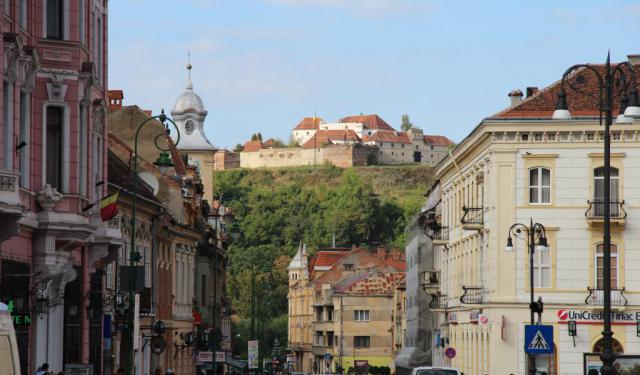
Walking Through Brasov's Medieval Old Town
Brasov is a city in the historical Romanian region of Transylvania. It is surrounded by the Southern Carpathians including Mount Tampa, which overlooks Brasov.
The city was first called Corona from the Latin word for "Crown." This name was first mentioned in 1235 AD. It is thought to have been named Corona for the reference St. Catherine's Monastery. It was then renamed to... view more
Tour Duration: 2 Hour(s)
Travel Distance: 3.0 Km or 1.9 Miles
The city was first called Corona from the Latin word for "Crown." This name was first mentioned in 1235 AD. It is thought to have been named Corona for the reference St. Catherine's Monastery. It was then renamed to... view more
Tour Duration: 2 Hour(s)
Travel Distance: 3.0 Km or 1.9 Miles
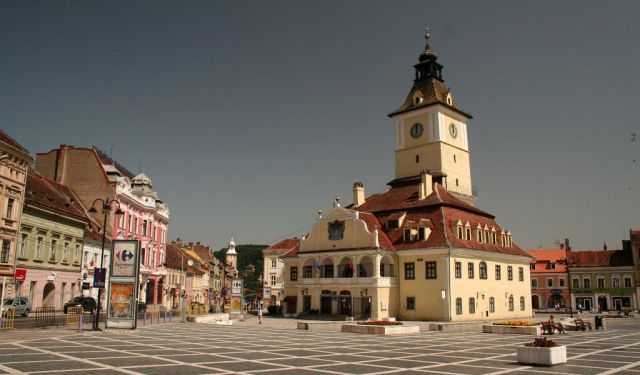
Brasov's Architectural Jewels Tour
Some may be pleasantly surprised to discover in Brasov, Romania, a treasure trove of architectural marvels. Indeed, spanning medieval through modern periods, the local architecture is quite impressive in terms of style variety.
Most of Brasov's architectural monuments are headquarters of local administration, museums, or other cultural venues. Among these jewels, there are several notable... view more
Tour Duration: 2 Hour(s)
Travel Distance: 2.5 Km or 1.6 Miles
Most of Brasov's architectural monuments are headquarters of local administration, museums, or other cultural venues. Among these jewels, there are several notable... view more
Tour Duration: 2 Hour(s)
Travel Distance: 2.5 Km or 1.6 Miles
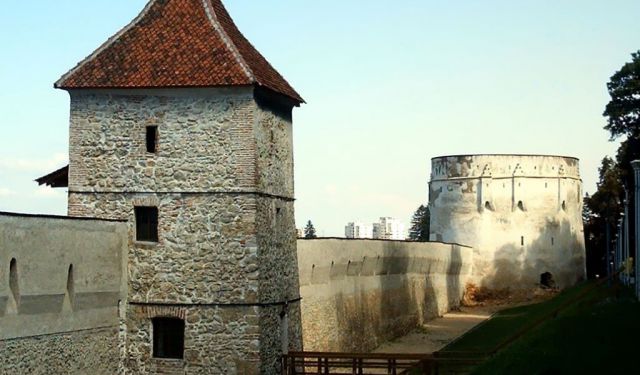
Brasov Fortifications Tour
Frequent invasions by Turkish Tatars throughout the 13th-15th centuries prompted Brasov residents to build fortifications around the town. At some point, Brasov came to be known as the “stronghold of seven bastions.” Remarkably, six of them are still in place. As for the other defensive structures placed between those bastions, most of them eventually succumbed to ruin, with only a few... view more
Tour Duration: 2 Hour(s)
Travel Distance: 2.8 Km or 1.7 Miles
Tour Duration: 2 Hour(s)
Travel Distance: 2.8 Km or 1.7 Miles