

Saint Sepulchre's Cemetery, Oxford
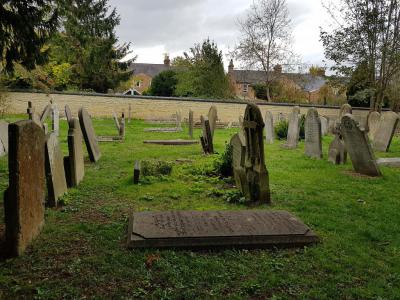
When you are in the Jericho area of Oxford, don’t just pass by Saint Sepulchre’s Cemetery, whose entry is on Walton Street; take a little time to stroll through it and observe the wildlife that now lives there among the ancient tombstones.
Following the Reformation a problem emerged in Oxford and most other English cities. More and more families wanted to build family vaults in their parish churchyards and other people wanted their tombs to rest undisturbed for perpetuity. With the rapidly growing population, parish graveyards were hard-pressed to find adequate space for everyone.
This problem came to a head in 1831 and later in 1849 during two cholera epidemics that ravaged the city. The authorities were obliged to close all parish church graveyards to avoid hygiene problems and three graveyards were created, none of them attached to any particular church; Saint Sepulchre’s Cemetery covered the northern part of Oxford.
The cemetery took over land that was bought from Saint John College and the former Walton Manor Farm that had been abandoned at the beginning of the 19th century. The farm’s gateposts still mark the entrance to the cemetery, but the lodge next to them was built in 1865 by Edward Bruton.
After the last epidemic the cemetery was the final resting place for many local families before being closed. Among the rather lopsided tombstones, you will find the graves of Thomas Combe, a Superintendent of the Oxford University Press, John Cavell, once the mayor of Oxford and Benjamin Jowett, Master of Balliol College and later Vice-Chancellor.
Following the Reformation a problem emerged in Oxford and most other English cities. More and more families wanted to build family vaults in their parish churchyards and other people wanted their tombs to rest undisturbed for perpetuity. With the rapidly growing population, parish graveyards were hard-pressed to find adequate space for everyone.
This problem came to a head in 1831 and later in 1849 during two cholera epidemics that ravaged the city. The authorities were obliged to close all parish church graveyards to avoid hygiene problems and three graveyards were created, none of them attached to any particular church; Saint Sepulchre’s Cemetery covered the northern part of Oxford.
The cemetery took over land that was bought from Saint John College and the former Walton Manor Farm that had been abandoned at the beginning of the 19th century. The farm’s gateposts still mark the entrance to the cemetery, but the lodge next to them was built in 1865 by Edward Bruton.
After the last epidemic the cemetery was the final resting place for many local families before being closed. Among the rather lopsided tombstones, you will find the graves of Thomas Combe, a Superintendent of the Oxford University Press, John Cavell, once the mayor of Oxford and Benjamin Jowett, Master of Balliol College and later Vice-Chancellor.
Want to visit this sight? Check out these Self-Guided Walking Tours in Oxford. Alternatively, you can download the mobile app "GPSmyCity: Walks in 1K+ Cities" from Apple App Store or Google Play Store. The app turns your mobile device to a personal tour guide and it works offline, so no data plan is needed when traveling abroad.
Download The GPSmyCity App



Saint Sepulchre's Cemetery on Map
Sight Name: Saint Sepulchre's Cemetery
Sight Location: Oxford, England (See walking tours in Oxford)
Sight Type: Attraction/Landmark
Sight Location: Oxford, England (See walking tours in Oxford)
Sight Type: Attraction/Landmark
Nearby Sights




Walking Tours in Oxford, England

Create Your Own Walk in Oxford
Creating your own self-guided walk in Oxford is easy and fun. Choose the city attractions that you want to see and a walk route map will be created just for you. You can even set your hotel as the start point of the walk.
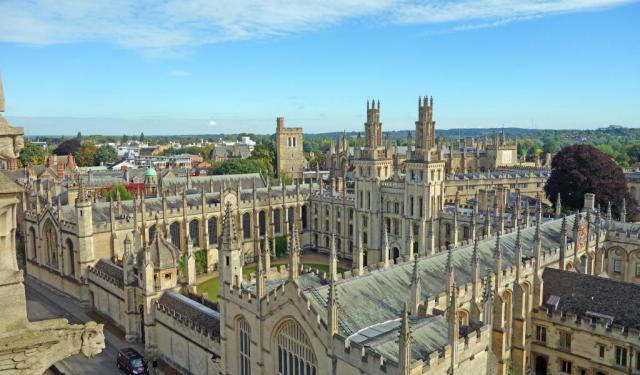
Oxford Downtown Walking Tour
Writer Oscar Wilde, who studied at Magdalen College, Oxford, once remarked that Oxford gave him “the most wonderful years” of his youth.
The city of Oxford has one of the longest and most layered histories in England. Its name comes from the Old English Oxenaforda, meaning “ford of the oxen,” referring to a shallow river crossing where cattle could pass through the water. This crossing... view more
Tour Duration: 2 Hour(s)
Travel Distance: 3.5 Km or 2.2 Miles
The city of Oxford has one of the longest and most layered histories in England. Its name comes from the Old English Oxenaforda, meaning “ford of the oxen,” referring to a shallow river crossing where cattle could pass through the water. This crossing... view more
Tour Duration: 2 Hour(s)
Travel Distance: 3.5 Km or 2.2 Miles

Harry Potter Walk in Oxford
Oxford’s connection with Harry Potter rests on a simple fact: the city already looked like Hogwarts before the cameras arrived. Long before it became associated with wands, robes, and moving staircases, Oxford was known for its medieval colleges, vaulted halls, cloisters, libraries, and enclosed quadrangles. For the filmmakers, it offered a real academic setting that needed little alteration to... view more
Tour Duration: 1 Hour(s)
Travel Distance: 1.0 Km or 0.6 Miles
Tour Duration: 1 Hour(s)
Travel Distance: 1.0 Km or 0.6 Miles
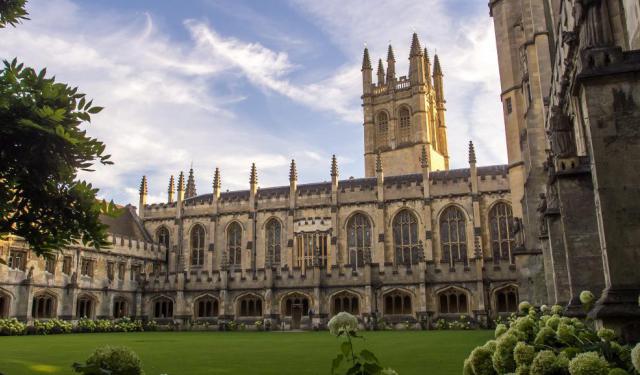
Colleges of Oxford University
During an 1862 summer boat ride along the River Thames, Oxford writer Lewis Carroll invented a fantastical story for Alice, the daughter of the dean of Christ Church, Oxford. That tale would later become Alice's Adventures in Wonderland.
Oxford’s colleges are the heart of the city’s identity, forming one of the oldest and most influential university communities in the world. Their... view more
Tour Duration: 1 Hour(s)
Travel Distance: 1.5 Km or 0.9 Miles
Oxford’s colleges are the heart of the city’s identity, forming one of the oldest and most influential university communities in the world. Their... view more
Tour Duration: 1 Hour(s)
Travel Distance: 1.5 Km or 0.9 Miles