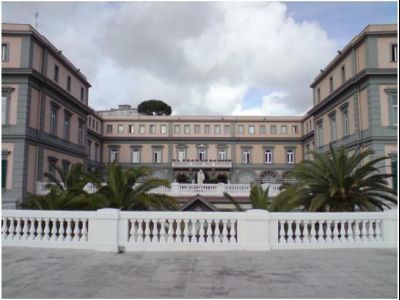


Seminario Arcivescovile di Napoli, Naples
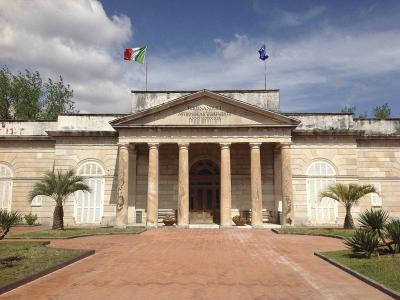
The Archiepiscopal Seminary of Naples serves as the diocesan seminary for the archdiocese of Naples. It is situated in the Capodimonte area of Naples and currently accommodates both the major seminary, which is named after Cardinal Alessio Ascalesi, and the minor seminary, which is named after Pope Paul VI.
The idea to construct the present seminary was proposed by Cardinal Alfredo Ildefonso Schuster during his visit to Naples. The previous facility had become too cramped and inadequate for the training requirements of the seminarians. The responsibility for the construction project was entrusted to the engineer Tirone, who drew inspiration from the design of the royal palace. Upon the recommendation of Pope Pius, construction commenced in 1930, and the new seminary was officially inaugurated on June 24, 1934, by Cardinal Alessio Ascalesi, the archbishop of Naples.
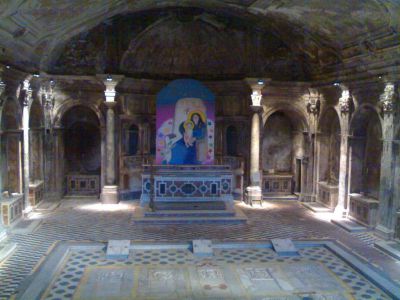
Following the devastating Irpinia earthquake in 1980, several valuable artworks salvaged from collapsed or damaged churches were safeguarded within the seminary. Notably, these included three Renaissance statues by Girolamo Santacroce (located in the main chapel), two eighteenth-century canvases by Antonio Sarnelli, and a pictorial series depicting the life of Moses.
On June 29, 1985, the seminary was renamed the Cardinal Alessio Ascalesi Seminary by the then-archbishop of Naples, Corrado Ursi, in honor of Cardinal Ascalesi, who had played a significant role in establishing the new headquarters.
Since 2003, under the direction of Archbishop Michele Giordano, the seminary has also housed the minor seminary, which was previously situated at Villa Bozzi ai Ponti Rossi.
The idea to construct the present seminary was proposed by Cardinal Alfredo Ildefonso Schuster during his visit to Naples. The previous facility had become too cramped and inadequate for the training requirements of the seminarians. The responsibility for the construction project was entrusted to the engineer Tirone, who drew inspiration from the design of the royal palace. Upon the recommendation of Pope Pius, construction commenced in 1930, and the new seminary was officially inaugurated on June 24, 1934, by Cardinal Alessio Ascalesi, the archbishop of Naples.
Following the devastating Irpinia earthquake in 1980, several valuable artworks salvaged from collapsed or damaged churches were safeguarded within the seminary. Notably, these included three Renaissance statues by Girolamo Santacroce (located in the main chapel), two eighteenth-century canvases by Antonio Sarnelli, and a pictorial series depicting the life of Moses.
On June 29, 1985, the seminary was renamed the Cardinal Alessio Ascalesi Seminary by the then-archbishop of Naples, Corrado Ursi, in honor of Cardinal Ascalesi, who had played a significant role in establishing the new headquarters.
Since 2003, under the direction of Archbishop Michele Giordano, the seminary has also housed the minor seminary, which was previously situated at Villa Bozzi ai Ponti Rossi.
Want to visit this sight? Check out these Self-Guided Walking Tours in Naples. Alternatively, you can download the mobile app "GPSmyCity: Walks in 1K+ Cities" from Apple App Store or Google Play Store. The app turns your mobile device to a personal tour guide and it works offline, so no data plan is needed when traveling abroad.
Download The GPSmyCity App



Seminario Arcivescovile di Napoli on Map
Sight Name: Seminario Arcivescovile di Napoli
Sight Location: Naples, Italy (See walking tours in Naples)
Sight Type: Attraction/Landmark
Sight Location: Naples, Italy (See walking tours in Naples)
Sight Type: Attraction/Landmark
Nearby Sights

Walking Tours in Naples, Italy

Create Your Own Walk in Naples
Creating your own self-guided walk in Naples is easy and fun. Choose the city attractions that you want to see and a walk route map will be created just for you. You can even set your hotel as the start point of the walk.
Naples Old Town Walk
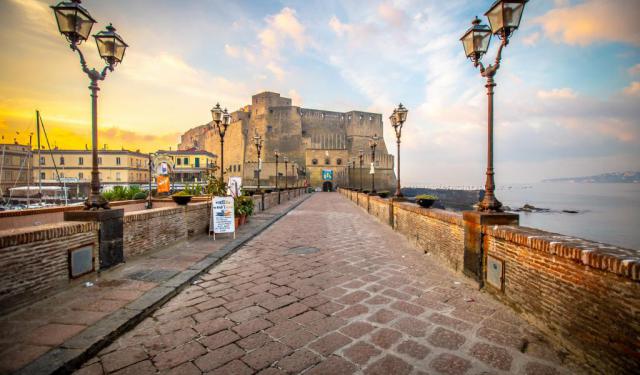
After travelling to Naples in 1835 using a false passport, French painter and writer Alexandre Dumas described the Old Town’s streets as true storytellers in his travel writings.
From the Middle Ages onward, the Old Town developed as a dense network of neighbourhoods organised around churches, convents, guilds, and markets. Religious institutions played a decisive role in shaping the urban... view more
Tour Duration: 2 Hour(s)
Travel Distance: 2.7 Km or 1.7 Miles
From the Middle Ages onward, the Old Town developed as a dense network of neighbourhoods organised around churches, convents, guilds, and markets. Religious institutions played a decisive role in shaping the urban... view more
Tour Duration: 2 Hour(s)
Travel Distance: 2.7 Km or 1.7 Miles
Historical Churches
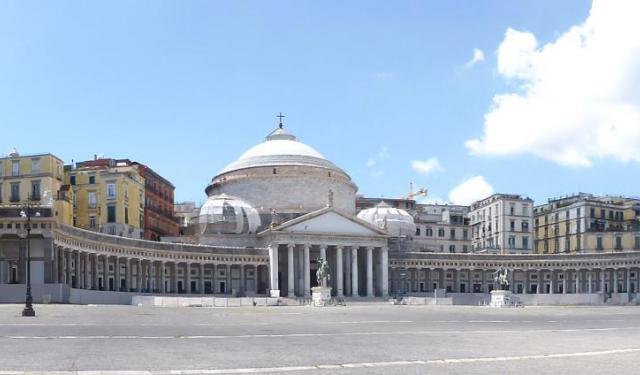
Christianity in general and the Catholic faith in particular have always played an important role in the social and cultural life of Naples. Not everyone knows that the city boasts the highest number of churches in the world – almost 500 historic “houses of God” (1,000 in total) – accumulated over the course of 17(!) centuries. Hence the nickname – “the city of 500 domes”.
And... view more
Tour Duration: 2 Hour(s)
Travel Distance: 3.7 Km or 2.3 Miles
And... view more
Tour Duration: 2 Hour(s)
Travel Distance: 3.7 Km or 2.3 Miles
Naples Top Attractions Walking Tour
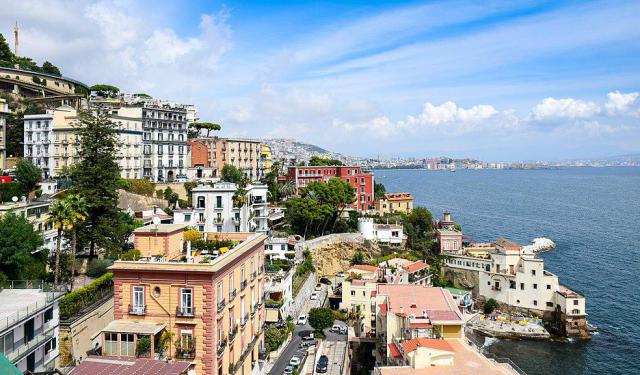
“See Naples and die.” German poet and scientist Goethe was convinced that Naples represented the epitome of human experience.
The city has been continuously inhabited for nearly three thousand years. Its origins date to the 8th century BC, when Greek settlers from Euboea established a small coastal colony known as Parthenope, near the site of today’s Ovo Castle. As the settlement expanded... view more
Tour Duration: 2 Hour(s)
Travel Distance: 3.7 Km or 2.3 Miles
The city has been continuously inhabited for nearly three thousand years. Its origins date to the 8th century BC, when Greek settlers from Euboea established a small coastal colony known as Parthenope, near the site of today’s Ovo Castle. As the settlement expanded... view more
Tour Duration: 2 Hour(s)
Travel Distance: 3.7 Km or 2.3 Miles
Naples Food Tour
A food tour through Naples is less about restaurants alone and more about understanding a city that has always lived through its kitchens, bakeries, markets, and street corners. Naples’ culinary story stretches back more than two thousand years, shaped by Greeks, Romans, Spanish rulers, French influences, and centuries of trade through one of the Mediterranean’s busiest ports. Each period... view more
Tour Duration: 1 Hour(s)
Travel Distance: 1.6 Km or 1 Miles
Tour Duration: 1 Hour(s)
Travel Distance: 1.6 Km or 1 Miles