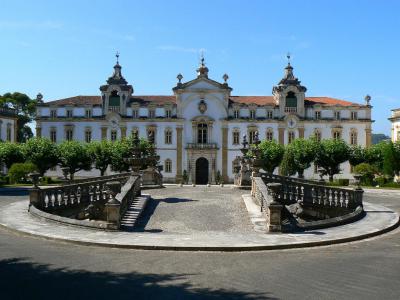


Seminario Maior da Sagrada Familia (Major Seminary of the Holy Family), Coimbra
The Major Seminary of the Holy Family (Seminário Maior da Sagrada Família) is a historical and religious landmark in Coimbra. Recognized as a National Monument since April 22, 2021, this grand institution has played a significant role in both theological and secular education for centuries.
The seminary was established on June 16, 1748, at the initiative of D. Miguel da Anunciacao, the Bishop of Coimbra and 16th Count of Arganil. The architectural vision for the building was executed by Italian architects Giovani Tamossi and Giacomo Azzollini, blending European influences into the city's cultural and religious landscape. The seminary was officially inaugurated on October 28, 1765, marking the beginning of its enduring legacy.
Among its most remarkable features is the Old Library, located on the ground floor, which houses an invaluable collection of approximately 9,000 books. These works, spanning from the early 16th century to 1800, represent a rich historical and intellectual heritage. The library's origins trace back to the private collection of Bishop D. Miguel da Anunciacao, which was later expanded through purchases and donations.
The seminary was designed to cater to both ecclesiastical students (Ordinandos) and lay scholars (Portionists), ensuring that the library contained essential materials for a broad spectrum of theological and secular disciplines.
Despite the 1834 decree suppressing religious orders and dispersing collegiate libraries, the Old Library of the Major Seminary remained intact, alongside the Royal College of Sao Pedro’s collection (now in the University of Coimbra’s General Library). It also survived the 1910 secularization of Church assets. With works in Latin, Portuguese, Spanish, and French, it spans Theology, Law, Sacred Scripture, Humanities, and History-a carefully preserved testament to Coimbra’s intellectual and spiritual heritage.
Today, the Major Seminary of the Holy Family continues to symbolize Portugal’s rich religious and educational history, preserving its architectural and bibliographic heritage for future generations.
The seminary was established on June 16, 1748, at the initiative of D. Miguel da Anunciacao, the Bishop of Coimbra and 16th Count of Arganil. The architectural vision for the building was executed by Italian architects Giovani Tamossi and Giacomo Azzollini, blending European influences into the city's cultural and religious landscape. The seminary was officially inaugurated on October 28, 1765, marking the beginning of its enduring legacy.
Among its most remarkable features is the Old Library, located on the ground floor, which houses an invaluable collection of approximately 9,000 books. These works, spanning from the early 16th century to 1800, represent a rich historical and intellectual heritage. The library's origins trace back to the private collection of Bishop D. Miguel da Anunciacao, which was later expanded through purchases and donations.
The seminary was designed to cater to both ecclesiastical students (Ordinandos) and lay scholars (Portionists), ensuring that the library contained essential materials for a broad spectrum of theological and secular disciplines.
Despite the 1834 decree suppressing religious orders and dispersing collegiate libraries, the Old Library of the Major Seminary remained intact, alongside the Royal College of Sao Pedro’s collection (now in the University of Coimbra’s General Library). It also survived the 1910 secularization of Church assets. With works in Latin, Portuguese, Spanish, and French, it spans Theology, Law, Sacred Scripture, Humanities, and History-a carefully preserved testament to Coimbra’s intellectual and spiritual heritage.
Today, the Major Seminary of the Holy Family continues to symbolize Portugal’s rich religious and educational history, preserving its architectural and bibliographic heritage for future generations.
Want to visit this sight? Check out these Self-Guided Walking Tours in Coimbra. Alternatively, you can download the mobile app "GPSmyCity: Walks in 1K+ Cities" from Apple App Store or Google Play Store. The app turns your mobile device to a personal tour guide and it works offline, so no data plan is needed when traveling abroad.
Download The GPSmyCity App



Seminario Maior da Sagrada Familia (Major Seminary of the Holy Family) on Map
Sight Name: Seminario Maior da Sagrada Familia (Major Seminary of the Holy Family)
Sight Location: Coimbra, Portugal (See walking tours in Coimbra)
Sight Type: Park/Outdoor
Sight Location: Coimbra, Portugal (See walking tours in Coimbra)
Sight Type: Park/Outdoor
Nearby Sights

Walking Tours in Coimbra, Portugal

Create Your Own Walk in Coimbra
Creating your own self-guided walk in Coimbra is easy and fun. Choose the city attractions that you want to see and a walk route map will be created just for you. You can even set your hotel as the start point of the walk.
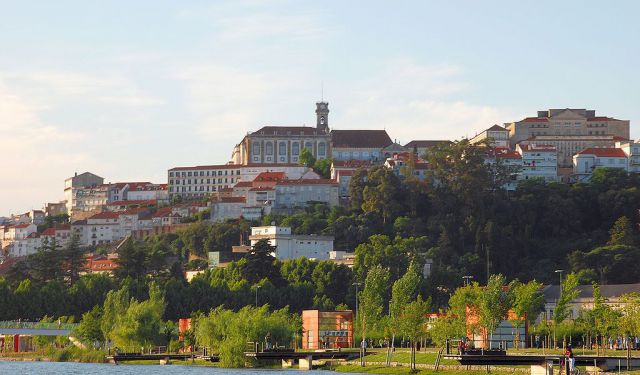
A Walking Tour of Coimbra's Historic Old Town
The ancient Roman city of Aeminium, by the Mondego River, eventually became the city of Coimbra. The modern Machado de Castro National Museum rests on the remains of a medieval bishop's palace. The palace was supported by an old cryptoporticus and Roman forum. The forum was the seed of the political and religious center of a city always reborn.
For more than 100 years Aeminium was held by... view more
Tour Duration: 2 Hours
Travel Distance: 2.2 Km or 1.4 Miles
For more than 100 years Aeminium was held by... view more
Tour Duration: 2 Hours
Travel Distance: 2.2 Km or 1.4 Miles
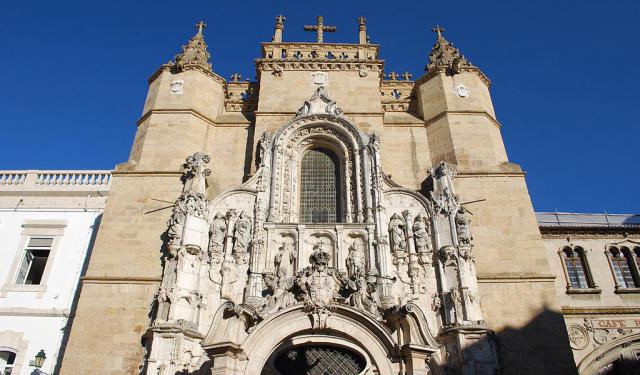
Coimbra's Historic Buildings Walking Tour
Amid the array of historic buildings narrating the cultural and architectural heritage of Coimbra, Portugal, there are both secular structures and great churches, dating back centuries. Apart from their historical value, these buildings exemplify the resplendent European architecture of the past, featuring Baroque, Renaissance, Rococo, and other styles. Some of them are richly decorated on the... view more
Tour Duration: 1 Hour
Travel Distance: 1.8 Km or 1.1 Miles
Tour Duration: 1 Hour
Travel Distance: 1.8 Km or 1.1 Miles