

St. Gangolf Church, Trier
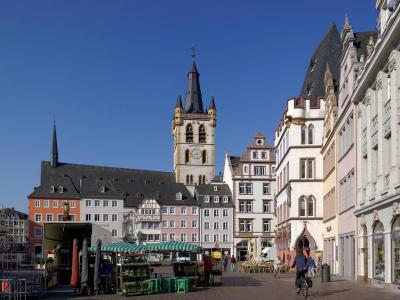
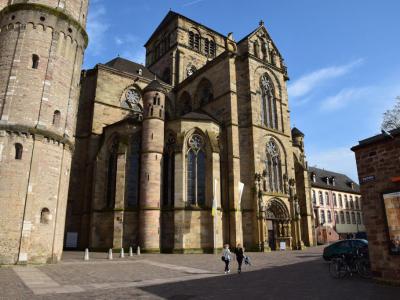
The Saint Gangolf Church in Trier stands as the second-oldest church in the city, nestled among the market buildings near Trier's main market square. Consecrated to Saint Gangolf, this iconic Gothic structure was originally built as a market church in 958 and has seen multiple reconstructions, including a significant overhaul in the late 15th century. The church’s distinctive rococo entrance gate, dating from 1731-32, grants entry to a late Gothic masterpiece with notable baroque elements added in the 18th century.
Saint Gangolf Church underwent extensive renovations between 2020 and 2023 due to structural issues. Architect Peter Berdi focused on preserving the integrity of the original roof and stonework. The floor was removed and replaced to mirror historical designs and vibrant colors were restored to the vaults and columns based on traces of the church’s original palette. A contemporary altar and chancel design by artist Hans Rams now grace the interior, while works by painters like Charles Crodel and Werner Persy enrich the windows with images celebrating Trier’s guilds and patrons.
Inside, a 115-square-meter fresco by August Gustav Lasinsky, crafted around 1850, captivates with its Nazarene art style. Recently restored, the fresco now displays its vivid colors and detailed figures, including Saint Gangolf in armor and Saint Sebastian. Additionally, a 15th-century entombment group stands in the nave, featuring a range of sculptural details restored by Thomas Lutgen, who preserved the natural stone colors.
Saint Gangolf’s bell tower, completed in 1507, rises to 62 meters. This tower houses the famed "Rag Bell," cast in 1475, which tolls at 10:00 p.m. as a reminder of curfew-a tradition harkening back to medieval Trier. Alongside the “Zundel” fire bell, four additional bells by Mabilon were added in 1995, and a minor chord trio rings from the tower clock. With each carefully preserved element, Saint Gangolf Church retains its historic significance, reflecting Trier’s evolving heritage over the centuries.
Saint Gangolf Church underwent extensive renovations between 2020 and 2023 due to structural issues. Architect Peter Berdi focused on preserving the integrity of the original roof and stonework. The floor was removed and replaced to mirror historical designs and vibrant colors were restored to the vaults and columns based on traces of the church’s original palette. A contemporary altar and chancel design by artist Hans Rams now grace the interior, while works by painters like Charles Crodel and Werner Persy enrich the windows with images celebrating Trier’s guilds and patrons.
Inside, a 115-square-meter fresco by August Gustav Lasinsky, crafted around 1850, captivates with its Nazarene art style. Recently restored, the fresco now displays its vivid colors and detailed figures, including Saint Gangolf in armor and Saint Sebastian. Additionally, a 15th-century entombment group stands in the nave, featuring a range of sculptural details restored by Thomas Lutgen, who preserved the natural stone colors.
Saint Gangolf’s bell tower, completed in 1507, rises to 62 meters. This tower houses the famed "Rag Bell," cast in 1475, which tolls at 10:00 p.m. as a reminder of curfew-a tradition harkening back to medieval Trier. Alongside the “Zundel” fire bell, four additional bells by Mabilon were added in 1995, and a minor chord trio rings from the tower clock. With each carefully preserved element, Saint Gangolf Church retains its historic significance, reflecting Trier’s evolving heritage over the centuries.
Want to visit this sight? Check out these Self-Guided Walking Tours in Trier. Alternatively, you can download the mobile app "GPSmyCity: Walks in 1K+ Cities" from Apple App Store or Google Play Store. The app turns your mobile device to a personal tour guide and it works offline, so no data plan is needed when traveling abroad.
Download The GPSmyCity App



St. Gangolf Church on Map
Sight Name: St. Gangolf Church
Sight Location: Trier, Germany (See walking tours in Trier)
Sight Type: Religious
Sight Location: Trier, Germany (See walking tours in Trier)
Sight Type: Religious
Nearby Sights
Walking Tours in Trier, Germany

Create Your Own Walk in Trier
Creating your own self-guided walk in Trier is easy and fun. Choose the city attractions that you want to see and a walk route map will be created just for you. You can even set your hotel as the start point of the walk.
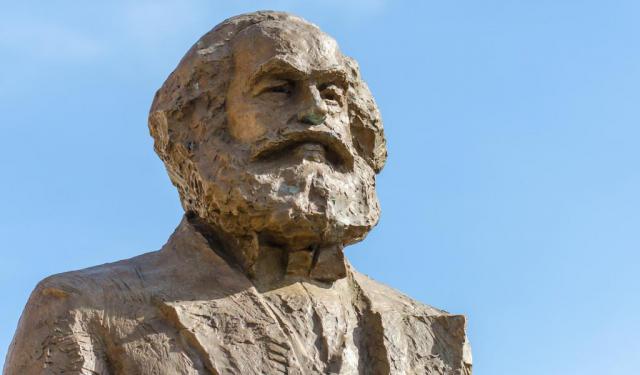
In The Footsteps of Karl Marx
Apart from being a home to the largest number of Roman ruins outside Rome, Trier is also extremely popular with international tourists, especially those from China, as the hometown of Karl Marx.
Here, the father of socialism and one of the most important philosophers of the 19th century, who, as an adult, managed to change the course of the world's history, had spent the first 17 years of... view more
Tour Duration: 1 Hour(s)
Travel Distance: 1.6 Km or 1 Miles
Here, the father of socialism and one of the most important philosophers of the 19th century, who, as an adult, managed to change the course of the world's history, had spent the first 17 years of... view more
Tour Duration: 1 Hour(s)
Travel Distance: 1.6 Km or 1 Miles
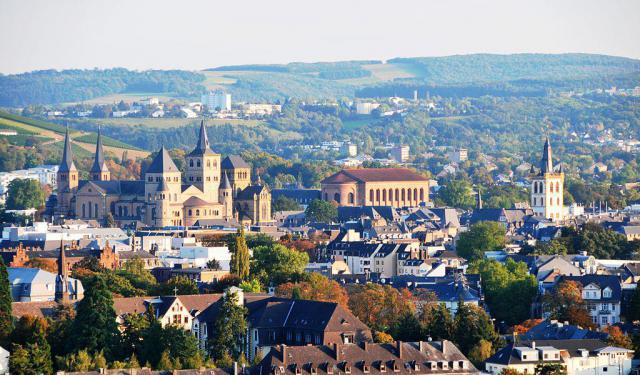
A Walk Through Trier's Historic Old Town
Trier is Germany’s oldest city and features beautiful Roman ruins, impressive medieval architecture, stunning churches, and fascinating museums.
While an inscription on the famous Red House states that the city was founded 1300 years before the Romans arrived, this has never been proven. The Celtics originally founded Trier during the fourth century BC. The Romans arrived in the first century... view more
Tour Duration: 2 Hour(s)
Travel Distance: 3.5 Km or 2.2 Miles
While an inscription on the famous Red House states that the city was founded 1300 years before the Romans arrived, this has never been proven. The Celtics originally founded Trier during the fourth century BC. The Romans arrived in the first century... view more
Tour Duration: 2 Hour(s)
Travel Distance: 3.5 Km or 2.2 Miles
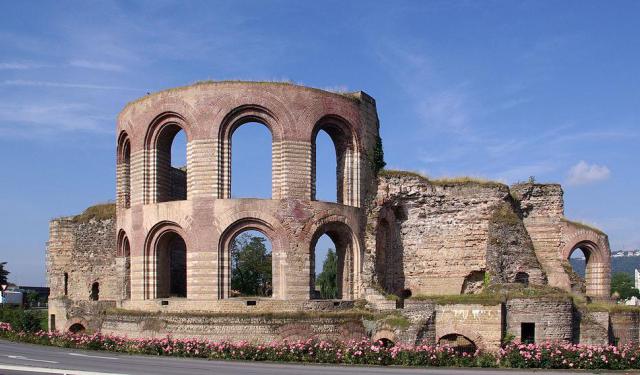
Trier's Roman Ruins Walking Tour
Nowadays it sounds a bit weird that a small German town of Trier, some 20-minute drive from the Luxembourg border, was once the capital of the mighty Western Roman Empire. Still, "the second Rome", as the emperor Diocletian used to call it, today fully lives up to its former status.
Founded in 15 BC by the Roman emperor Octavian Augustus, this oldest city in Germany is a home to the... view more
Tour Duration: 2 Hour(s)
Travel Distance: 4.4 Km or 2.7 Miles
Founded in 15 BC by the Roman emperor Octavian Augustus, this oldest city in Germany is a home to the... view more
Tour Duration: 2 Hour(s)
Travel Distance: 4.4 Km or 2.7 Miles