

Trier's Roman Ruins Walking Tour (Self Guided), Trier
Nowadays it sounds a bit weird that a small German town of Trier, some 20-minute drive from the Luxembourg border, was once the capital of the mighty Western Roman Empire. Still, "the second Rome", as the emperor Diocletian used to call it, today fully lives up to its former status.
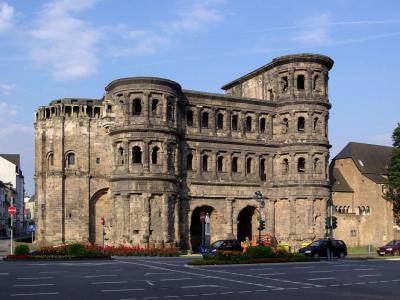
Founded in 15 BC by the Roman emperor Octavian Augustus, this oldest city in Germany is a home to the largest number of Roman ruins outside Rome. Many of these buildings, especially the one called Porta Nigra, are perfectly preserved and together form a UNESCO World Heritage Site. Dating to the 2nd century AD, “the Black Gate” was one of the four gates in the roughly rectangular city wall, and today is the real highlight of the Trier Roman ruins.
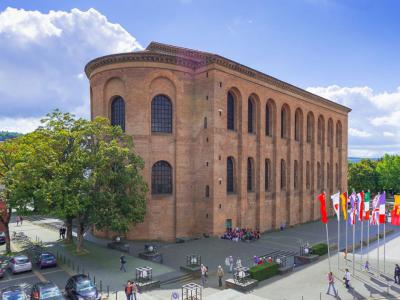
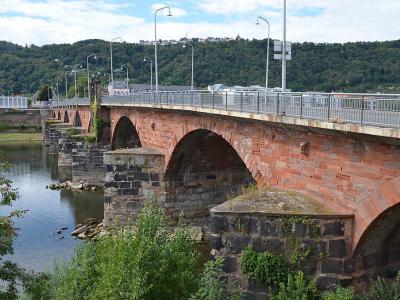
Other remnants from the glorious era, both pre-Christian and those built under Emperor Constantine I, are just as remarkable and include Aula Palatina (the Basilica of Constantine the Great), commissioned in the 4th century AD by the first Christian Roman ruler, and the Römerbrücke (Roman Bridge), the oldest bridge in Germany, erected in 152 AD.
Just as any other significant Roman city, Trier had public baths. Three of them have been excavated and can be viewed:
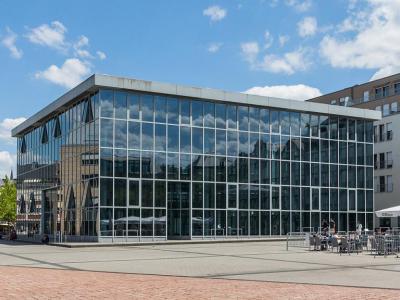
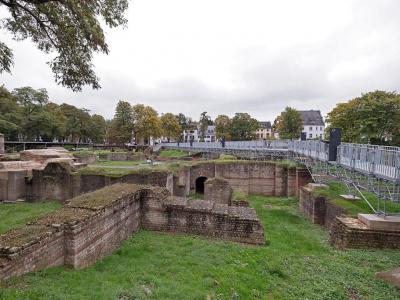
Thermen am Viehmarkt (Forum Baths) – currently encased in a glass box, date from the 3rd-4th centuries AD; in later years served as a source of construction materials, a Jewish cemetery, monastery garden, and a cattle market (viehmarkt);
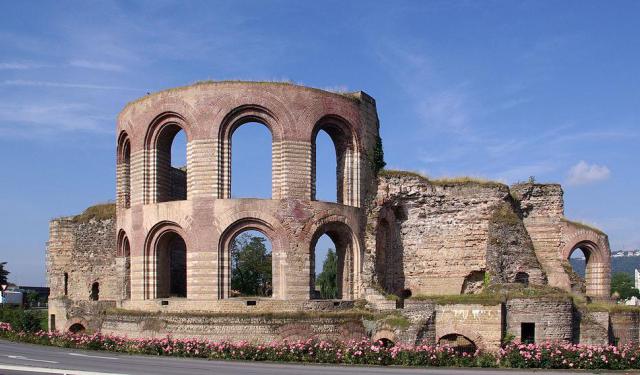
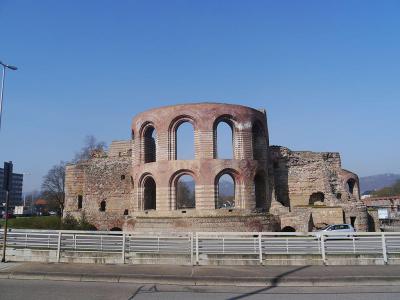
Kaiserthermen (Imperial Roman Baths) – completed in the 4th century AD, when Trier was the capital of the entire western portion of the Roman Empire;
Barbarathermen (Barbara Baths) – predating the Imperial Baths; 2nd century AD.
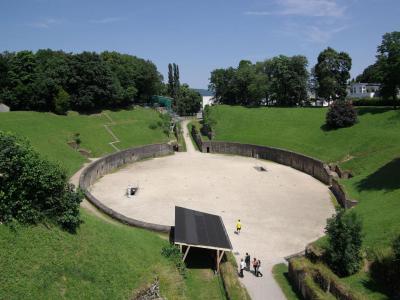
Another prominent monument of the Roman epoch is the Amphitheater, dating to the 1st century AD, with a seating capacity of 20,000.
If you find value in the ancient Roman monuments and sacred sites, you'll be interested in this self-guided tour. All of Trier's Roman ruins are within a walking distance of each other, so you can see them all at your leisure, in a single go, in the town center.
Founded in 15 BC by the Roman emperor Octavian Augustus, this oldest city in Germany is a home to the largest number of Roman ruins outside Rome. Many of these buildings, especially the one called Porta Nigra, are perfectly preserved and together form a UNESCO World Heritage Site. Dating to the 2nd century AD, “the Black Gate” was one of the four gates in the roughly rectangular city wall, and today is the real highlight of the Trier Roman ruins.
Other remnants from the glorious era, both pre-Christian and those built under Emperor Constantine I, are just as remarkable and include Aula Palatina (the Basilica of Constantine the Great), commissioned in the 4th century AD by the first Christian Roman ruler, and the Römerbrücke (Roman Bridge), the oldest bridge in Germany, erected in 152 AD.
Just as any other significant Roman city, Trier had public baths. Three of them have been excavated and can be viewed:
Thermen am Viehmarkt (Forum Baths) – currently encased in a glass box, date from the 3rd-4th centuries AD; in later years served as a source of construction materials, a Jewish cemetery, monastery garden, and a cattle market (viehmarkt);
Kaiserthermen (Imperial Roman Baths) – completed in the 4th century AD, when Trier was the capital of the entire western portion of the Roman Empire;
Barbarathermen (Barbara Baths) – predating the Imperial Baths; 2nd century AD.
Another prominent monument of the Roman epoch is the Amphitheater, dating to the 1st century AD, with a seating capacity of 20,000.
If you find value in the ancient Roman monuments and sacred sites, you'll be interested in this self-guided tour. All of Trier's Roman ruins are within a walking distance of each other, so you can see them all at your leisure, in a single go, in the town center.
How it works: Download the app "GPSmyCity: Walks in 1K+ Cities" from Apple App Store or Google Play Store to your mobile phone or tablet. The app turns your mobile device into a personal tour guide and its built-in GPS navigation functions guide you from one tour stop to next. The app works offline, so no data plan is needed when traveling abroad.
Download The GPSmyCity App



Trier's Roman Ruins Walking Tour Map
Guide Name: Trier's Roman Ruins Walking Tour
Guide Location: Germany » Trier (See other walking tours in Trier)
Guide Type: Self-guided Walking Tour (Sightseeing)
Tour Duration: 2 Hour(s)
Travel Distance: 4.4 Km or 2.7 Miles
Tour Best Suited For: Archtecture buffs
Guide Location: Germany » Trier (See other walking tours in Trier)
Guide Type: Self-guided Walking Tour (Sightseeing)
Tour Duration: 2 Hour(s)
Travel Distance: 4.4 Km or 2.7 Miles
Tour Best Suited For: Archtecture buffs
Sights Featured in This Walk
7) Amphitheater (must see)
Walking Tours in Trier, Germany

Create Your Own Walk in Trier
Creating your own self-guided walk in Trier is easy and fun. Choose the city attractions that you want to see and a walk route map will be created just for you. You can even set your hotel as the start point of the walk.
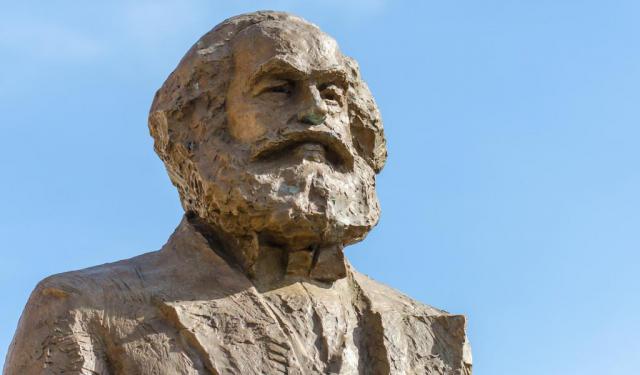
In The Footsteps of Karl Marx
Apart from being a home to the largest number of Roman ruins outside Rome, Trier is also extremely popular with international tourists, especially those from China, as the hometown of Karl Marx.
Here, the father of socialism and one of the most important philosophers of the 19th century, who, as an adult, managed to change the course of the world's history, had spent the first 17 years of... view more
Tour Duration: 1 Hour(s)
Travel Distance: 1.6 Km or 1 Miles
Here, the father of socialism and one of the most important philosophers of the 19th century, who, as an adult, managed to change the course of the world's history, had spent the first 17 years of... view more
Tour Duration: 1 Hour(s)
Travel Distance: 1.6 Km or 1 Miles
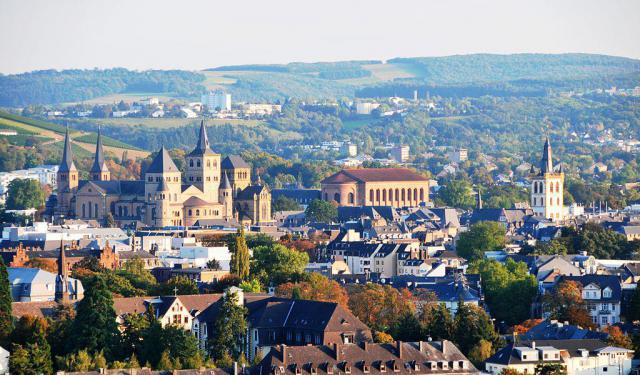
A Walk Through Trier's Historic Old Town
Trier is Germany’s oldest city and features beautiful Roman ruins, impressive medieval architecture, stunning churches, and fascinating museums.
While an inscription on the famous Red House states that the city was founded 1300 years before the Romans arrived, this has never been proven. The Celtics originally founded Trier during the fourth century BC. The Romans arrived in the first century... view more
Tour Duration: 2 Hour(s)
Travel Distance: 3.5 Km or 2.2 Miles
While an inscription on the famous Red House states that the city was founded 1300 years before the Romans arrived, this has never been proven. The Celtics originally founded Trier during the fourth century BC. The Romans arrived in the first century... view more
Tour Duration: 2 Hour(s)
Travel Distance: 3.5 Km or 2.2 Miles
The Most Popular Cities
/ view all